Kitesurfing vs Wing Foiling for Beginners
 by Yannick Schroth
Jul 28, 2026
10 min read
by Yannick Schroth
Jul 28, 2026
10 min read
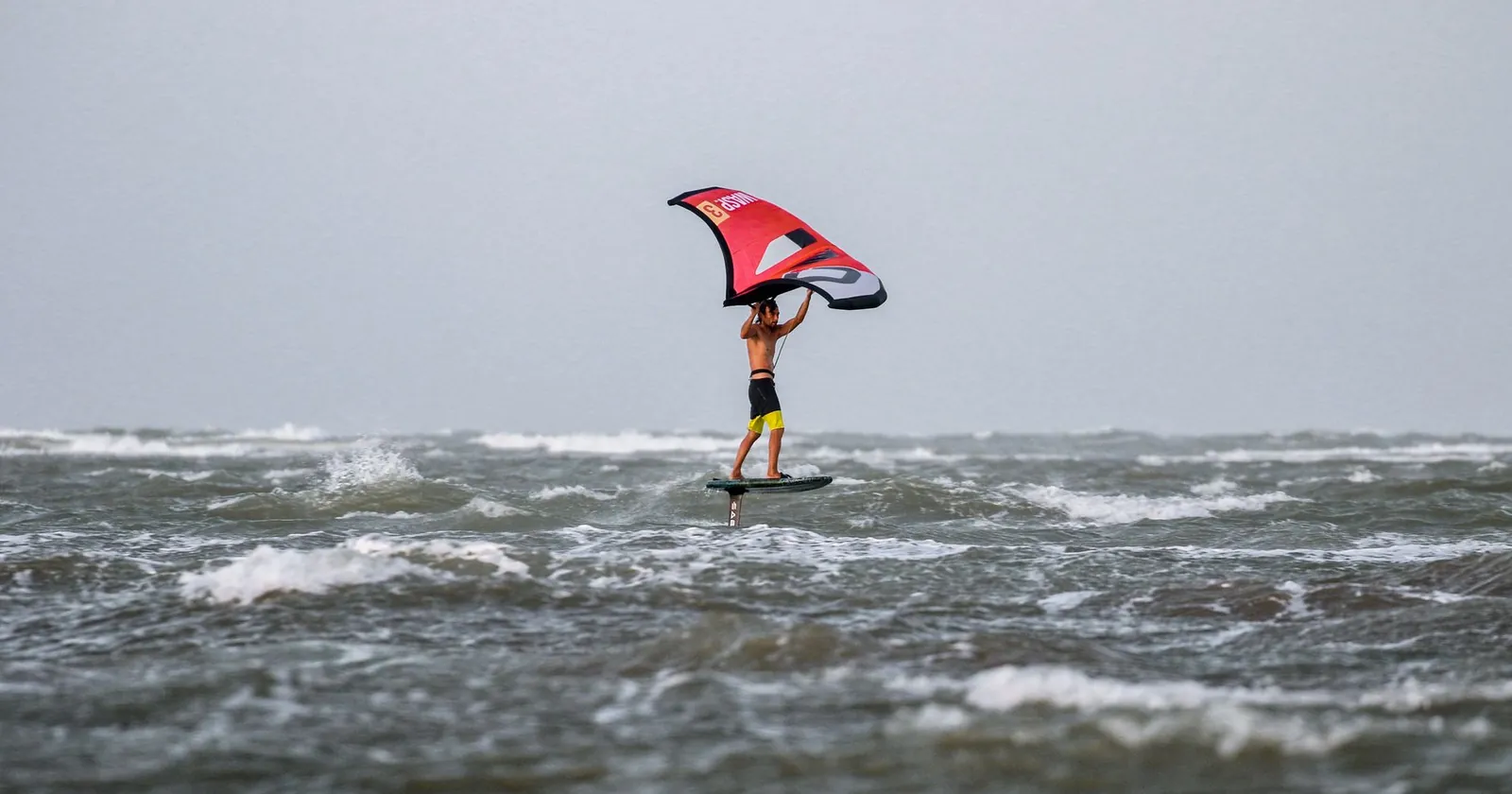
Photo: Harold Granados via Pexels (free license).
Both are wind sports that require lessons; neither should be self-taught.
Key takeaways
- Wing foiling is easier to start: no lines, gentler, more self-contained.
- Kitesurfing has more scene, jumps and wave riding, for a steeper curve.
- The foil buys the light wind, not the wing: kiteboarding has a foil class too, and it is the Olympic one.
- Both need lessons and respect; neither is a self-teach sport.
- Neither is truly travel-light; many nomads rent at wind spots.
The core difference: lines vs a handheld wing
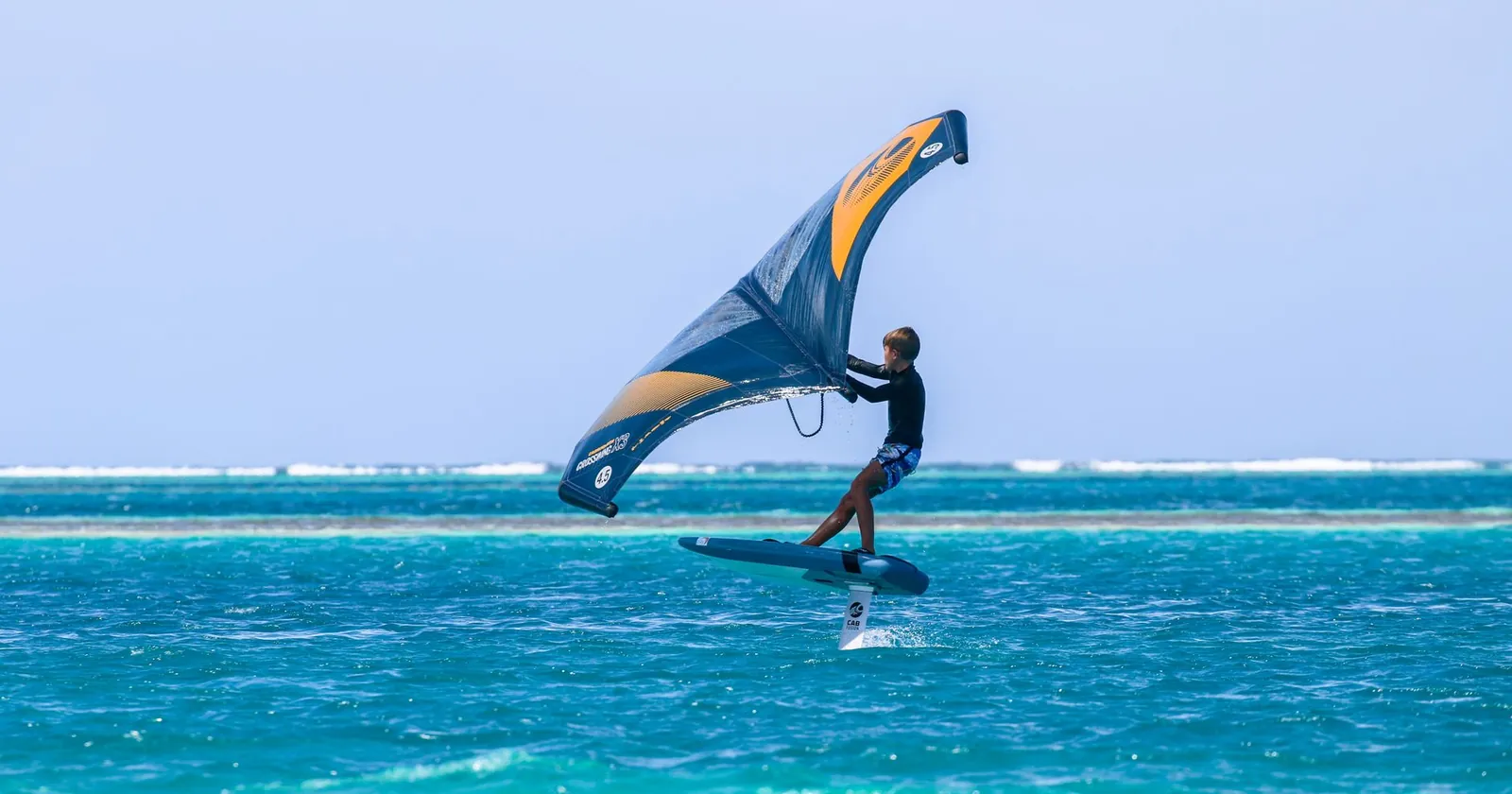
Both sports use the wind to drive you across the water, but the connection is different, and that is everything. Kitesurfing uses a large kite on 20-plus meter lines controlled by a bar, powerful and exhilarating, but the lines must be managed and the kite can generate strong, sometimes dangerous force. Wing foiling uses a handheld inflatable wing and a board with a hydrofoil underneath; there are no lines, and you can simply let the wing go if you need to. Everything below flows from that.
Learning curve: wing foiling is gentler to start
For a complete beginner, wing foiling is generally the faster, gentler route to standing on a board: the wing is easy to handle on the first try, and with no lines there is far less to coordinate. Kitesurfing's 20-plus meters of line add tangles, relaunches and mental load. The catch is that wing foiling adds a different challenge, the hydrofoil: learning to balance on a foil involves plenty of falls before it clicks. So: wing gets you moving sooner, but "foiling" itself is a skill; kite is more daunting early but a well-known path. See how to learn kitesurfing for that route.
Safety: both need respect, in different ways
Wing foiling is more forgiving and self-contained: no lines to tangle or drag you, and a wing you can release instantly. But the hydrofoil is a sharp, hard object under the board that can cause nasty cuts, so foilers wear helmets and impact vests and give each other space. Kitesurfing's powerful kite can drag a rider across the beach or loft them, which is why its safety systems and self-rescue are drilled hard. Neither is a beginner sport to self-teach; both demand lessons and conservative conditions.
Wind, space and cost
- Wind: foiling gets going in lighter wind because the foil is so efficient, extending your usable days; kitesurfing on a twin-tip wants a solid, steady breeze. Note the qualifier: it is the foil doing that work, and kiteboarding has a foil discipline of its own (below).
- Space: kitesurfing needs more room to launch and land safely and is more location-restricted; wing foiling is more self-contained and works in tighter spots.
- Cost: both are pricier to kit out than surfing; wing-foil setups (wing, foil, board) and kite setups (kite, bar, board, harness) are comparable, and lessons are a must-buy for either.
Kitesurfing and wing foiling at a glance
| Kitesurfing | Wing foiling | |
|---|---|---|
| Power source | Kite on ~20 m lines + bar | Handheld inflatable wing |
| Ease to start | Steeper, safety-critical | Gentler; foil balance is the challenge |
| Wind needed | Solid, steady breeze on a twin-tip; kite foiling changes this | Works in lighter wind (efficient foil) |
| Space needed | More; location-restricted | Less; more self-contained |
| Big draws | Jumping, wave riding, huge scene | Gentle glide, light-wind days, simplicity |
| Key risk | Powerful kite (drag/loft) | Sharp hydrofoil |
| Olympic class | Yes (Formula Kite, a foiling class, debut Paris 2024 and again at LA28 | No) not on the LA28 programme |
| Schools in our register | 182 VDWS stations teach it | 122 VDWS stations teach it |
What about windsurfing, alongside kite and wing?
The third wind sport worth a mention is windsurfing, the original board-and-sail. It has a gentle, safe start (no lines, a rig you can drop), a big historic scene, and rig gear that is bulky to travel with. It never went away, and many wind spots (including Dahab) are windsurf classics. In the current wave of interest, though, wing foiling has taken much of windsurfing's "easy, self-contained entry" appeal while adding the thrill of foiling, which is why the beginner question today usually comes down to kite vs wing. If a windsurf school is what your destination offers, it is still a lovely, accessible way onto the water.
Formula Kite: the Olympic foiling class
Every comparison of these two, the table above included, quietly matches a foil against a twin-tip. That is where “wing needs less wind” comes from, and it is worth being exact about what earns the light wind: the foil does, not the wing. Kiteboarding has had a foil discipline for years, and it is the one the sport is judged by.
Formula Kite was adopted as a World Sailing international class in 2013, and its class rules are equipment rules for a foiling board: a “Foil System” is defined as a “Hull appendage primarily used to produce vertical lift”, and only one may be attached to the hull. World Sailing's own description of the Olympic event is as short as it gets: “All that you need to compete is a kite, a board and a foil”, the board about a metre long, the riders reaching 30 knots downwind in races of about twelve minutes. It made its Olympic debut at Paris 2024, and World Sailing calls it the fastest sport there.
It stays in for Los Angeles. The LA28 sailing programme, announced on 13 November 2025, runs ten events, and the two kite events are the first medals of the regatta, on 19 July 2028. There is no wing event on that programme, in LA or anywhere before it.
None of which makes wing foiling the lesser sport, and none of it changes the gentler first session. What it changes is the reason you might pick one for a light-wind home spot. If the appeal is flying a foil on thin days, kiteboarding does that too, with an Olympic class, a longer-standing rulebook and, in our own register, 182 of the 413 VDWS stations teaching kite against 122 teaching wing. Pick the wing for the handheld simplicity and the self-contained kit, which is a real and good reason. Do not pick it because you were told it is the one with the foil.
So which should a beginner choose?
- Choose wing foiling if you want the gentler, more self-contained start, lighter-wind days, and you don't mind the foiling balance learning curve.
- Choose kitesurfing if you are drawn to big jumps, wave riding, and the huge established scene, and you will commit to the safety-first lessons.
- Do both if you love wind; the skills and the destinations (Dahab, Tarifa, Cabarete) overlap, and many riders switch depending on the day's conditions.
One side of this comparison has a product standard with numbers in it
Both disciplines are governed through World Sailing, which is why the rest of this page can quote class rules at both. Equipment safety is a separate question, and there the kite side has something written down.
Since 14 February 2020, ISO 21853 has covered “quick-release systems on kite bars and safety leashes”, with limits that can be checked rather than trusted: a maximum release force of 170 N or less and an opening time of two seconds or less. The test conditions matter as much as the numbers: the release is tested clean and dry, in dry sand, in water with and without sand, and cold and wet, with certification carried out at the Fraunhofer Institute in Rostock. That is a standard written for the state a rental bar is actually in.
A wing has no bar, no depower line and nothing to release: you let go of it and it flags out on the leash. That is a real difference in the failure mode rather than in the paperwork, and it is one of the arguments for starting on a wing.
FAQ: kitesurfing vs wing foiling
Is kitesurfing or wing foiling easier to learn?
Wing foiling is generally considered easier and gentler to start. You hold the wing in your hands with no long lines to manage, and you can stand on a board in your first session. Kitesurfing means controlling a powerful kite on 20-plus meter lines, which adds line management and cognitive load for beginners. Wing foiling does have its own challenge though: learning to balance on the hydrofoil.
Which is safer, kitesurfing or wing foiling?
Wing foiling is generally more forgiving and self-contained: a handheld wing you can simply let go of, and no lines to tangle or drag you across the beach. Kitesurfing's powerful kite can drag or loft a rider, so it demands strict safety training. That said, wing foiling involves a sharp hydrofoil under the board, which carries its own injury risk. Both require lessons and respect.
Which is better for travel, kitesurfing or wing foiling?
Wing foiling gear can be more self-contained (an inflatable wing plus a board and foil), but the foil board and mast are awkward and delicate to pack. Kite gear (kite, bar, board, harness) packs into a large board bag. Neither is truly carry-on friendly, so many nomads rent at wind destinations. If you must choose, an inflatable wing and a travel foil setup is arguably the more packable system.
Do you need more wind for kitesurfing or wing foiling?
Foiling can get going in lighter wind because the hydrofoil is so efficient, and that is the foil's doing rather than the wing's: kiteboarding has its own foil discipline, Formula Kite, which is the Olympic kiteboarding class. Kitesurfing on a regular twin-tip board typically wants a solid, steady breeze. Both are wind-dependent sports, so you go where and when the wind blows, but a wing-foil setup often extends your usable range into lighter days.
Should a beginner choose kitesurfing or wing foiling?
If you want the gentler, more self-contained start and don't mind the foiling balance challenge, wing foiling is the easier entry. If you are drawn to big jumps, wave riding and the huge established scene, kitesurfing is worth the steeper learning curve. Many people end up doing both. Either way, take lessons; neither should be self-taught.
Yannick Schroth
Founder of NOMADREEF and a former digital nomad. This comparison is researched against kiteboarding and wing-foiling instruction and industry guidance; both sports require certified, in-person lessons. About the author · LinkedIn ↗
Sources
- The kite-bar standard. Global Kitesports Association on ISO 21853:2020, in force “14th February 2020”, covering “quick-release systems on kite bars and safety leashes” with a “maximum release force (equal to or less than 170N) and opening time (equal to or less than 2 seconds)”, tested across dry and clean conditions, dry sand, water with and without sand, and cold and wet, and certified at the Fraunhofer Institute in Rostock. global-kitesports.org. Read 13 September 2026.
- Formula Kite is a foiling class, and a World Sailing one. IKA Formula Kite class rules, effective 8 May 2026, status Approved: the class “was adopted as a World Sailing international class in 2013”; a “Foil System” is a “Hull appendage primarily used to produce vertical lift”, and “Only one foil system is permitted to be attached to the hull.” sailing.org. Read 10 September 2026.
- What the Olympic kite event is. World Sailing's own explainer for Paris 2024: “All that you need to compete is a kite, a board and a foil”, on “a board which is about a metre long, attached to a foil”; riders “can reach speeds of 30 knots while travelling downwind, with races taking approximately 12 minutes”, and Formula Kite “will make its Olympic debut this summer”. paris2024.sailing.org. Read 10 September 2026.
- The LA28 programme, and what is not on it. World Sailing, 13 November 2025: ten events, with Men's and Women's Kite on Formula Kite and Men's and Women's Windsurfing on iQFOiL. Kite is the first medal decided, on 19 July 2028. No wing or wingfoil event appears on the programme. sailing.org. Read 10 September 2026.
- Where you could take a lesson. Counted from the discipline block on each station's page in the VDWS register, read on 26 August 2026: of 413 station pages, 182 name kitesurfing and 122 name wingfoiling. The register itself lists 428 stations in 26 countries.
- IKO (International Kiteboarding Organization), the kiteboarding training body whose progression the learn-to-kite route above follows. ikointl.com.