Zanzibar Diving: Mnemba, Menai Bay, the Stone Town Wrecks and the Fees at Each
 by Yannick Schroth
Sep 24, 2026
13 min read
by Yannick Schroth
Sep 24, 2026
13 min read
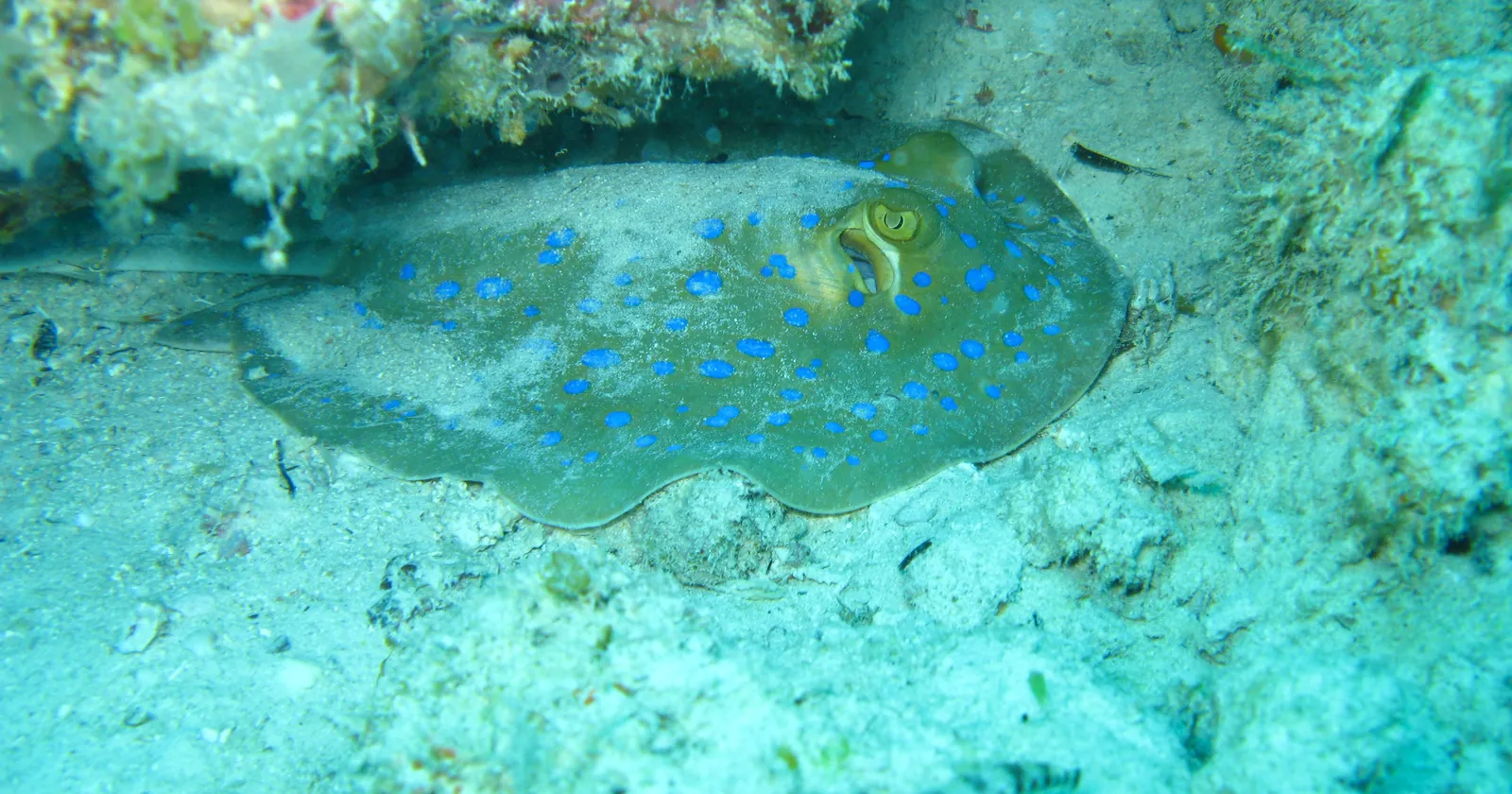
Photo: I've Got It On Film!, Wikimedia Commons, CC BY 2.0.

Key takeaways
- The revised conservation-area fee took effect on 1 September 2025: $10 for a foreign adult, $5 for a child aged 5 to 15, and $25 inside the Mnemba special area
- &Beyond, which runs the lodge on Mnemba Island, says the special area is a ring of 400 to 700 meters with a limit of eight boats a day and no anchoring
- Two peer-reviewed studies off Kizimkazi found dolphins rest less and move more erratically as tour boats and swimmers increase
- Zanzibar’s Fisheries Act forbids not only fishing with a spear gun but importing, selling or possessing one
- The $44 visitor insurance every foreign visitor must buy says nothing about diving, either way
Zanzibar’s conservation-area fee rose to $10 on 1 September 2025
The Ministry of Blue Economy and Fisheries revised the entry fees for Zanzibar’s marine conservation areas with effect from 1 September 2025. The list covers the Mnemba Island Conservation Area, the Menai Bay Conservation Area, the combined area for Chumbe and the Changuu-Bawe islands off Stone Town, and the Pemba Channel Conservation Area on the second island.
A visitor from outside the East African Community pays $10 per adult, meaning anyone aged 16 or over, and $5 per child aged 5 to 15, with children under five free. Two of the three reports of the notice say the rate is per day. Foreigners who are residents of Tanzania pay $5 and $3. East African citizens pay TZS 5,000 and TZS 2,500.
The ministry’s own budget speeches show how much the fee carries. The line for visitor entry fees at Menai Bay and Mnemba brought in TZS 3.09 billion between July 2024 and March 2025. Over the same nine months a year later, the first under the new rates, it brought in TZS 7.12 billion, already 105 percent of the full-year estimate.
The conservation program runs on it. Of the TZS 3.86 billion the marine conservation program had received by March 2026, TZS 3.75 billion was retention of the conservation department’s own collections, against TZS 29 million in salaries. By June 2024 the department had also started collecting through the ZanMalipo payment system, so ask your dive center whether its price already includes the fee.
More people are paying it. The Ministry of Tourism and Heritage reported 917,167 tourist arrivals in 2025, up 24.5 percent on 736,755 in 2024. A 2009 government guide already said visitors would pay a fee to maintain the areas and build livelihoods in the fishing villages around them.
Mnemba Atoll off Zanzibar has an inner ring with a $25 fee
The Mnemba Island Marine Conservation Area was officially created in 2002, according to that government guide, and it is far larger than the atoll. It runs along the coast from the Michamwi peninsula round to Kendwa in the north, as a multiple-use area where only sustainable fishing gear is allowed. The house reef on the north-western side of the island was declared a no-fishing zone.
Inside it sits a second, smaller layer. The ministry’s June 2024 budget speech reports that its agreement with &Beyond, the company running the tourist lodge on Mnemba Island, on conserving a “special area” around the island was being implemented. The 2025 fee revision left that special area on its old, higher rates: $25 per adult and $10 per child for visitors from outside East Africa.
The published description of the special area’s rules comes from &Beyond itself, so read it as the company’s account. Its December 2023 release describes a ring 400 to 700 meters around the island, with permits, a limit of eight boats a day carrying at most seven tourists and two crew, fixed access hours, and no anchors. A dive trip to “Mnemba” can mean the ring or the wider reef outside it, and the price should tell you which.
The reef outside the ring is being added to. The ministry reports 1,907 artificial reef units placed in conservation areas on both islands, including Uroa and Pongwe inside the Mnemba area and Muyuni and Kizimkazi Mkunguni in Menai Bay, built with the Wildlife Conservation Society, &Beyond and MCCC (Mwambao).
The ministry has also written guidance for Mnemba’s boats. In 2024/25 it drafted a guideline for tour guides and tourist boat captains on how to run dolphin trips inside the Mnemba area, briefed them on it, and put up 25 signboards about rare and endangered species across the conservation areas of both islands.

Kizimkazi’s dolphins in southern Zanzibar rest less when tour boats arrive
Kizimkazi, on the south coast, sits inside the Menai Bay Conservation Area, declared in August 1997. The IUCN task force on marine mammal habitats lists the bay as an Important Marine Mammal Area of 648 km², home to resident Indo-Pacific bottlenose dolphins and to the Indian Ocean humpback dolphin, which the Red List classes as Endangered.
A mark-recapture estimate from 2002 counted 63 humpback dolphins in the bay. The 2015 estimate was 19. Bottlenose dolphins went from 136 to 114 over the same period. The task force names bycatch in gillnets and “unregulated dolphin watching” as the pressures on them.
Two studies from Kizimkazi describe what the boats do. Stensland and Berggren followed nursing bottlenose females from January to March in 2000, 2001 and 2002. One or two tourist boats without swimmers did not change how the groups moved. As tourist activity grew, and when swimmers went in, the groups moved more erratically and the mothers traveled more, which the authors say may cut into the time available for nursing.
Christiansen and colleagues then compared groups with and without tourist boats present. With boats, the dolphins were less likely to stay resting or socializing and more likely to start traveling; resting, socializing and foraging all fell. Their conclusion was that regulation of dolphin tourism off the south coast was “urgently needed”.
The 2007 paper already urged that guidelines issued by the Zanzibar fisheries department be implemented and complied with. The one dolphin guideline the ministry reported writing in its 2025 and 2026 budget speeches covers the Mnemba area, not Menai Bay. If you go, the 2007 findings point to a boat that keeps its distance and puts no swimmers in the water.
Chumbe, Zanzibar’s first marine protected area, is run as a snorkeling reef
Chumbe Island lies between Menai Bay and the Changuu-Bawe islands, and its reef sanctuary and forest reserve were legally gazetted in 1994, which the park describes as the first marine protected area in Tanzania. It is managed by Chumbe Island Coral Park, a not-for-profit company, under a public-private partnership with the government, and says it has paid its own way since its eco-lodge opened in 1998.
What Chumbe offers visitors is guided snorkeling, tours of about an hour with the equipment provided, plus intertidal walks at spring low tide. Its activities page does not list scuba diving, and the reef crest is shallow enough that the park itself says snorkelers see what is usually only accessible to divers. Book it as a snorkel day, not a dive day.
The park’s own monitoring is the case for going. It reports more than 500 reef fish species and fish biomass rising from under 200 kg per hectare in the late 1990s to more than 2,300 kg per hectare by 2025, Those are the park’s figures for its own reef. Our snorkeling destinations list covers reefs built for the same kind of day.
The wrecks off Stone Town lie in Zanzibar’s Changuu-Bawe conservation area
The islands in front of Zanzibar’s old port, Changuu, Chapwani and Bawe, form their own conservation area, and the 2009 government guide says it holds at least three shipwrecks that the dive centers running daily trips can take you to. The best known is the Great Northern, a British cable-laying ship built in 1870 that sank on New Year’s Eve 1902 on a reef next to the Pange sandbank.
The same guide lists a wreck at 30 meters next to Bawe Island, a former Royal Navy lighter, and the Penguin, a steamship used to dredge the Stone Town port in the 1920s, at 40 meters between Pange and Murogo. Those are the guide’s depths; confirm them with the operator before booking.
In its May 2026 budget speech the ministry reported an ecological survey of Changuu, a new patrol station on Bawe Island and an ocean-sensor buoy moored inside the Changuu-Bawe area. Our wreck diving list covers other coasts built around this kind of dive.
Zanzibar’s Fisheries Act bans owning a spear gun, not just firing one
The law under all of this is the Fisheries Act No. 7 of 2010, passed by the House of Representatives on 31 March 2010. It repealed the Fisheries Act of 1988 and created a Marine Conservation Unit inside the fisheries department to coordinate the controlled areas. The ministry has since proposed repealing it and enacting a Fisheries Development and Marine Conservation Act (the Swahili title, translated); in May 2026 the next step was tabling that bill.
Section 17 is the one a diver should read. Subsection (1) says no person shall use a beach seine, fishing weir, spear gun or “any electrical or diving device for fishing”, which rules out hunting on scuba. Subsection (3) goes further: no person shall import, sell, offer for sale, possess, control or make a spear gun at all. Subsection (2) presumes that one found on a fishing vessel, or with anyone near Zanzibar’s waters, was meant for fishing.
Some spearfishing charters describe a sport license for Zanzibar waters. Section 17 contains no exception for sport, so any such license would have to rest on a separate regulation or exemption. Ask to see it in writing before you pack a gun; our spearfishing basics are written for places where the sport is plainly legal.
The government guide also asks divers not to remove, touch or stand on coral, or buy shells or other prohibited marine products.
Tides, not the monsoon, move most of the water in the Zanzibar Channel
Stone Town, Bawe and Chumbe all face the Zanzibar Channel, which a 2015 modeling study describes as about 100 km long, 40 km wide and 40 meters deep. Part of the East African Coastal Current flows north through it, strongest in the southwest monsoon season and weak, or occasionally reversed, in the northeast monsoon.
That seasonal flow is the smaller part of the story. The same study found that the tides carry 92 percent of the channel’s kinetic energy, against 5 percent for the ocean current and 3 percent for the local wind. The channel is well mixed except for short spells in the two rainy seasons, and it cools temporarily between December and February.
Oceanographers working on the Pemba Channel to the north use the same regional calendar: a southeast monsoon from May to September, cooler and drier with strong southerly winds, a northeast monsoon from November to March, and inter-monsoon months in April and October with relatively calm weather. On the channel side, check the tide table before the season.
Zanzibar’s $44 visitor insurance does not mention diving
Since 1 October 2024 every visitor to Zanzibar who is not a resident must hold an inbound travel policy from the Zanzibar Insurance Corporation. The corporation’s FAQ puts the price at $44 per visitor, covers a trip of up to 92 consecutive days, and says the policy must be issued by the corporation itself. Your own travel insurance does not replace it.
The policy is real cover: its FAQ lists emergency medical expenses and repatriation among the basic covers, alongside personal accident, baggage and liability. But neither the FAQ nor its list of exclusions mentions diving, scuba, depth or recompression treatment, in either direction. It neither promises to pay for a dive accident nor says it will refuse.
Treat it as the entry ticket, not dive cover. Carry a policy that names scuba and hyperbaric treatment; our dive insurance guide covers what to look for. Ask your operator where the nearest recompression chamber is and how a diver gets there, before you are in the water.
Pemba, the other Zanzibar island, is a separate dive trip
Pemba lies north of Unguja across its own channel, and it is not a day trip. Its reefs sit in the Pemba Channel Conservation Area, which appears on the same 2025 fee list, and the ministry has completed the procedures for two new conservation areas on Pemba’s east coast. Fewer visitors make the crossing: Pemba’s visitor-fee line collected TZS 46 million from July 2024 to March 2025, 15 percent of its estimate, and the ministry noted that most visitors go to the conservation areas on Unguja.
The water there behaves differently. A study of 24 years of drifter data found higher median surface currents in the Pemba Channel during the southeast monsoon than in the other seasons, with the fastest water over depths beyond 200 meters. The insurance rule travels with you: the corporation’s portal lists Pemba Airport, Mkoani and Wete among its entry points.
Coral monitoring at Misali and the other Pemba Channel sites, as at Menai Bay and Tumbatu, found corals beginning to recover after bleaching, the ministry reported in 2026. The operators counted below are all on Unguja.
Four SSI dive centers among Zanzibar’s 13 listed watersports businesses
The Zanzibar operator list holds 13 watersports businesses on Unguja, read on 24 September 2026. Four are dive centers, and SSI publishes all four in its register of affiliated centers: Bawe Diving Center, Dive Horizons Zanzibar, which SSI files under Kizimkazi, One Ocean Zanzibar and Scuba Blue Zanzibar.
The other nine are kite schools, seven of them published by IKO, around Paje, Jambiani and Kiwengwa; the Paje guide covers that side of the island. A register listing says a body lists the business on that date. It says nothing about the boats, the teaching or whether the center is open this season.
The license that matters locally comes from the Zanzibar Commission for Tourism, which inspected 690 tourism businesses across Unguja and Pemba in 2025/26, water-sports operators among them, for compliance with the Tourism Act. Ask a dive center for its current license. Which registers can be read sets out what each source returns.
FAQ: scuba diving in Zanzibar
How much is the marine park fee for diving in Zanzibar?
Since 1 September 2025, a visitor from outside the East African Community pays $10 per adult and $5 per child aged 5 to 15 to enter Zanzibar’s marine conservation areas, including Mnemba, Menai Bay, Chumbe with Changuu-Bawe, and the Pemba Channel. The special area around Mnemba Island kept its higher rate of $25 per adult and $10 per child.
Can you scuba dive at Chumbe Island?
Chumbe is run as a snorkeling reef. Its reef sanctuary was gazetted in 1994 and is managed by the not-for-profit Chumbe Island Coral Park, which offers guided snorkeling tours of about an hour and intertidal walks at spring low tide. Its activities page lists no scuba diving, and the park says the shallow reef crest shows snorkelers what is usually only accessible to divers.
Do dolphin tours at Kizimkazi harm the dolphins?
Two studies off Kizimkazi found measurable effects. With tour boats present, bottlenose dolphins were less likely to keep resting or socializing and traveled more. One or two boats without swimmers did not change how groups moved, but movement became more erratic as tourist activity rose and when swimmers went in. The Endangered humpback dolphins in Menai Bay fell from an estimated 63 in 2002 to 19 in 2015.
Does Zanzibar’s mandatory insurance cover scuba diving?
It does not say. Since 1 October 2024 every non-resident visitor to Zanzibar must buy a $44 inbound policy from the Zanzibar Insurance Corporation, covering up to 92 days; its FAQ lists emergency medical expenses and repatriation among the basic covers. Neither its FAQ nor its exclusions list mentions diving or recompression treatment, so carry separate dive insurance.
Is spearfishing legal in Zanzibar?
Section 17 of Zanzibar’s Fisheries Act No. 7 of 2010 forbids using a spear gun, or any diving device, for fishing, and forbids importing, selling, offering for sale, possessing, controlling or making a spear gun. The section contains no exception for sport, so any spearfishing license offered by a charter would need a separate written authority.
Note: Conditions, safety guidance and regulations change. Verify current information with official sources, including the dive operator, the park authority and the relevant government department, before you travel or dive.
Founder of NOMADREEF and a former digital nomad. This guide is sourced from the references below; conditions, prices and rules change, so verify current details, and follow qualified local guidance and safety briefings. About the author · LinkedIn ↗
Sources
- The 2025 fee revision (triangulated). The ministry’s own notice was not found online, so the rates rest on three independent reports of it, which agree: effective 1 September 2025; announced by the Ministry of Blue Economy and Fisheries; applying to MIMCA, MBCA, the Chumbe and Changuu-Bawe area and PECCA; $10 per non-EAC adult aged 16 and over, $5 per child aged 5 to 15, under-fives free; $5 and $3 for non-EAC residents of Tanzania; TZS 5,000 and TZS 2,500 for EAC citizens; the Mnemba Special Area keeping $25 per adult and $10 per child for non-EAC visitors. The Citizen and Tourism Update say “per day”; ATTA gives no period and gives the special-area range as $10 to $25. The Citizen, 2 September 2025; Tourism Update, 8 September 2025; ATTA, 3 September 2025. Read 24 September 2026. Triangulated, not primary. The previous rate is quoted by one of the three only and is left out.
- What the fee collects, and the Mnemba agreement (primary). Revolutionary Government of Zanzibar, Ministry of Blue Economy and Fisheries, budget speeches to the House of Representatives. June 2024 (2024/25): the agreement between the ministry, through its Department of Marine Conservation Areas, and &Beyond Tanzania on conserving the “Eneo Mahsusi” (special area) around Mnemba island being implemented; the department having started to use ZanMalipo to collect revenue in the conservation areas. Budget speech 2024/2025 (PDF, Swahili). June 2025 (2025/26): revenue annex, visitor entry fees for Menai and MIMCA estimated at TZS 2,700,000,000 and collected at TZS 3,086,875,910 from July 2024 to March 2025 (114 percent), PECCA estimated at TZS 314,873,200 and collected at TZS 46,264,708 (15 percent) with the note that most visitors go to Unguja’s areas; the dolphin tourism guideline and training for guides and boat operators in MIMCA; 25 signboards; 1,907 artificial reef units in MIMCA (Uroa, Pongwe), TUMCA, MBCA (Muyuni, Kizimkazi Mkunguni) and PECCA (Msuka, Kukuu) with WCS, &Beyond and MCCC (Mwambao). Budget speech 2025/2026 (PDF, Swahili). May 2026 (2026/27): visitor entry fees for Menai and MIMCA estimated at TZS 6,772,274,750 for 2025/26 and collected at TZS 7,124,311,449 from July 2025 to March 2026 (105 percent); the conservation sub-program receiving TZS 3,855,200,264 by March 2026, of which TZS 3,746,197,542 retention and TZS 29,366,612 salaries; an ecological survey of Changuu, a new patrol station on Bawe Island and a sensor buoy in CHABAMCA; coral monitoring in TUMCA, MBCA and PECCA showing recovery after bleaching; procedures completed for two new conservation areas in eastern Pemba; the proposal to repeal Fisheries Act No. 7 of 2010 and enact a Zanzibar fisheries development and marine conservation act, with tabling of the bill as the next step. Budget speech 2026/2027 (PDF, Swahili). Read 24 September 2026. Translations from Swahili are ours.
- Tourist arrivals and tourism inspections (primary). Ministry of Tourism and Heritage, budget speech 2026/27, May 2026: arrivals up 24.5 percent from 736,755 in 2024 to 917,167 in 2025; the Commission for Tourism inspecting 690 tourism projects in all regions of Unguja and Pemba, including hotels, restaurants, water sports and tour companies, against the Tourism Act. Budget speech 2026/2027 (PDF, Swahili). Read 24 September 2026.
- The conservation areas and the Stone Town wrecks (primary, dated 2009). Revolutionary Government of Zanzibar, Ministry of Agriculture, Livestock and Environment, Department of Fisheries and Marine Resources, A Guide to Marine Conservation Areas in Zanzibar (MACEMP, 2009): visitors paying a fee towards maintaining the areas and village livelihoods; MIMCA “Officially created in 2002”, from the Michamwi peninsula round to Kendwa, multiple use, the house reef on the north-western side a no-fishing zone; MBCA established in 1997; Chumbe located between Menai Bay and the Changuu-Bawe area; the Great Northern (built 1870, sank New Year’s Eve 1902 next to Pange sandbank), the wreck at 30 m next to Bawe Island and the Penguin at 40 m between Pange and Murogo; the request not to remove, touch or stand on corals or buy prohibited marine products. A Guide to Marine Conservation Areas in Zanzibar (PDF), a government publication hosted on a dive operator’s site. Read 24 September 2026. The guide is seventeen years old; wreck depths are its figures and were not confirmed elsewhere.
- The Fisheries Act (primary). Zanzibar Fisheries Act No. 7 of 2010, passed by the House of Representatives on 31 March 2010: section 17(1) on beach seines, fishing weirs, spear guns and “any electrical or diving device for fishing”; section 17(2) on the presumption for gear found on board or in possession; section 17(3) on importing, selling, offering for sale, possessing, controlling or making a spear gun; section 19 establishing the Marine Conservation Unit; section 36 repealing the Fisheries Act 1988. Fisheries Act No. 7 of 2010 (PDF scan, FAOLEX). Read 24 September 2026. The spearfishing-license claim is described on a spearfishing charter’s page; the regulation it would rest on was not found and is a gap.
- The Mnemba special area rules (operator statement). &Beyond, Creation of Mnemba Island Marine Special Area increases protection of coral reefs, December 2023: a radius of 400 m to 700 m, permits and a levy, a maximum of eight boats a day with up to seven tourists and two crew, limited hours, no anchors, artificial reefs outside the restricted zone. &Beyond press release (PDF). Read 24 September 2026. &Beyond is a party to the agreement, not the regulator; the legal instrument for the special area was not found, so these rules are attributed and not confirmed: gap.
- Menai Bay’s dolphins (primary). IUCN Marine Mammal Protected Areas Task Force, Menai Bay IMMA: 648 km²; MBCA designated in August 1997; humpback dolphins 63 in 2002 and 19 in 2015, bottlenose dolphins 136 and 114; bycatch and unregulated dolphin watching as pressures. Menai Bay IMMA fact sheet. The fact sheet also states a 63 percent reduction in humpback abundance, which does not match its own two estimates, so no percentage is given here. Stensland E, Berggren P (2007), Behavioural changes in female Indo-Pacific bottlenose dolphins in response to boat-based tourism, Marine Ecology Progress Series 332: 225–234: January to March 2000 to 2002; no effect on group movement from one or two boats without swimmers; more erratic movement with more tourism and with swimmers; the call to implement the fisheries department’s guidelines. doi:10.3354/meps332225. Christiansen F, Lusseau D, Stensland E, Berggren P (2010), Effects of tourist boats on the behaviour of Indo-Pacific bottlenose dolphins off the south coast of Zanzibar, Endangered Species Research 11: 91–99: less resting and socializing and more traveling with boats present; regulation “urgently needed”. doi:10.3354/esr00265. Read 24 September 2026, from the published abstracts; the publisher’s full text refused automated requests. No published code of conduct for Kizimkazi dolphin trips was found: gap.
- Chumbe Island Coral Park (primary for the park). Gazetted in 1994 as the Chumbe Island Coral Reef Sanctuary and Forest Reserve; managed by the not-for-profit CHICOP under a public-private partnership; eco-lodge opened 1998; guided snorkeling tours of about an hour; more than 500 reef fish species; fish biomass from under 200 kg/ha in the late 1990s to over 2,300 kg/ha by 2025, the park’s own figures. About, Activities and Conservation. Read 24 September 2026.
- The Zanzibar Channel (primary). Zavala-Garay J and co-authors (2015), On the dynamics of the Zanzibar Channel, Journal of Geophysical Research: Oceans 120: about 100 km long, 40 km wide and 40 m deep; stronger northward flow in the southwest monsoon, weak or occasionally southward in the northeast monsoon; tidal, remote and wind-forced flows holding 92, 5 and 3 percent of kinetic energy; temporary cooling between December and February. doi:10.1002/2015JC010879 (abstract). Semba ML and co-authors (2019), Seasonal and spatial variation of surface current in the Pemba Channel, Tanzania, PLOS ONE 14(1): e0210303: SE monsoon May to September, NE monsoon November to March, inter-monsoon April and October; higher median currents in the SE monsoon; strongest currents over water deeper than 200 m. doi:10.1371/journal.pone.0210303. Read 24 September 2026. The Tanzania Meteorological Authority’s own season definitions were not reached: gap.
- The visitor insurance (primary). Zanzibar Insurance Corporation, FAQs Mandatory Inbound Travel Insurance: “The cost of this policy is US $ 44 and is inclusive of all charges per visitor”; valid for a maximum of 92 consecutive days; must be issued by the corporation; emergency medical expenses and repatriation among the basic covers, with no sum insured stated in the FAQ; no mention of diving in the FAQ or the exclusions list. The portal text giving 1 October 2024 for all non-resident visitors, and listing Pemba Airport, Mkoani and Wete among entry points. ZIC FAQ (PDF) and inbound.visitzanzibar.go.tz; confirmed by the US Embassy alert of 25 September 2024. Read 24 September 2026. The full policy wording is issued only after purchase and was not read.
- Deliberately left out. The location of a recompression chamber on Zanzibar and the emergency number: no primary source was reached, and safety details are not given from secondary ones. The legal notices creating each conservation area and their boundaries: not found online.
- The 13 businesses. Thirteen watersports businesses on the Zanzibar operator list, read 24 September 2026: four dive centers published by SSI in its register of affiliated centers, seven kite schools published by IKO in its register of affiliated schools, and two kite schools that name IKO on their own websites. The register’s town field records where a body files a business, not necessarily where it operates; the limits of each source are set out on which registers can be read.