Orlando Scuba Diving Means Springs, Not Ocean, and Your Card Decides How Far In You Go
 by Yannick Schroth
Nov 4, 2026
17 min read
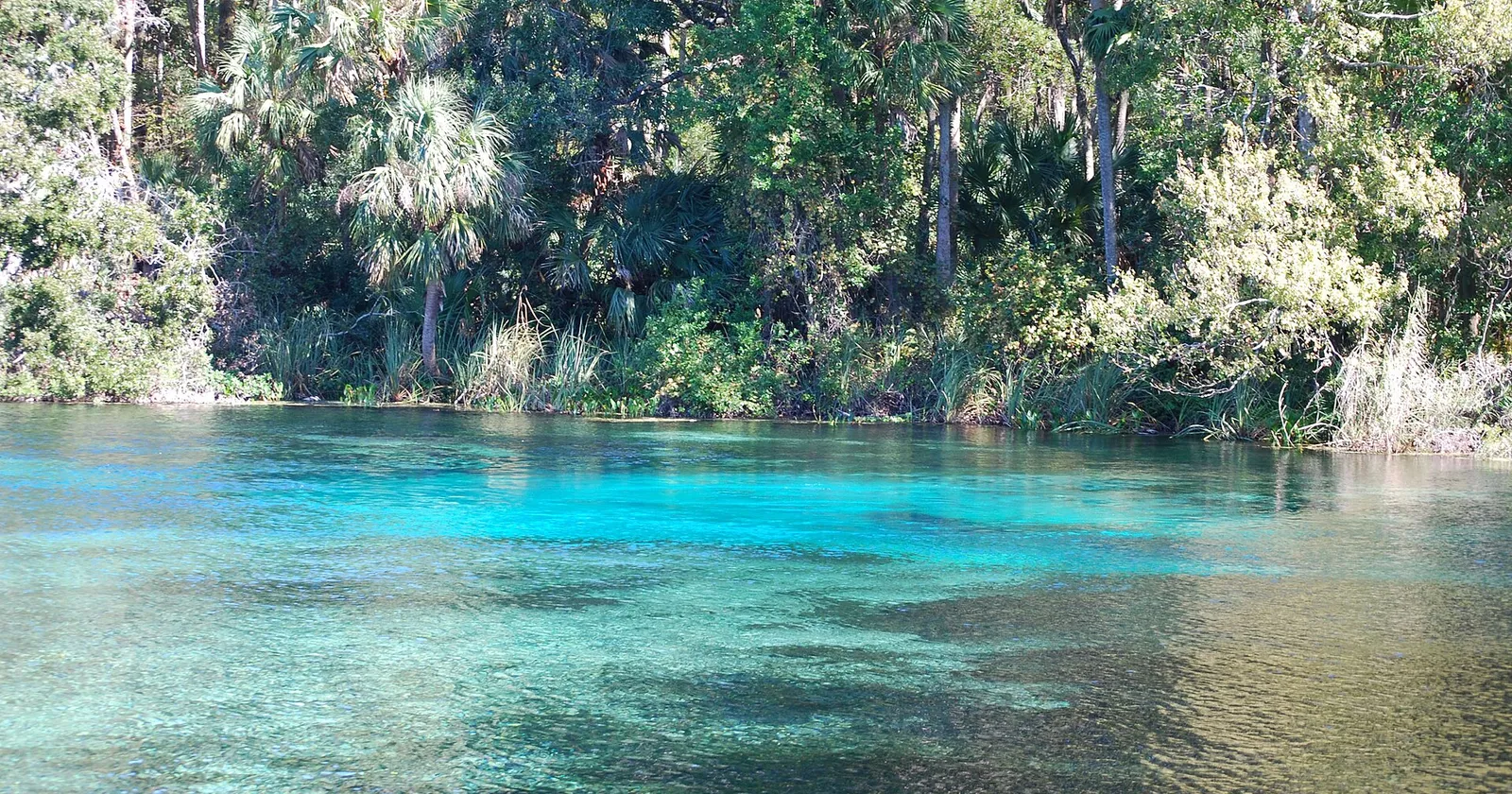
The main vent of Alexander Springs, Ocala National Forest. Photo: author not recorded, US National Archives, via Wikimedia Commons, public domain, cropped.

Key takeaways
- Wekiwa Springs, the park most Orlando visitors know, does not permit scuba or any other tank-assisted breathing system
- Blue Spring, the closest real dive at about 36 road miles, shuts its whole spring run for manatees from about mid-November to mid-March or later
- Alexander Springs is the one place in the Ocala National Forest where scuba is permitted, and it takes divers year-round at 25 to 28 feet
- Every gate writes its own cave rule: Devil's Den says no cave entry at all, while Ginnie Springs lets certified divers into a cavern that ends at a welded grate
- USGS gauges put Blue Spring at 72.9 to 74.7°F and Ginnie Spring at 72.0 to 72.9°F across two years, so the temperature is the one thing you need not plan around
Orlando scuba diving means springs, because the Atlantic is a 56-mile drive
Orlando has no coast. Port Canaveral sits about 56 road miles from downtown and Cocoa Beach about 60, so most Orlando scuba diving ends up in freshwater. The USGS counts 320 known springs in Florida, fed by the Floridan aquifer. Each one is a single site run by whoever owns the land.
That shapes the trip. You buy entry to one pool, not a boat ride to several reefs. Alexander Springs measures about 300 by 250 feet. Do not expect a week of varied sites close to town. Expect a day dive, a car, and a rule sheet that differs at every gate.
| Site | Road miles from downtown Orlando | Scuba rule | Depth on record | Winter | Diver entry |
|---|---|---|---|---|---|
| Wekiwa Springs State Park | 21 | Not permitted | Shallow | Open | $6 per vehicle, no diving |
| Blue Spring State Park | 36 | Open water to 50 ft; cavern and cave for certified cave divers | Vent slopes to about 40 ft | Closed about mid-Nov to mid-Mar or later | State park fee |
| Alexander Springs | 59 | Certified divers, open water only | 25 to 28 ft | Open | Per person at the gate |
| Devil's Den, Williston | 102 | Open water card; no cave entry | 50 ft | Open | $48 |
| Blue Grotto, Williston | about 102 | Lower chamber for trained cave divers | 40 ft basin, 50 ft upper cavern | Open | $61 with tax |
| Ginnie Springs, High Springs | 139 | Card required; lights limited by site | 50 ft in the Ballroom | Open | $36, or $28 for full cave |
Wekiwa Springs is Orlando's famous spring, and scuba is banned there
The state wrote this one plainly. “Use of scuba and other tank-assisted or tethered hookah breathing systems is not permitted,” says the Florida State Parks swimming page, and it adds that “due to the shallow nature of the spring, diving and jumping are not permitted.” Swimming and snorkeling are barred in Wekiwa Springs Run, Rock Springs Run and the Wekiva River too.
So leave the tanks at home. Wekiwa is a swim stop about 21 road miles out, with water the park puts at 72 degrees. It also fills up. The park says it reaches capacity during the week and on weekends in the summer months, and day-use guests need a reservation: arriving early cuts the wait but does not get you in. Entry is listed at $6 per vehicle, or $4 for a single occupant.
The state's October 2017 management plan sets the park's recreational carrying capacity at 3,220 users per day, with swimming and camping as its main uses. Scuba is not among them.
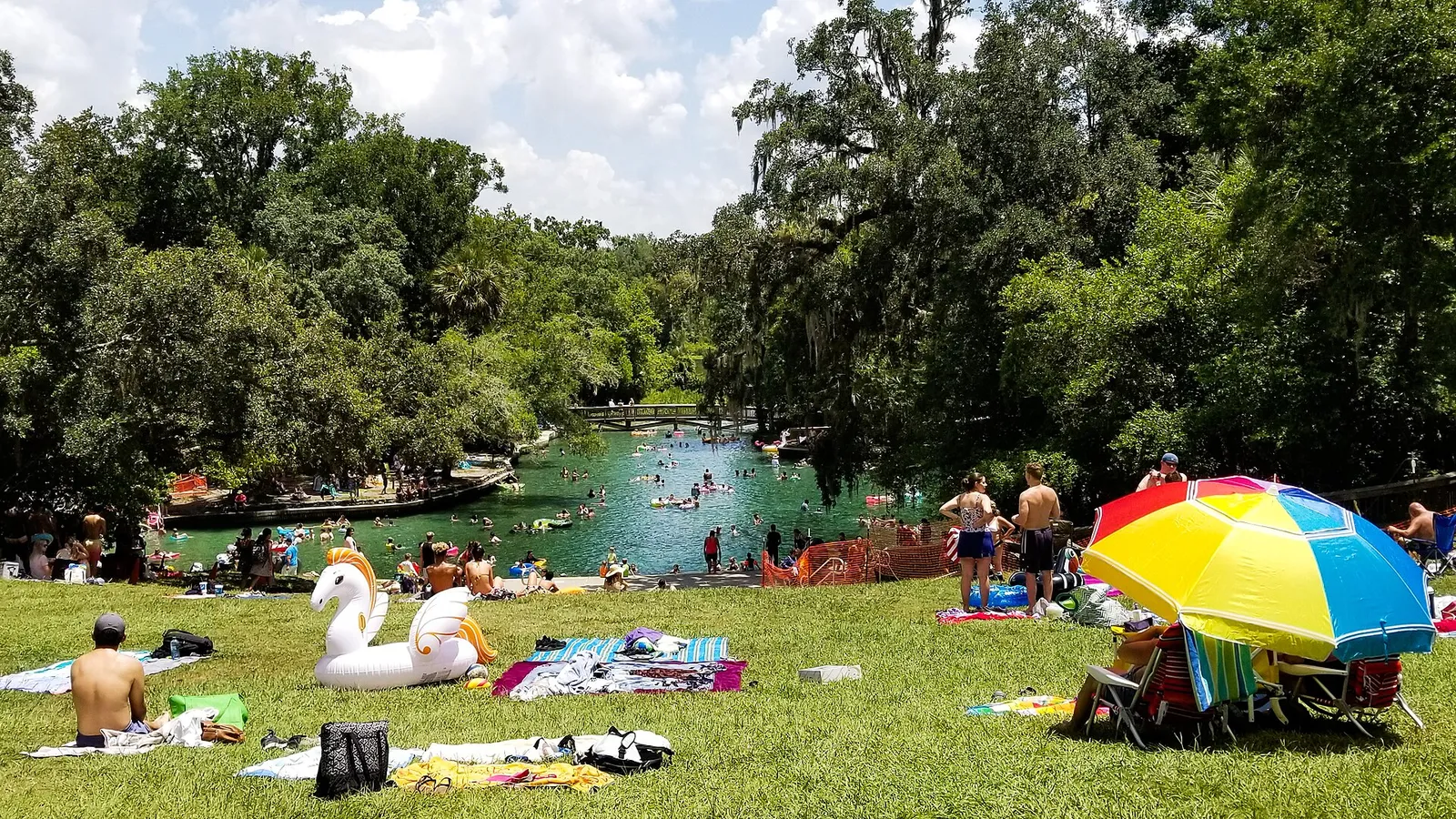

Blue Spring is the closest Orlando scuba dive, and manatees shut it every winter
Blue Spring State Park, at Orange City, is about 36 road miles from downtown. The St. Johns River Water Management District describes a first-magnitude spring with a pool about 135 by 100 feet. From a limestone ledge the vent slopes steeply to about 40 feet. A limited cave system has been mapped below it.
The park's rules are short. All divers must show proof of certification and have a buddy, with no solo diving. Open water divers are permitted to 50 feet. Cavern and cave diving is only for certified cave divers. Dives cannot run past 5 p.m., and scooters are not allowed. Day-use reservations are required here as at Wekiwa.
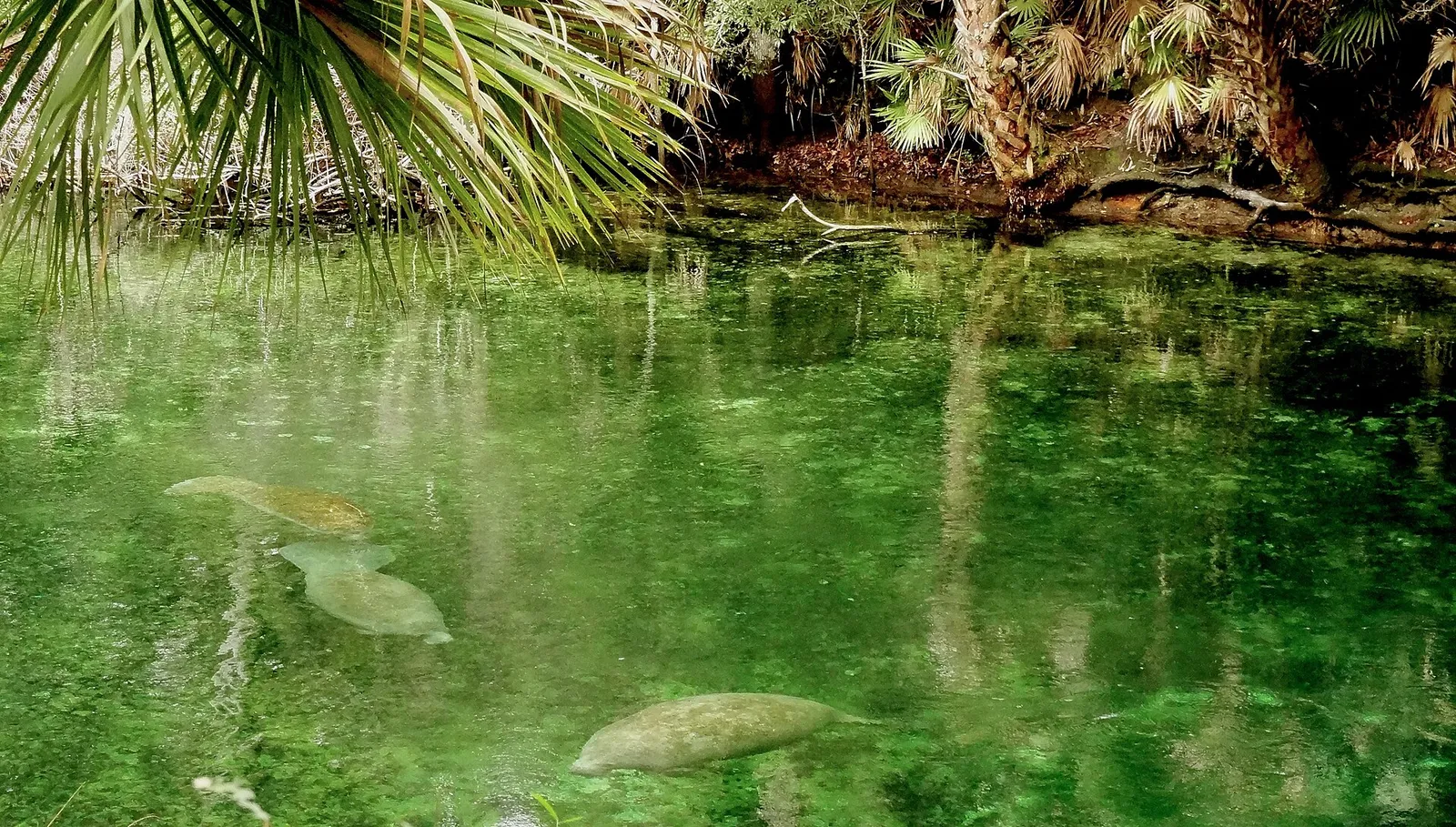
Then the season ends. The state's draft management plan says that since the winter of 2007, the park “closes the entire spring-run to water activities (swimming, tubing, diving, and paddling) from November 15th through March 15th,” and that the dates may begin sooner and end later depending on manatee presence.
The other official wordings differ, so plan on the wide version. The park's swimming page gives April 1 to November 14 as the open season. The water district says closed from mid-November to at least mid-March. In practice the 2025 closure began on November 21, and a park notice dated April 1, 2026 reopened the run. Swimming or diving with the manatees is not permitted, and the district adds that this is strictly enforced.
Do not expect a pristine cave either. The same plan calls the 0.17-acre aquatic cave in fair condition, with algae increasing and limestone “defaced by divers in recent years with etched words and symbols.” Park staff plan a photographic survey of the graffiti.

Alexander Springs is the Orlando open-water dive that stays open all year
For Orlando scuba diving on an open water card, start here. Recreation.gov says visitors can swim, snorkel and dive year-round, and that this is “the only place in the Ocala National Forest where scuba diving is permitted.” The site is about 59 road miles out. The Forest Service limits it to open water diving, and Recreation.gov to certified divers.
The water district describes the bottom falling away near the main vent to exposed limestone and boulders at about 25 to 28 feet. That is a shallow, gentle dive, and it suits a refresher. It will not hold an experienced diver for long.
Access has a summer catch. From Memorial Day through Labor Day, a visit on a Saturday, Sunday or holiday needs a Vehicle Access Reservation, and that ticket does not include the per-person entry fee paid at the gatehouse. Published fee figures for the forest's springs conflict, so ask for the current scuba rate before you drive.
Cave rules around Orlando change at every gate, so read them before you pay
No single state rule covers Orlando scuba diving. Rule 62D-2.014 of the Florida Administrative Code, the state park activities rule, says only that “no individual shall swim, bathe, or wade in any waters at such places designated as prohibited for such activity by the Division.” The words scuba, diving and cave do not appear in it. Each park's own conditions do the work.
The further north you drive, the stricter the card. At Wes Skiles Peacock Springs, about 179 road miles out, Florida State Parks limits cavern and cave diving to certified dive teams and allows open water divers only in Orange Grove Sink, without lights. Dive parties need at least two people. The state plan says unauthorized access by non-certified cave divers “must be prevented” for the resource and for visitor safety.
At Manatee Springs, open water divers may use the main spring and the Catfish Hotel, also without lights, and the Friedman Sink entrance requires full cave certification. Private sites write their own versions. Devil's Den is blunt: “Absolutely no cave entry!” Blue Grotto says its lower chamber, with no ambient light and no direct sight of the entrance, “is not for recreational divers using standard scuba gear.”
Ginnie Springs draws its line with lights. Certified divers of all levels may carry lights in the Ginnie Ballroom cavern, where a welded grate at a maximum 50 feet blocks the cave beyond. In the Devil's system, open water divers may not have lights or enter the overhead. Only registered cavern and cave divers may carry them, and if the rule applies to one buddy, it applies to both. Violators risk immediate expulsion.
A cavern certificate opens more of this map than a nitrox card does. Check your cover at the same time. Read what your dive insurance says about caves and overhead environments before you book, not after.
Devil's Den, Blue Grotto and Ginnie Springs are a long day from Orlando
These three carry the reputation, and none of them is near. Devil's Den, at Williston, is about 102 road miles out, and Blue Grotto shares the town. Ginnie Springs, by High Springs, is about 139. That is two to three hours each way before traffic, so an overnight beats a return drive. All three are private, with prices as listed on 4 November 2026.
Devil's Den is a 50-foot sinkhole under a cave roof, at $48 per diver with a full gear bundle at $60. Scuba is first come, first served, and only night dives take reservations. Your last dive must start 90 minutes before closing. Doubles, reels, rebreathers and side-mounts are out for recreational divers, and there are no nitrox fills.
Blue Grotto costs $61 with tax, plus $80 for a gear package without a light. It has an open basin to 40 feet with training platforms and an upper cavern to 50 feet with an air bell. It opens daily from 8 to 4. The operator says Devil's Den, Manatee Spring, Ginnie Springs and Paradise Springs are all under an hour away, which is the case for making Williston the base.
Ginnie Springs charges $36 a day for certified divers and $28 for full cave divers. Its rules bar solo diving, set a minimum scuba age of 12, and require registration by 5 p.m., or 4 p.m. in winter. The Ballroom basin is 15 feet deep before the cavern, and the operator says 35 million gallons a day push through the grate. Scuba rental packages run $65 to $75.
Spring water near Orlando runs a little warmer than the 72°F everyone quotes
Devil's Den says all Florida springs hold a constant 72 degrees. The USGS disagrees with “all”. Its fact sheet gives a statewide range of 66 to 97°F, averaging about 70 in north Florida and about 75 in central Florida, with the hottest water coming from deep in the aquifer. The figure you hear is a useful shorthand, not a law.
The gauges are better. Daily mean readings at Blue Springs near Orange City, from November 2024 to November 2026, ran from 22.7 to 23.7°C, which is 72.9 to 74.7°F. Ginnie Spring ran from 22.2 to 22.7°C, or 72.0 to 72.9°F. Neither moved more than about 2°F in two years. Your season does not change the water.
Dress for it on a long dive. Ginnie's rental rack stocks a full 7 mm wetsuit and a hood. The travel wetsuit guide is worth reading if you are packing a thin tropical suit.
Clarity is the variable. The state plan says water clarity at Blue Spring “varies between crystal clear and very cloudy,” and the water district notes that flow slows under backwater when the St. Johns River runs high. Call ahead after heavy rain.
Orlando's winter manatee closures read differently at Blue Spring and Crystal River
Winter Orlando scuba diving trips often pair springs with manatees, so the wording matters. Blue Spring's closure is a park decision with moving dates, covering the whole run. Crystal River, about 87 road miles from Orlando, has a federal rule with fixed dates and mapped areas.
Section 17.108(a) of title 50 of the Code of Federal Regulations lists manatee sanctuaries in Kings Bay and says: “All waterborne activities are prohibited in these areas during the period November 15-March 31 of each year.” The US Fish and Wildlife Service manages seven warm-water sanctuaries there. It adds that temporary closures at Three Sisters, House and Jurassic Springs, or wider sanctuary boundaries, may apply in extreme cold.
The biology behind both is the same. Manatees need water warmer than 68°F, and the St. Johns can drop into the 40 to 50°F range. A winter trip therefore loses Blue Spring first and keeps Alexander Springs and the Williston and High Springs sites, none of which lists a manatee closure.
Saltwater from Orlando means Brevard's deep artificial reefs or a train south
Orlando scuba diving in salt water takes more planning. The state's artificial reef list, dated March 6, 2026, files 72 Brevard County deployments. Of the 70 with a depth, 66 sit at 80 feet or more, with a range from 54 to 170 feet. That is deep for a casual day. The list records where the material went, not whether a charter runs there.
The newest, CCA Green Reef, went down on November 20, 2025: 111 pieces of concrete, 810 tons, in 83 feet, about 18 miles east of Port Canaveral by its coordinates. Shallower structures exist in Volusia County, where the Flagler culvert and barrier sites lie in 37 to 40 feet, about 46 miles from downtown Orlando in a straight line.
For a coral reef, take the train. Brightline runs from its station at Orlando International Airport, and the timetable feed gives 128 to 132 minutes to West Palm Beach, 165 to 174 to Fort Lauderdale and 205 to 216 to Miami. Fort Lauderdale's three reef lines, Miami's park wrecks and the West Palm Beach operators are all within a day of an Orlando base, and Key Largo is one step beyond them.
DiveQuest at Epcot is Orlando scuba diving in an aquarium, at $229 to $249
One dive needs no road trip at all. Disney's DiveQuest puts certified divers inside the Epcot aquarium. The listed price is $229 to $249 per person before tax. Proof of open water certification is required, guests must be at least 10, and the experience lasts 2 hours with about 40 minutes on the actual dive.
Treat it as a novelty. It is a good fit for a certified diver with a free afternoon in the theme parks, and a poor fit for anyone building dive experience. At that price, two days at Devil's Den cost less.
If a dive goes wrong near Orlando: 911 first, then DAN, then a chamber
Call 911 first. DAN's own guidance is to call 911 or get the injured person to the nearest medical facility, and then contact the DAN Emergency Hotline on +1-919-684-9111, staffed 24 hours a day, 365 days a year. Put the number in your phone before you leave. Several of these springs sit far from town.
Orlando does have a chamber. AdventHealth Orlando describes its hyperbaric center as holding the largest privately owned multiplace chamber in Florida, with a line on 407-303-1549, and AdventHealth's hyperbaric page names decompression sickness in scuba divers among the conditions it treats. The same pages describe outpatient sessions, and they do not promise overnight dive-emergency cover. Let the emergency physician and DAN choose the chamber.
Orlando works as a remote-work dive base for people with a car, and few others
As a base for Orlando scuba diving, the city trades a beach for reach. The airport has a train station, downtown has coworking at Venture X and Serendipity Labs, and six spring sites sit within a tank of fuel. Wekiwa is the swim, Alexander is the weekday dive, and Williston is the weekend. Alexander's vehicle reservations and Wekiwa's capacity warnings both fall in summer, so winter is the easier season everywhere except Blue Spring.
Skip Orlando if you want reef fish, boats or a walk from your door to the water. Skip it if you will not rent a car. Every natural site here is a drive. New divers should note that Devil's Den offers no lessons of its own and that every site above wants a card or an instructor. Solo divers are out at Blue Spring, Devil's Den and Ginnie Springs.
Four dive businesses sit on our Orlando list, and two are filed outside Orlando
The Orlando operator list holds 4 businesses, compiled on 20 September 2026: three published by SSI in its register of affiliated centers and one, Seminole Scuba, a Green Fins digital member that has only evaluated itself. All four publish a website. SSI files Castaway SCUBA Adventures under Oviedo, about 18 road miles out, and Isla Divers under Casselberry, about 12.
Prices are thin. Castaway's own site, read on 28 October 2026, lists an SSI Open Water course at $495 in a scheduled group or $799 privately, with springs entry included and training locations set on the first day. SSI rates Isla Divers and Divers Direct Orlando for freediving and extended range, and Isla also for rebreather and mermaid programs. A listing says nothing about whether a course runs this month. Which registers can be read sets out the limits of each one.
FAQ: Orlando scuba diving
Can you go scuba diving in Orlando itself?
Barely. The well-known option is an aquarium: Epcot's DiveQuest takes certified divers in for about 40 minutes, at $229 to $249 before tax. The springs sit outside the city: Blue Spring is about 36 road miles from downtown Orlando, Alexander Springs about 59, and Port Canaveral on the Atlantic about 56.
Is scuba allowed at Wekiwa Springs near Orlando?
No. Florida State Parks says the use of scuba and other tank-assisted or tethered hookah breathing systems is not permitted at Wekiwa Springs, and it bars diving and jumping because the spring is shallow. Swimming and snorkeling are also barred in the spring run and the Wekiva River.
When does Blue Spring close to scuba divers from Orlando?
From about mid-November to mid-March or later. The state's draft management plan gives November 15 through March 15 and says the dates may shift with manatee presence. The park's swimming page gives April 1 to November 14 as the open season. In 2025 the closure took effect on November 21.
Can an open water diver enter a cavern near Orlando?
It depends on the gate. Blue Spring limits open water divers to 50 feet and keeps cavern and cave diving for certified cave divers. Devil's Den says absolutely no cave entry. Ginnie Springs lets certified divers carry lights into its Ballroom cavern, which ends at a welded grate, but bars open water divers from the Devil's system overhead.
How cold are the springs for scuba diving near Orlando?
About 72 to 75 degrees Fahrenheit all year. USGS daily means at Blue Springs near Orange City ran from 72.9 to 74.7 degrees between November 2024 and November 2026, and Ginnie Spring ran from 72.0 to 72.9. Ginnie Springs rents full 7 mm wetsuits to scuba divers.
Where is the nearest hyperbaric chamber to Orlando?
AdventHealth Orlando runs a hyperbaric center and lists 407-303-1549, but its pages describe outpatient treatment and do not promise overnight dive-emergency cover. In an emergency call 911 first, get the diver to the nearest medical facility, then call the DAN Emergency Hotline on +1-919-684-9111.
Note: Conditions, safety guidance and regulations change. Verify current information with official sources, including the dive operator, the park authority and the relevant government department, before you travel or dive. Cave and cavern diving without the matching training can kill you.
Founder of NOMADREEF and a former digital nomad. This guide is sourced from the references below; conditions, prices and rules change, so verify current details, and follow qualified local guidance and safety briefings. About the author · LinkedIn ↗
Sources
All read 4 November 2026 unless stated. The floridastateparks.org, fs.usda.gov and adventhealth.com pages refuse automated readers, so their wording was read from search-engine extracts of those pages and not from the pages themselves; check them in a browser before relying on them.
- Wekiwa Springs rules, capacity and fee (primary, read as search extracts). The scuba and hookah ban, the ban on diving and jumping, the barred runs, the 72-degree figure and the summer capacity warning: Swimming at Wekiwa Springs. $6 per vehicle, $4 single occupant: Hours and Fees. Reservations at Wekiwa and Blue Spring: Day-Use Entry Reservation Information. Carrying capacity of 3,220 users per day: Wekiva River Basin State Parks Approved Unit Management Plan, October 2017 (PDF), page 178 of the plan.
- Blue Spring diving rules and season (primary, read as search extracts). Certification, buddy, 50 feet, cavern and cave limits, 5 p.m., no scooters: Experiences and Amenities. April 1 to November 14: Swimming at Blue Spring. Closure effective November 21, 2025, and the notice of April 1, 2026: Blue Spring State Park.
- Blue Spring closure wording and cave condition (primary). Florida Department of Environmental Protection, Blue Spring State Park draft unit management plan, July 2022 (PDF), plan pages 35, 44 and 45: the closure since the winter of 2007, the 68-degree threshold, the graffiti, clarity between crystal clear and very cloudy. This is a draft; the adopted text was not reached.
- The springs as described by the water district (primary). St. Johns River Water Management District, Blue Spring (Volusia County) (pool size, 40-foot vent, mapped cave, backwater, closed mid-November to at least mid-March, diving with manatees not permitted) and Alexander Springs (pool over 300 by 250 feet, 25 to 28 feet).
- Alexander Springs access (primary). Recreation.gov, Alexander Springs Recreation Area: year-round diving, only scuba site in the forest, certified divers, the Vehicle Access Reservation. Open water diving only: US Forest Service, Alexander Springs Recreation Area, read as a search extract. Fee figures conflict ($5.50, $6.50 and $13 in undated listings) and none is printed here.
- The state park rule (primary). Rule 62D-2.014(7)(a), Florida Administrative Code, last amended 4-30-07, text at Cornell LII. Other rules in chapter 62D-2 were not read.
- Peacock and Manatee Springs cave rules (primary). Cave Diving at Peacock Springs and Manatee Springs, Experiences and Amenities, read as search extracts; Wes Skiles Peacock Springs park chapter (PDF), plan page 23.
- Ginnie Springs (operator, for its own rules and prices). Dive rules and rentals, Admission and pricing, Ginnie Ballroom, Devil's Spring System. The 35 million gallons a day is the operator's figure.
- Devil's Den and Blue Grotto (operators, for their own rules and prices). Devil's Den, Scuba Dive, FAQ, home page (the 72-degree statement); Blue Grotto, pricing.
- Water temperature (primary). USGS daily mean water temperature, provisional, 1 November 2024 to 3 November 2026: station 02235500, Blue Springs near Orange City, 679 days, and station 02322400, Ginnie Spring, 732 days. Fahrenheit conversions are ours. The statewide range, regional averages and count of 320 springs: USGS Fact Sheet FS-151-95 (PDF).
- Crystal River (primary). 50 CFR 17.108(a), text at Cornell LII; US Fish and Wildlife Service, Crystal River refuge, Internet Archive copy of 16 September 2026.
- Artificial reefs (primary). Florida Fish and Wildlife Conservation Commission, State of Florida Artificial Reef Locations, as of March 6, 2026 (PDF). Counts of the BE entries and distances from the listed coordinates are our calculations.
- Trains (primary). Brightline GTFS timetable feed, 168 trips from Orlando in the feed; schedules change.
- DiveQuest (primary). Walt Disney World, EPCOT DiveQuest.
- Emergencies and chamber (primary). Divers Alert Network, Emergency Assistance. AdventHealth Orlando, Wound Care and Hyperbaric Medicine and AdventHealth, Hyperbaric Oxygen Therapy, read as search extracts. “Largest” is the hospital's own claim. Call to confirm the emergency arrangement.
- Road miles (calculated). From downtown Orlando at 28.5383°N, 81.3792°W, routed with OSRM on OpenStreetMap data, rounded. Spring positions are USGS or OpenStreetMap points. Blue Grotto's figure is taken from Devil's Den in the same town.
- Coworking. Venture X Downtown Orlando and Serendipity Labs Orlando Downtown, the operators' own pages.
- The four businesses. Four dive businesses on the Orlando operator list, compiled 20 September 2026: three in the SSI register of affiliated centers, filed under Oviedo, Orlando and Casselberry; one Green Fins digital member, self-evaluated, read 14 August 2026. Castaway's prices are recorded on the same list from the operator's site, read 28 October 2026.
- Left out. Orlando rent and internet speeds, because no primary figure was reached. Kelly Park and Rock Springs rules, because the Orange County site did not resolve. Seminole Scuba's town, because its site refused the request. Visibility in feet, which appears only in operator and forum material.