Kota Kinabalu Diving: The Marine Park Three Kilometres Offshore
 by Yannick Schroth
Sep 19, 2026
10 min read
by Yannick Schroth
Sep 19, 2026
10 min read
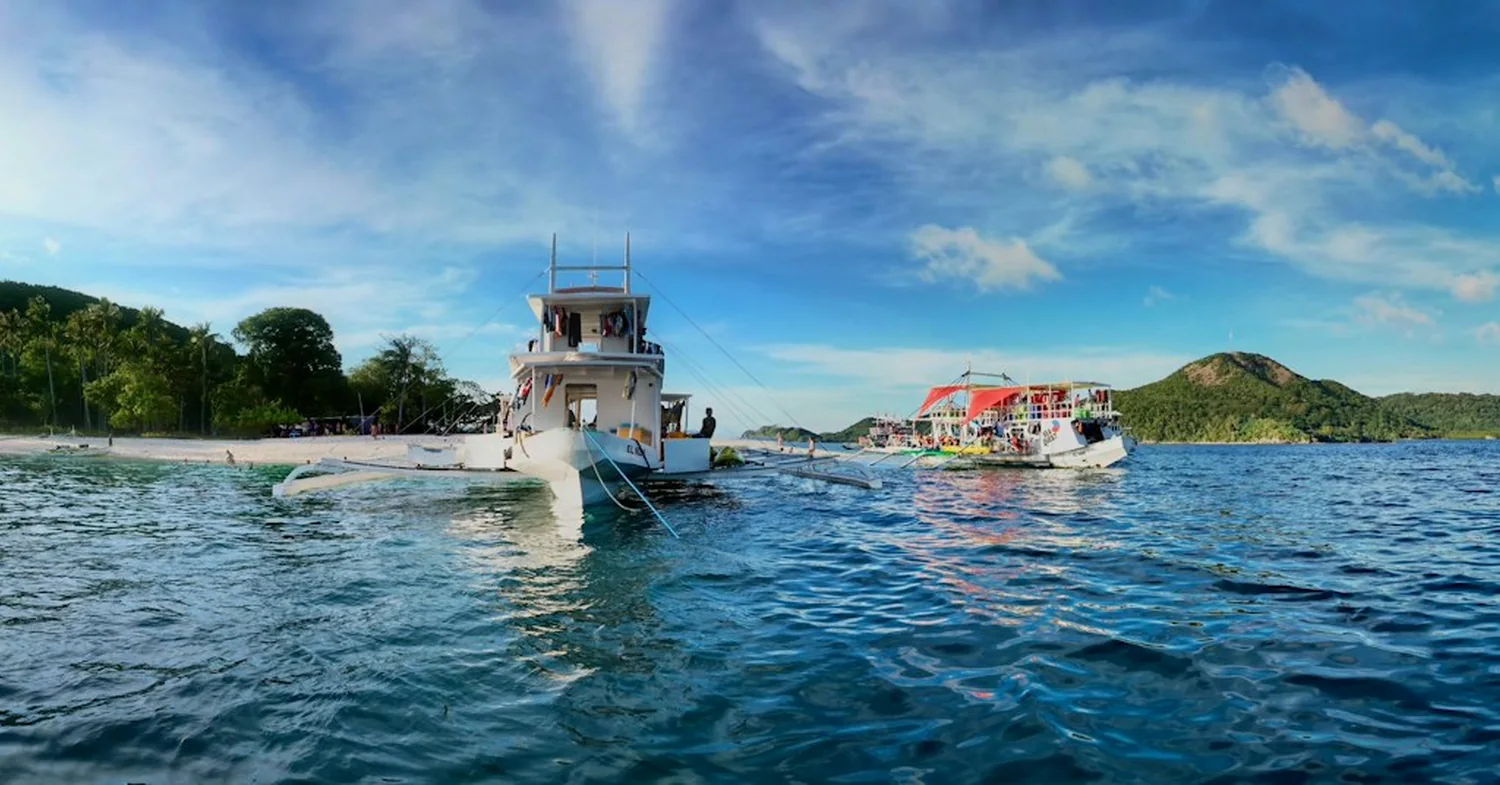
Photo: Unsplash (free licence).
Key takeaways
- Tunku Abdul Rahman Park sits 3 km off Kota Kinabalu in Gaya Bay: five islands, about 50 square kilometres, gazetted in 1974, open 8am to 5pm
- Sabah Parks charges a non-MyKad diver RM25 to enter and RM100 to dive, per person per day, against RM100 plus RM350 at Sipadan Island Park
- Sipadan is not reachable from Kota Kinabalu in a day: roughly 50 minutes of flying to Tawau, about 90 minutes of road to Semporna, then boats
- The northeast monsoon soaks the far side of Sabah; the coastal northwest around Kota Kinabalu peaks for rain in October instead
- Coral is protected by section 48 of the Parks Enactment 1984: up to five years of imprisonment or RM500,000 for a first offence
Tunku Abdul Rahman Park: five islands three kilometres off Kota Kinabalu
Most dive destinations begin with a transfer. This one begins with a walk to the waterfront. Sabah Parks puts Tunku Abdul Rahman Park three kilometres offshore in Gaya Bay, gazetted in 1974 and covering about 50 square kilometres, the large majority of it water rather than land.
Five islands carry the park. Gaya is the biggest at around 15 square kilometres, close enough to the city that its forest is part of the skyline. Manukan is the second largest and holds the park’s administrative centre. Sapi sits beside Gaya, Mamutik is the smallest, and Sulug is the furthest out and the quietest. Gates open at 8am and close at 5pm.
One conservation ticket covers the park for the day rather than a single island, so a boat that stops at two or three of them is still one entry fee. Sabah Tourism puts the crossing from the city jetty at about 15 minutes. That number is the whole argument for diving here: a dive day off Kota Kinabalu costs a morning, and nothing else.
Kota Kinabalu against Sipadan: why the two are not the same trip
Almost everyone arriving in Sabah with a dive bag is weighing these two places against each other, and the comparison is not close. Sipadan lies off Semporna, on the opposite coast. From Kota Kinabalu that is a flight of roughly 50 minutes to Tawau, about 90 minutes by road to Semporna, and then a boat of 45 minutes to an hour to Mabul or Kapalai, where you actually sleep.
Then there is the queue. Sabah Parks caps daily entry to Sipadan and hands the allocation to licensed operators rather than to individuals, which is why the island is sold as a package with a minimum number of nights instead of as a day ticket. Reported daily figures differ depending on whether snorkellers are counted, so any single number is worth confirming with the operator holding the allocation. The Semporna and Sipadan guide covers that system in detail.
The fee schedule makes the gap concrete. A non-MyKad diver pays RM100 to enter Sipadan Island Park and a further RM350 to dive it, per person per day. The same diver pays RM25 and RM100 in Tunku Abdul Rahman Park. That is RM450 against RM125, before a boat, a bed or a tank enters the arithmetic.
So the useful framing is not better or worse. Sipadan is a wall, a permit and a week. Kota Kinabalu is a bay you can dive on a Tuesday between two work calls. They reward completely different expectations, and the trip that tries to be both usually ends up rushing one.
What Sabah Parks charges for a day’s diving in Tunku Abdul Rahman Park
The numbers are not an operator estimate. They sit in the Fees (Sabah Parks) Regulations 2023, made under the Parks Enactment 1984 and in operation since 1 January 2023, and the Fourth Schedule is the part that governs this park.
Entry, which the schedule calls the entrance or conservation fee, is RM25 per person per day for a non-MyKad adult aged 18 and above, and RM20 for a non-MyKad visitor aged 17 or below or 60 and above. MyKad holders pay RM8 as adults and RM5 between 13 and 17, while children of 12 and below, senior citizens and disabled persons are admitted free.
Diving is then charged again. The activity table prices scuba diving at RM100 per person per day for non-MyKad holders and RM50 for MyKad holders. A foreign diver’s park bill is therefore RM125 a day, before the boat, the guide, the tanks or anything else.
There is a second, stranger line worth knowing. The schedule prices Kuraman scuba diving separately at RM200 for non-MyKad holders and RM100 for MyKad holders, double the general rate, for the vessel scuttled inside the park in 2017. Camping is RM20 a day for a foreign adult and a barbecue is RM20 a head for everyone. Whether a quoted dive package includes any of this is the thing to settle before paying a deposit.
Jesselton Point, the South Jetty and the boats to the Kota Kinabalu islands
The island boats leave from the city, which is the part that makes the park work as a half-day. Jesselton Point Ferry Terminal is the usual departure point, and right now it is not where the maps put it: the terminal states that it is operating from South Jetty at Kota Kinabalu Port while the original building is upgraded.
Published return fares go by the number of islands rather than by distance. An adult pays RM48 for one island, RM58 for two, RM68 for three and RM78 for four, with children RM5 less on each line. That covers the return transfer, a life jacket and a safety briefing. The conservation fee is collected separately and is not part of the ticket.
Boats run from 8am to 4pm, and the last return boat is the 4pm. Sabah Parks keeps the park open until 5pm, so the timetable that actually ends the day is the ferry’s, not the park’s. Dive centres generally run their own boats to their own sites, which is a different arrangement from the island-hopping shuttle and worth confirming rather than assuming.
Diving Tunku Abdul Rahman Park: wrecks, macro and a working bay
The best-known dive in the park is a deliberate one. The former KM Kuraman, a patrol vessel that spent decades in Malaysian naval and maritime service under the earlier name KD Renchong, was scuttled upright on 17 November 2017 in about 23 metres of water between Manukan, Sulug and Mamutik, and has since been renamed the Mamutik wreck. It now carries soft coral, barracuda, juvenile blacktip reef sharks, ghost pipefish and frogfish.
It is not the only steel on the bottom. Sabah Tourism points divers at the Mari Mari wrecks off the Sepanggar islands, lying across a range of roughly 2 to 27 metres, and at sunken Vietnamese vessels in the same water. Between the wrecks, the park is sand, rubble and patch reef rather than dramatic topography. Nobody comes here for a drop-off.
That bottom is the point. Sabah Tourism’s own account of the park reads as a macro list: tiger-tail and half-spined seahorses, blue-ringed octopus, marbled frogfish, pipefish, squid and nudibranchs, with green and hawksbill turtles, spotted eagle rays, barracuda and trevally over the reef. The same article places whale sharks in the park between November and February.
Set expectations on the water column rather than the life. This is a bay beside a working port with river outflow into it, and clarity swings with rain and tide. No official visibility series is published for Gaya Bay, and operator accounts scatter across a wide band, so the sensible plan is to book the macro dives you actually want and treat a clear day as a bonus rather than a promise.
Mantanani and Pulau Tiga: the long days out of Kota Kinabalu
Two further sites get sold from Kota Kinabalu, and both are longer than the brochure suggests. Sabah Tourism describes the route to Mantanani as a two-hour drive to the Kampung Kuala Abai jetty at Kota Belud, then about an hour on a speedboat. As a day trip that means a pre-dawn pickup, two or three dives and a late return, which is why an overnight on the island is the more common arrangement for divers.
Mantanani also sits outside the park system. The Sabah Parks fee schedule names eight parks and Mantanani is not among them, so there is no conservation counter on the jetty and the operator’s price is the entire price. That cuts both ways: less to pay, and no park enforcement in the water.
Pulau Tiga is the opposite case. It is a gazetted park, declared in 1978 and covering 158 square kilometres of which most is sea, made up of Pulau Tiga itself, Pulau Kalampunian Besar and Pulau Kalampunian Damit. The last of those is the snake island, a breeding ground where thousands of the amphibious sea krait Laticauda colubrina come ashore to mate and nest.
Access is from Kuala Penyu, south of Kota Kinabalu on the Klias Peninsula, rather than from the city jetty. Entry is RM20 a day for a non-MyKad adult and RM12 for a visitor of 17 or below, and the volcanic mud bath that made the island famous is charged on top at RM10 for the first three hours. Diving and snorkelling over the reefs is part of the offer, though the island has always been better known above water than below it.
The northeast monsoon, and why Sabah’s west coast reads differently from its east
The most repeated planning mistake here is importing the Semporna calendar. These are opposite coasts of one state, and they do not share a season.
The Malaysian Meteorological Department describes the northeast monsoon as the wet season for exposed coasts, and in Sabah the exposed coast is the northeast one, which takes heavy rain spells and peaks for rainfall in January. Kota Kinabalu faces the other way. For coastal northwest Sabah the department puts the primary rainfall maximum in October and a secondary maximum in June, which is a different shape of year entirely.
Wind keeps its own schedule. The department notes that between April and November, when typhoons develop over the west Pacific and track west across the Philippines, southwesterly winds over the northwest coast of Sabah and Sarawak can strengthen to 20 knots or more. So the choppy mornings off Kota Kinabalu are a distant-storm effect falling in what the rest of the region treats as the dry half of the year.
None of that closes the park. It changes what a cancelled morning costs. A blown-out day in Semporna can eat the only Sipadan permit of a trip. A blown-out day in Gaya Bay costs a boat ride you can take again tomorrow, which is the quiet advantage of diving 15 minutes from where you sleep.
What the Parks Enactment forbids in the water off Kota Kinabalu
Sabah runs its parks under the Parks Enactment 1984, and section 48 is a list of things nobody may do inside one without the written permission of the Board, the Director or an authorised Park Officer. Several of them describe ordinary diver carelessness rather than deliberate harm.
Paragraph (b) makes it an offence to cut, damage, remove, injure, destroy or bomb any coral, whether living or dead. The Enactment defines coral broadly, as the living polyps or the external skeleton, hard or soft, dead or alive, individually or in colony, and it also folds coral into its definition of an animal. A first offence under that paragraph carries up to five years of imprisonment or a fine up to RM500,000, or both, rising to seven years or RM750,000 on a second.
A tier below sit the paragraphs that catch the rest of a bad dive. It is an offence to hunt, kill, injure, capture or disturb any animal, or to take or destroy an egg or a nest, and a separate one to remove any animal or vegetation from a Park, alive or dead. Those carry up to a year of imprisonment or RM50,000 the first time.
One clause catches a camera rather than a hand. Taking film, video or still photographs for commercial purposes inside a Park is on the same list and also needs written permission, which matters if the footage is going anywhere that pays. A souvenir shell and a stock-library clip sit under the same section in Sabah.
The 12 dive businesses in Kota Kinabalu, and what a listing settles
Twelve dive businesses in Kota Kinabalu appear in the sources this site holds. Nine are published by SSI in its register of affiliated centres, read on 13 September 2026, and three are Green Fins members, read on 15 August 2026, every one of those three assessed in person. Nine of the twelve publish a website at all.
Green Fins is the only source in this directory where a trained assessor physically visited the business and scored it. It is voluntary, so a business outside it is outside a scheme rather than below a standard. That distinction is worth stating plainly, because a membership badge gets read as a quality ranking and it is not one.
What a register entry settles is narrow. It says the body lists the business, on the date given. It says nothing about the teaching, the kit, the boats, the briefings or whether the centre is trading this season. Every entry on the Kota Kinabalu operator list links back to the page it was read from, so the affiliation can be checked at the source instead of taken from here.
The obvious cross-check is the one Malaysia does not make available. Licensing plainly exists, since Sabah Parks allocates Sipadan permits to licensed operators and to nobody else, but no readable list of licensed dive operators comes out of it: POSSI answers a plain request with HTTP 403, and the marine park directory serves almost nothing. The same pattern in other countries is logged on which registers can be read, with the date each one was asked.
FAQ: scuba diving in Kota Kinabalu
Is diving in Kota Kinabalu worth it if the trip already includes Sipadan?
Yes, but for the opposite reasons. Tunku Abdul Rahman Park is three kilometres offshore, so a dive day costs a morning rather than a week, and the draw is small: seahorses, frogfish, nudibranchs and a scuttled patrol vessel over sand and rubble. Sipadan is a wall with pelagics and a permit queue. Divers who arrive in Kota Kinabalu expecting a rehearsal for Sipadan are usually disappointed, and divers who arrive expecting macro are usually not.
What does Sabah Parks charge to dive in Tunku Abdul Rahman Park?
Two separate fees under the Fees (Sabah Parks) Regulations 2023. A non-MyKad adult pays RM25 per person per day to enter the park, and scuba diving carries a further activity fee of RM100 per person per day. Diving the vessel the schedule calls Kuraman is priced separately again, at RM200. Malaysians pay RM8, RM50 and RM100 for the same three lines.
How far is Sipadan from Kota Kinabalu?
Far enough that it is a different trip, not an excursion. Sipadan sits off Semporna on the opposite coast of Sabah, reached by a flight of roughly 50 minutes from Kota Kinabalu to Tawau, about 90 minutes by road to Semporna, and then a boat. Operators normally sell it as a multi-night package, because the permit rotation is tied to how many nights are booked.
When is the best time of year to dive in Kota Kinabalu?
The Kota Kinabalu calendar is not the Semporna calendar. The Malaysian Meteorological Department puts the heavy northeast monsoon rain of December to March on the northeast coast of Sabah, while the coastal northwest, where Kota Kinabalu sits, has its main rainfall maximum in October and a second one in June. Distant typhoons crossing the Philippines between April and November can push southwesterly winds over northwest Sabah past 20 knots. No month is closed, and the crossing is short enough that a rough morning costs only a morning.
Can you learn to dive in Kota Kinabalu?
The conditions suit it. The park islands are about 15 minutes from the city jetty, the sites are shallow sheltered bay dives, and courses run out of both the city and the island centres. The cost that surprises people is the park counter: entry and the scuba activity fee are charged per person per day, so a four-day course carries four days of both unless the operator has folded them into the quoted price.
How do you get to the Tunku Abdul Rahman Park islands from Kota Kinabalu?
By boat from the city waterfront, in about 15 minutes. Jesselton Point Ferry Terminal, the usual departure point, is operating from South Jetty at Kota Kinabalu Port while the original terminal is upgraded. Its published return fares run from RM48 for an adult visiting one island to RM78 for four, boats operate from 8am to 4pm, and the conservation fee is collected separately. Dive centres generally run their own boats instead.
Is Mantanani a realistic day trip from Kota Kinabalu?
It is done daily, but it is a long day. Sabah Tourism describes the route as a two-hour drive to the Kampung Kuala Abai jetty at Kota Belud followed by about an hour on a speedboat, which means a pre-dawn pickup and a late return for two or three dives. Mantanani is not one of the eight parks named in the Sabah Parks fee schedule, so there is no park counter and the operator price is the whole price.
How many dive schools are there in Kota Kinabalu?
Twelve dive businesses in Kota Kinabalu appear in the sources behind this site. Nine are published by SSI in its register of affiliated centres, read on 13 September 2026, and three are Green Fins members, read on 15 August 2026, each of those three assessed in person. Nine of the twelve publish a website. A register entry says the body lists the business on the date given, and nothing about the teaching, the kit or the boats.
What are the rules about touching coral in the Kota Kinabalu marine park?
They are criminal rules, not guidelines. Section 48 of the Parks Enactment 1984 makes it an offence to cut, damage, remove, injure, destroy or bomb any coral, living or dead, inside a Park without written permission, and a first offence carries up to five years of imprisonment or a fine up to RM500,000. Disturbing an animal, or removing anything alive or dead, sits one tier down at up to a year or RM50,000. Commercial filming and photography inside a Park also needs permission.
Founder of NOMADREEF and a former digital nomad. This guide is sourced from the references below; conditions, prices and rules change, so verify current details, and follow qualified local guidance and safety briefings. About the author · LinkedIn ↗
Sources
- The park itself. Five islands (Gaya, Sapi, Manukan, Mamutik, Sulug) about 3 km offshore in Gaya Bay, gazetted 1974, roughly 50 square kilometres, open 8am to 5pm, with Manukan carrying the administrative centre: Sabah Parks, Tunku Abdul Rahman Park. Read 19 September 2026.
- Every ringgit figure for the parks. Fees (Sabah Parks) Regulations 2023 (G.N.S. 4 of 2023), made under the Parks Enactment 1984 and deemed in operation from 1 January 2023. Fourth Schedule, Tunku Abdul Rahman Park: entrance RM25 and RM20 non-MyKad, RM8 and RM5 MyKad; scuba diving RM100 non-MyKad and RM50 MyKad per person per day; Kuraman scuba diving RM200 and RM100; camping RM20 non-MyKad. Sixth Schedule, Pulau Tiga Park: RM20 and RM12 non-MyKad, mud bath RM10 for the first three hours. Seventh Schedule, Sipadan Island Park: entrance RM100 non-MyKad, scuba diving RM350 non-MyKad. Published by the Sabah Attorney-General’s Chambers: Fees (Sabah Parks) Regulations 2023 (PDF). Read 19 September 2026. The copy published by the Sabah Attorney-General’s Chambers carries a “for reference only” stamp dated July 2023, so treat these as the schedule as published rather than as a rate confirmed on the day you book.
- What is forbidden underwater, and the penalties. Parks Enactment 1984, section 48: coral offences under paragraph (b) at up to five years of imprisonment or RM500,000 for a first offence and seven years or RM750,000 thereafter; disturbing or removing animals and commercial filming under paragraphs (d), (g) and (o) at up to one year or RM50,000; coral defined in section 2 and included within the definition of an animal. Published by the Sabah Attorney-General’s Chambers: Parks Enactment 1984 (PDF). Read 19 September 2026.
- Pulau Tiga Park. Declared 1978, 158 square kilometres of which most is sea, three islands including Pulau Kalampunian Damit as a breeding ground for Laticauda colubrina, administered from Pulau Tiga with a branch office at Kuala Penyu: Sabah Parks, Pulau Tiga Park. Read 19 September 2026.
- Mantanani, and the dive sites in the park. The state tourism board gives the Mantanani route as a two-hour drive to the Kampung Kuala Abai jetty at Kota Belud plus about an hour by speedboat, and its guide to the park names the Mari Mari wrecks at 2 to 27 metres, the wreck off Mamutik, a 15-minute crossing from the jetty, the macro species list and whale sharks between November and February: Sabah Tourism Board, Mantanani Island and Sabah Tourism Board, macro diving in Tunku Abdul Rahman Park. Read 19 September 2026.
- The monsoon, by coast. Heavy northeast monsoon rain spells on exposed coasts including the northeast coast of Sabah, with the December to March maximum there; a primary rainfall maximum in October and a secondary one in June for coastal northwest Sabah; and southwesterly winds over northwest Sabah and Sarawak strengthening to 20 knots or more between April and November, when typhoons cross the Philippines: Malaysian Meteorological Department, general climate of Malaysia. Read 19 September 2026.
- The boats and the jetty. Return fares of RM48, RM58, RM68 and RM78 for an adult visiting one to four islands (children RM5 less on each), inclusive of return transfer, life jacket and safety briefing, with the conservation fee charged separately; boats 8am to 4pm and the last return at 4pm; and the terminal currently operating from South Jetty at Kota Kinabalu Port while the original building is upgraded: Jesselton Point Ferry Terminal, schedule and fares. Operator-published, read 19 September 2026.
- The Kuraman wreck, and the Sipadan quota. The scuttling of KM Kuraman (formerly KD Renchong) upright in about 23 metres between Manukan, Sulug and Mamutik on 17 November 2017, and its later renaming as the Mamutik wreck, is reported by the dive press rather than by Sabah Parks: Divernet, read 19 September 2026, and triangulated against operator dive-site pages. The daily Sipadan entry cap is triangulated in the same way rather than taken from a primary figure: published numbers differ according to whether snorkellers are counted, so no single figure is stated here. Sabah Parks publishes the Sipadan Island Park fees cited above, not the quota.
- The twelve businesses. Nine from the SSI register of affiliated centres, read 13 September 2026, and three from the Green Fins member register, read 15 August 2026, each of those three assessed in person; nine of the twelve publish a website. From divessi.com and the Green Fins member register. Each entry links to the page it was read from on the Kota Kinabalu operator list, and the absence of a Malaysian licence list is logged on which registers can be read.