Ibiza Diving: Four Marine Reserves, the Gorgonian Walls of Es Vedrà and a Wreck in 45 Meters of Water
 by Yannick Schroth
Sep 25, 2026
14 min read
by Yannick Schroth
Sep 25, 2026
14 min read
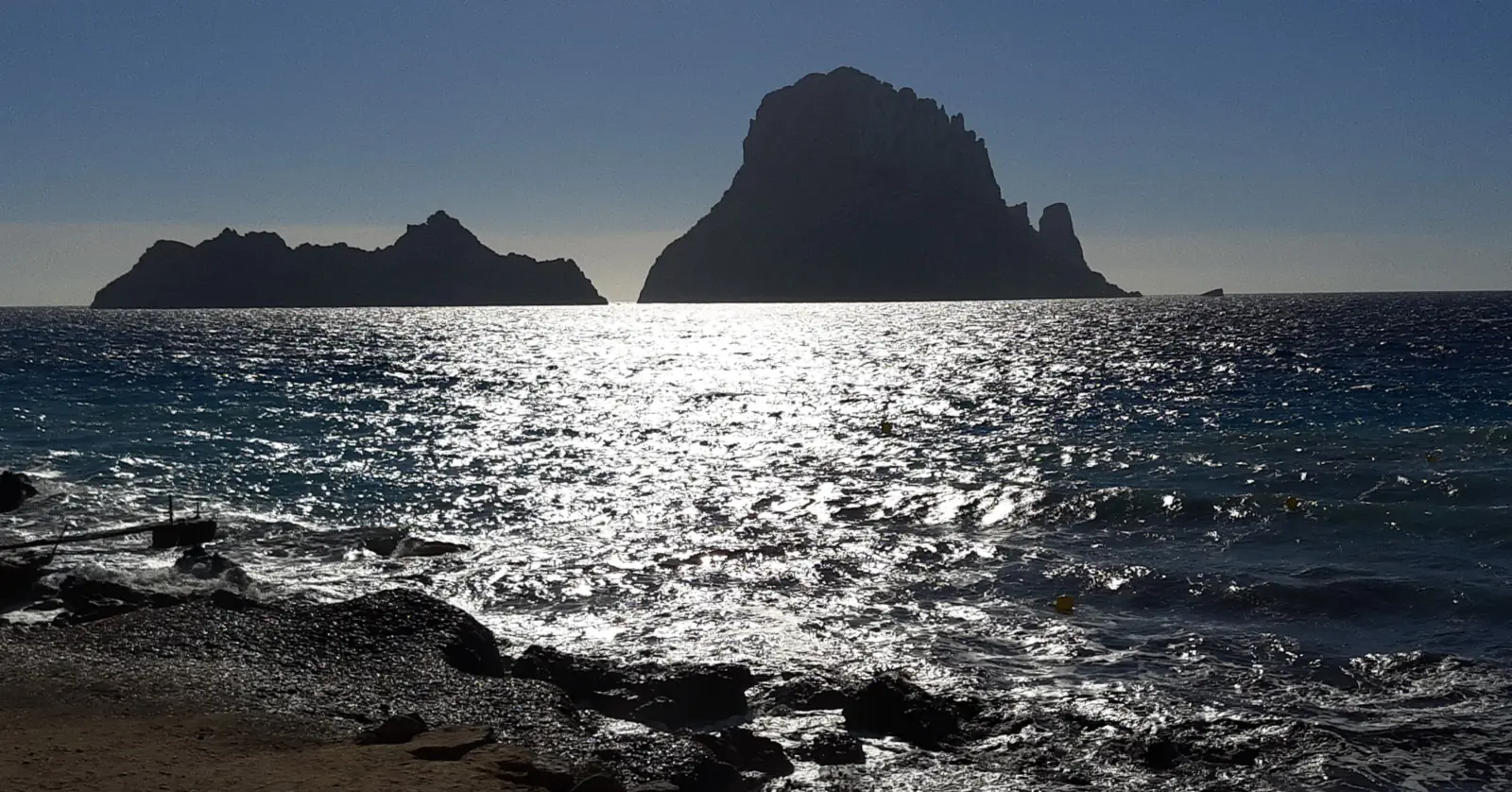
Photo: Gerda Arendt, Wikimedia Commons, CC0, cropped.

Key takeaways
- Scuba in the Freus, Tagomago, ses Bledes and es Vedrà-Vedranell reserves needs a specific authorization under article 9 of Decreto 41/2015; breath-hold diving needs none
- Article 2 of Decreto 63/1999 bans scuba, anchoring and all fishing in the maximum protection zone around s’Espardell, the one part of the Freus reserve closed to scuba
- The ses Bledes and es Vedrà-Vedranell reserves, created in May 2023 to protect red gorgonians, prohibit night dives for individual scuba divers
- The study behind the “100,000-year-old plant” put its oldest ages in a scenario its own authors called unlikely
- The Don Pedro came to rest on its port side in 45 meters of water on 11 July 2007, beyond the 40 meters Spain allows for recreational scuba unless an adult carries the extra equipment in annex III
Scuba in Ibiza’s four marine reserves needs a Balearic authorization, snorkeling does not
Four of the Balearic Government’s marine reserves touch Ibiza. The oldest, the reserve of es Freus d’Eivissa i Formentera, fills the strait between the two islands and was established on 28 May 1999, the first of the Balearic network. The reserve of the northeast coast of Ibiza and Tagomago followed in December 2018, and the reserves of ses Bledes and es Vedrà-Vedranell off the west coast in May 2023.
One rule runs through all four. Article 9 of Decreto 41/2015 says that scuba diving in the reserves needs a specific authorization from the fisheries directorate, issued to an individual or, only for dive centers and dive clubs, collectively, for a year or a shorter period. Divers may not carry anything that could be used to fish or take marine life, in hand or on their boat, and their dives have to be reported to the directorate.
Breath-hold diving is treated differently. Article 9.7 says snorkeling in the reserves needs no prior authorization, although each reserve may regulate it by resolution. The Govern’s own pages for the Freus and for the two west-coast reserves put it in one line: breath-hold dives are free throughout the reserve, and a safety knife is the one exception to the ban on carrying fishing tools.
On a guided dive the center’s collective authorization covers you. How the authorization is issued, and the skills test a newcomer to the Balearic reserves can be asked to pass, are set out in our Mallorca diving guide, together with the Balearic diving decree and Spain’s national safety rules, which apply on Ibiza in the same way.
Ibiza’s 2023 reserves at ses Bledes and es Vedrà protect red gorgonians and ban individual night dives
Decreto 25/2023 of 2 May 2023, published in the Balearic gazette on 4 May, created two reserves off Ibiza’s west coast, and its preamble names the reason. The red gorgonian, Paramuricea clavata, is a vulnerable species of high heritage value, and some of the few Balearic populations that grow on submerged vertical walls lie inside the new limits. A study of the west coast had also found the fish stocks around both island groups badly damaged.
The Govern gives the sizes. The ses Bledes reserve covers 448 hectares, of which 26 form a special protection zone around na Bosc, na Vaixell and na Gorra. The es Vedrà-Vedranell reserve covers about 536 hectares, with a special protection zone of 2 hectares at the Punta de na Bruta. Both overlap the natural reserves of es Vedrà, es Vedranell and the Illots de Ponent, declared in 2002, and the Costa Oest d’Eivissa conservation area of 2022.
Neither special zone is closed to divers. At ses Bledes, article 2 bans all fishing and extraction except professional hand lines, squid jigs and trolling, plus management and science. At na Bruta, article 3 bans only the setting of trammel nets. Everywhere else in both reserves, fishing and extraction are banned apart from small-scale professional fishing and recreational fishing from boats, both under license, sampling, and since 2024 no-kill competitions tied to the reserve’s monitoring. Recreational fishing from the islets themselves is banned.
Article 7 adds the rule a diver meets. Scuba and breath-hold diving follow article 9 of Decreto 41/2015, and night dives are prohibited for individual scuba diving, the category the reserve rules set against a center’s or club’s collective authorization. A night dive here goes through a center or club, not an individual authorization.
The decree also looks ahead. Article 7.4 tells the fisheries department to promote a study of scuba activity and then, where appropriate, to set by order dive points marked by mooring buoys with an ecological fixing, diver quotas and schedules. A 2024 amendment, Decreto 45/2024, rewrote the fishing exceptions of both reserves and left the diving article as it was.
The Freus reserve between Ibiza and Formentera bans scuba in one box of water off s’Espardell
The Freus reserve is the older design, and its founding decree still carries the sentence that matters most to a diver. Article 2 of Decreto 63/1999 declared a maximum protection zone around the islet of s’Espardell, off the north of Formentera, and banned in it any fishing, the taking of marine flora and fauna, anchoring and scuba diving. Only dives and sampling for science can be authorized there.
Decreto 41/2015 redrew the limits of the reserve and of the zone and repealed other parts of the 1999 decree, but not article 2. The zone now runs from the Racó de sa Casota to the Punta de Migjorn, a box between about 38°47.3’ and 38°48.6’ N and 1°27.8’ and 1°29.5’ E, closed along the islet’s shore. The Govern’s page for the reserve, as archived in April 2026, says scuba is allowed everywhere in the Freus except there.
Read the rule as it is written. It names scuba, buceo con escafandra autónoma, and the same Govern page says breath-hold dives are free throughout the reserve, without carving the Espardell zone out of that. The ban on anchoring, by contrast, applies to every boat. The islets of Espardell and Espardelló are protected on land too: Ley 17/2001 declared them a natural reserve inside the Ses Salines natural park.
The 1999 preamble explains why the strait was chosen. It describes large meadows of Posidonia oceanica and Cymodocea nodosa as nurseries for commercial fish, and it records an initiative by the town of Eivissa and other Pitiusan institutions to have the Posidonia meadows of the area declared World Heritage. UNESCO inscribed them later that year.
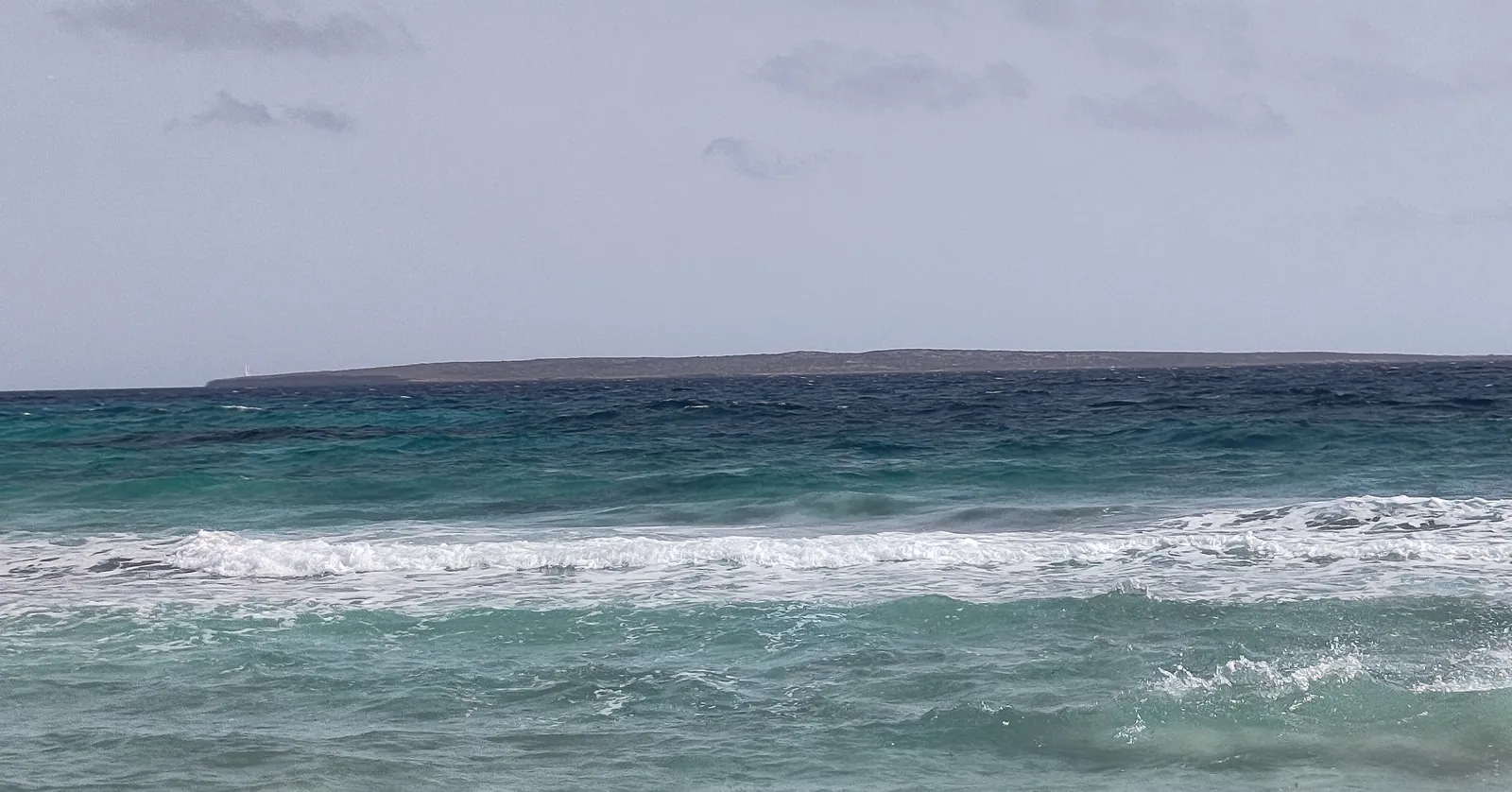

Tagomago, off Ibiza’s northeast coast, has an integral zone where boats may not anchor
Decreto 45/2018 of 14 December 2018 created the reserve of the northeast coast of Ibiza and Tagomago, from the shore at Santa Eulària round to the Punta des Jonc and the waters around the islet of Tagomago. Its preamble is unusually frank about why. A study presented by the Consell d’Eivissa found experimental catches there significantly lower than in the Freus reserve, in places with similar conditions.
The fish counts in the same study showed large coastal predators missing, or scarce and small: the dusky grouper, the common dentex, even the red scorpionfish, in water that suits them. The one bright spot was the greater amberjack, Seriola dumerili, for which Tagomago appeared to be an important place. The preamble lists the reefs as well, the Llosas of Santa Eulària and es Figueral that break the surface and the reefs of Cala Mestella and Cala Jonc that do not.
Article 2 declares an integral reserve around the Llosa des Figueral, which the Govern puts at about 220 hectares; the study had proposed 250. Article 3.3 bans anchoring in it, on top of the limits that article 8.4 of the Balearic fisheries law, Ley 6/2013, attaches to integral zones, which can cover underwater activities as well as fishing. The directorate may authorize anchoring, a dive or sampling there only for scientific, safety or rescue reasons.
In the rest of the reserve, scuba follows article 9 of Decreto 41/2015. Article 6.2 adds a second layer: diving in the parts that fall inside Natura 2000 sites, among them the Tagomago site, the marine area of Tagomago and the islets of Santa Eulària, Redona and es Canar, must also comply with those sites’ management plans. The 2024 amendment changed the fishing exceptions here too, and not the diving article.
The Posidonia between Ibiza and Formentera is not shown to be 100,000 years old
The line most visitors meet about the seagrass off Ibiza is that one plant here is 100,000 years old, the oldest living thing on Earth. That is how SINC, the Spanish public science news agency, reported the study on 2 February 2012: a CSIC team had found a clone of Posidonia oceanica in Formentera, 100,000 years old, making it the longest-lived species in the biosphere.
The paper, published in PLoS ONE on 1 February 2012, says something narrower. The team genotyped 1,544 sampling units from 40 locations across the Mediterranean and found identical genotypes in meadows up to 15 kilometers apart. In Formentera, 18 to 30 percent of the sampled shoots belonged to genets found at two localities 15 kilometers apart around a cape, and a second pair of meadows sharing clones lay 7 kilometers apart, between Formentera and Ibiza.
Then comes the age. If those clones had spread by growth alone, the authors calculate a minimum age of 80,000 to 200,000 years. In the next sentence they call that scenario unlikely, because during the last ice age the sea stood about 100 meters lower and the sampling sites would have been dry land. Their preferred model combines clonal growth with shoots breaking off and re-rooting nearby, and it implies a less extreme life span.
So the version the paper supports is this: the meadows you drift over between Ibiza and Formentera hold clones spread across kilometers, which the abstract puts at hundreds to thousands of years old and the discussion at thousands to tens of thousands. The PLOS press release of 1 February used that second range. The popular 100,000 years comes from a scenario the paper itself sets aside.
Ibiza’s World Heritage site is mostly sea, and dive boats may not anchor on its meadows
UNESCO inscribed Ibiza, Biodiversity and Culture in 1999 as a mixed property: the fortified upper town, the Phoenician settlement of Sa Caleta, the necropolis of Puig des Molins, and the sea. Its statement says the property covers 9,020 hectares, mostly sea, and that its natural values are characterized by the best-conserved meadows of Posidonia oceanica in the Mediterranean.
The natural criteria go further than the seagrass. Criterion (ix) names dense Posidonia meadows and reefs of cushion coral, and criterion (x) calls the property home to the most diverse community of Mediterranean pillow coral in the Mediterranean. The statement also lists what protection requires: mooring points, signposted free-anchoring zones, surveillance of the marine reserves, and monitoring and removal of invasive seaweed.
UNESCO rests the legal protection of those natural values on a national law of 1995 and on Ley 17/2001, the Balearic law that made Ses Salines a natural park. The Govern puts the park at about 2,752.5 hectares of land and 14,028 hectares of sea, from the south of Ibiza to the north of Formentera, including the arm of sea between them. The Freus reserve lies in that same strait, so a dive boat there works under a fisheries reserve and a natural park at once.
A third applies across the islands. Decreto 25/2018 on Posidonia bans anchoring on the meadows as a general rule in article 7.1, and its preamble names the meadows between Eivissa and Formentera as the ones UNESCO listed. Article 2.1.f defines a professional anchorage and names dive companies as its example; article 8.3.f requires boats that need one over Posidonia to use permanent low-impact moorings.
Divers are named directly as well. Article 13.2 lists pulling up bundles of Posidonia during dives among the acts that count as offenses under Spain’s biodiversity law, where they degrade or destroy the habitat. The court challenge that trimmed other parts of the decree in 2021 is covered in the Mallorca guide; the general anchoring ban in article 7.1 survived it.
The Don Pedro wreck off Ibiza lies in 45 meters, past Spain’s 40-meter scuba limit
In the early hours of 11 July 2007 the Spanish ro-ro ship Don Pedro left Ibiza for Valencia. At 02:52, shortly after clearing the harbor mouth, it struck the shoals next to the Dado Pequeño, one of the islets called Los Dados, and water came in through the port side. The 18 crew and 2 passengers were all rescued, and the ship sank at about 04:04.
The official investigation report, by Spain’s standing commission for maritime accident investigation, puts the wreck at 38°53.08’ N, 1°27.11’ E, 1.15 miles on a bearing of 169 degrees from the end of the Botafoch breakwater. It came to rest on its port side in 45 meters of water. The ship was 141.55 meters long with a beam of 18.67 meters, so, lying on its side, the hull must rise well above that bottom.
Depth is where the national rules come in. Article 18.1 of Real Decreto 550/2020, in the consolidated text in force since 31 December 2025, limits recreational scuba to 40 meters on air or nitrox, with no planned decompression. Article 18.3 is the exception: going beyond those depth and gas limits is open only to divers over 18, carrying the minimum equipment in section 1.2 of annex III.
Article 18.1 also rules out entering wreck interiors, caves or any overhead dive where light is lost and the penetration depth is more than 30 meters. Which parts of the Don Pedro fall inside 40 meters is a question for the dive plan, not for this page. For wrecks elsewhere, see the wreck diving list.
The islets the ship hit are protected in their own right: Ley 17/2001 declared es Daus, the Dau Gros and Dau Petit, a natural reserve inside the Ses Salines park. The report’s appendix records a large oil slick near the sinking position that morning, and the harbor master of Ibiza activated Spain’s national contingency plan for accidental marine pollution at 09:00.
Ibiza dive centers need a Govern authorization, and seven are in the directory
A dive center on Ibiza cannot simply open. Article 13 of Decreto 14/2014, as amended on 1 September 2026, requires prior authorization from the Balearic fisheries directorate. The application form annexed to the decree asks for a dive plan with procedures for recovering, resuscitating and evacuating an injured diver, emergency oxygen, and information on the nearest hyperbaric medicine center. Ask for that plan before you book.
The Ibiza operator list holds seven dive businesses, compiled on 21 September 2026. Six are published by SSI in its register of affiliated centers, and one is a Green Fins digital member, a status based on self-evaluation rather than an in-person assessment. All seven publish a website. Two are filed under Formentera, at La Savina and Formentera, and one under Sant Josep de sa Talaia.
SSI rates two of the six for Extended Range and one of those for Mermaid, a statement about the listing and not proof that a course runs this season. None of these registers is the Govern’s authorization, and which registers can be read sets out what each source can and cannot tell you. For a longer stay, the Spain digital nomad visa guide covers the residence side, and the dive insurance guide covers the accident insurance, including hyperbaric treatment, that the Balearic decree asks every recreational diver to hold.
FAQ: scuba diving in Ibiza
Do you need a permit to scuba dive in Ibiza?
Inside the marine reserves, yes, and four of them touch Ibiza: es Freus, the northeast coast and Tagomago, ses Bledes and es Vedrà-Vedranell. Article 9 of Decreto 41/2015 requires a specific authorization from the Balearic fisheries directorate to scuba dive in them, issued to an individual or, for dive centers and clubs, collectively. On a guided dive the center's authorization covers you. Breath-hold diving needs no prior authorization.
Can you scuba dive at Es Vedrà?
Yes, with an authorization. Decreto 25/2023 made the waters around es Vedrà and es Vedranell a marine reserve in May 2023 to protect red gorgonians on vertical walls. Scuba there follows article 9 of Decreto 41/2015, and night scuba dives are prohibited for individual divers. The small special protection zone at the Punta de na Bruta bans trammel nets, not divers.
Where is scuba diving banned around Ibiza?
In the maximum protection zone around the islet of s'Espardell, inside the Freus reserve between Ibiza and Formentera. Article 2 of Decreto 63/1999 bans all fishing, extraction, anchoring and scuba diving there. In the integral zone of the Tagomago reserve at the Llosa des Figueral, the directorate may authorize a dive only for scientific, safety or rescue reasons.
How deep is the Don Pedro wreck in Ibiza?
The official investigation report says the ro-ro ship came to rest on its port side in 45 meters of water after sinking on 11 July 2007, about 1.15 nautical miles south of the Botafoch breakwater at Ibiza town. That is deeper than the 40 meters article 18 of Real Decreto 550/2020 sets for recreational scuba, which only adults with the extra equipment in annex III may exceed.
Is the Posidonia between Ibiza and Formentera really 100,000 years old?
Not as the study states it. The 2012 PLoS ONE paper found identical clones in meadows up to 15 kilometers apart around Formentera and Ibiza. Growth by cloning alone would make them 80,000 to 200,000 years old, but the authors call that scenario unlikely because the sites were dry land in the last ice age. Their preferred reading is thousands to tens of thousands of years.
Note: Conditions, safety guidance and regulations change. Verify current information with official sources, including the dive operator, the park authority and the relevant government department, before you travel or dive.
Founder of NOMADREEF and a former digital nomad. This guide is sourced from the references below; conditions, prices and rules change, so verify current details, and follow qualified local guidance and safety briefings. About the author · LinkedIn ↗
Sources
- The four reserves and the authorization (primary). Decreto 41/2015, de 22 de mayo, BOIB 77 of 23 May 2015: preamble (the Freus reserve established on 28 May 1999 as the first of the network); article 9.1 to 9.4 and 9.7 (specific authorization, individual or collective for centers and clubs, annual or shorter; no fishing gear in hand or aboard; dives reported; snorkeling without prior authorization); additional provision (new limits of the Freus reserve and of the s’Espardell maximum protection zone); repealing provision (article 1 and article 3.2 b and c of Decreto 63/1999 only). BOIB PDF (archived copy). Decreto 26/2025, which later amended Decreto 41/2015, added a paragraph to article 5 on recreational fishing and did not touch article 9: BOIB 86 of 5 July 2025 (archived copy). Read 25 September 2026. The BOIB server refused connections on that day, so the official PDFs on this page were read through the Internet Archive.
- The Freus reserve and s’Espardell (primary). Decreto 63/1999, de 28 de mayo, BOCAIB 74 of 8 June 1999: preamble (Posidonia and Cymodocea meadows; the initiative to have the meadows declared World Heritage); article 2 (maximum protection zone around s’Espardell; ban on fishing, extraction, anchoring and scuba diving; scientific dives by authorization). BOCAIB PDF (archived copy). Govern de les Illes Balears, marine reserves site, activity rules for the Freus reserve (scuba allowed except in the s’Espardell maximum protection zone; breath-hold dives free throughout; safety knife excepted from the fishing-tool ban), caib.es (archived 28 April 2026). Read 25 September 2026.
- Ses Bledes and es Vedrà-Vedranell (primary). Decreto 25/2023, de 2 de mayo, BOIB 57 of 4 May 2023: preamble (red gorgonian on submerged vertical walls; damaged fish stocks; joint follow-up commission with Tagomago); articles 1 to 4 and 6 (limits, special protection zones, prohibitions, no fishing from the islets); article 7 (diving under article 9 of Decreto 41/2015, night dives banned for individual scuba diving, a future order on buoyed dive points, quotas and schedules). BOIB PDF (archived copy). Areas from the Govern’s description pages for ses Bledes (448 ha, 26 ha special protection zone) and es Vedrà-Vedranell (about 536 ha, 2 ha at the Punta de na Bruta); diving rules on the activity page. Read 25 September 2026.
- Tagomago (primary). Decreto 45/2018, de 14 de diciembre, BOIB 157 of 15 December 2018: preamble (the Consell d’Eivissa study, catches against the Freus, missing predators, Seriola dumerili, the reefs, the proposed 250 ha no-fishing zone); articles 1 to 3 (limits, integral reserve at the Llosa des Figueral, anchoring ban and the scientific, safety or rescue exception); article 6 (diving under article 9 of Decreto 41/2015 and the Natura 2000 management plans). BOIB PDF (archived copy). The integral zone of about 220 ha is from the Govern’s description page (archived 25 June 2022). Ley 6/2013, de 7 de noviembre, article 8.4 on integral reserve zones, consolidated text last updated 13 June 2026: BOE-A-2013-12688. Read 25 September 2026.
- The 2024 amendment (primary). Decreto 45/2024, de 18 de octubre, BOIB 137 of 19 October 2024, first and second final provisions: new fishing exceptions in the Tagomago, ses Bledes and es Vedrà-Vedranell reserves; the diving articles are not amended. BOIB PDF (archived copy). Read 25 September 2026.
- The Posidonia clones (primary, peer-reviewed). Arnaud-Haond S, Duarte CM, Diaz-Almela E, Marbà N, Sintes T, Serrão EA (2012), Implications of Extreme Life Span in Clonal Organisms: Millenary Clones in Meadows of the Threatened Seagrass Posidonia oceanica, PLoS ONE 7(2): e30454: 1,544 sampling units from 40 locations; clone mates up to 15 km apart; 18 to 30 percent of sampled ramets in Formentera shared between localities 15 km apart; pairs 7 km apart between Formentera and Ibiza and 15 km apart around a cape in Formentera; minimum age of 80,000 to 200,000 years under clonal growth alone, considered unlikely because of the sea level 100 m lower in the last ice age; “hundreds to thousands of years” in the abstract and “thousands to tens of thousands of years” in the discussion. doi:10.1371/journal.pone.0030454. Read 25 September 2026.
- How the study was reported (secondary, cited for the wording). SINC, “La ‘Posidonia oceanica’ es la especie más longeva de la biosfera”, 2 February 2012 (a Formentera clone 100,000 years old), agenciasinc.es; and the PLOS release of 1 February 2012 (thousands to tens of thousands of years), EurekAlert. Read 25 September 2026.
- The World Heritage property (primary). UNESCO World Heritage List, Ibiza, Biodiversity and Culture, property 417rev: inscribed 1999, criteria (ii)(iii)(iv)(ix)(x), 9,020.3 ha with a buffer zone of 7,567.63 ha, “mostly sea”; the Posidonia and cushion coral in criteria (ix) and (x); the protection and management requirements. whc.unesco.org (archived 14 September 2026). Read 25 September 2026; the live page refused automated requests that day.
- The Ses Salines natural park (primary). Ley 17/2001, de 19 de diciembre, de protección ambiental de ses Salines de Ibiza y Formentera, article 1 (the park and its inner waters; the natural reserves including the islets of Espardell and Espardelló and es Daus), original text as published in BOE 14 of 16 January 2002: BOE-A-2002-916. Areas from the Govern’s park page, caib.es (archived 4 July 2025). Read 25 September 2026.
- Posidonia and anchoring (primary text, consolidated reproduction). Decreto 25/2018, de 27 de julio, BOIB 93 of 28 July 2018: preamble (the meadows between Eivissa and Formentera listed by UNESCO in 1999; 50 percent of Spain’s inventoried meadows); article 2.1.f (professional anchorage, naming dive companies); article 7.1 (anchoring ban); article 8.3.f (permanent low-impact moorings); article 13.2 (pulling up Posidonia during dives). Noticias Jurídicas, consolidated text. Read 25 September 2026.
- The Don Pedro (primary). Comisión Permanente de Investigación de Siniestros Marítimos, report on the sinking of the ro-ro ship Don Pedro on 11 July 2007: time of contact and sinking; Dado Pequeño and Los Dados; 18 crew and 2 passengers rescued; position 38°53.08’ N 1°27.11’ E, 1.15 miles at 169 degrees from the Botafoch breakwater; resting on the port side at 45 m; length 141.55 m, beam 18.67 m; appendix on the fuel slick and the contingency plan. Ministerio de Transportes (PDF). Read 25 September 2026.
- Spain’s national safety rules (primary). Real Decreto 550/2020, de 2 de junio, consolidated text as amended by Real Decreto 1188/2025, last update published 30 December 2025: article 18.1 (40 m, air or nitrox, no planned decompression, overhead and penetration limit, emergency decompression of up to ten minutes) and 18.3 (beyond the limits only over 18 with the equipment in annex III, 1.2). BOE-A-2020-6745. Read 25 September 2026.
- Dive center authorization (primary text, consolidated reproduction). Decreto 14/2014, de 14 de marzo, as amended by Decreto 35/2017 and Decreto 30/2026: article 13 (prior authorization by the fisheries directorate); the application’s dive plan naming the nearest hyperbaric medicine center; article 17 (register of dive centers). Noticias Jurídicas, consolidated text. Read 25 September 2026.
- The seven businesses. The Ibiza operator list, compiled 21 September 2026 from the SSI register of affiliated centers and the Green Fins member register. The register’s town field records where a body files a business, not necessarily where it operates. The limits of each source are on which registers can be read.
- Left out, and why. The location of the recompression chamber serving Ibiza was found only in press reports, not at the health service or the facility, so this page names none: ask your center for the dive plan Decreto 14/2014 requires. No primary series of water temperatures at Ibiza’s dive sites was found; the Puertos del Estado deep-water buoys nearest the island are off Mallorca, so no temperatures are given. Published figures for the area of the Freus reserve differ between sources and none is quoted. Whether an order fixing dive points for ses Bledes and es Vedrà has been made was not established. The dive rules in the Ses Salines park’s own management plan (Decreto 132/2005) were not read.