Mallorca Diving: The Reserve Permit, the El Toro Buoys and the Rules That Changed in 2026
 by Yannick Schroth
Sep 24, 2026
16 min read
by Yannick Schroth
Sep 24, 2026
16 min read
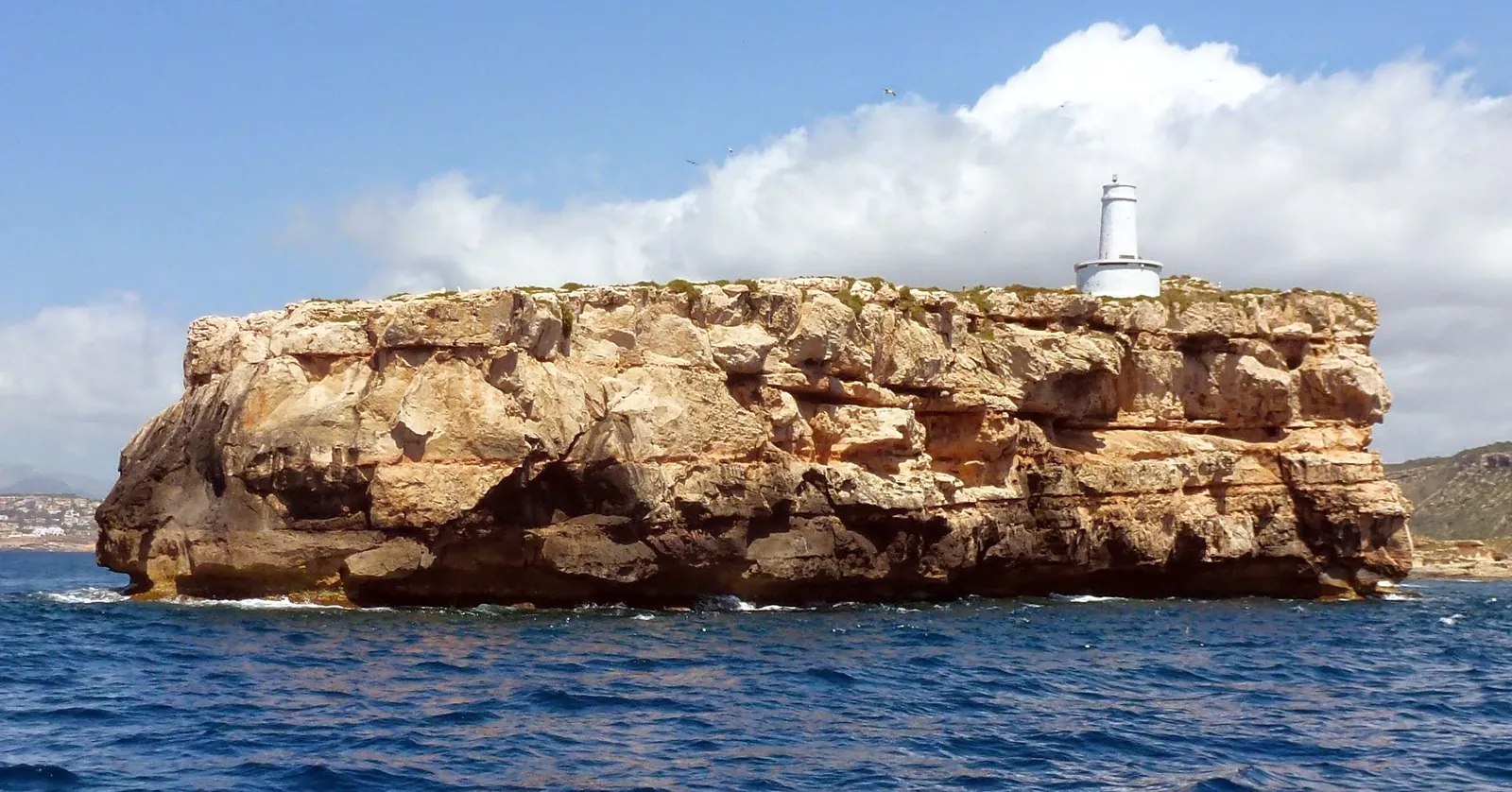
Photo: Николай Максимович (Nikolai Maksimovich), Wikimedia Commons, CC BY 3.0, cropped.

Key takeaways
- Article 9 of Decreto 41/2015 requires a specific authorization to scuba dive in the Balearic Government’s marine reserves; snorkeling needs none
- A diver new to the Balearic reserves who has not dived in three years, or has fewer than ten dives, sits a four-skill test at no more than 12 meters, and a failed mask clear or failed neutral buoyancy ends the reserve dive
- Decreto 26/2025 caps each of the six El Toro dive points at 12 divers per visit and the islet at 48 divers in the water at once
- The Balearic diving decree lists five requirements for a recreational diver, and one of them is accident insurance that covers treatment in a hyperbaric medicine center
- The Dragonera buoy off western Mallorca logged 33.02°C on 5 August 2026, the highest water temperature ever measured across the Puertos del Estado network
Scuba diving in a Mallorca marine reserve needs an authorization, usually your dive center’s
Five of the Balearic Government’s marine reserves lie off Mallorca: the Bahía de Palma, Migjorn de Mallorca, Llevant de Mallorca, the Freu de sa Dragonera and, since July 2025, the reserve of the islands of Ponent de Mallorca, el Toro, las Malgrats and el Sec off Calvià. They are fisheries reserves first, built up by the Govern since 1999 to rebuild fish stocks, and diving inside them runs on paper.
The rule is article 9 of Decreto 41/2015. Scuba diving in these reserves needs a specific authorization from the fisheries directorate, issued either to an individual or, only for dive centers and clubs, collectively. Divers may not carry any gear that could catch or extract marine life, in hand or aboard their boat. Divers and centers must report their dives and the key data to the directorate. Snorkeling needs no prior authorization, although each reserve may regulate it by resolution.
Orden 21/2022, published on 13 September 2022, sets how the paper is issued. An individual pays a fee and declares a valid recreational diving certification, accident and civil liability insurance in force, and a commitment to the responsible-diving criteria in its annex. The authorization runs for the period requested, up to one year. Where daily numbers are capped, 5 percent of the places are held back for private divers.
A center applies collectively and certifies that it checks every diver’s certification and insurance, and that its guides have passed the course on responsible diving in marine reserves. So a guided reserve dive rides on the center’s authorization, while a diver going in on their own applies individually. The Orden’s preamble counts more than 60,000 dives a year across the Balearic reserve network.
Two of the five are managed jointly with the Spanish state. In Llevant de Mallorca and Dragonera the agriculture ministry’s Orden APA/126/2019 on responsible recreational diving also applies, which is why the Balearic order was written to match it.
The buoyancy test that can open your first Mallorca reserve dive
The annex to Orden 21/2022 is short and specific, and it is the part a visiting diver meets in person. A diver going under with scuba in a Balearic reserve for the first time sits a basic skills test if they have not dived in the last three years or have fewer than ten dives, or whenever the dive guide considers it necessary.
The test is done at a maximum depth of 12 meters, in a spot where it does the least harm. It has four parts: checking at the surface that the gauge needle holds while breathing, reaching neutral buoyancy with the jacket, clearing the mask while neutral, and taking the regulator out and back in while neutral. Some of these are eliminatory. The Orden names mask clearing and neutral buoyancy: fail either and you do not dive inside the reserve.
The guide who runs it must hold a qualification equivalent to Dive Leader under ISO 24801-3, FEDAS-CMAS three star, or Spain’s state sports technician diploma. A pass is valid in every Balearic reserve, except on dives with particular features that call for extra exercises, and the guide is obliged to record it, by a logbook stamp, a certificate, a sticker or a center card. Ask for it, or you sit the test again.
The same annex lists what a reserve diver may not do: harm, disturb or collect living things; take shells or archaeological remains; feed fish; approach fishing gear or handle scientific equipment; or enter caves and wreck interiors without experience or specific training. If the mask exercise worries you, our buoyancy control guide covers the skill the test turns on.
El Toro off Mallorca: six buoys, twelve divers each and 48 at once
The Illa del Toro, off the Calvià coast in southwest Mallorca, has dive rules written down to the buoy. The Govern first protected the waters around El Toro and the Malgrats in 2004, merged and enlarged them in 2022, then replaced that reserve on 4 July 2025 with Decreto 26/2025. The new reserve runs along the coast from the Cap des Falcó to the Morro d’en Grosser, and it holds three high-protection zones.
Around El Toro, annex 3 of the decree allows diving at six points only: Cala Rafalbeig, the east side of the Munt de Pedres, and the inner and outer east and west sides of the islet, each to be marked with moorings of minimum impact on the seabed communities. The maximum is 12 divers per point and visit, and never more than 48 people diving at once in the immediate surroundings of the islet, meaning buoys 3 to 6.
The northwest sector of the zone, between the Clot des Moro and els Pans, is closed to recreational diving outright. The decree leaves the number of daily dives and shifts to a separate order of the fisheries minister. Decreto 30/2026, published on 1 September 2026, loosened one detail: a center holding two buoys in the same shift may now drop and collect its divers at either point, up to 24 people.
Boats in transit through the El Toro and Malgrats zones must keep their speed above 3 and below 6 knots, and jet skis are banned in both. Night scuba dives on an individual authorization, as opposed to a center’s or club’s, are prohibited in the high-protection zones of El Toro, the Malgrats and the Sec. Divers must stay 150 meters from the reserve’s traditional fixed-net points while the nets are set, and the Clot des Moro is one of them.
Diving the Malgrats and the Sec in Mallorca’s newest reserve
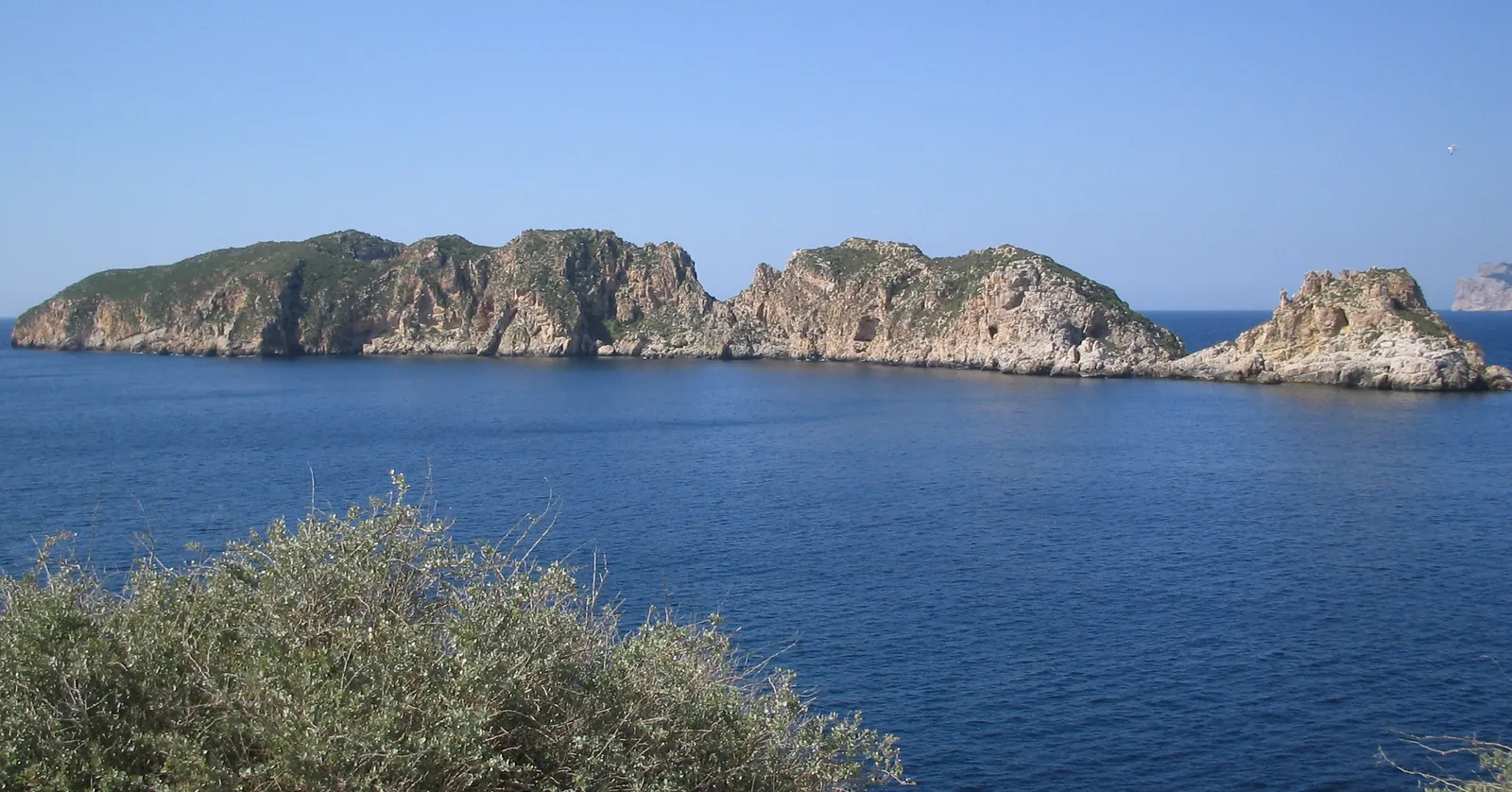
The Malgrats, off the same Calvià coast, carry the same pattern on a smaller scale. Annex 4 of Decreto 26/2025 allows diving at four points: the southeast coast of the Illa des Malgrat, its southwest tip, its west coast and the Caló de l’Olla. The limits match El Toro, 12 divers per point and visit and no more than 48 in the zone at once.
The Malgrats also carry the one training exception in the decree. After notifying the fisheries directorate beforehand, a dive school may run occasional training sessions in the Cala de Ses Pedretes. Recreational anglers keep limited seasonal rights inside this zone, which is why you may meet a line from a boat between October and April.
The third zone, around the Illa del Sec in the southwest of the Bay of Palma, was the reason the reserve was redrawn. Calvià’s town council wanted the islet and the reef next to it inside the protection, and the 2022 reserve had stopped short of it. Now all fishing and extraction is banned there except professional octopus traps in the Bay of Palma season and scientific sampling. For collective reserve dives off Calvià, the decree gives centers three months to report them.

What a visiting diver must carry in Mallorca under the decree rewritten in September 2026
The Balearic rulebook for recreational diving is Decreto 14/2014, and it was amended by Decreto 30/2026, published on 1 September 2026, to follow Spain’s national safety decree. Its article 5 lists five requirements for a recreational diver, and a certification card is only the first of them.
The card counts if it matches the decree’s annexes. Annex IV gives an equivalence table that names FEDAS, CMAS, ACUC, PADI, SSI, NAUI, IDEA, SDI and Barakuda: a PADI or SSI Open Water Diver, for instance, equals the old Spanish second-class diver. Annex V accepts the European and ISO levels directly, from Supervised Diver (ISO 24801-1) to Dive Leader (ISO 24801-3).
The second requirement is a health statement. At a dive center you fill in the questionnaire in annex I of Real Decreto 550/2020, and a medical certificate is needed only where that decree asks for one: if your answers show a pre-existing condition that could affect your safety, you dive only after passing a medical examination, renewed every year.
The third is a dive log. If you do not bring one, the center lets you join only what it judges you capable of from your card and the experience you can show. The fourth is accident insurance that covers any accident, including treatment in a hyperbaric medicine center, plus civil liability to third parties. The fifth is the minimum age.
Centers must keep an accident policy available for divers who arrive without one, so a missing policy can be fixed at the counter. For what a travel policy does and does not reach, see our dive insurance guide.
Three more lines in the decree bite. Nobody may dive without the constant company of another certified diver, except students with the center’s staff. The card gives no right to fish, collect, move rocks or attract fauna. And diving inside flooded inland caves needs an exceptional authorization from the environment department, plus special training and equipment.
Spain’s national dive rules in Mallorca: 40 meters, no planned decompression, try dives one to one
Safety conditions in Mallorca follow Real Decreto 550/2020, which since September 2026 the Balearic decree cites by name. Article 18 sets recreational scuba at a maximum of 40 meters, on air or nitrox only, with direct access to the surface and a buddy pair as the minimum unit. Planned decompression stops are not allowed.
Nor are dives inside caves, grottoes or wrecks where the light is lost and the penetration depth is more than 30 meters. An amendment in force since 31 December 2025 added a narrow exception: if an emergency forces decompression, it follows the computer or tables and may not exceed ten minutes in total. Diving beyond the depth and gas limits is open only to adults, with the extra equipment the decree lists.
Children may start at eight, with depth tied to age: 6 meters at 8 to 9, 12 meters at 10 to 11, 21 meters at 12 to 15 and 40 meters from 16. Minors breathe air only. Guides and instructors may spend no more than 180 minutes a day under pressure, or 300 if the whole day stays shallower than 10 meters, which caps how many dives one guide can lead.
The change most visitors will notice came through Real Decreto 1188/2025, in force since 31 December 2025. Every participant in a try dive must now be accompanied individually by an instructor, who may not supervise more than one student at a time. The original 2020 text set no instructor ratio for try dives. Try dives are also banned in dangerous settings, in bad weather and at night.
On the surface, every other vessel must keep at least 50 meters from a dive zone, and the support boat flies the Alpha flag. For shore diving, no support boat is needed within 200 meters of a beach or 50 meters of the rest of the coast, but a surface marker is compulsory whenever there is no boat or the area is unmarked. The national decree applies on the mainland too, so a trip combined with the Costa Brava runs on the same safety rules.
Mallorca dive boats may not drop anchor on Posidonia
The seagrass meadows around Mallorca are protected by their own law. Decreto 25/2018 on the conservation of Posidonia oceanica, published on 28 July 2018, notes that the Balearic Islands hold 50 percent of all the Posidonia meadow inventoried in Spain, and that about 75 percent of it lies inside Natura 2000 sites.
Article 7 bans anchoring on Posidonia as a general rule. Boats may moor over a meadow only on authorized low-impact systems, single buoys or buoy fields, and none may be installed on the meadows rated high value. The decree has a word for a dive boat’s routine: a professional anchorage, defined as one used by businesses such as dive companies that return to the same place often. Article 8 requires such boats to use permanent low-impact moorings over Posidonia.
Divers are named too. Article 13 lists manually pulling up bundles of Posidonia during diving among the acts that count as offenses under Spain’s biodiversity law, where they degrade or destroy the habitat. The El Toro annex follows the same logic: its six dive points must be marked with moorings of minimum impact on the seabed.
The decree was challenged in court by nautical associations. On 21 April 2021 the Balearic High Court struck out the catch-all clause that made any breach of the decree an offense, and the aggravating circumstance for pumping bilges inside a buoy field. It upheld the anchoring ban. Anchoring on Posidonia in Mallorca remains prohibited, and the sailing side of the island is covered in our Palma sailing guide.
Cabrera National Park diving from Mallorca needs the park’s own authorization
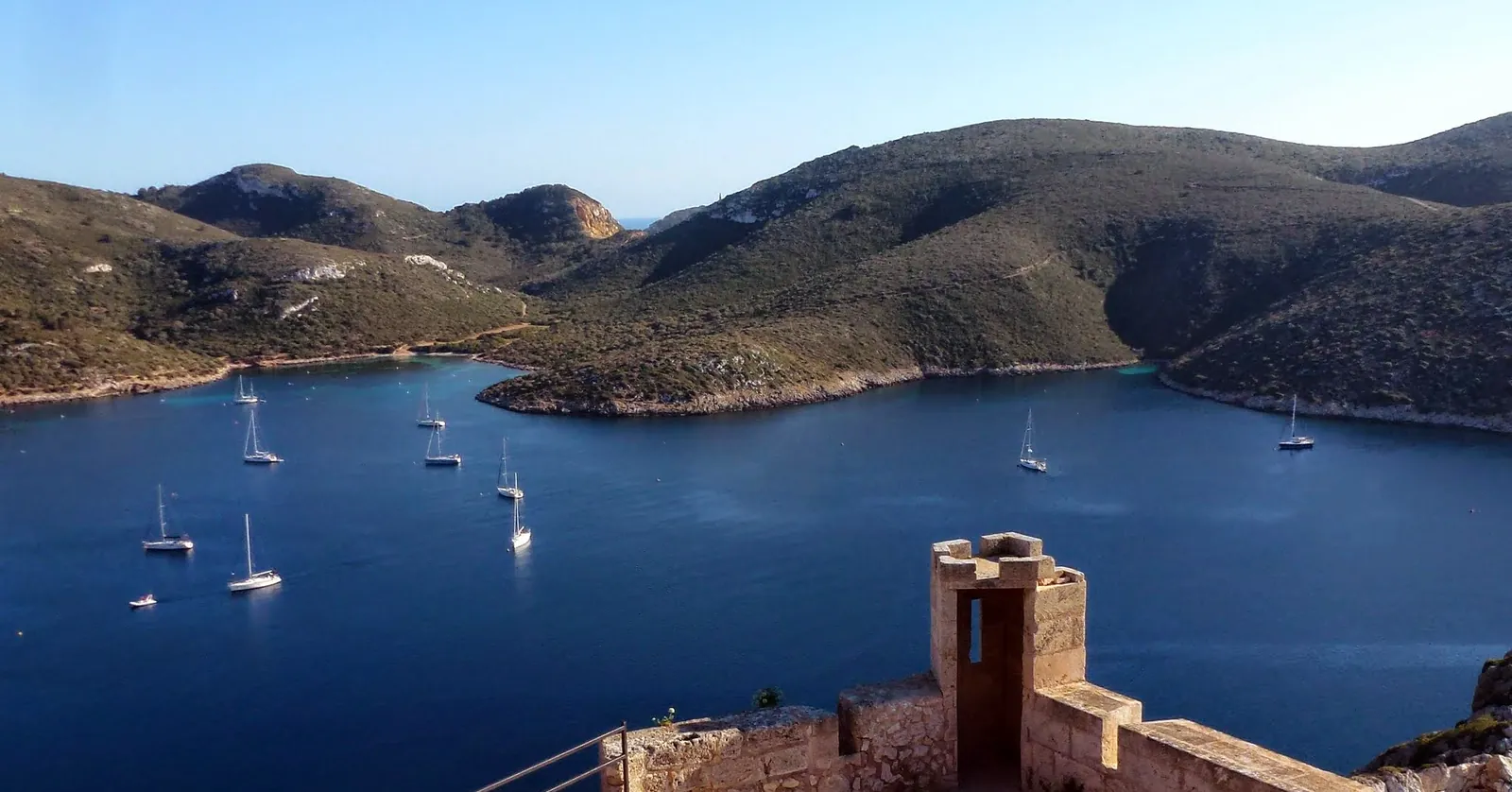
South of Mallorca, the Cabrera archipelago is a maritime-terrestrial national park with its own rules. It was declared by law in 1991 and enlarged in February 2019 by adding adjacent marine waters. Since then the park covers 90,794 hectares, of which 89,478 are sea and 1,316 land, according to the Govern’s file on its new management plan.
To navigate, anchor or dive there you apply to the park online. The Spanish national parks network states that a scuba application must include the certification of every diver, and that the authorized dive zones can change from one year to the next. Overnight moorings are on bookable buoys, with a maximum of 50 boats a day.
The management plan is in transition. The plan approved by Decreto 58/2006 replaced the 1995 one for a six-year term. In 2024 the Govern opened the drafting of a new one, a delay its own file puts partly down to waiting for Spain’s Supreme Court, which ruled on 12 November 2020 that the enlarged park needs unified management by the Balearic Islands. Because the authorized zones can change by year, go by the zones on your authorization, not a map from a previous season.
.jpg)
Mallorca’s sea reached 33.02°C at the Dragonera buoy in August 2026
Puertos del Estado, the state ports agency, runs a buoy off Dragonera, the islet at the western tip of Mallorca. On 5 August 2026 at 6 p.m. it recorded 33.02°C, the highest water temperature ever measured across the agency’s whole monitoring network. The buoy has carried a temperature sensor since 2006.
It was not a lone reading. Every buoy in the Levantine-Balearic basin except Valencia broke its own record that summer, including Mahón off Menorca at 32.36°C on 8 August. The agency’s marine climate indicator ranks summer 2026 among the warmest years it covers, with water above the climatic average in nearly every summer month.
A record maximum is not a season average, and it says nothing about the water at 30 meters. Royal Decree 550/2020 puts the choice on the diver: thermal protection must suit the water temperature. Pack for the dive depth you have booked, not for the surface figure on a forecast page.
Mallorca dive centers: the Govern’s authorization register and 27 listed businesses
A dive center in the Balearic Islands cannot simply open. Article 13 of Decreto 14/2014 requires prior authorization from the fisheries directorate, valid until 31 December, and article 17 creates a register that the Govern publishes online. As archived on 15 May 2026, that page listed 34 centers across the islands whose data were up to date for the year, against 66 for 2025 and 60 for 2024. It does not sort them by island.
Each register entry records the center’s authorization number, so asking a center for it is a fair question before you pay. The register page itself says that a center missing from it should contact the directorate, so a gap there is a question to ask rather than a verdict.
The Mallorca operator list holds 27 watersports businesses, compiled on 21 September 2026. Twenty-three list scuba diving, one of them freediving as well, and four are VDWS wind and sailing stations around Alcúdia, Pollença and Playa de Muro. Twenty-six come from the SSI and VDWS registers of affiliated centers, and 26 publish a website.
Two Big Blue Diving entries share one website, one of them named for Puerto Portals, which reads as two bases of one company rather than two businesses. One business is a Green Fins member, which rests on self-evaluation rather than an in-person assessment. SSI rates five of the Mallorca-filed centers for Extended Range and one for Rebreather, a statement about the listing and not proof that a course runs this season.
None of those registers is the Govern’s authorization, and which registers can be read sets out what each source can and cannot tell you. If you are staying on the island longer, the Spain digital nomad visa guide covers the residence side.
FAQ: scuba diving in Mallorca
Do you need a permit to dive in Mallorca?
Not for ordinary diving outside protected areas, where the Balearic diving decree asks for a certification, a health declaration, a dive log and insurance. Inside the Balearic Government's marine reserves, scuba diving needs a specific authorization under article 9 of Decreto 41/2015. On a guided dive the center's collective authorization covers you; diving without a center, you apply individually for up to a year. Cabrera National Park issues its own authorization.
Is a PADI or SSI certification valid for diving in Mallorca?
Yes. Annex IV of Decreto 14/2014 lists equivalences for FEDAS, CMAS, ACUC, PADI, SSI, NAUI, IDEA, SDI and Barakuda, and a PADI or SSI Open Water Diver equals the old Spanish second-class diver. Annex V accepts the ISO 24801 levels directly. The card is one of five requirements; the others are a health declaration, a dive log, accident and liability insurance, and the minimum age.
How deep can you dive in Mallorca?
Recreational scuba in Spain is limited to 40 meters on air or nitrox under article 18 of Real Decreto 550/2020, with a buddy pair and no planned decompression stops. Children dive from eight: 6 meters at 8 to 9, 12 meters at 10 to 11, 21 meters at 12 to 15 and 40 meters from 16. Going beyond the limits is open only to adults with the extra equipment the decree lists.
How many divers are allowed at El Toro in Mallorca?
Annex 3 of Decreto 26/2025 allows diving at six buoyed points in the El Toro high-protection zone, with a maximum of 12 divers per point and visit and never more than 48 people diving at once around the islet. The northwest sector between the Clot des Moro and els Pans is closed to recreational diving, and night scuba dives on an individual rather than a center's authorization are banned in the zone.
Do you need dive insurance to dive in Mallorca?
Yes. Article 5 of Decreto 14/2014 requires accident insurance covering any accident, including treatment in a hyperbaric medicine center, plus civil liability to third parties, and article 18 of Real Decreto 550/2020 requires accident and liability cover for every recreational diver. Balearic dive centers must keep an accident policy available for divers who arrive without one.
Note: Conditions, safety guidance and regulations change. Verify current information with official sources, including the dive operator, the park authority and the relevant government department, before you travel or dive.
Founder of NOMADREEF and a former digital nomad. This guide is sourced from the references below; conditions, prices and rules change, so verify current details, and follow qualified local guidance and safety briefings. About the author · LinkedIn ↗
Sources
- Diving in the reserves (primary). Decreto 41/2015, de 22 de mayo, on extraction and underwater activities in the marine reserves of the inner waters of the Balearic Islands, BOIB 77 of 23 May 2015: article 9.1 (specific authorization, individual or collective for centers and clubs), 9.2 (no fishing or extraction gear in hand or aboard), 9.3 (dives reported to the directorate), 9.4 (caps by order), 9.7 (snorkeling needs no prior authorization). BOIB PDF (archived copy). Read 24 September 2026. The BOIB server refused connections from our location on that day, so the official PDFs here were read through the Internet Archive.
- How the authorization is issued, and the reserve test (primary). Orden 21/2022 of the Consejera de Agricultura, Pesca y Alimentación, BOIB 120 of 13 September 2022: preamble (more than 60,000 dives a year in the network; Orden APA/126/2019 applying in Llevant de Mallorca and Dragonera, where management is shared with the state); article 2 (individual and collective requirements, 5 percent reserve for private divers, maximum one year); annex points 1, 3 and 5 (guide qualification, prohibited conduct, test triggers, 12-meter maximum, four exercises, eliminatory skills, validity in all Balearic reserves, recording the pass). BOIB PDF (archived copy). Read 24 September 2026.
- The Ponent, El Toro, Malgrats and Sec reserve (primary). Decreto 26/2025, de 4 de julio, BOIB 86 of 5 July 2025: preamble (reserves of 2004 and 2022, the Sec and its reef, the Calvià council); article 1 (limits from Cap des Falcó to Morro d’en Grosser); article 3.4 (150 meters from fixed-net points); article 5 (three months to report collective dives; night scuba on an individual authorization banned in the three high-protection zones); articles 7 to 9 (zones, 3 to 6 knots, jet skis); annex 2 (Clot des Moro as a fixed-net point); annexes 3 and 4 (dive points, 12 per point, 48 at once, the closed northwest sector, Ses Pedretes training). BOIB PDF (archived copy). Read 24 September 2026.
- The September 2026 amendments (primary text, consolidated reproduction). Decreto 30/2026, de 28 de agosto, BOIB 109 of 1 September 2026, in force 2 September 2026: second final provision amending Decreto 14/2014; third final provision amending annex 3 of Decreto 26/2025 (two buoys in one shift, up to 24 divers). Noticias Jurídicas, full text. Read 24 September 2026. The BOIB original could not be reached, so the text was read in this legal database’s reproduction.
- The Balearic diving decree (primary text, consolidated reproduction). Decreto 14/2014, de 14 de marzo, BOIB 36 of 15 March 2014, as amended by Decreto 35/2017 and Decreto 30/2026: article 3.4, article 4.c (flooded caves), article 5 (five requirements; buddy rule; no fishing rights), article 9.5 (accident policy available), article 13 (prior authorization, valid until 31 December), article 17 (register and its publication), annexes IV and V (equivalences and ISO levels). Noticias Jurídicas, consolidated text. Read 24 September 2026.
- Spain’s national safety rules (primary). Real Decreto 550/2020, de 2 de junio, consolidated text as amended by Real Decreto 1188/2025: article 7 (ages and depths), article 8 (health declaration, annex I questionnaire), article 9.3 (one instructor per try-dive participant), article 12.2 (minors on air), article 13 (thermal protection; no try dives at night), articles 14 and 15 (surface marker, 50 meters, Alpha flag, 200 and 50 meters from shore), article 18 (40 meters, air or nitrox, no planned decompression, overhead limit, emergency decompression of up to ten minutes, insurance), article 20.2 (180 and 300 minutes). BOE-A-2020-6745; original 2020 wording of article 9 without a ratio: BOE, original text; the amending decree and its preamble on the 1:1 ratio: BOE-A-2025-27010. Read 24 September 2026.
- Posidonia (primary text, consolidated reproduction). Decreto 25/2018, de 27 de julio, BOIB 93 of 28 July 2018: preamble (50 percent of Spain’s inventoried meadows, about 75 percent in Natura 2000); article 2.1.f (professional anchorage, naming dive companies); article 7.1 and 7.2 (anchoring ban, low-impact systems, none on high-value meadows); article 8.3.f (permanent low-impact moorings); article 13.2 (pulling up Posidonia during diving). Noticias Jurídicas, consolidated text. Read 24 September 2026.
- The 2021 ruling (triangulated). The judgment itself, TSJ Illes Balears 248/2021 of 21 April 2021, appeal 530/2018, was not reached. What it annulled and upheld rests on three independent sources: the annotation in the consolidated text above; Bartomeu Trias Prats, “Islas Baleares: la protección de la posidonia oceánica”, Observatorio de Políticas Ambientales 2022, pp. 1157 to 1169, BOE legal library (PDF) (annulment of articles 13.1 and 7.4, anchoring ban upheld); and Ecoticias, 28 April 2021. Read 24 September 2026.
- The five reserves on Mallorca (primary). Govern de les Illes Balears, marine reserves site, general rules page listing the reserves and their decrees. caib.es (archived 16 May 2026). Read 24 September 2026.
- Cabrera (primary). Govern de les Illes Balears, file on the draft management plan (area of 90,794 hectares, the 2019 enlargement, Supreme Court judgment 1507/2020 of 12 November 2020, Decreto 58/2006), caib.es (archived); authorization page (online applications, 50 boats a day on the buoys), caib.es (archived); and the national parks network page on compatible uses (certification of every diver, zones varying by year), MITECO. Read 24 September 2026.
- Water temperature (primary). Puertos del Estado, “Sea water temperatures reach record highs this summer”, 11 September 2026: Dragonera 33.02°C on 5 August at 6 p.m., sensor since 2006; all Levantine-Balearic buoys except Valencia at record highs; Mahón 32.36°C on 8 August; the marine climate indicator for summer 2026. puertos.es. Read 24 September 2026.
- The Govern’s register of authorized dive centers (primary). Web GOIB, “Centros de buceo recreativo autorizados que tienen los datos actualizados”, updated 14 May 2026: 34 centers for the current year, 66 for 2025, 60 for 2024, no island field. caib.es (archived 15 May 2026). Read 24 September 2026. The live page could not be reached, so a later update is possible.
- The 27 businesses. The Mallorca operator list, compiled 21 September 2026 from the SSI register of affiliated centers, the VDWS station register and the Green Fins member register. The register’s town field records where a body files a business, not necessarily where it operates. The limits of each source are on which registers can be read.
- Left out, and why. The location of Mallorca’s recompression chamber and the emergency procedure were not confirmed at a primary source, so this page names neither: ask your center for its dive plan, which Decreto 14/2014 requires to name the nearest hyperbaric medicine center. The daily dive and shift numbers for El Toro depend on a ministerial order that was not found. Press reports of dive-center closures blamed on the one-to-one rule, and of a 510 km² strict zone in Cabrera’s draft plan, rest on fewer than three independent sources and are not repeated here. Typical seasonal water temperatures by month were not found in a buoy climatology, so none are given.