Best Drift Diving Destinations for Nomads
 by Yannick SchrothAug 5, 20266 min read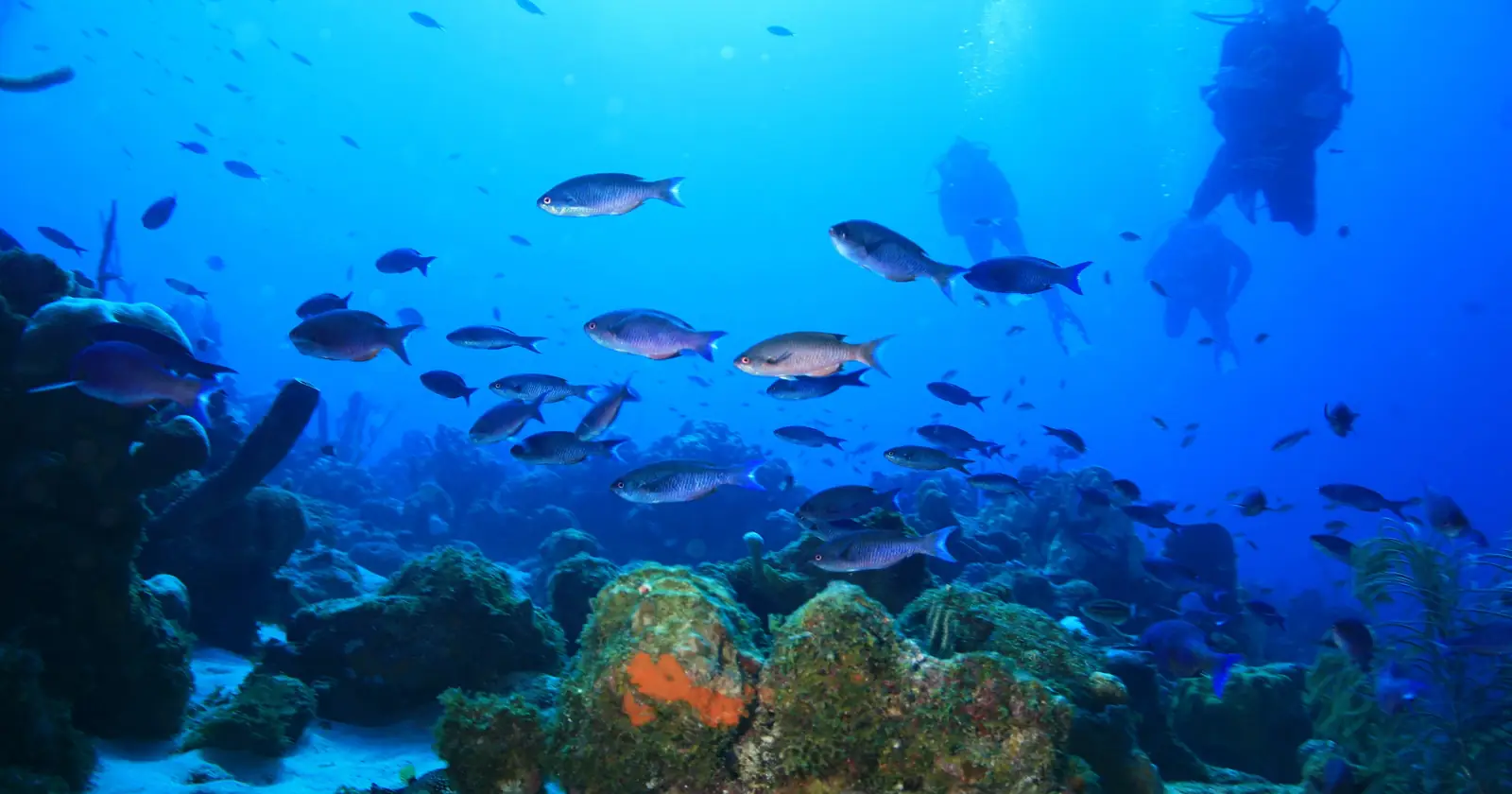
Photo: Laszlo Ilyes via Wikimedia Commons, CC BY 2.0, cropped.
What makes a good drift dive
Drift diving is graded by how the current behaves, not by how strong it is. The places below have flow predictable enough to plan a dive around and operators who run live-boat pickups. Sites with downcurrents or washing-machine conditions are left off whatever the marine life is doing.
The buoy is the whole safety system
On a drift the boat does not sit above you; it follows you, and it follows the buoy. That makes the DSMB the piece of kit the dive actually depends on, and DAN is specific about it. Size first: outside a training pool, “divers should use at minimum a 6-foot (1.8-meter) DSMB, which provides better visibility to surface support and other boats”. The little orange sausage clipped to a jacket is a training aid, not a signal a skipper can find in a swell.
Then the three ways a deployment goes wrong, all of which DAN names. Never clip the reel or spool to yourself: “if it jams, the excess buoyancy could cause a rapid ascent”, and a boat or a bystander pulling the line after the buoy is up does the same thing. Keep lines taut and away from the body, because slack line in current is how divers get wrapped. And carry a cutting device you can reach, every time.
Those four points are worth checking against a shop before you book a week of drifts. A centre that hands out three-foot buoys and no reel training is telling you what its pickups look like.
Cozumel
Effortless drift diving along Palancar, Santa Rosa and Punta Tunich inside a marine park, with warm, clear water.
Caribbean, effortless driftsRead the guide → 8°44′S 115°33′E · IndonesiaNusa Penida
Much of the diving is drift, with strong currents and cooler water on the mola dives; Lembongan has gentler options.
Strong currents, mantasRead the guide → 8°29′S 119°53′E · IndonesiaLabuan Bajo (Komodo)
Batu Bolong and Castle Rock are advanced drift and pinnacle dives that reward experience and reef hooks.
Komodo, advanced driftsRead the guide → 0°14′S 130°31′E · IndonesiaRaja Ampat
Cape Kri, Sardine Reef and Blue Magic can run strong; drift technique, a reef hook and an SMB are part of the deal.
World-class, current-fedRead the guide → 4°29′N 118°37′E · MalaysiaSemporna (Sipadan)
Sipadan throws strong, sometimes unpredictable current, especially at Barracuda Point, on one of the planet's best walls.
Barracuda Point wallRead the guide →Picking a drift destination
- Your first drifts: Cozumel, where the current does the work along a shallow marine-park reef.
- Big animals with the current: Nusa Penida for mantas and mola, Komodo for pinnacle drifts.
- The most demanding: Raja Ampat and Sipadan, where reef-hook technique and real logged experience matter.
- Be candid with operators about your experience; on these sites the currents are not a formality.
FAQ: Drift Diving Destinations
What is drift diving, and is it hard?
Drift diving means letting the current carry you along the reef while the boat follows your bubbles, which is effortless and exhilarating on gentle sites. It gets serious where currents run strong or unpredictably, as at Sipadan's Barracuda Point or Komodo's Batu Bolong, where advanced certification, reef-hook technique and an SMB are expected.
Where should a newer diver start with drift diving?
Cozumel is the friendliest introduction we cover: warm, clear water and long, easy drifts along Palancar, Santa Rosa and Punta Tunich inside a marine park, though it still suits confident divers. Around Nusa Penida, Lembongan has gentler options while the mola sites are for experienced divers only.
Sources
- What the Red List says about the reefs. IUCN Red List of Threatened Species, version 2026-1: “More than 49,500 species are threatened with extinction”, “28% of all assessed species”, with reef corals at 44% and sharks & rays at 38% against 26% for mammals and 11% for birds. iucnredlist.org. Read 12 September 2026.
- A note on the two entries above. Both the DSMB and the drift-diving citations on this page are Divers Alert Network material, published on its two sites. They are one organisation, not two independent checks, which is why the Red List entry above was added rather than relying on them alone.
- DSMB size and deployment. Divers Alert Network, “Popping the Question: What is a DSMB?”, the six-foot minimum outside training, never clipping the reel or spool to yourself, keeping lines taut and away from the body, and an easily accessible cutting device on every deployment. dan.org. Read 8 September 2026.
- What a broken buoy does. Divers Alert Network case summary, rapid ascent following a failed DSMB, for why the buoy is treated as safety equipment rather than a marker. world.dan.org. Read 8 September 2026.
- Each entry links to our full guide for that place, and those guides carry the external sources and read dates behind the claims summarised here. They are the place the readings are recorded, not the evidence for them: Cozumel, Nusa Penida, Labuan Bajo (Komodo), Raja Ampat, Semporna (Sipadan).