Antalya vs Fethiye for Diving: Which Base for a Season?
 by Yannick SchrothOct 13, 202611 min read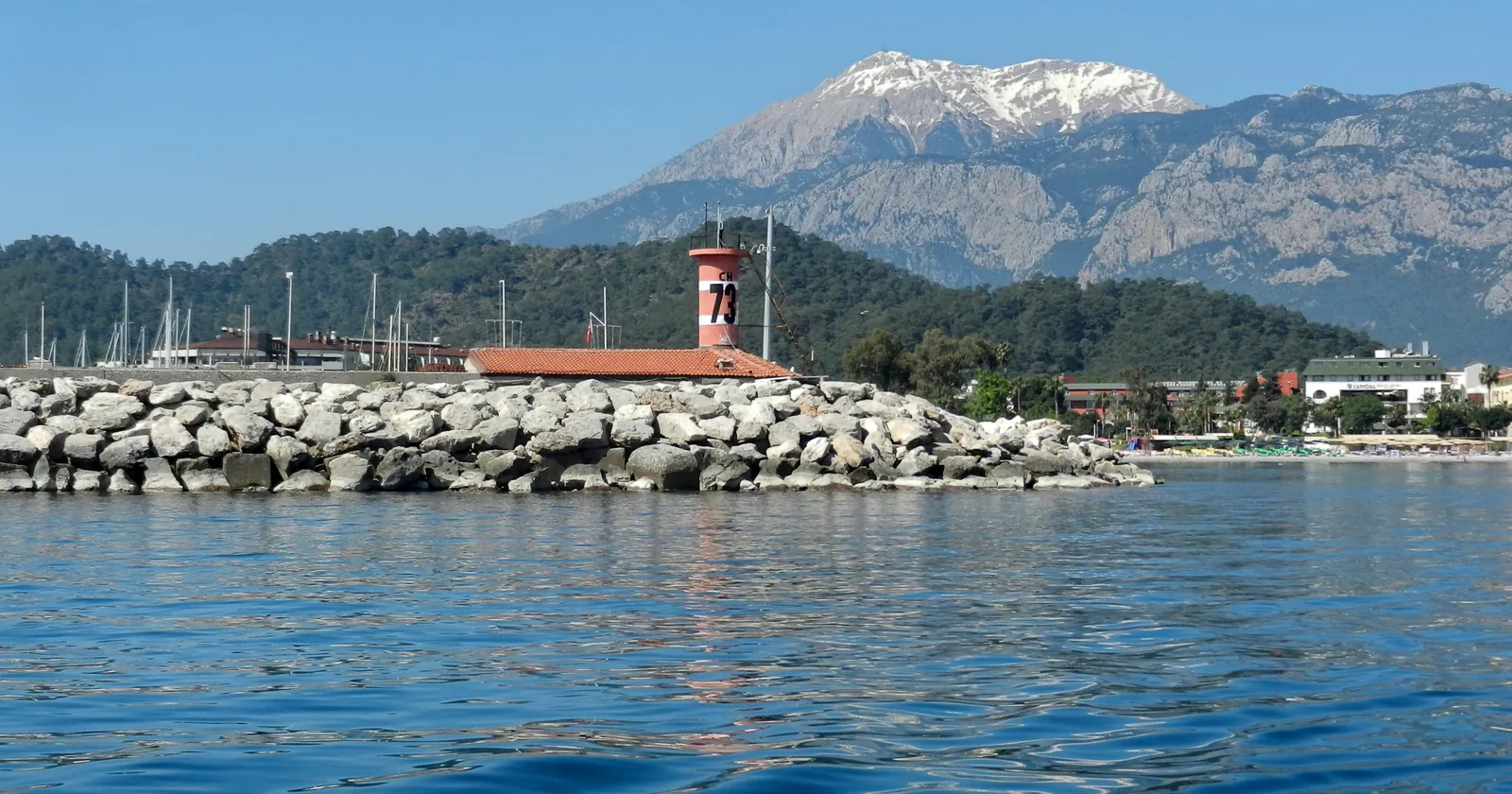
The breakwater of Kemer's yacht harbour, April 2012, the Antalya side of this comparison; the wreck of the Paris lies about 1.5 km off this harbour. Photo: Tanya Dedyukhina, Wikimedia Commons, CC BY 3.0, cropped.
| Antalya (city, Kemer, Tekirova) | Fethiye (and the Gulf of Göcek) | |
|---|---|---|
| The diving the province itself describes | The Paris wreck off Kemer, the Üç Adalar off Tekirova, shore entries under the city cliffs | The islands of Fethiye bay, inside the Fethiye-Göcek Special Environmental Protection Area |
| Boxes closed to all but scientific diving | None on the Kemer and city coast; ten further west, from Kalkan to Olympos | Five, A6 to A10, from the west shore of the Gulf of Göcek to Yedi Burun |
| Depth limit and guide rule | The same 1990 regulation: 30 meters, 42 in training, and foreign divers with a Turkish guide diver | |
| Sea temperature | One official Mediterranean series for both: 16.0°C in February, 28.1°C in August | |
| Nearest hyperbaric center | Antalya Training and Research Hospital, in the city | Bodrum or Marmaris, as named by the Muğla governor in November 2024 |
| International passengers, January 2025 | 513,242 at Antalya | 8,536 at Dalaman |
Dive sites and permits are from the Antalya provincial culture and tourism directorate and the Turkish Official Gazette; the sea series is the Turkish State Meteorological Service's; passenger figures are from the airports authority DİHMİ. All read 13 October 2026.
Antalya vs Fethiye under water: Kemer's wrecks or Fethiye's islands
Antalya vs Fethiye is first a choice between two kinds of boat day, and the official pages describe each in their own words.
On the Antalya side the center of gravity is Kemer, which the provincial culture and tourism directorate calls the place with the most dive schools in the country. Its wreck is the Paris, a French warship lost in the First World War, thought to date from 1896, lying on sand about 1.5 kilometers off Kemer yacht harbor with three decks and two holds. The same directorate page gives her depth twice: 25 meters in her own entry and 33 meters in the Kemer section. That gap is not trivial. At 25 meters the sand is inside the Turkish sport limit; at 33 it is past it. South of Kemer, the Üç Adalar off Tekirova sit about 45 minutes from the marina by boat, with a canyon the directorate says holds large rays, caves, schools of bluefin tuna in August and September, and a possible monk seal.
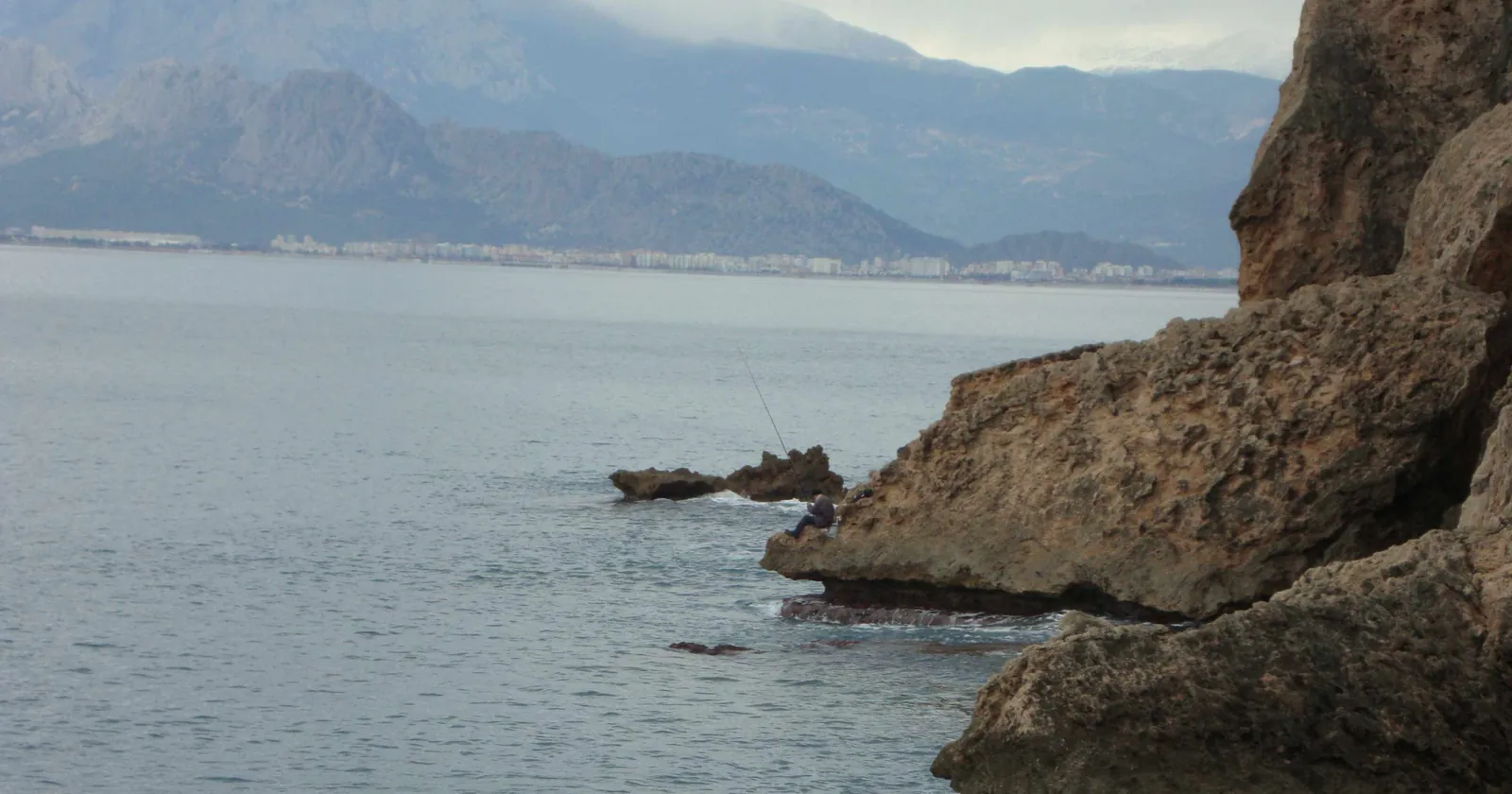
The city adds shore diving. Between Lara and Konyaaltı beaches the cliffs run down from 14 to 25 meters, and the directorate names the foot of the road down to Konyaaltı as an easy way in. Two wrecks near the city need paperwork. The San Didier, sunk in 1942 a kilometer off the yacht harbor, needs permission from the Antalya Governorship and the Marine Police, and the B-24 off Manavgat needs special permission. The Antalya diving guide goes site by site.
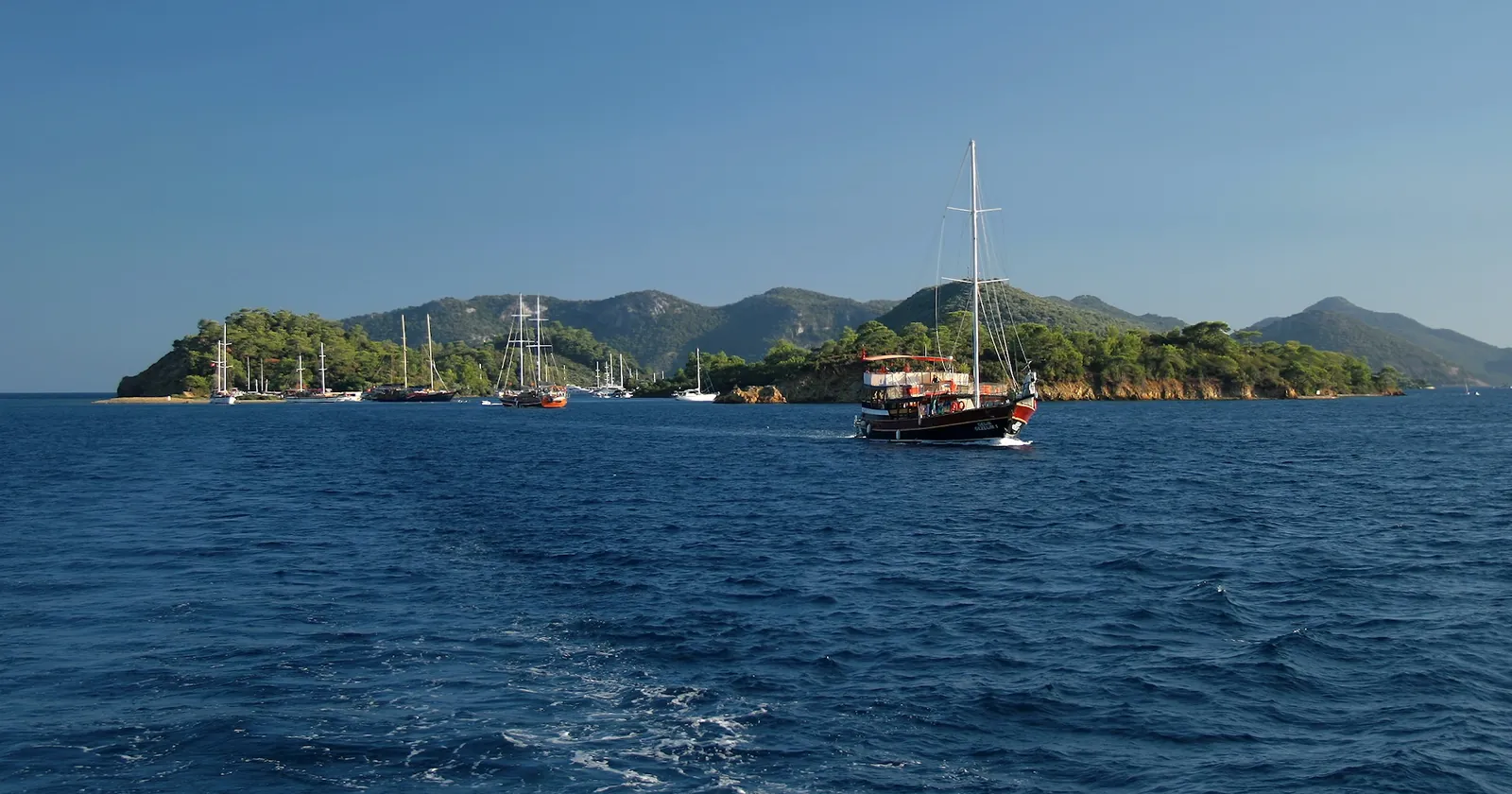
Fethiye's water is a protected area first. The Fethiye-Göcek Special Environmental Protection Area was declared by Council of Ministers decision 88/13019 of 12 June 1988, and the environment ministry's nature directorate puts it at 805.37 square kilometers. Its islands are the draw: the ministry names Şövalye, Tersane, Kızıl Ada, Katrancı, the Delikli islands, Yassıca and Domuz among the Twelve Islands west of the bay. A 2010 ministry survey logged 581 scuba dives at 88 stations down to 55 meters and recorded 1,225 species between 5 and 55 meters, with loggerhead turtles, monk seals and bottlenose dolphins at the stations.
Scale is harder to pin down. At a dive tourism workshop in Fethiye in November 2024, the head of the local Chamber of Shipping branch put the area at about 30,000 dives a year. That is his figure, not a statistic. The plane wreck people ask about, Air France's Constellation that ditched off Fethiye on 3 August 1953, was filmed by the Turkish Navy at 257 meters, as reported in February 2018: a story for land, not a dive. The Fethiye diving guide has the full account.
Five no-dive boxes off Fethiye, none on the Kemer and Antalya city coast
Turkey closes water to divers by coordinates. The instrument is decision 2016/8743 of 5 April 2016, published in the Official Gazette of 20 May 2016. Its Article 1 bars all diving other than for scientific purposes inside the areas on its annexed maps and coordinate lists. The Mediterranean annex numbers them A1 to A21, and it falls very unevenly on these two bases.
Fethiye has five: A6 to A10. Plotted on a map, they cover the west shore of the Gulf of Göcek with the Sarsala and Hamam coves, a stretch of shore at Kayaköy, Gemiler Island, the coast below Faralya down to Kabak, and the headlands at Yedi Burun. The place names are a reading aid; the decision itself lists only corner points.
Antalya's city coast has none. Ten boxes, A11 to A20, sit on the western Antalya coast between Kalkan and Olympos, four of them between Kaş and Kekova. The next entry, A21, is off Hatay at 35°56′ east. Between them there is no numbered box at all, which leaves Kemer, Tekirova and the Gulf of Antalya outside the map. Article 1 does have a second limb further east: from Alanya to the Syrian border, the shores of archaeological sites are closed until the underwater survey there is finished. Of all the Antalya vs Fethiye differences, this one is written into law.
Göcek adds a local layer. Rules for the Göcek bays, in force since 4 May 2010, ban diving in a five-cornered area that box A6 later matched, cap boat speed at 6 knots, and let day boats into Sarsala, Kurşunlu and other named coves only between 10:00 and 20:00. You will see plenty of boats in water you may not dive.
One 1990 rulebook for Antalya and Fethiye: 30 meters and a Turkish guide diver
The diver's own rules do not change between the two provinces. They come from the Regulation on Scuba Diving for Sporting Purposes in Turkish Territorial Waters of 3 March 1990, read in its current text on the state legislation portal.
- Depth: Article 4 defines a sport scuba dive as one with a depth limit of 30 meters, a maximum of 42 in training, and “kesinlikle dekompresyonsuz”, strictly without decompression. Article 10 requires medical personnel and equipment on dives past 30 meters.
- Guide: Article 9 makes it compulsory for foreign nationals to dive accompanied by a Turkish guide diver, who is responsible for protecting cultural and natural property during the dive.
- Permission: Article 7 makes every scuba dive by a foreigner subject to permission from the provincial tourism directorate, then exempts training dives and two-person buddy dives outside the prohibited zones from notice and permission. How the two sentences combine for a foreign buddy pair is not spelled out.
- Certification: Article 8 asks for the federation's dive card but accepts certificates from bodies training to international standards. For foreigners it asks for membership of the international underwater sports federation, or a document from their own country's authority. It names no training agency.
In practice the guide rule shapes the week more than the depth rule. Diving here is guided boat diving, in Kemer and in Fethiye alike.
Sea temperature in Antalya and Fethiye: one official curve for both
The Turkish State Meteorological Service publishes one sea temperature series for the Mediterranean, now covering 1970 to 2025. It names no station, so it is the same curve for Kemer and for Fethiye bay. Its monthly means:
| Month | Mediterranean mean, 1970–2025 |
|---|---|
| February | 16.0°C |
| April | 18.1°C |
| June | 23.9°C |
| August | 28.1°C |
| October | 24.6°C |
| December | 18.5°C |
On water temperature, Antalya vs Fethiye is a tie. The trend runs one way. The mean was 21.0°C from 1970 to 1980 and 22.3°C from 2014 to 2025. At the Fethiye workshop, the Chamber of Shipping branch head described a sea that does not fall below 19°C in any month. The regional series puts five months under that line, December to April, so pack for 16°C in late winter whichever town you pick. The travel wetsuit guide covers the thickness question.
For a season stay, the useful local figure comes from the environment ministry's leaflet on Kaş-Kekova, the protected area between the two: it gives the diving season there as April to January.
The nearest decompression chamber: Antalya city, or Bodrum and Marmaris from Fethiye
This is the clearest practical gap in the Antalya vs Fethiye question.
Antalya Training and Research Hospital, a Ministry of Health hospital in the city, runs an Underwater and Hyperbaric Medicine Center. The first two disease groups on its page are decompression sickness and air or gas embolism. The page does not publish hours or say whether the chamber takes emergencies at night, so ask your operator how its plan reaches it from Kemer.
For Fethiye, the Muğla governor told the November 2024 dive workshop that the province had hyperbaric oxygen centers in its Bodrum and Marmaris districts, and that one would open soon at the Muğla Sıtkı Koçman University Training and Research Hospital. He named none in Fethiye. Treat the university unit as unconfirmed until an operator names it in writing. Ask the operator which chamber its emergency plan names, and check what your dive insurance pays for the transfer.
Antalya airport vs Dalaman in winter: the flight gap for a season stay
For a few summer weeks, Antalya vs Fethiye barely turns on the airports. For a season it does.
DİHMİ's year-end table for 2025 counts 39,000,177 passengers at Antalya, 32,151,890 of them international, and 5,577,142 at Dalaman, the airport for Fethiye, with 3,627,229 international. The monthly split, calculated for this page from the authority's cumulative tables, shows what that means in practice:
| International passengers, 2025 | Antalya | Dalaman |
|---|---|---|
| January | 513,242 | 8,536 |
| February | 480,773 | 7,689 |
| August | 5,220,668 | 673,435 |
| December | 569,407 | 11,493 |
In January 2025 Dalaman handled 72,626 domestic passengers against 8,536 international ones. Antalya's winter is quieter than its summer, but it stays an international airport every month. If you plan to come and go between November and March, base yourself near Antalya, or expect most winter trips out of Fethiye to start with a domestic flight.
Turkey's digital nomad visa works the same in Antalya and Fethiye
The visa is national, so the town makes no difference. The Ministry of Culture and Tourism's GoTürkiye platform issues a Digital Nomad Identification Certificate, which you then take to a Turkish visa center or consulate to apply for the visa itself. Its requirements, as of October 2026:
- Age: “a Digital Nomad between the ages of 21-55”.
- Nationality: 36 countries: the EU states except Cyprus, plus Norway, Iceland, Liechtenstein, the United Kingdom, Switzerland, the USA, Canada, the Russian Federation, Ukraine and Belarus. Australia and New Zealand are not on the list.
- Income: “a monthly income of 3,000 USD or 36,000 USD annually”.
- Work: a contract with a company outside Türkiye, as an employee or self-employed.
- Documents: a passport valid for at least six months from arrival, a university diploma and a biometric photo.
The platform does not state how long the visa runs, so confirm that with the consulate. The ministry's launch release names both regions, Muğla with Fethiye and Antalya, as digital nomad bases. Living on this coast is covered in the Ölüdeniz and Fethiye base guide.
Dive shops in Antalya and Fethiye on the registers
The two lists are the same size and built the same way, from public registers.
| Base | Businesses on our list | Green Fins members |
|---|---|---|
| Antalya | 9, all dive centers in the SSI register | 0 |
| Fethiye | 9: 8 SSI dive centers and 1 windsurf, kite and sailing center in the VDWS register | 0 |
Both registers file these businesses under the province, Antalya or Muğla, rather than the town, so a search for Kemer or Fethiye finds none of them. Neither coast has a Green Fins member. The operating permit is a separate document from the provincial governorship, published as no list, so ask to see it. Kaş, in Antalya province but closer to Fethiye along the coast, has its own list of 11 centers.
Antalya vs Fethiye in five lines
- Antalya for wrecks and shore dives: the Paris off Kemer, the city cliffs, and no closed box on that coast.
- Fethiye for islands: a protected gulf with 1,225 species recorded, and five boxes closed to divers, Gemiler Island among them.
- Same rules, same sea: 30 meters, a Turkish guide diver, and a 16.0°C February on one official curve.
- Antalya has the chamber in town; for Fethiye the governor named Bodrum and Marmaris.
- Winter flights favor Antalya: 513,242 international passengers in January 2025, against 8,536 at Dalaman.
Antalya for a winter season, Fethiye for a summer in the gulf
Antalya vs Fethiye comes down to the calendar. Pick Antalya if you are staying from autumn into spring, if wrecks and shore entries appeal more than island hopping, and if you want the hyperbaric center and an international airport within a drive. Kemer is the dive town; the city is where the year-round life is.
Pick Fethiye for a stay between April and October, when Dalaman is busy with international flights and the island boat days of the gulf are the point. Plan around the closed boxes, ask early about the chamber, and do not book the plane wreck. If neither fits, Kaş sits on the coast between the two, with the Kaş-Kekova protected area and its own closed water; the Kaş diving guide sets it out.
FAQ: Antalya vs Fethiye
Is Antalya or Fethiye better for diving?
It depends on the diving you want. Antalya has the Paris wreck off Kemer, shore entries under the city cliffs and no closed dive box on that coast. Fethiye has the islands of a protected gulf, where a 2010 ministry survey recorded 1,225 species, but five boxes on its coast are closed to all but scientific diving.
Is Antalya or Fethiye better for a winter stay?
Antalya. Its airport handled 513,242 international passengers in January 2025, against 8,536 at Dalaman, the airport for Fethiye, according to the airports authority DİHMİ. Antalya also has a hyperbaric center in the city. The sea is the same on both coasts: the official Mediterranean series puts February at 16.0°C.
Where is the nearest decompression chamber to Antalya and Fethiye?
For Antalya, the Underwater and Hyperbaric Medicine Center at Antalya Training and Research Hospital, in the city. For Fethiye, the Muğla governor named hyperbaric centers in Bodrum and Marmaris in November 2024 and said one would open at the university hospital in Muğla. He named none in Fethiye itself.
Can you dive the plane wreck at Fethiye or the wrecks off Antalya?
Not the Fethiye plane: the Air France Constellation lies at 257 meters, far past the 30-meter Turkish sport limit. Off Antalya, the Paris near Kemer lies at 25 or 33 meters depending on which entry of the provincial page you read. The San Didier and the B-24 off Manavgat need official permission first.
Can you work remotely from Antalya or Fethiye on Turkey's digital nomad visa?
Yes, if you qualify. The GoTürkiye platform asks for an age of 21 to 55, citizenship of one of 36 listed countries, a university degree, a contract with a company outside Türkiye, and income of 3,000 USD a month or 36,000 USD a year. The certificate is then taken to a Turkish consulate or visa center.
Note: Closed areas, permits, flight schedules and visa terms on this coast change. Check them with the dive operator, the provincial directorate and the Turkish consulate before you commit to a season.
Sources
- Antalya dive sites: Kemer as the place with the most dive schools in the country (“Ülkemizin en çok dalış okullarının bulunduğu”); the Paris at 33 m in the Kemer section and at 25 m in its own entry, 1.5 km off Kemer yacht harbor, built about 1896, three decks and two holds; the Üç Adalar off Tekirova, about 45 minutes from Kemer yacht harbor; the Lara to Konyaaltı cliffs from 14 to 25 m; the San Didier and its permission from the Antalya Governorship and the Marine Police Branch Directorate; the B-24 near Manavgat and its special permission. Antalya Provincial Directorate of Culture and Tourism, read 13 October 2026. antalya.ktb.gov.tr
- Fethiye-Göcek Special Environmental Protection Area: declared by Council of Ministers decision 88/13019 of 12.06.1988, 805.37 km², the named islands. Ministry of Environment, Urbanization and Climate Change, nature directorate. The live server did not respond on 13 October 2026, so the page was read in the Internet Archive copy of 12 November 2024. The 2010 survey (88 stations, 581 scuba dives, to 55 m, 1,225 species between 5 and 55 m): ministry project summary (PDF), as read for our Fethiye guide on 25 September 2026.
- The closed boxes: decision 2016/8743 of 5 April 2016, Article 1 and the Mediterranean annex A1 to A21, including the second limb on archaeological shores from Alanya to the Syrian border. Official Gazette of 20 May 2016, issue 29717, resmigazete.gov.tr (PDF). The annex is a scanned image; its corners were read page by page for our Fethiye and Kaş guides on 25 September 2026, and the place names come from plotting them on OpenStreetMap as a reading aid.
- The Göcek bay rules, in force 04/05/2010: the no-dive area, the 6-knot limit and the day-boat hours and coves. Ministry text, webdosya.csb.gov.tr (PDF), read 13 October 2026.
- The 1990 diving regulation: Article 4(b) (“derinlik limiti 30 mt (eğitim esnasında maksimum 42 mt.)”, “kesinlikle dekompresyonsuz”), Article 7, Article 8, Article 9 (“Yabancı uyrukluların sportif dalışlarını Türk rehber balıkadam refakatinde yapmaları zorunludur”) and Article 10. Regulation of 3 March 1990, Official Gazette issue 20450, current text on the state legislation portal, read 13 October 2026. mevzuat.gov.tr
- Sea temperature: Mediterranean sea water temperature, 1970 to 2025, monthly means (16.7, 16.0, 16.6, 18.1, 20.8, 23.9, 26.7, 28.1, 27.0, 24.6, 21.4 and 18.5°C) and the period means of 21.0°C for 1970–1980 and 22.3°C for 2014–2025. Turkish State Meteorological Service, read 13 October 2026. mgm.gov.tr (PDF). The Kaş-Kekova season (April to January, “uzun bir dalış sezonu”, a long dive season): environment ministry leaflet, webdosya.csb.gov.tr (PDF), read 13 October 2026.
- The Fethiye workshop of 8 November 2024: the governor on hyperbaric oxygen treatment centers in Bodrum and Marmaris and one to open at the Muğla Sıtkı Koçman University Training and Research Hospital; the Chamber of Shipping Fethiye branch head on about 30,000 dives a year and a sea temperature that does not fall below 19 degrees in any month. Muğla Governorship, read 13 October 2026. mugla.gov.tr. Whether the university center has opened is unverified, needs human check: the hospital site did not respond on 13 October 2026.
- Antalya Training and Research Hospital: Sualtı Hekimliği ve Hiperbarik Tıp Merkezi, disease groups beginning with decompression sickness and air or gas embolism, page dated 25 June 2020. Read 13 October 2026. antalyaeah.saglik.gov.tr
- Airport passengers: DİHMİ passenger traffic tables, December 2025 cumulative (Antalya 39,000,177, of which 32,151,890 international; Dalaman 5,577,142, of which 3,627,229 international) and the monthly cumulative tables for 2025, from which the monthly figures were calculated for this page. Read 13 October 2026. December 2025 (PDF), January 2025 (PDF)
- The 1953 ditching and the wreck at 257 m: the French investigation report of 16 March 1954, BEA (PDF); the 257 m figure is triangulated from TRT Haber, Euronews and Milliyet, as read for our Fethiye guide on 25 September 2026; the navy's own release was not found.
- Digital Nomad Identification Certificate: age 21-55, the 36 eligible nationalities, passport, diploma, contract outside Türkiye, biometric photo, “a monthly income of 3,000 USD or 36,000 USD annually”. GoTürkiye, read 13 October 2026. requirements, launch release
- SSI training center register and VDWS station register, for the counts. divessi.com, vdws.de
- Counted from the operator lists: Antalya and Fethiye, both compiled 4 September 2026.