Wakesurfing vs Wakeboarding: Which to Try?
 by Yannick Schroth
Jul 29, 2026
7 min read
by Yannick Schroth
Jul 29, 2026
7 min read
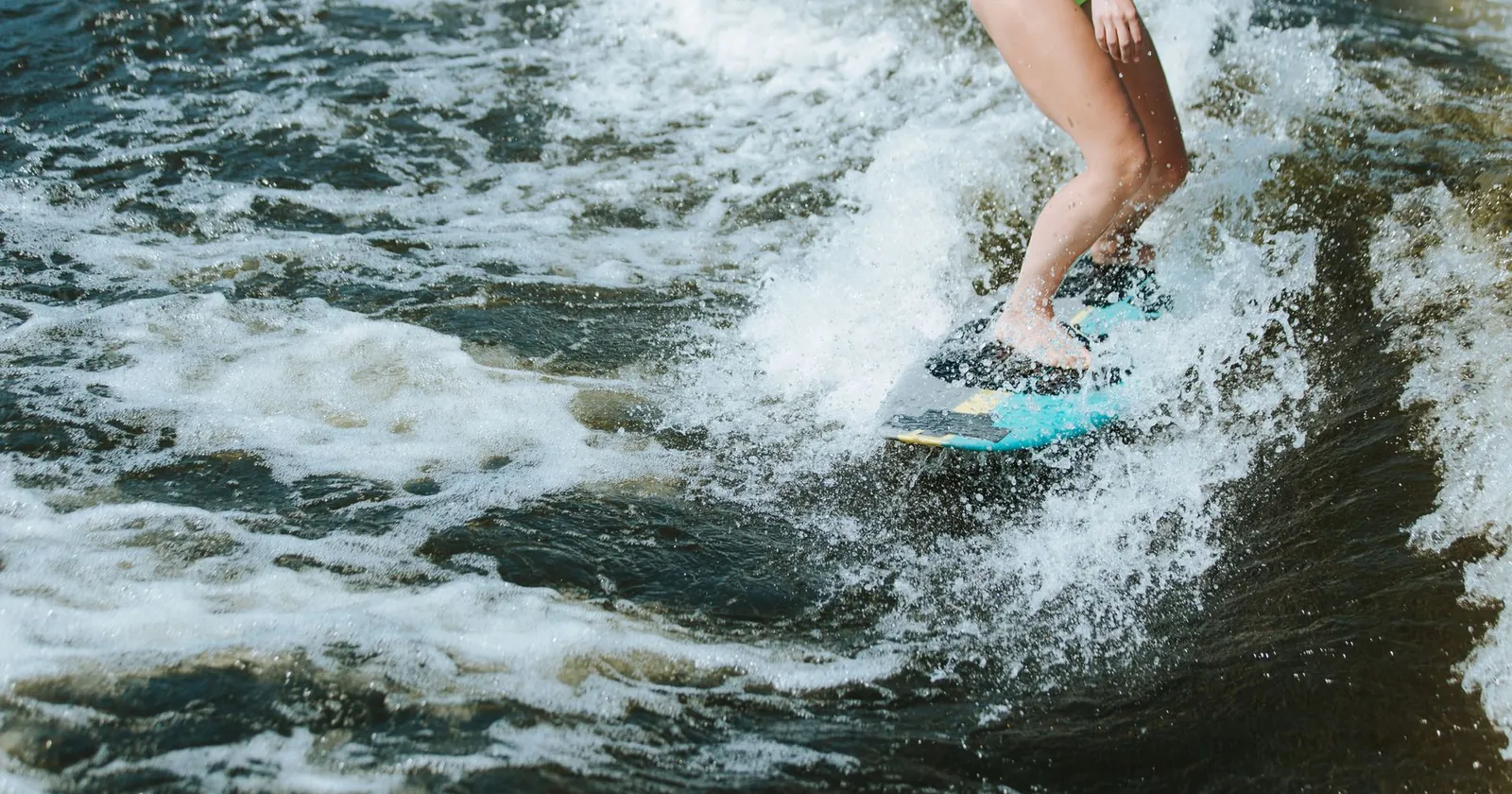
Photo: Ron Lach via Pexels (free license).
This is a general comparison, not a substitute for a lesson and the operator's safety briefing.
Key takeaways
- Rope: wakeboard holds it throughout; wakesurf drops it and surfs free.
- Feet: wakeboard is strapped in; wakesurf is free, like a surfboard.
- Speed: wakeboard is fast; wakesurf is slow and low-impact.
- Boat: wakesurf needs an inboard wake boat; wakeboard is flexible (or cable).
- Access: wakeboard wins on cable parks; wakesurf needs the right boat.
The core difference
Both start with a tow behind a boat, but that is where they split. Wakeboarding keeps you attached to the rope the whole ride, feet locked into bindings, towed at speed so you can carve and launch off the wake. Wakesurfing tows you up slowly, then you let go of the rope and surf the steep, powerful wake right behind the boat, feet free on a surf-style board, as if riding a wave that never ends.
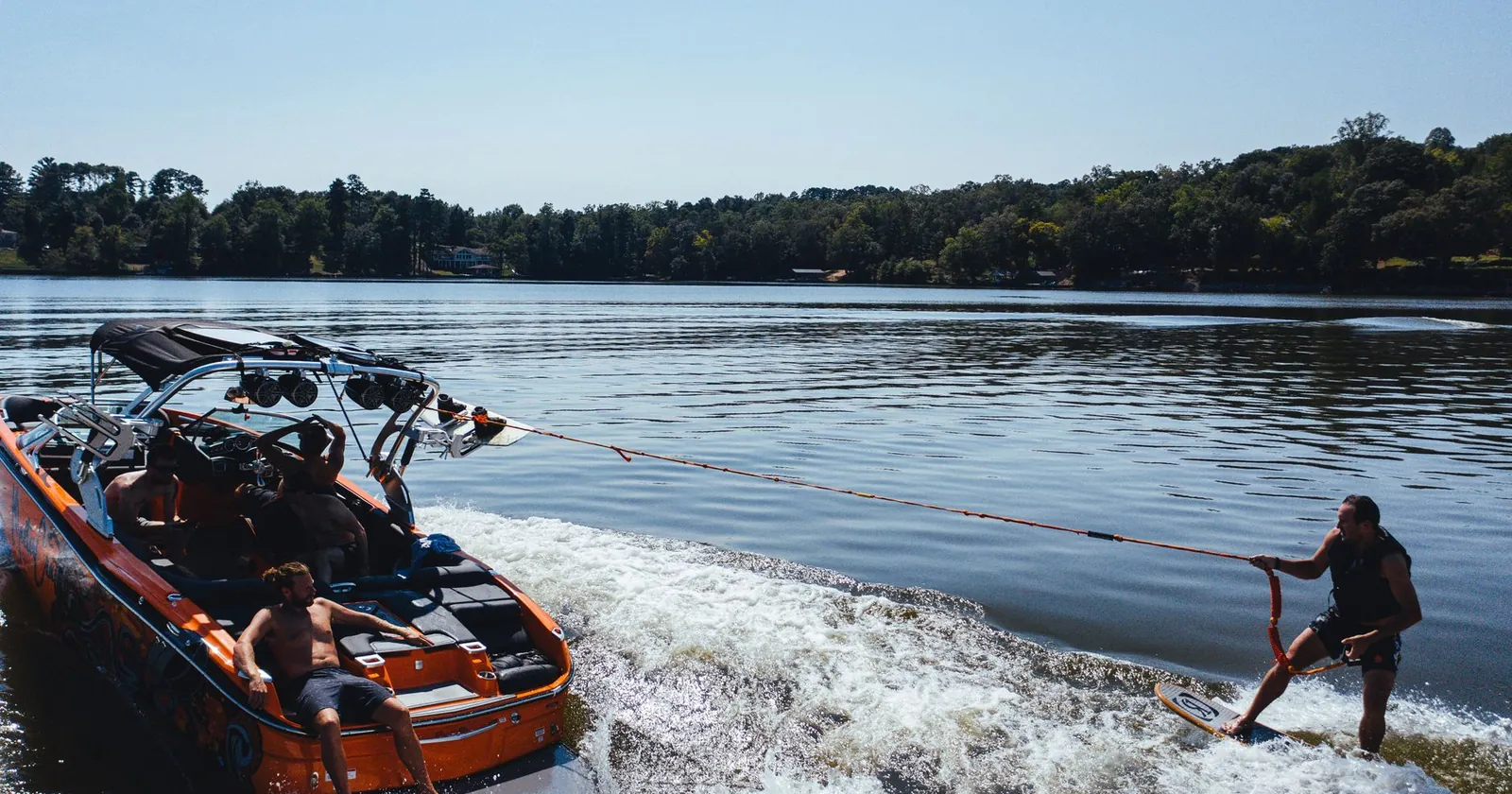
Wakesurfing and wakeboarding head to head
| Wakeboarding | Wakesurfing | |
|---|---|---|
| Rope | Held throughout | Dropped once up |
| Feet | Strapped into bindings | Free, like a surfboard |
| Speed | Faster (harder falls) | Slow, low-impact |
| Boat needed | Many tow boats, or none (cable) | Inboard wake boat only |
| Cable parks | Yes, cheap and widespread | No |
| Feel | Aggressive, air and tricks | Mellow, surf-like |
| Getting up | Steeper first hurdle (at speed) | Gentler, softer falls |
The boat matters (a lot)
This is the practical decider. Wakesurfing must be done behind an inboard (V-drive) boat built to throw a big, clean wake, usually with ballast, because you ride close behind it. It should never be done behind an outboard or sterndrive boat, where the propeller sits dangerously close to the rider. Wakeboarding is far more flexible: many tow boats work, or no boat at all at a cable park. For a traveling nomad, that makes wakeboarding much easier to find.
Why the boat rule exists, and the line the law draws
Every guide says wakesurfing needs an inboard boat and leaves it there. The reason is worth spelling out, because it also explains the one thing you must not do behind any boat.
Wakesurfing puts you closer to the transom than any other towed sport, and the transom is the worst place to be. California's boating agency states it plainly: “The transom is where carbon monoxide collects. Stay away from the transom while the vessel is idling or underway.” Symptoms of poisoning, “nausea, dizziness, confusion, headache and fainting”, are also what a tired rider feels on a hot day, which is exactly why they get missed.
There is a version of this that is not a judgement call but an offence. “Teak surfing”, defined by that agency as “holding onto the swim platform or transom of an underway vessel to bodysurf on the wake of the vessel”, has been against the law in California since 1 January 2005. Wakesurfing proper is not teak surfing: you are on a board, off the rope, metres back: but the distance between the two is the distance between a sport and a prosecutable act, and it is measured in a couple of metres of rope.
So the practical rules behind “you need the right boat”: ride the length of rope the boat's builder specifies rather than creeping forward for a better push, never start or wait at the platform with the engine running, and treat a headache on the water as a reason to come in rather than a reason to drink more water.
The cable-park side of wakeboarding has no exhaust at all, which is one of its quiet advantages, and it does have a written standard: the IWWF's cable wakeboard rules require “a suitable well fitted helmet in the course”, with disqualification for riding without one, and define the life vest as something that “must float the Rider” and “must be constructed to provide adequate protection from impact damage to the ribs and internal organs”. Those are competition rules rather than a law for a day pass, but they are the standard the sport sets for itself, and they apply to a body hitting water at speed whichever of these two sports put it there.
Which should you try first?
- Want relaxed and low-impact, and have a proper wake boat? Wakesurfing is a joy.
- Want the cheapest, most available option? Wakeboard at a cable park, especially in Southeast Asia.
- Chasing jumps and tricks? Wakeboarding opens that door.
- Kind to the body? Wakesurfing's slow speed and free feet are gentler.
FAQ: wakesurfing vs wakeboarding
What is the difference between wakesurfing and wakeboarding?
In wakeboarding your feet are strapped into bindings and you hold the rope the whole time while being towed at speed, riding and jumping off the wake. In wakesurfing you ride a surf-style board with your feet free, get towed up slowly, then drop the rope and surf the boat's large wake unattached. Wakeboarding is faster and more aggressive; wakesurfing is slower, lower-impact and feels like surfing an endless wave.
Which is easier, wakesurfing or wakeboarding?
Many people find wakesurfing gentler because it is slower, the falls are softer, your feet are not locked in, and once up you are surfing a stable wake. Wakeboarding's getting-up phase, being pulled up at speed with your feet strapped in, is the steeper first hurdle. That said, once up, staying in the wakesurf sweet spot takes practice too. For a low-impact, relaxed introduction, wakesurfing often wins; for widespread, affordable access, wakeboarding at cable parks wins.
Do you need a special boat for wakesurfing?
Yes. Wakesurfing must be done behind an inboard (V-drive) boat designed to throw a large, clean wake, usually with ballast, because you ride close behind the boat. It should never be done behind an outboard or sterndrive boat, where the propeller is dangerously close to the rider. Wakeboarding is far more flexible: it can be done behind many types of tow boat, or with no boat at all at a cable park.
Can you wakesurf at a cable park?
No. Wakesurfing needs the large wake thrown by a specialized inboard boat, so it cannot be done at a cable park. Cable parks are for wakeboarding (and wakeskating and features), where an overhead cable tows you. This is a big practical difference: wakeboarding is widely accessible and cheap at cable parks around the world, while wakesurfing depends on access to a suitable wake boat.
Which should a beginner try first?
If you have access to a proper inboard wake boat and want a relaxed, low-impact, surf-like feel, wakesurfing is a lovely place to start. If you want the most accessible and affordable option, especially as a traveler, wakeboarding at a cable park is easier to find and cheaper, and it opens the door to jumps and features. Either way, take a lesson, wear the right flotation, and follow the operator's safety rules.
Yannick Schroth
Founder of NOMADREEF and a former digital nomad. This comparison explains how the two sports differ; it is not a substitute for a lesson and the operator's safety briefing. About the author · LinkedIn ↗
Sources
- Carbon monoxide, the transom, and the offence. California Department of Parks and Recreation, Division of Boating and Waterways: “The transom is where carbon monoxide collects. Stay away from the transom while the vessel is idling or underway”; “'Teak surfing' involves holding onto the swim platform or transom of an underway vessel to bodysurf on the wake of the vessel”; “As of January 1, 2005, 'teak surfing' and other similar recreational activities are against the law in California”; and the symptoms, “nausea, dizziness, confusion, headache and fainting”. One state's law, quoted as such. dbw.parks.ca.gov. Read 11 September 2026.
- The cable-park standard. IWWF Cable Wakeboard Council, Competition Guidelines for Cable Wakeboard & Wakeskate, effective 1 March 2025: “Riders must wear a suitable well fitted helmet in the course. If a rider performs their routine without a helmet, they will be disqualified from the competition”; the life vest “must float the Rider” and “must be constructed to provide adequate protection from impact damage to the ribs and internal organs”. cablewakeboard.net. Read 11 September 2026.
- Wakeboarding and wakesurfing conventions (tow speed, rope, boat requirements, cable parks).
- Our own how to wakeboard and wakeboarding gear guides.