Wakeboarding Gear for Beginners
 by Yannick Schroth
Jul 29, 2026
7 min read
by Yannick Schroth
Jul 29, 2026
7 min read
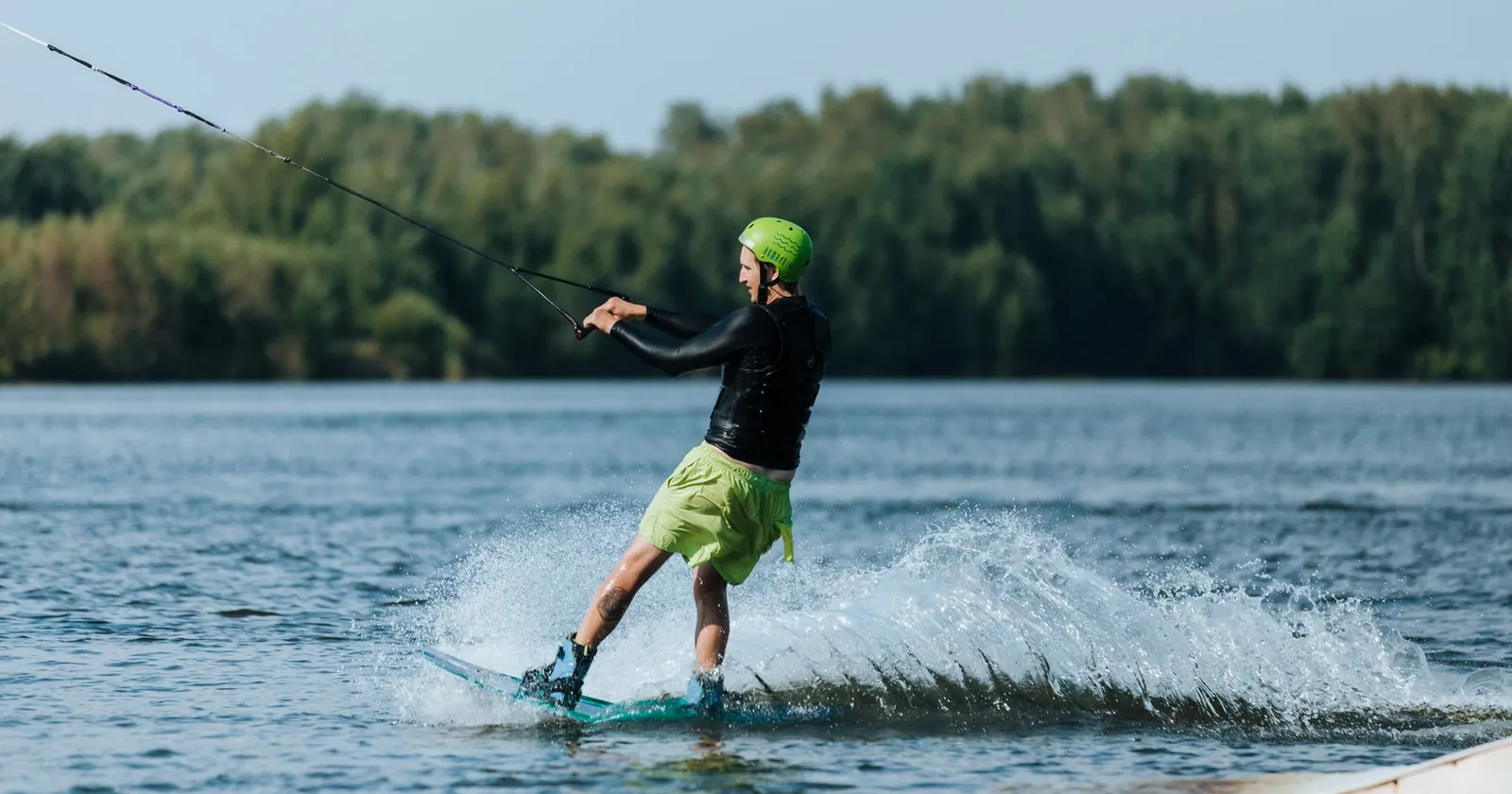
Photo: Ron Lach via Pexels (free license).
Sizing depends on your weight and level; use a shop or school's chart and advice before buying.
The longer end of your range is more stable and easier to ride.
Browse on Amazon →Beginners favour a certified vest over a low-float impact vest.
Browse on Amazon →Parks include kit; a used board and bindings is an affordable start.
Browse on Amazon →Recommendations by type and spec, not a tested product ranking; confirm fit/size with a shop. Any price is live at the retailer. See our disclosure.
Key takeaways
- Core kit: board + bindings, flotation vest, helmet (cable), rope (boat).
- Board size is by weight; beginners suit the longer end of their range.
- Vest fit is safety-critical; beginners favour a certified buoyancy aid.
- Cable adds a helmet; boats add a non-stretch rope and handle.
- Rent or use provided gear first; buy used to start affordably.
The board and bindings
A wakeboard's length is chosen by your weight (each board lists a weight range), and beginners suit the longer end of their range because it is more stable and easier to get up on. Shorter boards are livelier for tricks. Bindings (boots) should fit snugly and match the board. Flex, rocker and fins fine-tune the ride, so use a sizing chart and shop advice for your weight.
The flotation vest
Two types exist: a certified buoyancy aid (life jacket) that prioritises keeping you afloat, and an impact vest that is more flexible and protects against impacts but floats less. Beginners and weaker swimmers should favour a certified buoyancy aid. Whichever you choose, fit is critical so it will not ride up in a fall.
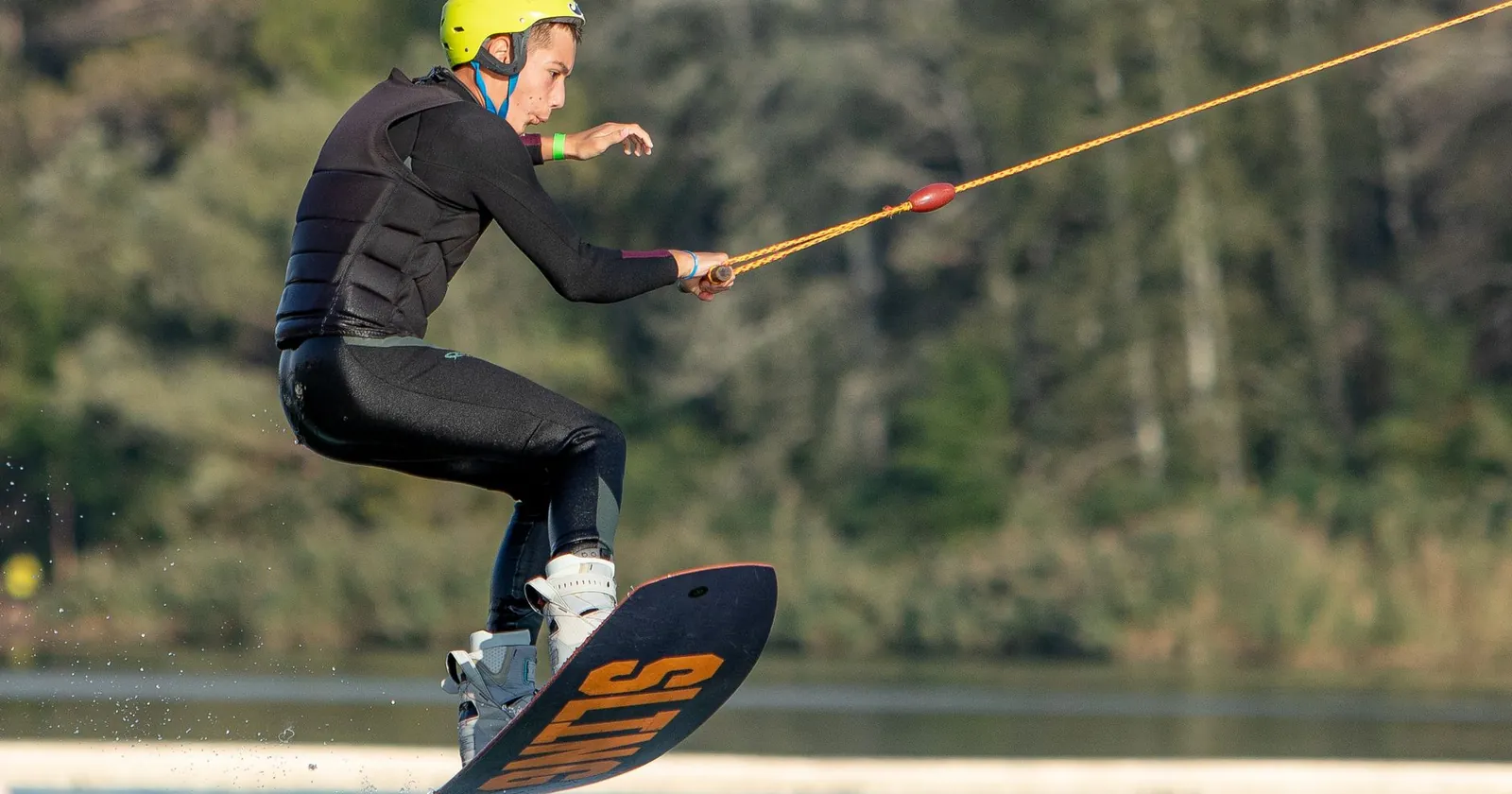
Helmet, rope and wetsuit
- Helmet: standard at cable parks, especially near features; a sensible watersport helmet that fits well.
- Rope and handle: boats need a non-stretch wakeboard rope (unlike a stretchy waterski rope) and a comfortable handle; cable parks do not, as the cable tows you.
- Wetsuit: for cooler water; see our travel wetsuit guide.
Cable vs boat gear, in short
The board, bindings and vest are largely the same. Cable riding adds a helmet and often boards built to take features; boat riding adds the non-stretch rope and handle. Own one setup and you can generally ride both.
Wakeboard brands worth a look
| Item | Beginner priority | Examples |
|---|---|---|
| Board + bindings | Stable, sized to your weight | Ronix, Hyperlite, Liquid Force, CWB |
| Vest | Certified buoyancy aid, snug fit | O'Brien, Ronix, Jobe, Mystic |
| Helmet | Watersport-rated, good fit | Sandbox, Pro-Tec, Mystic |
| Rope + handle (boat) | Non-stretch wakeboard line | Ronix, Straight Line, Proline |
These are examples, not a ranked verdict; use a shop's sizing chart for your weight before buying. Browse wakeboard gear on Amazon (affiliate), and specialist wake retailers for boards and bindings.
What the rulebook says a vest has to do
Buying guides sort vests by fit and price. The sport's governing body sorts them by function, and its wording explains a distinction that costs people ribs.
The IWWF's cable wakeboard rules require a life vest that “must float the Rider” and “must be constructed to provide adequate protection from impact damage to the ribs and internal organs”. Two jobs. A swimming buoyancy aid does the first and not the second, which is the whole argument for buying a proper impact vest rather than borrowing the orange thing from the boat locker. On helmets the same rules are blunt: “Riders must wear a suitable well fitted helmet in the course”, and riding without one is a disqualification, not a warning.
One item that belongs on a gear page and is not gear: behind a boat, “the transom is where carbon monoxide collects”, and the symptoms overlap with ordinary tiredness. No purchase fixes that; waiting away from the platform does.
FAQ: wakeboarding gear
What gear do you need for wakeboarding?
A wakeboard with bindings sized to you, a correctly-fitted buoyancy aid or impact vest, and at cable parks a helmet, plus a wetsuit in cooler water. If you ride behind a boat you also need a non-stretch wakeboard rope and handle. Beginners get all of this at schools and cable parks, so you rarely need to own gear until you are sure you enjoy the sport and know what suits you.
How do I choose a wakeboard size?
Wakeboard length is chosen mainly by rider weight, with manufacturers publishing a weight range for each board; heavier riders need longer boards. Beginners suit a longer board within their range because it is more stable and easier to get up on and ride, while shorter boards are more agile for tricks. Board flex, rocker and fin setup also affect the ride, so use a shop's or school's sizing chart and advice for your weight.
Do I need a special vest for wakeboarding?
You need a correctly-fitted flotation vest. There are two types: a certified buoyancy aid (life jacket), which prioritises keeping you afloat, and an impact vest, which is more flexible and protects against impacts but offers less flotation. Beginners and weaker swimmers should favour a certified buoyancy aid. Whichever you use, fit is critical so it will not ride up in a fall, and at cable parks a helmet is standard too.
Is cable-park gear different from boat gear?
Mostly it is the same board, bindings and vest, but cable riding adds a helmet as standard and often uses boards and fins suited to hitting features (rails and kickers). Boats require a non-stretch wakeboard-specific rope and handle, which cable parks do not, since the cable does the towing. If you own one setup you can generally ride both, and beginners are best off using the gear provided at each venue while learning.
Should I buy or rent wakeboard gear?
Rent or use provided gear at first. Cable parks and schools include the board, bindings and vest in the price, which lets you learn and discover your preferences before spending. When you do buy, prioritise a correctly-fitted vest and helmet, then a board sized to your weight; buying a beginner-friendly board and bindings used is a sensible, affordable start. Wakeboards travel more easily than most watersports gear but are still bulky to fly with.
Yannick Schroth
Founder of NOMADREEF and a former digital nomad. This guide explains wakeboard gear categories and beginner sizing principles; brand names are examples, and you should use a shop or school's sizing chart for your weight before buying. About the author · LinkedIn ↗
Sources
- What the sport's rulebook requires. IWWF Cable Wakeboard Council, Competition Guidelines for Cable Wakeboard & Wakeskate, effective 1 March 2025: “Riders must wear a suitable well fitted helmet in the course. If a rider performs their routine without a helmet, they will be disqualified from the competition”; the life vest “must float the Rider” and “must be constructed to provide adequate protection from impact damage to the ribs and internal organs”. Competition rules, not a law for a day pass. cablewakeboard.net. Read 12 September 2026.
- Carbon monoxide behind a boat. California Department of Parks and Recreation, Division of Boating and Waterways: “The transom is where carbon monoxide collects. Stay away from the transom while the vessel is idling or underway”; “'Teak surfing' involves holding onto the swim platform or transom of an underway vessel to bodysurf on the wake of the vessel”, and “As of January 1, 2005, 'teak surfing' and other similar recreational activities are against the law in California”; symptoms “may include nausea, dizziness, confusion, headache and fainting”. One state's law, quoted as such. dbw.parks.ca.gov. Read 12 September 2026.
- Wakeboard gear categories and beginner sizing conventions (manufacturer and instruction guidance).
- Our own how to wakeboard guide.