Bodyboarding Gear for Beginners
 by Yannick Schroth
Jul 30, 2026
6 min read
by Yannick Schroth
Jul 30, 2026
6 min read
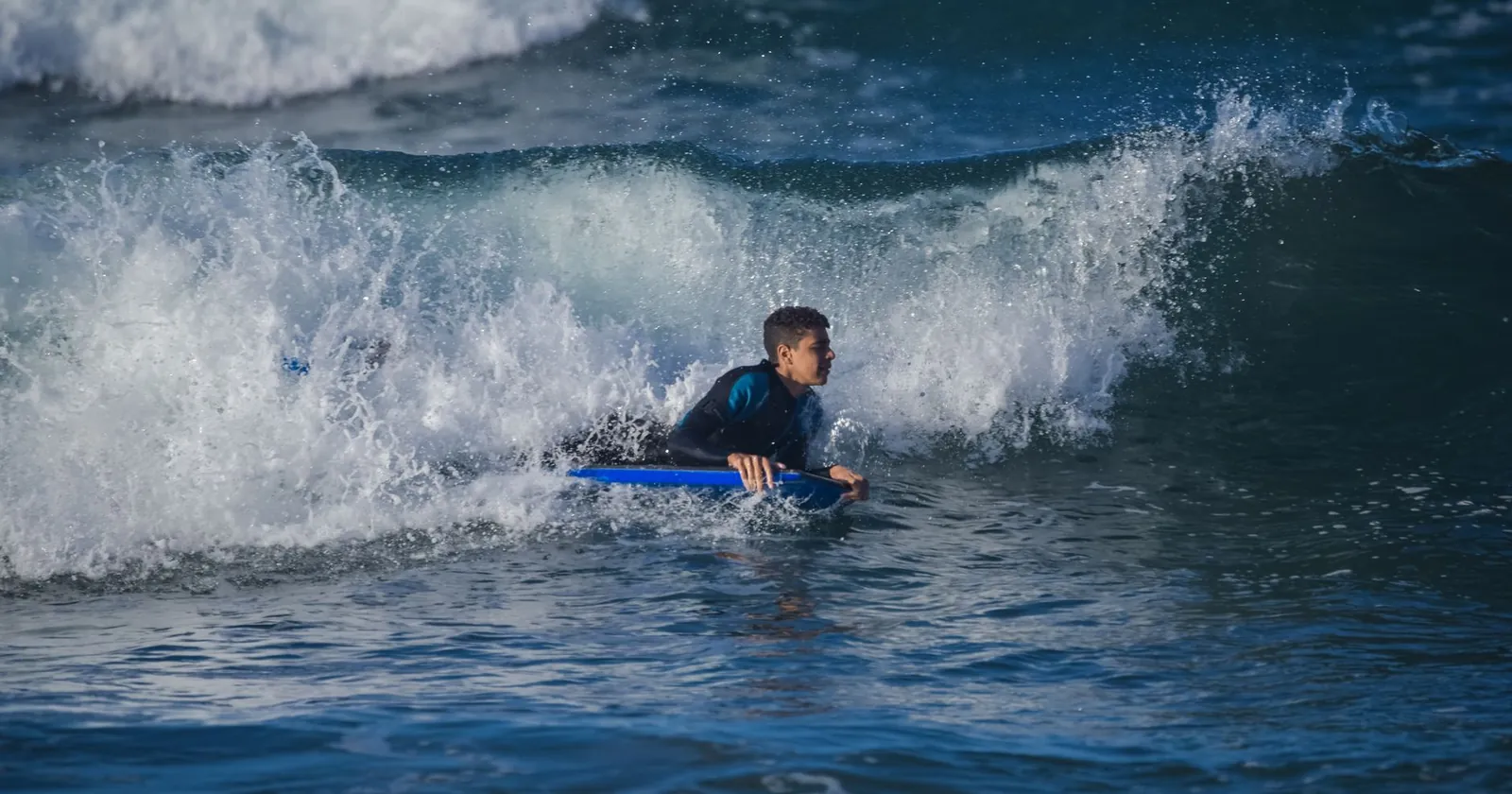
Photo: MAG Photography via Pexels (free license).
Board core and fit depend on you and your water; try fins on and get sized advice from a shop.
A forgiving PE or PP core in the right length is all a beginner needs.
Browse on Amazon →Propulsion and control; socks stop rubbing, savers stop losing them.
Browse on Amazon →Cheap, packable, and everything to start riding.
Browse on Amazon →Recommendations by type and spec, not a tested product ranking; confirm fit/size with a shop. Any price is live at the retailer. See our disclosure.
Key takeaways
- Whole kit: board, fins (+ socks, savers), leash, wetsuit or rashguard.
- Board size: reaches your belly button; core PE (soft) vs PP (stiff).
- Fins: short and stiff, snug fit, with socks and tethers.
- Cheap and packable: the ultimate travel wave-riding gear.
- Buy mid-range to start; upgrade the core later as you learn.
The board (size and core)
Size: stood on its tail, the board should reach roughly your belly button (heavier riders need more board). Core: two common types, polyethylene (PE), more flexible and forgiving, suits cooler water and a smooth feel; and polypropylene (PP), stiffer, livelier and faster, suits warmer water and advanced riding. Stringers (rods through the core) add stiffness. Beginners are happy on a mid-range board in either core.
Swim fins
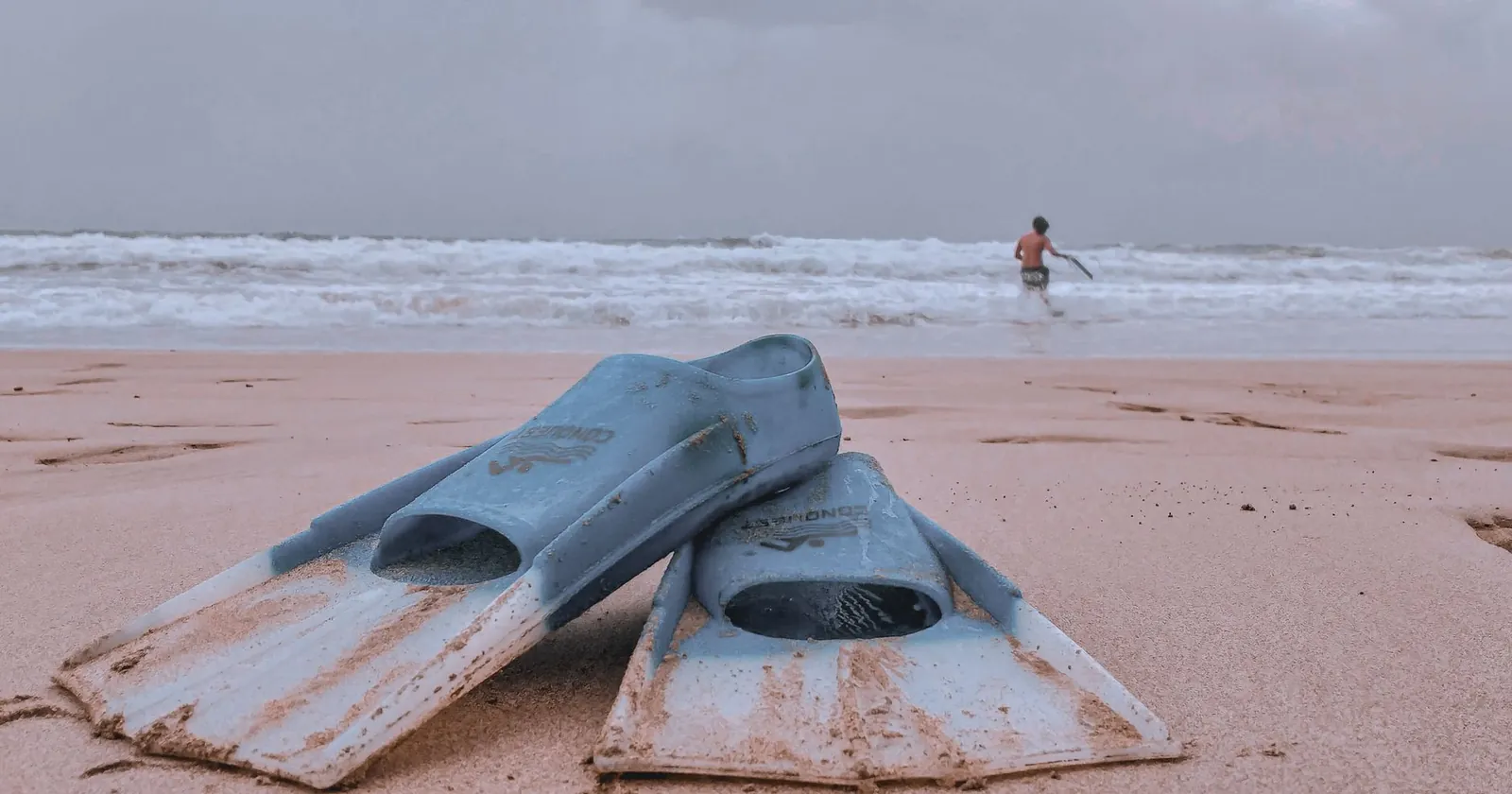
Use short, stiff swim fins made for bodyboarding (not long freediving fins). Fit is everything: snug but not painful, with fin socks for comfort and fin savers (tethers) so a wipeout does not cost you a fin. Try them on with your socks before you rely on them.
Leash and wetsuit
- Leash: attaches to your bicep for prone riding (wrist for drop-knee), keeping the board close and not a hazard to others.
- Wetsuit or rashguard: match to your water; a rashguard in the tropics, a wetsuit in cooler seas. See our travel wetsuit guide.
The travel angle
This is the most travel-friendly wave-riding kit there is: a short light board, packable fins and leash, and a low price, so you can bring it, check it, or even buy locally without much cost. Ideal for nomads chasing waves across many destinations.
Bodyboard brands worth a look
| Item | Beginner priority | Examples |
|---|---|---|
| Board | Mid-range, sized to you | Morey, BZ, Custom X, Science, NMD |
| Fins | Short, stiff, good fit | Churchill, DaFin, Ally, Limited Edition |
| Leash + savers | Coiled bicep leash, tethers | Various (with any board brand) |
These are examples, not a ranked verdict; try fins for fit and get board sizing from a shop. Browse bodyboarding gear on Amazon (affiliate), and surf shops for boards and fins.
The gear list has a gap, and it is not equipment
A board, fins, a leash and a wetsuit cover the shopping. The thing most likely to ruin a session costs nothing and is a habit: looking at the water from the highest point you can reach before you change.
NOAA's description of a rip current is worth memorising because it is visual: a “strong, narrow, seaward flow of water” that shows up as “darker, narrow gaps of water heading offshore between areas of breaking waves and whitewater”, as “narrow regions of choppy, rippled water heading offshore”, or as “plumes of sand or foam offshore of the breakers”. Polarized sunglasses make the colour difference readable, which is the one piece of kit on this page that is about currents rather than comfort.
The reason it matters more in this sport than in surfing: channel rips “typically flow about 1 to 2 feet per second and may reach speeds up to 8 feet per second”, and swimming against one “can quickly result in exhaustion”. Your board is not a flotation device you can rest on for twenty minutes.
For proportion: the World Health Organization counts around 300,000 drowning deaths a year worldwide, 57 per cent of them among people under 30. The gear above will not change that number. The minute spent looking at the water might.
FAQ: bodyboarding gear
What gear do you need for bodyboarding?
A bodyboard sized to you, swim fins for propulsion (with fin socks and fin savers), a leash, and a wetsuit or rashguard for the conditions. That is the whole kit, and it is cheap and packs small, which makes bodyboarding one of the most travel-friendly water sports. Beginners can start with a forgiving mid-range board and short swim fins; you do not need anything expensive or advanced to have fun and progress.
What bodyboard core should I choose?
The two common cores are polyethylene (PE), which is more flexible and forgiving and suits cooler water and a smooth feel, and polypropylene (PP), which is stiffer, livelier and faster and suits warmer water and more advanced riding. Many beginners are happy on either in a mid-range board. Stringers (rods through the core) add stiffness and control. Warm water softens PE and cold stiffens it, so match the core loosely to your water, and do not overthink it as a beginner.
What fins are best for bodyboarding?
Short, stiff swim fins designed for bodyboarding give the best mix of power and manoeuvrability, unlike long freediving fins. Fit matters most: they should be snug but not painful, and wearing fin socks improves comfort and prevents rubbing. Add fin savers (tethers) so a wipeout does not cost you a fin. Get the size right by trying them on, ideally with the socks you will wear, since a lost or ill-fitting fin ruins a session.
Is bodyboarding gear good for travel?
Yes, it is arguably the most travel-friendly wave-riding kit. A bodyboard is short and light, fins, leash and a rashguard pack into a bag, and the whole setup is inexpensive, so you can bring it as checked baggage or even buy locally without much cost. This makes bodyboarding a brilliant choice for nomads who want to ride waves at many destinations without the hassle and expense of traveling with a full surfboard.
Should I buy or rent bodyboarding gear?
Because the gear is cheap and personal, most people buy their own rather than rent, though beach rentals and cheap shop boards are fine for a first try. When you buy, prioritise a correctly-sized board and well-fitting fins with socks, then a leash and a rashguard or wetsuit for your water temperature. Starting with a mid-range board is sensible; you can upgrade the core and construction later once you know your style and local conditions.
Yannick Schroth
Founder of NOMADREEF and a former digital nomad. This guide explains bodyboarding gear and beginner priorities; brand names are examples, and you should try fins for fit and get board sizing from a shop. About the author · LinkedIn ↗
Sources
- Rip currents, from the weather service. NOAA National Weather Service: a rip current is a “strong, narrow, seaward flow of water that extends from close to the shoreline to outside of the surf zone”, visible as “darker, narrow gaps of water heading offshore between areas of breaking waves and whitewater”, “narrow regions of choppy, rippled water heading offshore” and “plumes of sand or foam offshore of the breakers”, best seen from an elevated position and through polarized sunglasses; channel rips “typically flow about 1 to 2 feet per second and may reach speeds up to 8 feet per second”, and “attempting to swim back to shore against the seaward flowing current can quickly result in exhaustion”. weather.gov. Read 12 September 2026.
- The global scale of drowning. World Health Organization drowning fact sheet, 1 May 2026: “There are around 300 000 annual drowning deaths worldwide”; “Ninety-two percent of drowning deaths occur in low- and middle-income countries”; and “Children and young adults aged 0–29 years account for over half (57%) of all drowning deaths”. who.int. Read 12 September 2026.
- Bodyboarding gear conventions (board sizing, PE vs PP cores, swim fins and fit, leash placement).
- Our own how to bodyboard and travel wetsuit guides.