How to Skimboard for Beginners
 by Yannick Schroth
Jul 30, 2026
6 min read
by Yannick Schroth
Jul 30, 2026
6 min read
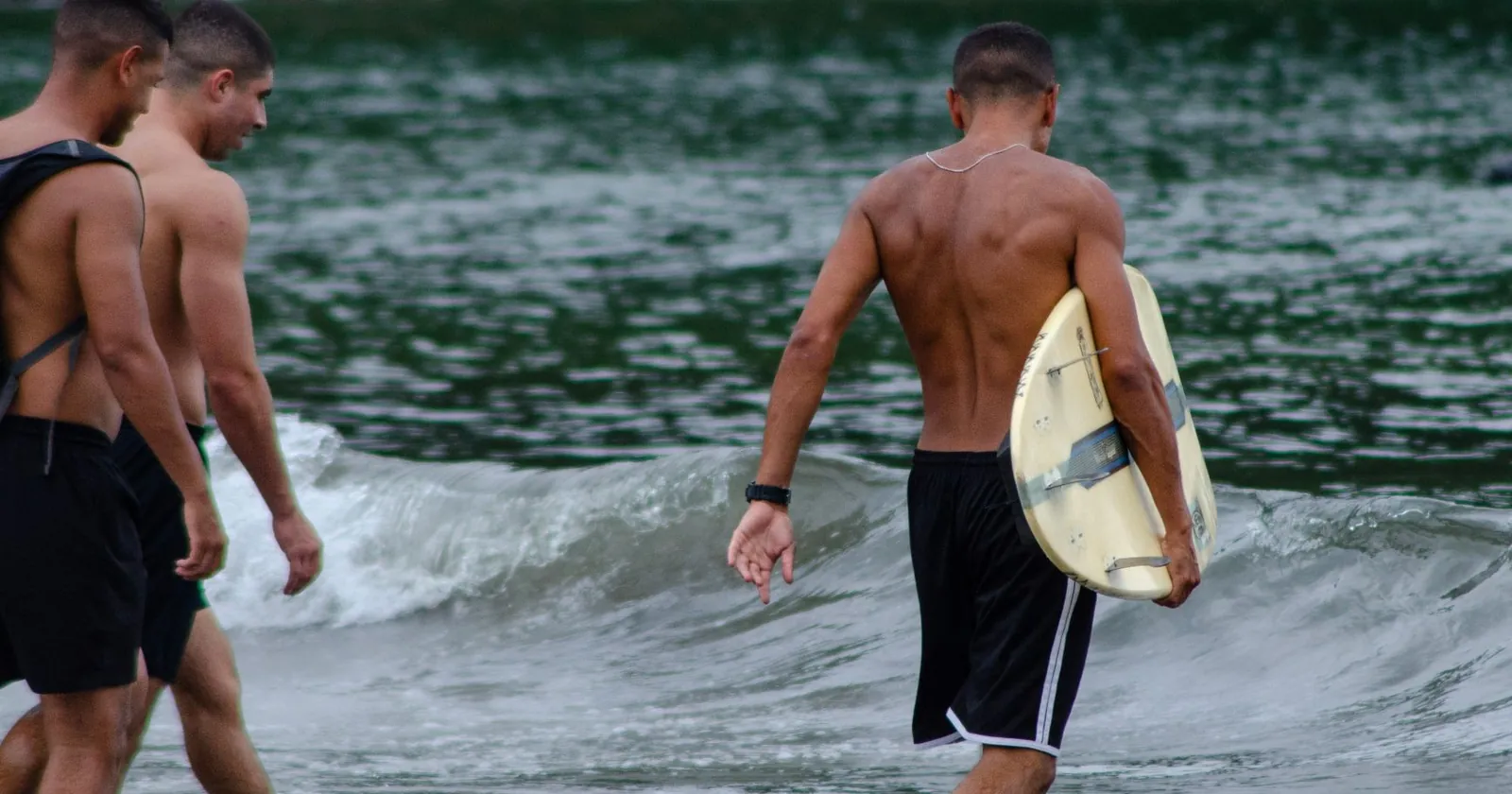
Photo: Matheus Lara via Pexels (free license).
This is general beginner guidance, not a substitute for a lesson or in-water supervision.
Key takeaways
- Two styles: flatland (easier) and wave/inland skimming (advanced).
- Board: foam or wood for learning, hard boards for waves.
- The drop is the hard part: land it flat, keep your momentum.
- Knees bent, weight centred, look where you want to go.
- Shallow, hard sand: wrist, ankle and knee falls are the risk.
Flatland or waves?
Skimboarding comes in two flavours. Flatland skimming glides across the thin water over sand or a lagoon and is where you learn the drop, balance and tricks, the easier start. Wave (inland) skimming means running out to meet a breaking shore-break wave and riding the wash back, which is more advanced. Begin with flatland.
How a beginner progresses in skimboarding
Step 1: Get a suitable board
Foam boards are buoyant, forgiving and great for beginners and flatland; wood boards are a cheap way to start; hard fibreglass or carbon boards are for wave riding. Size it to your weight and use, and start with a forgiving flatland board.
Step 2: The drop and run
The heart of skimboarding. Hold the board flat, run toward the thin sheet of water left by a receding wave, and drop the board flat onto the water just ahead of your feet, then step on front foot first without stopping. If the board lands at an angle or you hesitate, it digs in and stops dead. Land it flat, keep your momentum.
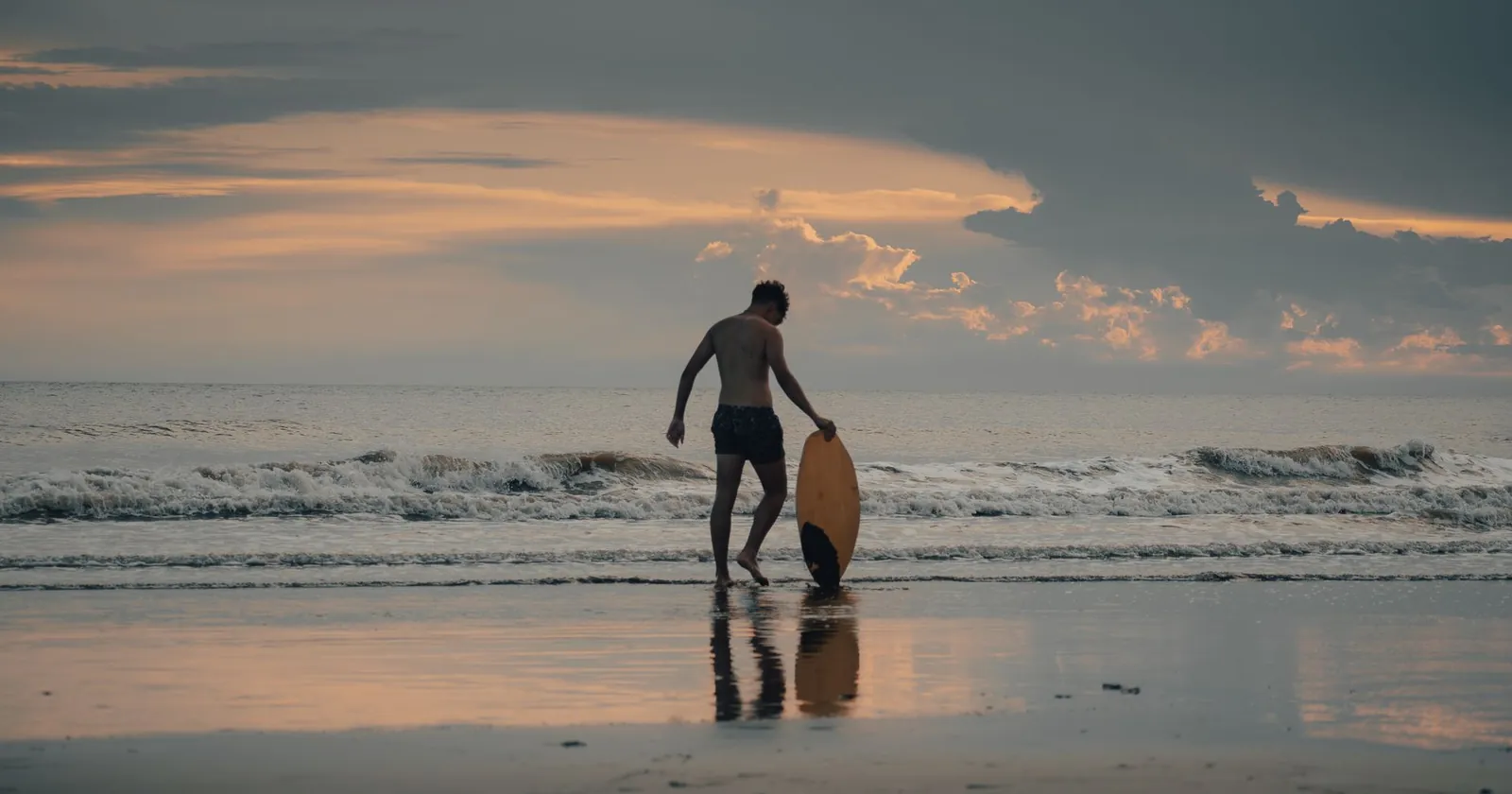
Step 3: Balance and glide
On the board, keep your knees bent, weight centred and slightly forward at first, then shift back to control speed and direction, looking where you want to go. Practise gliding and gentle turns on flat wash before you attempt a wave.
Step 4: Progress to waves
For wave skimming, time your run to meet a small shore-break wave as it breaks, then ride the wash back in. Build up from tiny waves; there is no rush.
What gear you need to start skimboarding
Just a skimboard sized to you and, in cooler water, a rashguard or wetsuit. Some riders use grip wax or traction pads. It is one of the cheapest, most packable board sports, an easy add for a beach-based nomad. It pairs naturally with bodyboarding and bodysurfing.
The water you are riding, and the water taking you sideways
This is a shore-break sport: no board big enough to float on, no paddle out, and a wave that breaks in water you can stand in until suddenly you cannot. Reading the current before you get in is part of the skill, and there is one feature worth being able to spot from the sand.
NOAA describes a rip current as a “strong, narrow, seaward flow of water that extends from close to the shoreline to outside of the surf zone”, and gives the signs: “darker, narrow gaps of water heading offshore between areas of breaking waves and whitewater”, “narrow regions of choppy, rippled water heading offshore”, and “plumes of sand or foam offshore of the breakers”. Look from an elevated position, through polarized sunglasses.
Why not to argue with one: a channel rip “typically flows about 1 to 2 feet per second and may reach speeds up to 8 feet per second”, and “attempting to swim back to shore against the seaward flowing current can quickly result in exhaustion”. With a small board and fins you are faster than a swimmer, and still not that fast.
The scale behind the caution: the World Health Organization counts around 300,000 drowning deaths a year worldwide, with 92 per cent in low- and middle-income countries and 57 per cent among people aged under 30. Most of those are nothing like a session at a patrolled beach, but the mechanism that turns a good one bad begins with not having looked at the water first.
FAQ: skimboarding for beginners
What is skimboarding?
Skimboarding is riding a small, finless board across a thin layer of water. There are two main styles: flatland skimming, gliding and doing tricks on the thin water over sand or a lagoon, and wave (inland) skimming, where you run out across the wash to meet a breaking shore-break wave and ride it back to the beach. You start by dropping the board onto the water and stepping onto it while running, rather than paddling out like a surfer.
Is skimboarding hard to learn?
The basic glide on flat water can be picked up in a few sessions, but the drop, landing the board flat and stepping on without losing momentum, is genuinely tricky and takes practice. Flatland skimming is the easier, more forgiving place to learn balance and the drop. Wave skimming is considerably harder because you must also time the shore break. Starting on flatland with a forgiving board shortens the learning curve a lot.
What skimboard should a beginner buy?
For learning, a foam skimboard is buoyant, forgiving and great for flatland skimming, while a wood board is a cheap way to start and hard fibreglass or carbon boards are made for wave riding and are less forgiving for beginners. Size the board to your weight and intended use: too small will not glide and support you, too big is hard to control. Most beginners are best on a foam or wood board sized for flatland to build the drop and balance first.
Where do you skimboard?
Flatland skimming works anywhere there is a thin sheet of water over a smooth surface, such as a flat sandy beach at low tide, a tidal lagoon or wet sand. Wave skimming happens at the shoreline of a beach with a suitable shore break, where you run out to meet the breaking waves. Look for gentle, uncrowded beaches with firm, smooth sand and a shallow gradient, and avoid rocky or steeply-shelving beaches with heavy shore dumps while learning.
Is skimboarding dangerous?
Skimboarding carries a real injury risk because it happens in very shallow water on hard, firm sand, so falls can cause wrist, ankle, knee and shoulder injuries, and wave skimming adds the shore-break hazard. Reduce the risk by warming up, starting on flatland with small, controlled runs, learning to fall safely, choosing gentle beaches with smooth sand, and building up gradually rather than attempting big waves early. As always, do not skim alone in the surf. This is general information, not instruction.
Yannick Schroth
Founder of NOMADREEF and a former digital nomad. This guide explains the beginner basics of skimboarding; it is not a substitute for a lesson or in-water supervision, and the shallow, hard sand makes falls a real hazard to respect. About the author · LinkedIn ↗
Sources
- Rip currents, from the weather service. NOAA National Weather Service: a rip current is a “strong, narrow, seaward flow of water that extends from close to the shoreline to outside of the surf zone”, visible as “darker, narrow gaps of water heading offshore between areas of breaking waves and whitewater”, “narrow regions of choppy, rippled water heading offshore” and “plumes of sand or foam offshore of the breakers”, best seen from an elevated position and through polarized sunglasses; channel rips “typically flow about 1 to 2 feet per second and may reach speeds up to 8 feet per second”, and “attempting to swim back to shore against the seaward flowing current can quickly result in exhaustion”. weather.gov. Read 12 September 2026.
- The global scale of drowning. World Health Organization drowning fact sheet, 1 May 2026: “There are around 300 000 annual drowning deaths worldwide”; “Ninety-two percent of drowning deaths occur in low- and middle-income countries”; and “Children and young adults aged 0–29 years account for over half (57%) of all drowning deaths”. who.int. Read 12 September 2026.
- Skimboarding conventions (flatland vs wave skimming, board materials, the drop, shallow-water safety).
- Our own how to bodyboard and how to bodysurf guides.