Sayulita vs Puerto Escondido: Which Mexico Surf Town?
 by Yannick SchrothAug 3, 20266 min read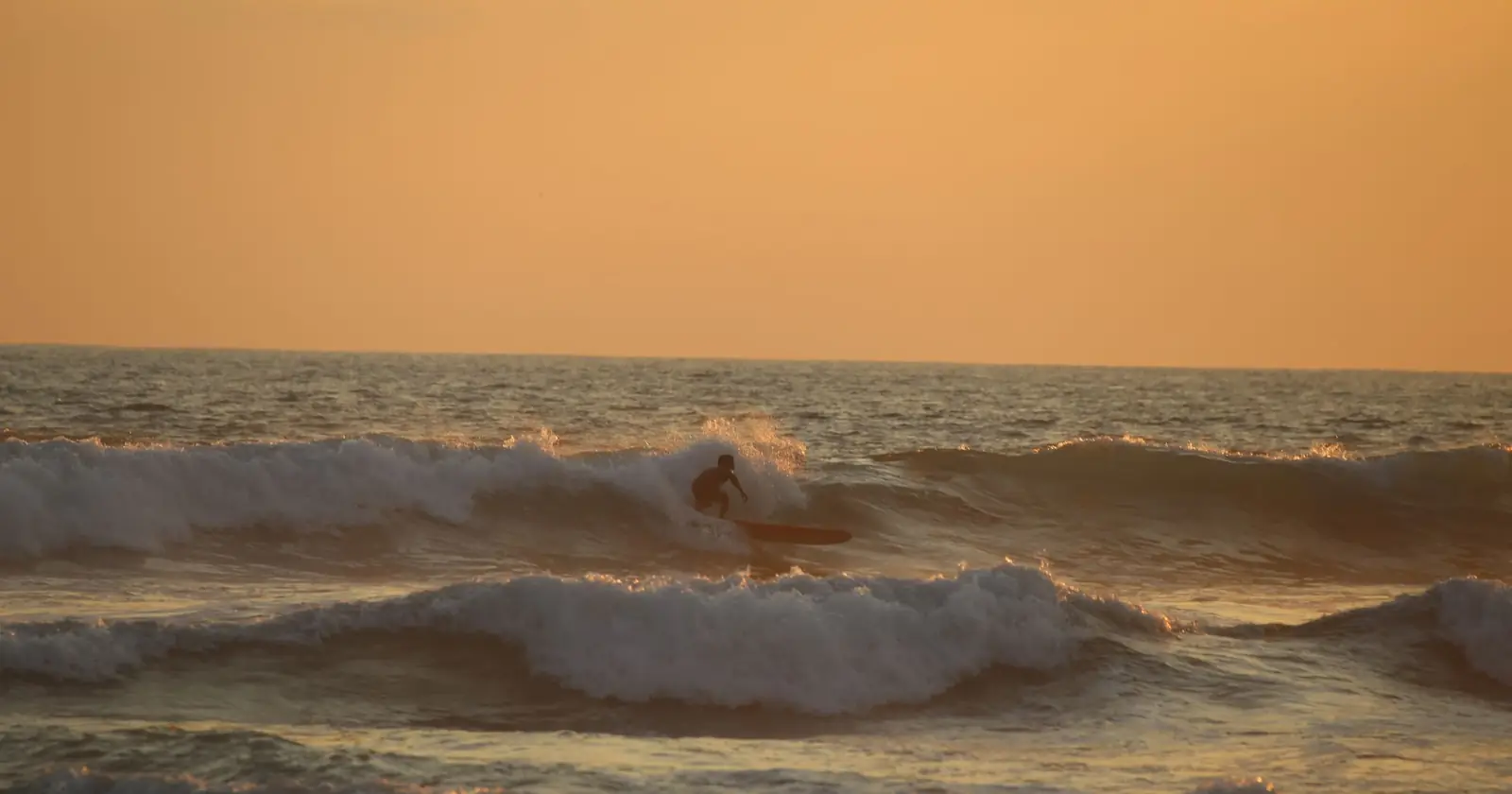
Photo: Guillermo Jaquez / Pexels.
Best for
- A mellow, boho beginner beach town: Sayulita, soft break and easy vibe
- A serious surf city, experts and progression: Puerto Escondido
| Sayulita | Puerto Escondido | |
|---|---|---|
| Waves | Soft, learner-friendly beach break | Zicatela (expert) plus La Punta (progression) |
| Level | Beginner | Beginner (La Punta) to expert (Zicatela) |
| Vibe | Boho, colourful, family and holiday town | Surf-first, lively, more hardcore and party |
| Cost | Mid, touristy | Mid, surf-town |
| Season | Year-round mellow, bigger in summer | Big south swells in summer (Zicatela heaviest) |
| Visa | Mexico tourist permit (up to 180 days, discretion) | Same |
| Best for | Beginners, families, casual surf | Improving-to-expert surfers and surf culture |
Sayulita in short
Sayulita, on the Nayarit coast, is a small, colourful, boho beach town with a soft, forgiving break and a laid-back holiday-and-family vibe. It is one of the friendliest places in Mexico to learn to surf, with schools on the beach and an easy, social scene. The trade-off is that it is touristy and crowded, and the surf will not challenge anyone past beginner level.
Puerto Escondido in short
Puerto Escondido, on the Oaxaca coast, is a surf-first town built around Zicatela, the heavy beach break known as the Mexican Pipeline, one of the most powerful waves in the world and strictly for experts. Crucially it also has La Punta, a mellower left where improving surfers progress, plus a bigger, more hardcore surf and party culture. It is the pick if surfing is the point.
The verdict: Sayulita or Puerto Escondido
Choose Sayulita if you are learning, traveling with family or want an easy, boho beach town; choose Puerto Escondido if you surf at an intermediate level or above, or want to be immersed in a serious surf culture (with La Punta to progress and Zicatela to aspire to). Both run on the Mexican tourist permit.
Sayulita or Puerto Escondido: which to pick
- If you are a beginner or want a boho, family-friendly town: Sayulita.
- If you are progressing or want a serious surf city: Puerto Escondido.
- Both use Mexico's tourist permit (up to 180 days at officer discretion); summer brings the biggest swells.
Same basin, same season, two completely different relationships to it
Both towns face the eastern Pacific, whose season the National Hurricane Center dates from 15 May to 30 November, in a basin that “extends from Mexico and Central America westward to 140°W”. What differs is what each town does with the swell that season produces.
The NHC's description of the basin's shape is the key: “A peak in activity is noted in late August… Relatively high levels of activity in the eastern Pacific tend to be spread out over a longer portion of the season than in the Atlantic, with most tropical cyclones occurring between late June and early October.” An average season carries 15 named storms, 8 hurricanes and 4 major hurricanes on the 1991–2020 record. That long, spread-out run of systems is what makes Zicatela's summer: close-range swell, arriving often, from May to October.
Sayulita sits in Banderas Bay's shelter, which is exactly the point of it. The same systems that make Puerto Escondido a proving ground reach Sayulita filtered by the bay, which is why one is a beginner town and the other is not.
That difference has a safety consequence worth stating plainly. The US National Weather Service's guidance on beach hazards is built around one number, citing the United States Lifesaving Association: “The chances of drowning at a beach with lifeguards are 1 in 18 million”, and “Only swim at a beach with lifeguards.” Zicatela's shorebreak and rip channels are not a beginner's water with or without a board, and the NWS adds the line that misleads visitors most: “Rip currents often form on calm, sunny days.”
And a third reading that applies to both coasts and to neither town's marketing: the warm water itself moves. Copernicus names ENSO as “The chief driver of year-to-year variability” in sea surface temperature, with El Niño raising the average and La Niña lowering it, and puts the average sea surface temperature of the extrapolar ocean about 0.9 °C above the late nineteenth century, around 0.6 °C of it added since 1980. The Mexican Pacific is one of the coasts where an ENSO year is felt directly, in water temperature and in how the season behaves.
FAQ: Sayulita vs Puerto Escondido
Is Sayulita or Puerto Escondido better for beginners?
Sayulita, clearly: its soft beach break and beach-side schools make it one of the easiest places to learn in Mexico. Puerto Escondido's Zicatela is expert-only, though its La Punta wave is a good place for improving surfers to progress.
Which has bigger waves?
Puerto Escondido, by far: Zicatela (the Mexican Pipeline) is a heavy, world-class beach break that gets very big on summer south swells and is for experts only. Sayulita stays mellow and beginner-friendly year-round.
Which has the better vibe?
That is personal. Sayulita is boho, colourful and family-friendly; Puerto Escondido is a surf-first town with a livelier, more hardcore surf and party culture. Pick Sayulita for easy and social, Puerto for surf-immersed.
Sources
- What moves the water temperature. Copernicus Climate Change Service, climate indicator for sea surface temperature: “The chief driver of year-to-year variability is the El Niño Southern Oscillation (ENSO)… El Niños temporarily increase the global average SST and La Niñas temporarily decrease it”; the average SST over the extrapolar ocean “has increased by about 0.9°C” since 1880–1900, and “The increase from 1980 to 2023 has been around 0.6°C”. climate.copernicus.eu. Read 13 September 2026.
- The basin and its season. NOAA National Hurricane Center, tropical cyclone climatology: “The eastern Pacific hurricane season runs from May 15 to November 30. The eastern Pacific basin extends from Mexico and Central America westward to 140°W”; average season 15 named storms, 8 hurricanes, 4 major hurricanes; “A peak in activity is noted in late August… with most tropical cyclones occurring between late June and early October.” nhc.noaa.gov. Read 13 September 2026.
- What a patrolled beach is worth. NOAA National Weather Service, How to Avoid Getting Caught in a Rip Current: “Only swim at a beach with lifeguards. The chances of drowning at a beach with lifeguards are 1 in 18 million (U.S. Lifesaving Association)”; “Rip currents often form on calm, sunny days.” weather.gov. Read 13 September 2026.
- This comparison is assembled from our two full destination guides, and every cost, wifi, season and visa claim above is one those guides already verify: Sayulita, Mexico, Puerto Escondido.
- How we work: editorial standards.