Puerto Rico Diving: The La Parguera Wall, the Desecheo and Mona Reserves, Culebra and the Coral Law
 by Yannick Schroth
Nov 10, 2026
12 min read
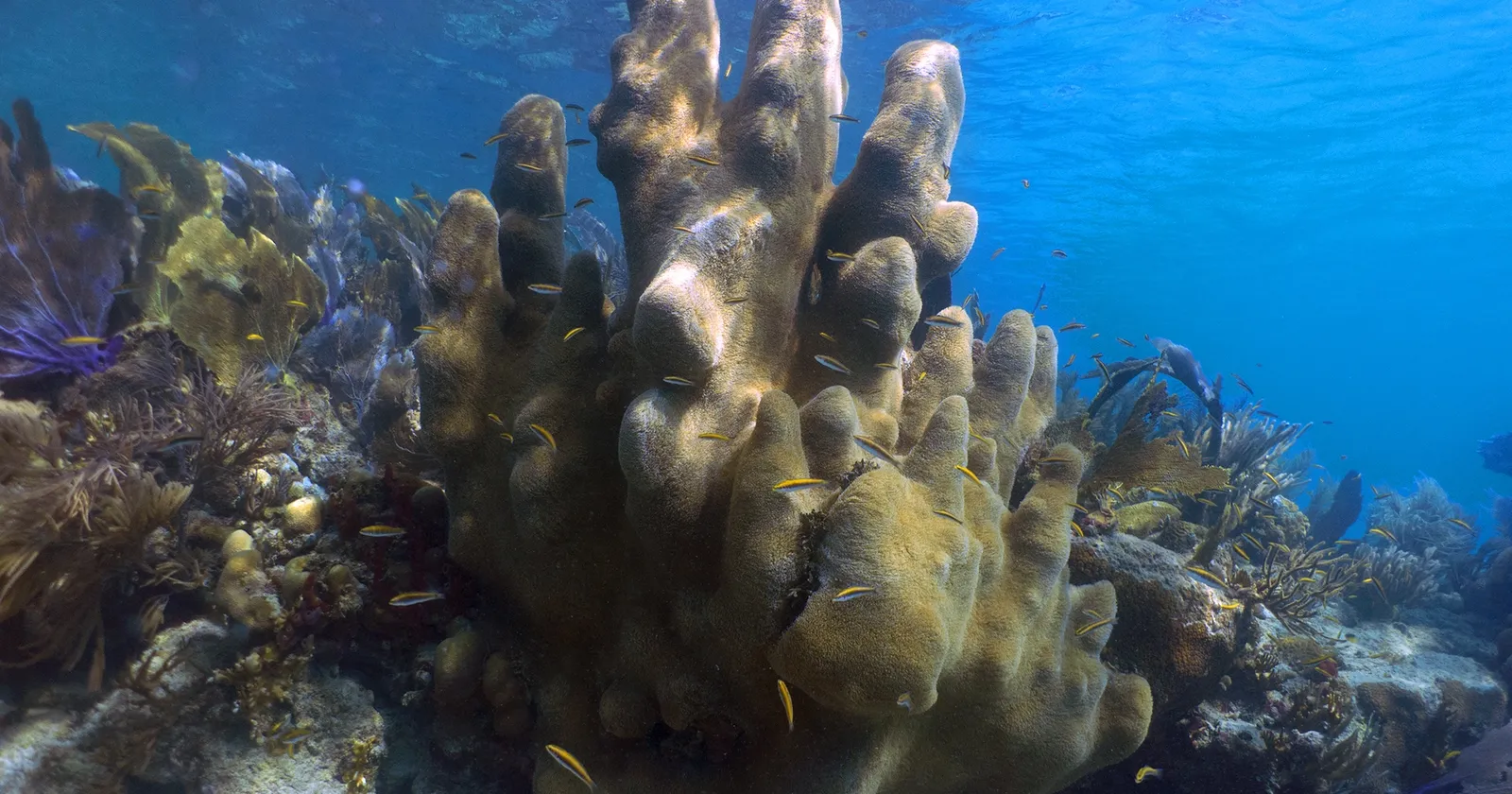
Corals on a reef off Culebra. Thomas Shahan, Wikimedia Commons, CC BY 2.0, cropped.

Key takeaways
- The La Parguera wall dives at 18 to 37 meters, according to the shop that runs daily trips there; the east coast reefs off Fajardo and Culebra are mostly shallower than 24 meters
- Desecheo is a closed wildlife refuge because of unexploded ordnance, but the half mile of sea around it is a Puerto Rico marine reserve, dived on day trips from Aguadilla
- Puerto Rico's coral law sets fines of $500 to $10,000 per violation for damaging coral, anchoring outside marked buoys or diving in a reserve without authorization
- Recreational fishers may not use a speargun and a scuba tank together, and no fishing at all is allowed around Desecheo or in the Tres Palmas and Luis Peña reserves
- Centro Médico in San Juan has a hyperbaric chamber; we could not confirm from the hospital that it takes divers around the clock, and the emergency number is 911
Puerto Rico diving: four coasts, four kinds of dive
Puerto Rico is not one dive area but several. The south-west coast at La Parguera, in Lajas, has a deep shelf-edge wall reached by boat. The west coast, from Aguadilla down to Rincón, mixes shore dives with boat trips to Desecheo island. Further west lie Mona and Monito, a nature reserve with tight fishing limits and an uncertain public access record. In the east, shops in Fajardo dive the cays offshore and run day trips to Culebra, which has its own dive shop, and Vieques has shore diving at a former military pier. Where you stay decides which of these you can dive in a morning.
La Parguera: the south-west wall
Paradise Scuba, on Road 304 in La Parguera, runs daily two-tank trips to what it calls the Parguera Wall, with depths from 60 to 120 feet, about 18 to 37 meters. On its site list it says the wall system spans more than 20 miles. At Blackwall, named after the black coral on parts of it, the wall drops from 65 feet at the shelf to 160 feet at the first landing, about 20 and 49 meters. The shop no longer takes divers into the swim-through at Hole in the Wall, which it says lies at 120 feet. For newer divers it runs a one-tank reef dive limited to 60 feet, or 18 meters.
Those depths matter. A wall that starts at 20 meters and drops past 40 is a deep dive by any standard, and the morning boat leaves at 7:00 for a dive window from 8:00 to 11:30. Plan your nitrogen and your flights accordingly, and bring a computer: Paradise lists it among the gear you rent separately.
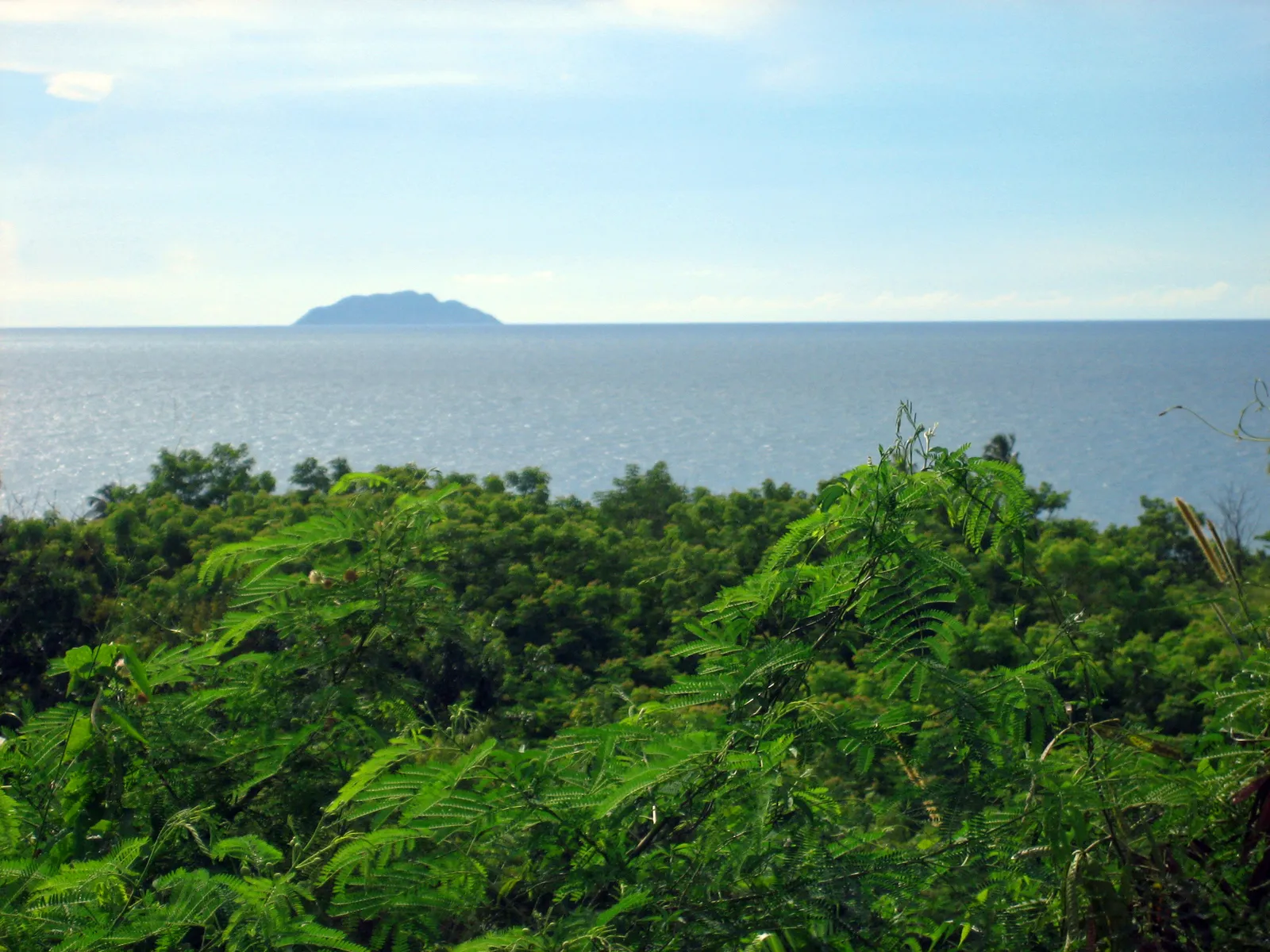
Desecheo Island seen from Rincón. Oquendo, Wikimedia Commons, CC BY 2.0, cropped.

Desecheo: a reserve around a closed island
Desecheo is a small island in the Mona Passage off the west coast. The island itself is a US national wildlife refuge of 360 acres, and the US Fish and Wildlife Service keeps it closed to the public because of unexploded military ordnance. The water around it is a different matter. Puerto Rico's Law 57 of 2000 made half a mile of sea around Desecheo a marine reserve, and the wildlife service says visits to those waters are regulated by Puerto Rico's Department of Natural and Environmental Resources, the DRNA.
The law's preamble cites a DRNA report calling Desecheo's corals possibly the best-quality reefs in Puerto Rico's waters, and names sites for mooring buoys, among them South Gardens, North Side Tunnels, Yellow Reef and Sponge Valley. Aquatica in Aguadilla runs a two-tank Desecheo day trip of about four hours for up to five divers, names Candyland and Yellow Reef among its sites, and asks divers to be comfortable to 100 feet, about 30 meters, and used to diving from boats. Nobody may land, so these are boat dives only.
Mona and Monito: permits and an open question
Mona and the islet of Monito form a nature reserve under the DRNA. Puerto Rico's fishing regulation bans fishing within a one-mile restricted zone around them and limits fishing in the reserve to hook and line, so no spearguns, traps or nets. According to a 2025 news report, visitors need a prior permit to camp, move around, fish or hunt on Mona, and a 2004 DRNA rule has camping applications filed in person at the department's offices. We could not read the DRNA's own Mona page to confirm the current process.
Access has also been contested. In June 2025 the DRNA's secretary said Mona was open to visitors, while a boat operator told El Nuevo Día his trips had been restricted since March. We found no operator publishing a Mona dive trip with a date and a price, so treat Mona as a trip to arrange directly, well ahead, and only after confirming the permit situation with the DRNA.
Culebra, Fajardo and Vieques: the east
The east is the gentler side. Sea Ventures, in the Villa Marina shopping centre in Fajardo, describes its Fajardo sites as coral reefs around small cays at about 5 to 24 meters, with about six sites to choose from and visibility of 6 to 23 meters. Its Culebra day trip takes six and a half hours and visits reefs of 6 to 17 meters, where it gives visibility of 12 to 30 meters on an average day.
On Culebra itself, Culebra Divers says its sites are generally 18 meters or less, takes at most six divers on its boat, and includes the Luis Peña nature reserve fee in its trips. It calls December to March its high season and May to October its slower one, and its rental wetsuits are 3 mm shorties. On Vieques, Black Beard Sports says it is temporarily unable to run boat dives and offers shore dives at Mosquito Pier, a former military pier, to a maximum of 40 feet, about 12 meters.
Aguadilla and Rincón: shore dives and Tres Palmas
On the north-west corner, Aquatica in Aguadilla dives from the shore or by boat and says it picks sites by weather, skill and visibility; its two-tank trips leave only in the morning. Taino Divers works from the Black Eagle Marina in Rincón. Off Rincón, Law 17 of 2004 created the Tres Palmas marine reserve to protect the Steps and Tres Palmas reefs, which the law calls two of the best-developed coral reefs on the west coast, dominated by elkhorn coral. The same law calls surfing compatible with the reserve. Fishing inside its boundaries is banned under the fishing regulation.
The rules: coral law, reserves and fishing
Puerto Rico's coral reef law, Law 147 of 1999 as amended, lets the DRNA fine anyone who extracts, breaks or damages coral, sells coral or aquarium organisms, or anchors a boat outside the mooring buoys in an area marked with buoys or designated for reef recovery. It also covers fishing or diving in reef recovery areas, marine reserves and other marked areas without the secretary's prior authorization, and tourist excursions in those areas need that authorization too. Fines run from $500 to $10,000 per violation, plus the cost of repairing the damage. In practice, diving Desecheo, Mona, Tres Palmas or the Luis Peña channel is simplest with an operator; ask it to confirm it holds DRNA authorization, because we could not read the DRNA's list of authorized operators.
The 2010 fishing regulation adds the rules most likely to catch a visiting diver. A recreational fisher may not use a speargun and a scuba tank at the same time, may not spearfish within 100 feet, about 30 meters, of the coast, and may not spearfish at night, at piers, in bathing areas, on artificial reefs or in marine reserves. Fishing of any kind is banned within half a mile of Desecheo and inside the Tres Palmas and Luis Peña reserves. Spiny lobster must have a carapace length of at least 89 millimeters and may not be taken with spears or hooked gaffs. The one exception for scuba is the invasive lionfish: with the DRNA's written lionfish authorization you may spear it on scuba, and that day your catch must be lionfish only.
When to dive Puerto Rico: sea temperature and hurricanes
NOAA's satellite averages for 1991 to 2020 show warm water all year with a small swing. Off La Parguera the sea averages about 26.6 °C in February and March, 28.4 °C in July and 29.2 °C in September. Off Rincón and at Desecheo and Mona the figures are nearly the same, from 26.5 °C in February to 29.1 °C in September. Off Culebra and Fajardo the water runs slightly cooler, from 26.2 °C in February and March to 28.9 °C in September and October. These are surface figures; the water on the deep wall is colder.
The warmest water arrives with the storms. The National Weather Service office in San Juan gives the Atlantic hurricane season as 1 June to 30 November and places Culebra and Vieques in the Lesser Antilles, on what it calls the Atlantic hurricane alley. NOAA's National Hurricane Center puts the season's peak on 10 September, with most activity between mid-August and mid-October. Culebra Divers' high season, December to March, sits outside it.
Chamber and emergencies
Puerto Rico's public hyperbaric chamber is at Centro Médico, the public medical centre run by the Administración de Servicios Médicos (ASEM) in Barrio Monacillos, Río Piedras, in San Juan. ASEM describes its hyperbaric medicine service and celebrates 27 years of its chamber, but its page names no diving conditions and no hours. A 2020 news report quoted a diving-medicine specialist calling it Puerto Rico's only 24-hour emergency chamber; we could not confirm that from ASEM, so ask your operator for its evacuation plan. ASEM's main number is 787-777-3535. In an emergency call 911; if you cannot call, Puerto Rico's 911 service accepts text messages from a phone's normal messaging app, though not WhatsApp or Telegram. Check that your dive insurance covers the road transfer to San Juan from wherever you dive.
What a dive costs in Puerto Rico
Prices on the shops' own pages, read on 10 November 2026, in US dollars:
| Shop | Trip | Price |
|---|---|---|
| Paradise Scuba, La Parguera | Wall, two tanks | $145, plus $25 for gear |
| Paradise Scuba, La Parguera | Reef, one tank, gear included | $130 |
| Aquatica, Aguadilla | One tank / two tanks | $105 / $140, gear not stated |
| Aquatica, Aguadilla | Desecheo, two tanks, gear included | $275 |
| Sea Ventures, Fajardo | Fajardo reefs, two tanks | $130, gear extra |
| Sea Ventures, Fajardo | Culebra reefs, two tanks | $155, plus $40 for gear |
| Black Beard Sports, Vieques | Two shore dives | $110, or $150 with gear, plus tax |
Sea Ventures' Fajardo page gives the gear rental as both $30 and $40, so ask. Culebra Divers and Taino Divers publish their prices only inside their booking systems, which we could not read.
Getting to Puerto Rico and between the islands
Besides San Juan's airport, SJU, the Puerto Rico Ports Authority lists commercial passenger flights at Rafael Hernández International in Aguadilla (BQN), on the west coast, and at Mercedita International in Ponce (PSE) on the south coast, as well as at small airports on Vieques and Culebra.
Ferries to the two islands leave from Ceiba. Puerto Rico Ferry's rates page lists adult fares of $2.00 to Vieques and $2.25 to Culebra, and $2.00 between the two islands; non-residents may not bring vehicles, and a surfboard costs $6. The operator also announced higher fares for non-residents from 5 May 2026. News reports gave the new fare as $11.25 a trip and later said the transport authority had postponed it until 31 December 2026, so check the fare before you go. Non-residents can buy advance tickets only on the website or app, and the operator asks passengers to arrive an hour before departure.
Puerto Rico as a remote-work base
For immigration purposes Puerto Rico is part of the United States: US law defines the country in the geographic sense as including Puerto Rico. Visitors therefore need what they would need for the mainland. Citizens of the 42 Visa Waiver Program countries may come for business or tourism for up to 90 days without a visa, with an e-passport and an approved ESTA; the ESTA fee for the US fiscal year from October 2026 is $40.62. We found no official US statement on remote work under the Visa Waiver Program, so check your own case with the US authorities. For the surf town, rents and connectivity on the west coast, see our Rincón nomad guide.
Who Puerto Rico diving suits
Puerto Rico suits a diver who wants variety under one set of US entry rules: a deep wall in the south-west, a protected island reef off the west coast, and easy, shallow reefs in the east. It suits a remote worker who can base on the west coast and split days between Aguadilla, Rincón and La Parguera. It suits less well anyone set on Mona without time to sort out permits, anyone who needs a chamber confirmed to run around the clock, or a diver visiting in September, the peak of the hurricane season.
FAQ: Puerto Rico diving
Do you need a permit to dive Desecheo?
Desecheo's waters are a marine reserve, and Puerto Rico's coral law lets the DRNA fine anyone who dives in a marine reserve without its prior authorization. Tourist excursions there also need authorization, so go with an operator. The island itself is closed to the public because of unexploded ordnance.
How deep is the La Parguera wall?
Paradise Scuba gives depths of 60 to 120 feet, about 18 to 37 meters, for its wall trips. At Blackwall the wall drops from about 20 meters at the shelf to about 49 meters at the first landing.
What is the water temperature in Puerto Rico?
NOAA's 1991 to 2020 satellite averages give about 26.2 to 26.6 °C in February and March and 28.9 to 29.2 °C in September, depending on the coast. Culebra Divers rents 3 mm shorty wetsuits.
Is there a hyperbaric chamber in Puerto Rico?
Yes, at Centro Médico in Río Piedras, San Juan, run by the public medical services administration ASEM. Its page does not say whether the chamber treats divers around the clock, so ask your operator for its plan. The emergency number is 911.
Do I need a visa to dive in Puerto Rico?
Puerto Rico follows US immigration rules. Citizens of the 42 Visa Waiver Program countries can visit for business or tourism for up to 90 days with an approved ESTA, which costs $40.62 from October 2026. Travellers from other countries should check the US visa rules.
Note: Conditions, safety guidance and regulations change. Verify current information with official sources, including the dive operator, the DRNA and the relevant government department, before you travel or dive.
Founder of NOMADREEF and a former digital nomad. This guide is sourced from the references below; conditions, prices and rules change, so verify current details, and follow qualified local guidance and safety briefings. About the author · LinkedIn ↗
Sources
- Dive areas (each shop primary for itself). Paradise Scuba, wall dive, reef dive and dive sites; Aquatica, Desecheo trips and tank dives; Sea Ventures, Fajardo reefs and Culebra reefs; Culebra Divers, scuba diving and FAQs; Black Beard Sports, fun dives; Taino Divers. Read 10 November 2026.
- Desecheo and Tres Palmas (primary). Law 57 of 2000 (PDF) and Law 17 of 2004 (PDF), Office of Management and Budget compilations; US Fish and Wildlife Service, Desecheo National Wildlife Refuge and visiting. Read 10 November 2026.
- Coral and fishing rules (primary). Coral reef law, Law 147 of 1999, as amended (PDF), articles 9 to 11; DRNA, Fishing Regulation 7949 of 2010 (PDF), articles 8, 18 and 22. Read 10 November 2026.
- Mona. DRNA, Regulation 6770 of 2004 on recreation and camping areas (PDF), section 8.05 (primary); Metro Puerto Rico, 14 September 2025 and El Nuevo Día, 5 June 2025 (news). Read 10 November 2026.
- Season and sea temperature (primary). NOAA PSL, OISST v2.1 monthly long-term means 1991–2020, cells 17.875°N 67.125°W (La Parguera), 18.375°N 67.375°W (Rincón), 18.375°N 67.625°W (Desecheo), 18.125°N 67.875°W (Mona) and 18.375°N 65.375°W (Culebra and Fajardo), computed for this page; National Weather Service San Juan, newsletter, 2020 (PDF); National Hurricane Center, tropical cyclone climatology. Read 10 November 2026.
- Chamber and emergencies. ASEM, medical services and 27 years of the hyperbaric chamber (primary); Puerto Rico 9-1-1 Emergency Systems Bureau (primary); Global Press Journal, 13 September 2020 (news, unconfirmed). Read 10 November 2026.
- Prices (each shop primary for itself). The shop pages listed under dive areas. Read 10 November 2026.
- Getting there. Puerto Rico Ports Authority, airports (primary); Puerto Rico Ferry, rates, resident registry and fare notice and FAQ (primary); fare reports from Metro Puerto Rico, 3 May 2026 and Ground News, summarising El Nuevo Día (news). Read 10 November 2026.
- Staying and working (primary). 8 U.S.C. 1101(a)(38); US Customs and Border Protection, Visa Waiver Program and ESTA; Federal Register, fiscal year 2027 fee notice (PDF). Read 10 November 2026.
- Left out. The DRNA's own pages, which did not answer during our research, and with them the current Mona permit process, the list of operators authorized in the reserves and any reef-diving permit fee; whether the Centro Médico chamber runs around the clock for divers; any current Mona dive trip with a price; Culebra Divers' and Taino Divers' prices; the ferry fare for non-residents after 2026; named shore-dive sites in Aguadilla and Rincón; and internet figures from a primary source.