Nias, Indonesia: Surfing Sorake and Lagundri Bay
 by Yannick Schroth
Aug 1, 2026
7 min read
by Yannick Schroth
Aug 1, 2026
7 min read
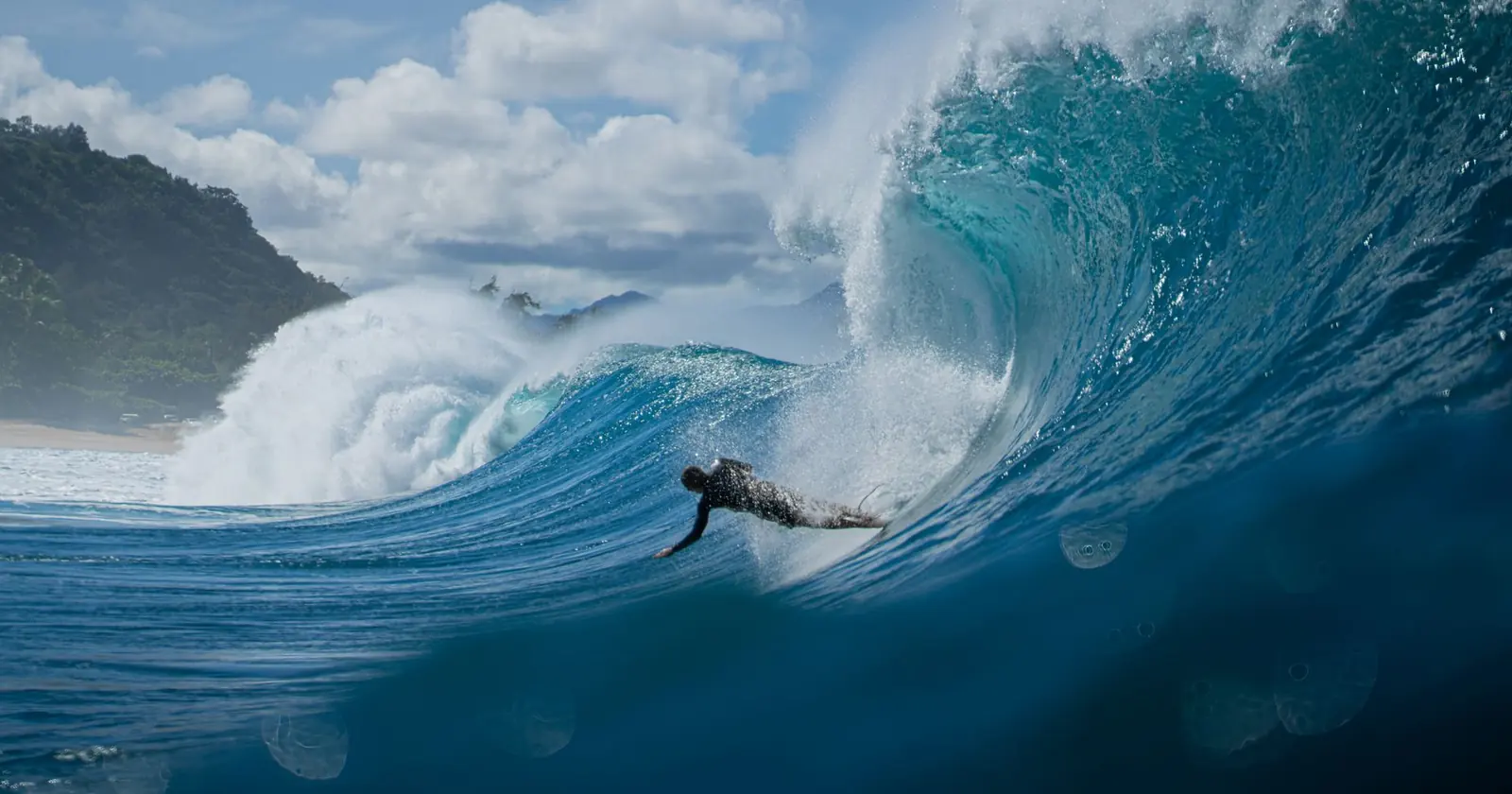
Photo: Daniel Torobekov / Pexels.
Key takeaways
- The season runs roughly May to October (dry-season groundswell), with the biggest and most consistent surf usually June to August; shoulder months can be cleaner but smaller.
- Sorake and Lagundri, "The Point," is a right-hand reef barrel for intermediate-to-advanced surfers; the hazards are real: shallow live coral, urchins, and heavy hold-downs at size. The reef is shallow for a reason with a date, the M8.6 earthquake of 28 March 2005 lifted this coast by up to about 2.8 m.
- Getting there is a multi-leg haul: an international flight to Medan (Kualanamu, KNO), a short domestic hop to Gunungsitoli (Binaka, GNS), then a long road transfer south to Lagundri Bay.
- For a surf trip, use the e-VOA: IDR 500.000,00 per the immigration portal, 30 days of stay, single entry, and the visa itself valid 90 days as an entry window, buy it too early and it expires before the swell.
- Connectivity is limited and power cuts are common; some camps run generators and offer wifi, but bring a Telkomsel SIM or eSIM as backup and keep work expectations low.
The wave and how hard it really is
Sorake Beach, better known as Lagundri Bay or simply "The Point," is a mechanical right-hander that jacks off a takeoff straight into a long, hollow barrel over shallow coral reef. It is one of the best-quality right-handers in Indonesia and has hosted international contests. It holds swell across a huge range, from waist-high runners up to double-overhead-plus days when it turns into a genuine freight-train barrel.
Be honest with yourself about level. The main peak is an intermediate-to-advanced wave; the reef is shallow, the takeoff is critical, and hold-downs at size are heavy. Wipeouts put you on live coral. It is not a learn-to-surf wave. That said, on smaller days and in the low season Lagundri can offer more forgiving, manageable sections where a confident intermediate can find their feet, and there are mellower spots elsewhere on the island. If you are still in your first year or two of surfing, come to progress and watch, not to charge the barrel on the first swell.
Ideal conditions are a southwest groundswell with offshore wind from the northwest. The Point is known for breaking cleanly across a wide range of conditions, which is part of why it draws surfers from around the world.
Why the reef is shallow: the island came up in 2005
Every guide to this wave, this one included, warns you about the shallow reef. Almost none says where the shallowness came from, and it has a date.
On 28 March 2005 at 16:09 UTC a magnitude 8.6 earthquake struck the Sunda megathrust, centred 78 km west-south-west of Singkil and known as the Nias–Simeulue event. It did not just shake the islands, it lifted them. A 2024 study of Nias corals opens with the consequence: coastal uplift of up to about 2.8 metres, and in those areas “fringing reef coral communities were killed by exposure”. The study's own sites on Nias span vertical displacement from +2.5 m to −0.4 m, some of the coast rose by two and a half metres, some of it sank.
What that means for a surfer is simple enough. The reef you are surfing over is a post-2005 reef, on a coast whose height changed inside a single afternoon, and the shallowness the guidebooks warn about is not a quirk of the spot but the recent geology of the island. Exactly how much the bay at Lagundri rose is not something this page can tell you: the study measured its own sites, not the lineup, and no published figure for the Point itself has been found.
The other half of it is the part no surf guide should skip. The same fault ruptured on 26 December 2004 and again here three months later, and the 2005 earthquake killed people and flattened buildings on Nias. The wave is a by-product of a disaster that the island lived through, which is worth carrying in your head when you get off the transfer.
When to go to Nias, and how the swell season runs
The surf season tracks the dry season, roughly May to October, when southwest groundswell lights up the reef. June to August is generally the biggest and most consistent window and the time contests have run, so it is also the most crowded and the most competitive in the lineup.
May and the shoulder edges of the season can deliver cleaner, smaller, less crowded waves, which some intermediates actually prefer. Outside the dry season the swell drops off and conditions are more variable. Treat any month as a probability, not a guarantee; watch a forecast tool (surf-forecast, Surfline, Windguru) in the two weeks before you commit to flights and camp dates.
Getting to Nias
Nias is remote, and reaching it is a multi-leg trip. Most surfers route through Medan on Sumatra, landing at Kualanamu International Airport (KNO). From there, Wings Air and Citilink fly the short hop (under an hour) to Gunungsitoli's Binaka Airport (GNS) on Nias, with several daily departures. Book the domestic leg in advance in peak season, as seats and baggage allowances fill up.
Binaka sits on the north of the island near Gunungsitoli, while Sorake and Lagundri Bay are down at the southern tip near Teluk Dalam. That means a long road transfer of several hours after you land, usually arranged by your surf camp. Confirm the pickup when you book so you are not stranded at the airport.
For boards, both Wings Air and Citilink are used to handling surfboards on their Indonesian routes, but they charge per board (reported around IDR 100,000 to 200,000 as of 2026, verify at check-in) and space is tight on small aircraft, so pack light and pad your quiver well.
Indonesia's visa on arrival and e-VOA for a surf trip
For a surf trip, the practical route is the Visa on Arrival or its online version, the e-VOA. The immigration portal states the fee plainly, “The Visitor Visa fee is IDR 500.000,00”, for a 30-day stay from the date of arrival, single entry. Two details from that page are worth having before you book flights. First, the visa is valid for 90 days, which is the window in which you must enter, not the length of your stay: an e-VOA bought four months before a swell is wasted. Second, the portal does not describe the visa as extendable; what it says is that to stay longer “you must apply for a residence permit extension at the Immigration Office”. The practical outcome is the familiar 30 plus 30, but it is an in-country errand at an immigration office, not something that happens automatically at the border. Apply on the official portal, evisa.imigrasi.go.id, and avoid third-party agencies charging markups.
About the digital-nomad angle: Indonesia does have a genuine remote-worker visa, the E33G KITAS, and it is open and operational (it launched in 2024). But it is a year-long residence permit aimed at settled remote workers, with real requirements: proof of remote employment for a company outside Indonesia, a minimum income threshold reported around USD 5,000 per month, and government plus service fees in the region of IDR 13,000,000 as of 2026. It is not the tool for a two-to-eight-week surf trip, and it is not something you activate casually on arrival. For a Nias surf expedition, plan on the e-VOA. If you genuinely intend to base long-term in Indonesia (realistically Bali, not Nias) and qualify, look into the E33G separately and verify the current rules on the official immigration site.
Connectivity and remote work reality
Be candid with yourself: Sorake is remote and the infrastructure shows it. Power cuts are common, and some camps run generators precisely because the grid drops out. A few surf camps advertise wifi and some travelers report it works fine for light tasks, but reliability varies camp to camp and day to day.
If you must stay reachable, buy a Telkomsel SIM or load an eSIM before you head south; Telkomsel has the widest coverage in this part of Indonesia, though signal in the far south of the island can still be thin. Do not book a work-critical week here expecting stable video calls. The realistic model is: surf the tides, work in the flat windows on a phone hotspot, and warn clients or your team in advance that you will be intermittent. This is a place to disconnect, not to run a launch.
Costs, camps and safety
Nias is a budget-friendly destination once you arrive; the main expense is getting there. As of 2026, expect the international leg to dominate your budget, with the Medan-to-Nias domestic flight often in the low-tens to low-hundreds of USD round trip depending on timing. Surf camps and losmen clustered around Sorake and Lagundri range from very basic guesthouses to more comfortable surf houses, and many offer monthly and long-stay deals; get a current quote directly, as prices shift with season and demand. These are ranges to verify, not fixed figures.
On safety, respect the reef and the locals. Wear booties, know the tides (the reef is shallowest at low tide), and never surf beyond your level on a big day. Common hazards include coral cuts that infect fast in the tropics, sea urchins, and heavy hold-downs. There is also a malaria and dengue risk in this region, so consult a travel-health clinic about prophylaxis and pack repellent. Get travel insurance that explicitly covers surfing and, ideally, medical evacuation, because serious care means a flight off the island. Ride with an established camp your first sessions, watch the lineup before paddling out, and give the local surfers their waves.
FAQ: Nias
Do I need a special digital-nomad visa to surf Nias?
No. For a surf trip the practical route is the e-VOA (Visa on Arrival). The immigration portal gives the fee as IDR 500.000,00 for a 30-day single-entry stay, with the visa itself valid 90 days as an entry window; staying longer means applying for a residence permit extension at an immigration office in Indonesia. Indonesia's E33G remote-worker visa is genuinely open, but it is a year-long residence permit with income proof and higher fees, aimed at settled remote workers, not short trips. Always confirm current rules on Indonesia's official immigration portal before you fly.
When is the best time to surf Nias?
Roughly May to October, the dry season, when southwest groundswell hits the reef. June to August is usually the biggest and most consistent, and also the most crowded. May and the shoulder months can be cleaner and smaller, which some intermediates prefer. Check a forecast tool in the two weeks before booking.
Is Sorake suitable for beginners?
The main peak, "The Point," is an intermediate-to-advanced right-hand barrel over shallow reef, not a beginner wave. On smaller days and in the low season Lagundri can be more manageable, and there are mellower spots elsewhere on the island, but if you are new to surfing, come to progress and watch rather than to charge the barrel.
How do I actually get to Nias?
Fly to Medan (Kualanamu, KNO), then take a short domestic flight with Wings Air or Citilink to Gunungsitoli's Binaka Airport (GNS) on Nias. From there it is a several-hour road transfer south to Sorake and Lagundri Bay, usually arranged by your surf camp. Book the domestic leg and confirm your airport pickup in advance during peak season.
Can I work remotely from Nias?
Only lightly and with low expectations. Power cuts are common and some camps run generators; wifi exists at certain camps but is inconsistent. Bring a Telkomsel SIM or eSIM as backup, plan on a phone hotspot, and warn your team you will be intermittent. It is a disconnect-and-surf destination, not a reliable remote-work base.
Yannick Schroth
Founder of NOMADREEF and a surfer who has spent time in the water in Indonesia. This guide draws on that background plus current research and cited sources; Nias is remote, and where a detail is from research rather than a personal visit, we say so. About the author · LinkedIn ↗
Sources
- The earthquake. United States Geological Survey earthquake catalogue: magnitude 8.6 (Mww), 28 March 2005 at 16:09 UTC, located 78 km WSW of Singkil, Indonesia, the Nias–Simeulue event. earthquake.usgs.gov. Read 11 September 2026.
- The uplift, and what it did to the reef. Sosdian SM, Gagan MK, Natawidjaja DH and others, “Coral geochemical response to uplift in the aftermath of the 2005 Nias-Simeulue earthquake”, Scientific Reports, 2024: “On 28 March 2005, the Indonesian islands of Nias and Simeulue experienced a powerful Mw 8.6 earthquake and coseismic uplift and subsidence. In areas of coastal uplift (up to ~ 2.8 m), fringing reef coral communities were killed by exposure”; the study's Nias sites span vertical displacement of “+ 2.5 m to − 0.4 m”. The paper measures its own coral sites and does not give a figure for Lagundri Bay, which is why this page does not give one either. europepmc.org. Read 11 September 2026.
- The visa, from the portal itself. Indonesia's official e-visa portal, e-VOA page: “The Visitor Visa fee is IDR 500.000,00”, 30 days of stay from arrival, “Visitor Visa is valid for 90 days” and “only for single entry”; to stay longer, “you must apply for a residence permit extension at the Immigration Office”. evisa.imigrasi.go.id. Read 11 September 2026. Corrected 11 September 2026: this page previously described the visa itself as “extendable once to 60”, which is not the portal's wording, and gave a dollar conversion that carried no rate or date. The dollar figure has been dropped.
- surf-forecast.com Lagundri seasonal data
- surfertoday.com Nias/Lagundri Bay guide
- Indonesia E33G remote-worker visa guides (2026)
- Wings Air / Citilink Medan (KNO) to Gunungsitoli (GNS) flight listings
- Nias surf camp listings (Raffiel Nias, Keyhole, Perfect Wave Travel)