Hanifaru Bay: Snorkel-Only Rules, the MVR 310 Permit, Manta Season and How to Get There from Dharavandhoo
 by Yannick Schroth
Nov 10, 2026
10 min read
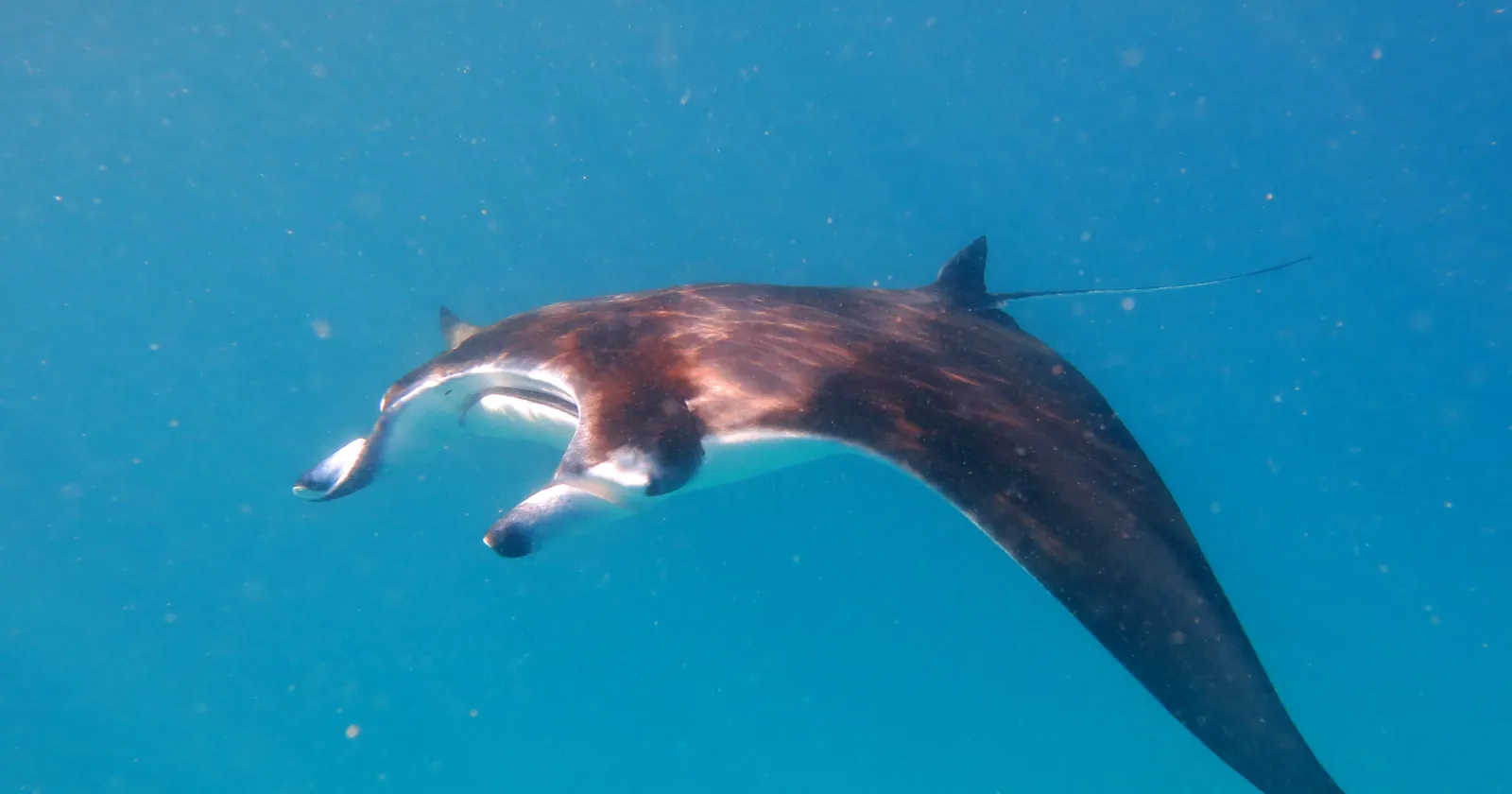
A reef manta ray in Baa Atoll. Ahmed Abdul Rahman, Wikimedia Commons, CC BY-SA 3.0, cropped.

Key takeaways
- Hanifaru Bay is snorkel-only: scuba, underwater scooters, drones, flash and selfie sticks are all banned inside the protected area
- Every visitor needs an access permit and an EPA-certified guide; the ministry's portal lists the visit at MVR 310 per person
- The code of conduct caps the bay at 80 snorkellers and 45 minutes in the water, one guide per ten guests in calm water and per five in rough water
- The government plan puts the feeding aggregations from May to December; tourist numbers peak from July to September, and the sea stays between 28.1 and 29.8 °C all year
- The nearest chamber that says it answers around the clock is the Kuredu clinic in Lhaviyani Atoll; Maldives Immigration lists no remote-work visa, so long stays run on the tourist visa
Hanifaru Bay: a protected feeding ground, not a dive site
Hanifaru is a reef, a small bay and a sand cay in Baa Atoll. It was declared protected on 5 June 2009 under the Environment Protection and Preservation Act, according to the action plan and the code of conduct (the ministry's portal gives 2011), and its rules are set out in Regulation 2012/R-23 and its later amendments. Baa Atoll became a UNESCO Biosphere Reserve in 2011, and Hanifaru is one of its core areas. The ministry's protected-areas portal gives the area as 529 hectares; the 2025 to 2030 conservation action plan gives 467.5 hectares and calls it a "look, see, don't touch" zone.
What makes it famous is food. The plan describes how the southwest monsoon pushes nutrient-rich water into the atoll and tidal currents trap the resulting plankton in the bay's mouth. It says up to 1,500 reef manta rays use the site in a season, and that Hanifaru is the only known place where reef manta feeding aggregations peak at 200 to 250 animals. Whale sharks come to feed too.
The site is managed on the ground by the Baa Atoll Biosphere Reserve Office, with the Environmental Protection Agency, which now publishes under the name Environmental Regulatory Authority, overseeing it for the environment ministry. Rangers patrol the bay but, the plan notes, have no enforcement powers of their own: they record breaches and pass them to the agency or the police. Fines under the regulation run from MVR 5 for minor offences to a maximum of MVR 100 million for major ones.
The rules in the bay
The official code of conduct for the protected area is short and strict. You need two things before you get wet: a Hanifaru access permit, valid for a single entry, and a guide certified by the agency. The bay takes a maximum of 80 snorkellers at a time, and nobody may stay in the water longer than 45 minutes. In calm or moderate conditions one guide may lead ten guests; in rough conditions, five.
Scuba diving is banned, and so are manned or unmanned underwater vehicles and diving equipment, drones, flash photography, selfie sticks and extension poles, fishing, fish feeding, collecting anything dead or alive, touching or chasing animals, loud noise and littering. Liquid Salt Divers, a Dharavandhoo dive centre, tells customers that cameras are fine but lights and selfie sticks are not. The poster also bans unauthorised filming, which matters if you plan to shoot for a client.
Boats work to a fixed pattern. Skippers call the ranger hotline before arriving. Inside, there is a two-mile-an-hour no-wake limit, no anchoring, a mooring area for seven boats and a waiting area for three, and a drop-off buoy for snorkellers. A flag on site shows conditions: green for calm or moderate, red for strong currents, yellow when the bay is full. The code adds that no flag does not mean the water is safe.
Access is also limited by the clock. There is no entry from 6 pm to 6 am, none on Fridays between noon and 2 pm, and the bay closes for 24 hours on the first day of Ramadan and on all Hajj days. Resorts, dive schools and guesthouses are told to follow a schedule of alternating days; we could not find the published rota, so ask your operator which days it may go.
The permit fee: MVR 310
The ministry's protected-areas portal lists a Hanifaru visit at MVR 310 per person, booked by time slot and paid once the request is approved. The 2020 amendment to the Hanifaru regulation sets that same MVR 310 access permit for visitors arriving through a resort, a liveaboard, a dive school or a guesthouse, and MVR 32 for Maldivians. The action plan lists higher entry fees among the measures it will consider, so check the portal before you go. Neither operator page quoted below says whether the fee is inside its package price; ask.
How to behave with mantas and whale sharks
The code of conduct sets distances and directions. With mantas: keep three metres away, approach from the side, never swim in front of them or come up from behind, do not touch or chase them, keep your fins below the surface and stay calm and quiet. With whale sharks: stay at least three metres from the head or body and four metres from the tail, no flash, no touching or riding, no motorised propulsion and nothing that blocks the animal's path.
The reasoning is in the research the plan cites. A 2020 study by Murray and colleagues found that tourists approaching a manta from the front made a strong flight response more likely, and that approaches from above were more likely to stop it feeding. The same work found that manta encounters in Baa Atoll followed the recommended guidelines only 44% of the time. All rays, including both manta species, are protected in the Maldives, and so are all sharks, including whale sharks.
If you are new to snorkelling among large animals, our snorkelling safety guide covers the basics before you join a group of strangers in a current.
When the mantas come
The government's conservation action plan describes Hanifaru as a feeding site for reef mantas and whale sharks from May to December, driven by the southwest monsoon, which it dates from May to October. It records the most tourist activity from July to September, with the most boats in August, and the busiest days over flood and high tides around full and new moons, when feeding is at its peak.
The Manta Trust, a UK research charity that runs the Maldivian Manta Ray Project and has no regulatory role, surveys Baa Atoll from May to November. In its 2019 annual report, manta sightings inside Hanifaru Bay peaked in July and August, with 592 and 556 sightings, and the bay's whale shark sightings peaked in August. One season is not a forecast, and the Trust's own field notes link its biggest days to full-moon tides. Our manta ray guide compares Hanifaru with sites that work in other months.
Water temperature at Hanifaru
NOAA's satellite averages for 1991 to 2020, for the grid cell at 5.125°N 73.125°E next to the bay, put the sea at 28.1 °C in January, 28.4 in February, 29.1 in March and a high of 29.8 °C in April. It eases to 29.6 in May, 29.1 in June, 28.8 in July and 28.7 in August, then holds at 28.6 to 28.7 through September to November and 28.4 in December. These are surface figures, which for a snorkeller are the ones that count.
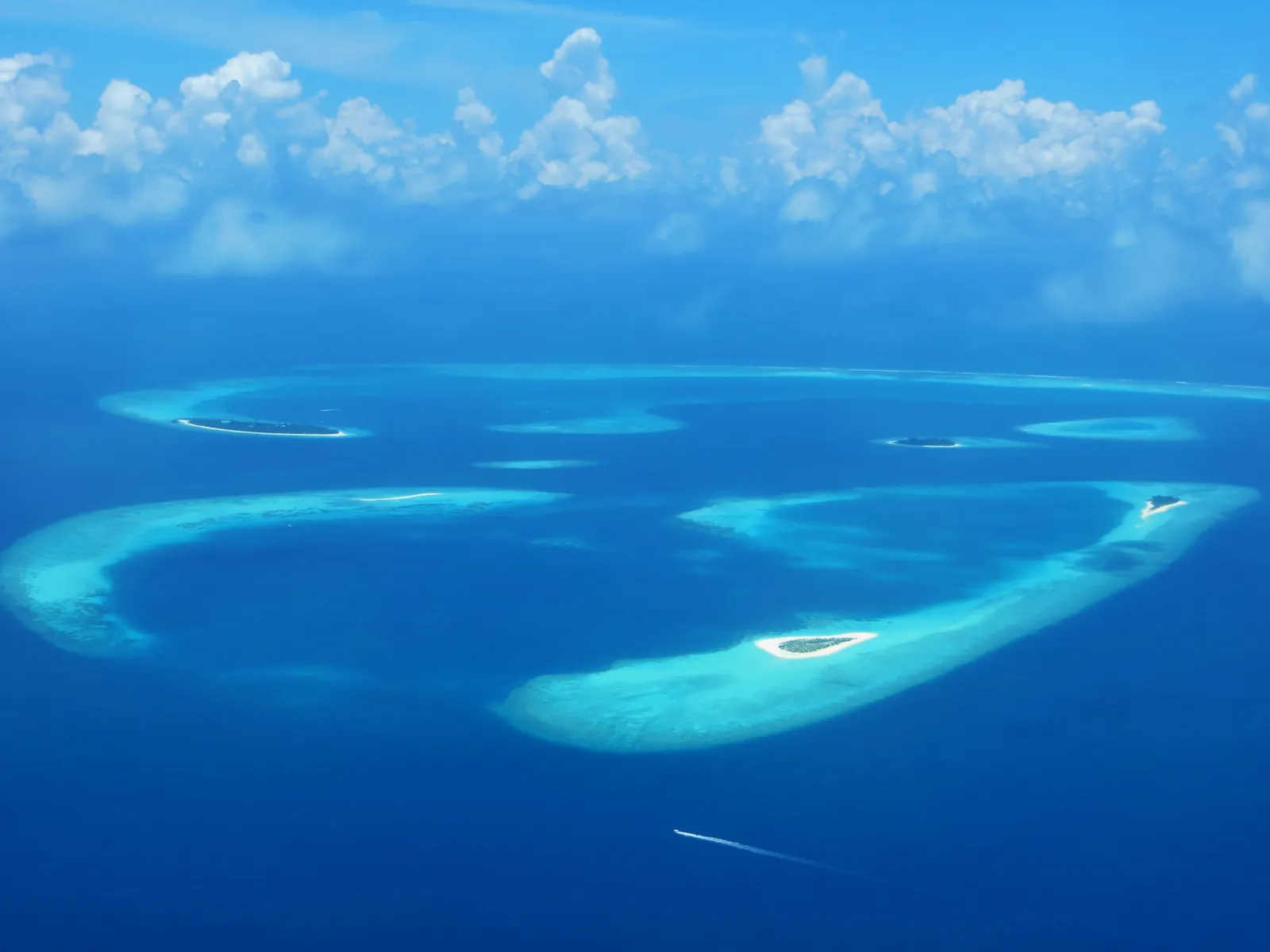
Reefs and islands of Baa Atoll from the air. Frédéric Ducarme, Wikimedia Commons, CC BY-SA 4.0, cropped.

Getting there: resort or local island
You reach Hanifaru by boat with an operator, either from a Baa Atoll resort or from one of the inhabited islands. The state airline Maldivian flies to Dharavandhoo, an inhabited Baa island whose airport opened in October 2012 and which, it notes, is surrounded by Dharavandhoo Thila and Hanifaru Bay. Aveyla Manta Village, a Dharavandhoo guesthouse, gives the flight from Velana as 20 to 45 minutes, or about 2.5 to 3 hours by speedboat depending on the sea, and says its jetty is a 15-minute boat ride from the bay. Manta Nomad Divers on Maalhos, another Baa island, flies its package guests in by domestic plane and offers speedboat transfers on request.
The choice between a resort and a local island is mostly about budget and daily life, and our Maldives local islands guide covers guesthouse costs, dress rules and connectivity. For Hanifaru specifically, remember the alternating days: a resort guest and a guesthouse guest may not be allowed in the bay on the same day.
What a Hanifaru trip costs
Local-island operators in Baa sell Hanifaru mostly inside multi-night packages. Prices from the operators' own pages, read on 10 November 2026, per person in US dollars:
| Operator | Package | Twin or double | Single |
|---|---|---|---|
| Liquid Salt Divers, Dharavandhoo | 3 nights, 2 manta snorkel trips | $720 | $845 |
| Manta Nomad Divers, Maalhos | 4 nights, 2 manta snorkel trips | $740 | $920 |
| Manta Nomad Divers, Maalhos | 6 nights, 3 manta snorkel trips | $955 | $1,270 |
Liquid Salt Divers sells its "Manta Madness" package from June to November and includes breakfast, the return domestic flight from Malé, service charge, taxes and green tax; the Aveyla Manta Village site lists the same package and prices. Manta Nomad Divers includes breakfast and the domestic flight, charges $80 for each extra Hanifaru trip and leaves snorkel gear rental out. We found no single-trip price on a Dharavandhoo operator's own page, and no current excursion price on a Baa resort's own site.
Safety: chamber and emergency numbers
Hanifaru itself is snorkel-only, but if you also scuba dive elsewhere in Baa, know where the chamber is. The Kuredu Medical Clinic and Hyperbaric Centre at Kuredu Resort, in Lhaviyani Atoll, runs a multiplace chamber with diving doctors and trained chamber staff. It gives two hotlines, +960 790 7510 and +960 790 1754, which it says are available 24/7 and answered by a diving doctor, and describes itself as the only operational chamber in the northern Maldives, serving resorts and passing liveaboards. We could not find a published transfer time from Baa. The UK Foreign Office warns that many resort islands are more than an hour from the nearest chamber and tells divers to know how their operator would get them there; check that your dive insurance covers that evacuation.
The Maldives Police Service lists 911 as its emergency number, and its Tourist Police Hotline is 1478. The UK Foreign Office tells travellers to dial 102 for an ambulance. For anything inside the protected area, the Hanifaru ranger hotline is 7905949, and the environment agency's confidential line for reporting breaches is +960 7980379.
Staying longer as a remote worker
Maldives Immigration lists tourist, sponsorship, work, marriage, dependent, business, resident and meeting visas; there is no digital-nomad or remote-work category. The tourist visa is granted on arrival if you have a passport valid for at least a month, a confirmed return ticket, a prepaid booking at a registered facility and enough money for the stay, and you must file the free IMUGA traveller declaration within 96 hours before arrival. The UK Foreign Office gives the visa as 30 days and says anyone intending to work in the Maldives needs a work visa before travelling. Since 23 April 2026 extensions are filed online through IMUGA, with a decision expected within 48 hours. In practice that makes a Hanifaru season a stay of weeks, not a year; the local islands guide covers how nomads run it.
Who Hanifaru Bay suits
Hanifaru suits anyone who can swim calmly in open water and wants to see the largest known reef manta feeding aggregations without needing a dive card. It suits a remote worker who can base on Dharavandhoo or Maalhos for a few weeks between June and October and go back on several days, since the mantas follow tides and plankton, not a booking. It suits less well a scuba diver who wants to be underwater with the mantas, which the rules forbid, anyone travelling outside the southwest monsoon, and anyone who wants a guaranteed sighting on a fixed date.
FAQ: Hanifaru Bay
Can you scuba dive at Hanifaru Bay?
No. Scuba diving is banned inside the Hanifaru Marine Protected Area, as are underwater scooters and other diving equipment. Visitors snorkel only, with an access permit and an EPA-certified guide.
How much is the Hanifaru Bay entry fee?
The environment ministry's protected-areas portal lists a visit at MVR 310 per person. The 2020 amendment to the Hanifaru regulation applies the same amount to visitors from resorts, liveaboards, dive schools and guesthouses. Ask your operator whether its price includes it.
When is the best time to see mantas at Hanifaru Bay?
The government's management plan dates the feeding aggregations from May to December, with the most visitors from July to September. In the Manta Trust's 2019 season, manta sightings in the bay peaked in July and August. Feeding is strongest on big tides around full and new moons.
How long can you stay in the water at Hanifaru?
45 minutes at most. The bay takes up to 80 snorkellers at a time, with one guide for ten guests in calm conditions and one for five in rough conditions. There is no entry from 6 pm to 6 am or on Fridays between noon and 2 pm.
How do you get to Hanifaru Bay from a local island?
Fly from Velana to Dharavandhoo, an inhabited Baa Atoll island with its own airport, and join a guesthouse or dive-centre trip. One Dharavandhoo guesthouse says the bay is a 15-minute boat ride from its jetty. Resorts and local-island operators use the bay on alternating days.
Note: Conditions, safety guidance and regulations change. Verify current information with official sources, including the dive operator, the park authority and the relevant government department, before you travel or dive.
Founder of NOMADREEF and a former digital nomad. This guide is sourced from the references below; conditions, prices and rules change, so verify current details, and follow qualified local guidance and safety briefings. About the author · LinkedIn ↗
Sources
- Hanifaru protected area and fee (primary). Ministry of Climate Change, Environment and Energy, Maldives Protected Areas portal, Hanifaru Region and how to book; Environmental Regulatory Authority, laws page with Regulation 2012/R-23 and its amendments, including the 3rd amendment, 2020/R-110 (PDF, Dhivehi), fee table translated by us. Read 10 November 2026.
- Management plan and code of conduct (primary). Ministry of Tourism and Environment and EPA, Hanifaru Marine Protected Area Conservation Action Plan 2025–2030 (PDF) and its executive summary (PDF), with the code of conduct poster and vessel movement chart; research cited there (Murray et al. 2020; Armstrong et al. 2021). Read 10 November 2026.
- Season (research body). Manta Trust, Maldivian Manta Ray Project, Baa Atoll Annual Report 2019 (PDF) and start of the 2022 Baa season. Read 10 November 2026.
- Sea temperature. NOAA PSL, OISST v2.1 monthly long-term means 1991–2020, cell 5.125°N 73.125°E, computed for this page (primary). Read 10 November 2026.
- Getting there. Maldivian, Dharavandhoo destination page (primary); Aveyla Manta Village, FAQ and Hanifaru page, and Manta Nomad Divers, Hanifaru page (operators). Read 10 November 2026.
- Prices (each operator primary for itself). Liquid Salt Divers, Manta Madness and Hanifaru page; Aveyla Manta Village, Manta Madness; Manta Nomad Divers, manta packages. Read 10 November 2026.
- Chamber and emergency numbers. Kuredu Medical Clinic and Hyperbaric Centre (facility); Maldives Police Service, important contacts (primary); UK Foreign Office, Maldives safety and security and health. Read 10 November 2026.
- Staying and working. Maldives Immigration, tourist visa, extension process of 24 April 2026 and the site's list of visa types (primary); UK Foreign Office, entry requirements. Read 10 November 2026.
- Left out. The rota of resort and local-island days; whether package prices include the permit fee; a single-trip price on a Dharavandhoo operator's own page and any current resort excursion price; the transfer time from Baa to the Kuredu chamber; monsoon and storm figures from the Maldives Meteorological Service, which we did not read; the official maximum tourist stay and extension fee; and why the portal dates protection to 2011 rather than 2009.