Fiji Diving by Region: Beqa's Shark Reef, Taveuni's Rainbow Reef, Bligh Water, Kadavu and the Mamanucas
 by Yannick Schroth
Nov 10, 2026
13 min read
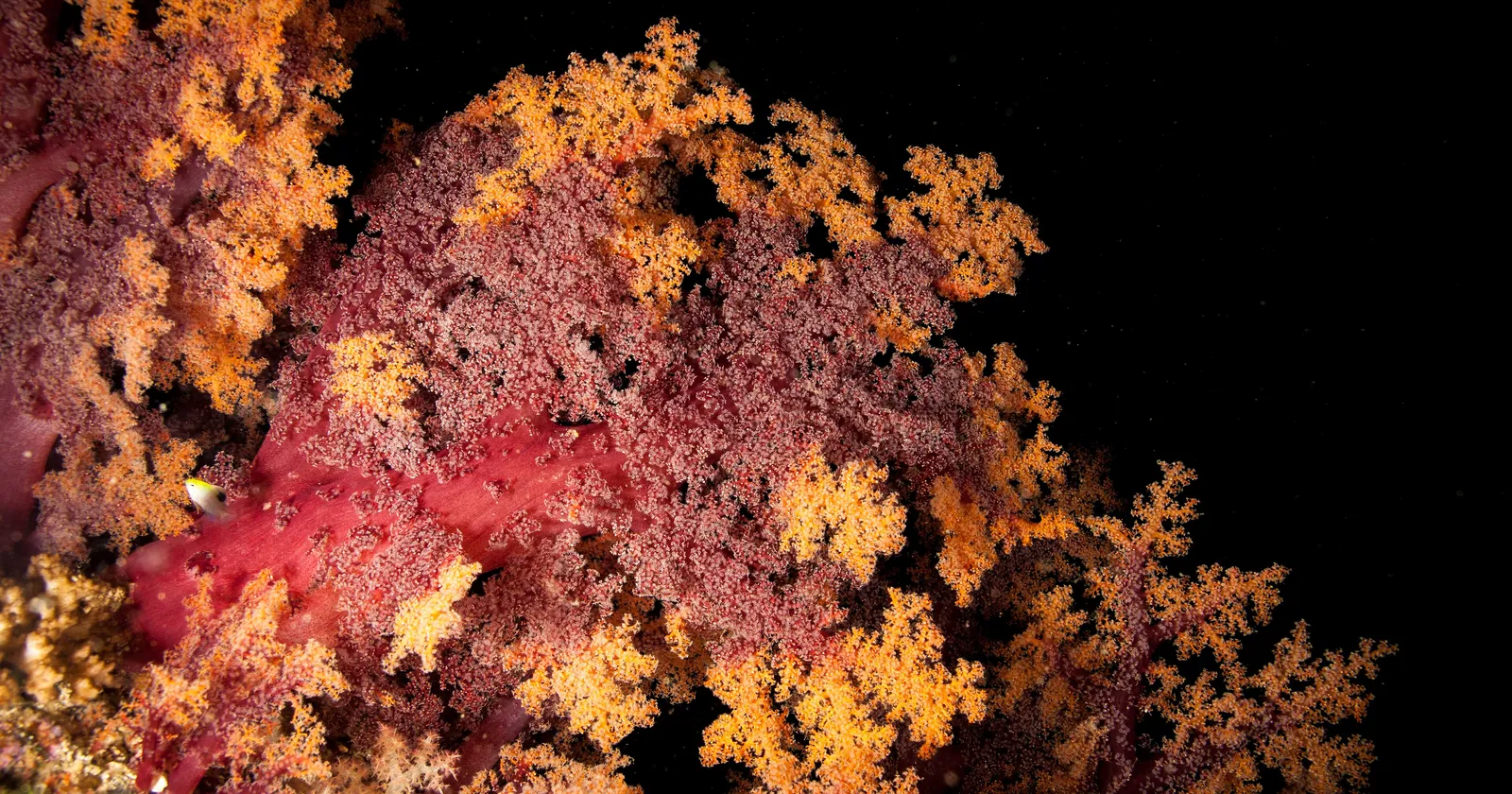
Soft coral at the Alacrity dive site in Fiji. q phia, Wikimedia Commons, CC BY 2.0, cropped.

Key takeaways
- Fiji's dive regions are spread across the country: Beqa Lagoon, the Suncoast and Bligh Water, Savusavu and Namena, Taveuni and the Somosomo Strait, Kadavu, the Mamanucas and the Yasawas
- Shark Reef off Pacific Harbour is a marine reserve under a 2014 regulation that bans all fishing and collecting, coral included, with fines from FJ$500 to FJ$10,000; divers pay a FJ$25 daily levy to the village that gave up its fishing rights
- A 1997 regulation bans collecting, taking or diving for fish with scuba, and even carrying scuba gear for that purpose
- NOAA's 1991 to 2020 averages put the sea at about 28.6 to 29.2 °C in February and March and 25.0 to 26.4 °C in August and September; cyclone season runs from November to April
- For a dive accident, the industry protocol says to call the CWM Hospital switchboard in Suva on 331 3444 around the clock; a second chamber in Nadi lists daytime hours
Fiji diving is a choice between regions
Fiji has no single dive centre of gravity. Tourism Fiji, the country's tourism body, lists eight dive regions, and they are a long way apart: some a drive from Nadi, others a domestic flight or an overnight ferry. Choosing a base means choosing what you want most. Sharks are at Beqa, current and soft coral in the Somosomo Strait and Bligh Water, remote reef at Kadavu, and easy lagoon diving in the Mamanucas.
| Region | Known for | Way in |
|---|---|---|
| Pacific Harbour and Beqa Lagoon | The shark dive at Shark Reef; pinnacles and wrecks | Road from Nadi or Suva |
| Suncoast (Rakiraki) and Bligh Water | Soft coral on reefs and pinnacles in strong current; liveaboards | 2½ hours' drive north of Nadi |
| Taveuni and the Somosomo Strait | Rainbow Reef and the Great White Wall | Domestic flight to Taveuni or Savusavu |
| Savusavu and Namena | The Namena Marine Reserve, Natewa Bay | Domestic flight to Savusavu |
| Kadavu | The Great Astrolabe Reef, Naiqoro Passage, mantas | Domestic flight or ferry from Suva |
| Mamanuca and Yasawa islands | Calm reefs for beginners; Yasawa mantas from May to October | Ferry from Port Denarau or Lautoka |
Beqa Lagoon and the Shark Reef Marine Reserve
Shark Reef lies off the south coast of Viti Levu, about 15 minutes by boat from Pacific Harbour. It became a reserve in April 2004 through Beqa Adventure Divers (BAD), the Fisheries Department and Galoa, the village that traditionally owns the reef. Galoa gave up its fishing rights there. In return, every diver on the shark dive pays a levy, which BAD collects and pays out to the village each month. In November 2014 the reserve became Fiji's first national marine park, and BAD manages it day to day.
The legal basis is the Fisheries (Shark Reef Marine Reserve) (Serua) Regulations 2014. Boats inside the reserve may use only its moorings, and nobody may dump rubbish there. Any fishing, and any collecting of sharks or other marine life including coral, is banned. The fine is FJ$500 to FJ$10,000, or up to six months in prison, or both, and the Fisheries Department can seize gear, vehicles and boats. A buffer zone around the reserve bans nets and other indiscriminate gear and anything rigged to catch sharks.
The dive itself is tightly run. BAD's morning shark trips run on Monday, Tuesday, Thursday, Friday and Saturday, two tanks each. The first dive starts at 30 meters, where divers watch from fixed positions for 10 to 12 minutes while a divemaster swims overhead dropping tuna heads and the bull sharks come in. Then the group moves to 10 meters for grey reef and sicklefin lemon sharks, and ends at 4 meters with whitetips and blacktips during the safety stop. The second dive starts at 25 or 15 meters, depending on the season and the sea. BAD lists eight regular species, tiger sharks among them.
BAD's own rules are strict. You need at least an Open Water card; a PADI Scuba Diver card is not enough. Divers with fewer than 30 logged dives get a divemaster of their own, and bookings stop at 20 divers. Everyone follows the same profile from fixed positions, with no exploring. Wetsuits must be dark and full-length, with black gloves, and nothing white, bright or shiny is allowed. Away from the sharks, BAD says the lagoon has more than 30 coral sites, including two wrecks at 25 and 30 meters.
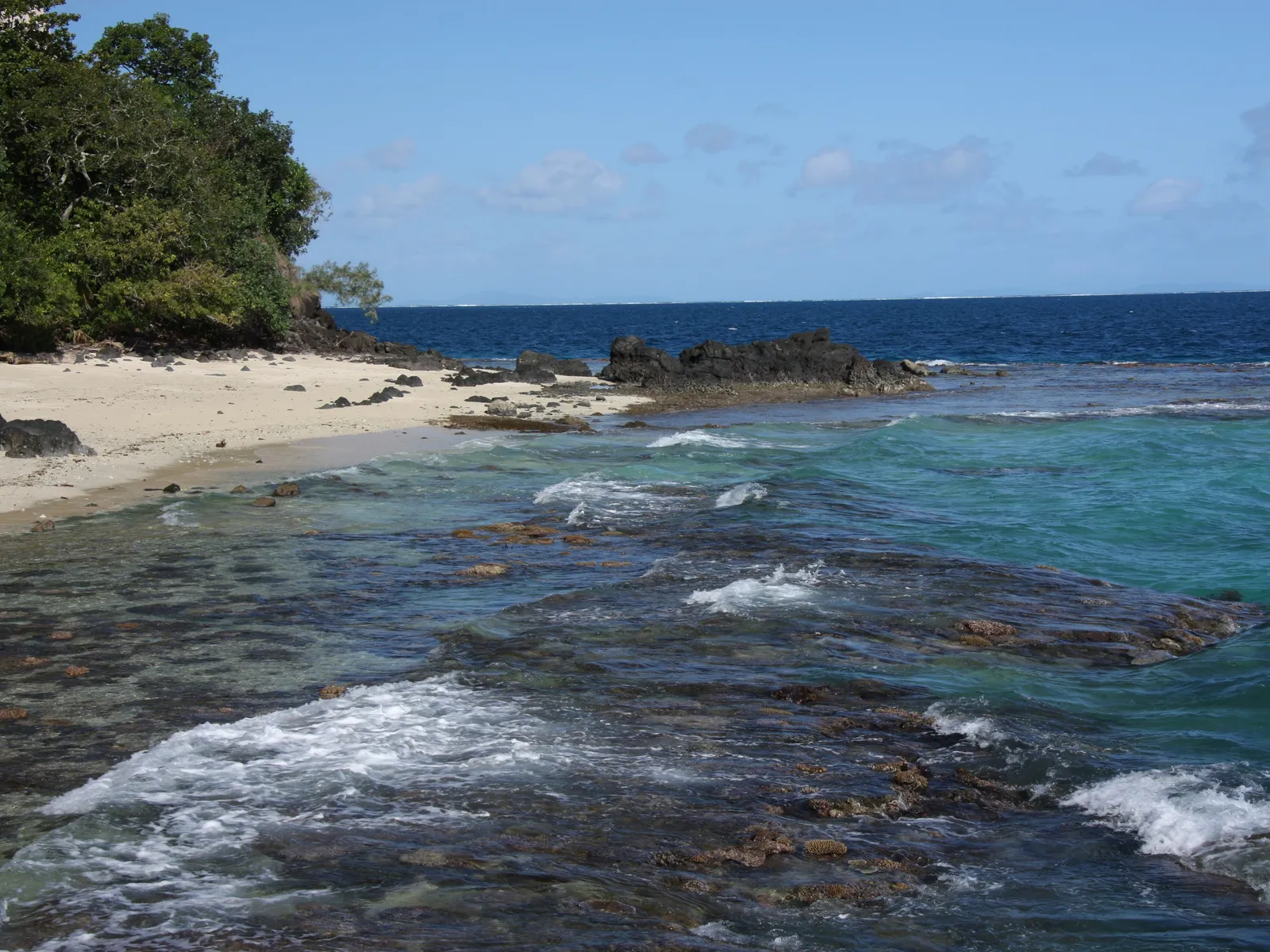
Beqa Lagoon, seen from the shore. Mark Heard, Wikimedia Commons, CC BY 2.0, cropped.

Taveuni, the Somosomo Strait and Rainbow Reef
The Somosomo Strait is the narrow channel between Taveuni and Vanua Levu. Rainbow Reef lies off the Vanua Levu side. When the tide runs, water from the deep feeds the soft coral, and that is what divers come for. Tourism Fiji gives the Great White Wall, the strait's best-known site, a depth of 15 to 65 meters. It says the wall is best on a slack low tide and, because of the depth and current, better for experienced divers.
Timing matters here. Dive Academy Fiji, at Viani Bay, says each Rainbow Reef site has its own best moment in the tide. Taveuni Dive Resort says the White Wall is best when the coral is open to feed, which depends on the moon and the tides, and publishes a schedule of good days. Dive Academy describes the entry as a tunnel at 9 to 12 meters that opens onto a near-vertical wall of white soft coral dropping beyond 60 meters. Because the wall is close to its base, it says it can time the dive on almost any day. It also runs a boat trip to Rabi Island, where it says mantas feed from April to November.
Fiji Link flies daily to Taveuni and Savusavu from Nadi and Nausori, according to Tourism Fiji, and Northern Air flies a few times a week from Nausori. Viani Bay is about 20 minutes by boat from Taveuni. The nearest chamber, as Dive Academy itself points out, is in Suva.
Bligh Water and the Suncoast
Bligh Water is the stretch of sea between Viti Levu and Vanua Levu, Fiji's two largest islands. Tourism Fiji counts about 50 sites in its maze of reefs, channels and pinnacles, with named dives such as Black Magic and Mount Mutiny. Around Vatu-i-Ra island, strong ocean currents are forced up through a deep channel, which is what feeds the soft coral. The same currents make many of the remote sites better for experienced divers on a liveaboard. Tourism Fiji names Nai'a, which runs seven- to ten-day trips to Vatu-i-Ra, Namena, Makogai, Wakaya and Gau. Humpback whales pass through these waters from July to October.
On land, the base is Rakiraki on the Suncoast, about two and a half hours' drive north of Nadi. Ra Divers, at Volivoli Beach Resort, says it has dived the Bligh Water since 1990 and uses more than 90 sites in nine areas, with boat rides of 12 to 50 minutes. It also names two wrecks nearby, the MV Ovalau II and the Papuan Explorer.
Savusavu and the Namena Marine Reserve
Savusavu, on Vanua Levu, is the base for Namena, a community-run reserve that Tourism Fiji says has some of Fiji's best dive sites. It lies in the traditional fishing grounds, or qoliqoli, of the Kubulau district. The landowners closed it to fishing in 1997, and a local committee manages it. The reserve has been funded by an annual dive tag, valid for the calendar year; in 2014 it cost FJ$30, according to the Coral Reef Alliance, which helped set up the system. We could not confirm today's price. Koro Sun Dive in Savusavu lists a "Namena surcharge" of $100 on an undated price page, without saying what it covers, so ask.
Kadavu and the Great Astrolabe Reef
Kadavu is Fiji's remote southern dive region. The Great Astrolabe Reef runs along the island's south coast and curves north-east past Ono to Buliya. Currents in the reef's passages are strong. The best-known passage, Naiqoro, is closed to fishing, and Tourism Fiji says you need a permit to enter it. We could not find who issues the permit or what it costs, so your resort should arrange it. Mantas are seen at gentler sites around Ono and Buliya.
Tourism Fiji lists about four Fiji Link flights a week from Nadi to Vunisea, taking 50 minutes, and one a week from Nausori. The cheaper way is Goundar Shipping's overnight ferry from Narain Jetty in Suva, which runs once or twice a week and takes seven to eight hours. Vunisea has a hospital but no pharmacy.
The Mamanuca and Yasawa islands
The two island chains off Nadi are reached by boat. Tourism Fiji describes the Mamanucas as calm, easy-to-navigate reefs suited to beginners and families, with sites such as Namotu Wall and the Supermarket. Further north, the Yasawas have walls with sea fans and soft coral. Between May and October, mantas gather in a shallow channel off Drawaqa island to feed. Tourism Fiji says mantas are protected under Fijian law and the Manta Trust studies them there. South Sea Cruises runs daily ferries to both groups from Port Denarau, and the Tavewa Seabus runs daily from Lautoka to the Yasawas.
Fiji's rules on taking marine life
The rule that matters most for a diver is short. Under the Fisheries regulations on underwater breathing apparatus, in force since March 1997, nobody may collect, take or dive for fish using scuba or a compressor, or carry that gear for the purpose. Only licensed fishers with a separate exemption can. As published in 1997, the penalty was a fine of $400, six months in prison, or both. In practice, do not take anything while on scuba.
Protected areas go further. At Shark Reef, collecting any marine life, coral included, is an offence, and Namena and Naiqoro are closed to fishing. Tourism Fiji says Fiji supports nearly 400 community-led marine areas and has pledged to protect 30% of its waters by 2030. Many of Fiji's marine reserves are community-managed, and Tourism Fiji says much of the entry fees goes back to local communities. It asks visitors to pay them and to leave shells and coral where they find them.
When to dive Fiji: water temperature and cyclones
Fiji is warm all year, with the coolest water in the southern winter. NOAA's satellite averages for 1991 to 2020 put the surface between 28.6 and 29.2 °C in February and March, depending on the region. In August and September it falls to between 25.0 °C off Kadavu and 26.4 °C off the Mamanucas. The Mamanucas and Yasawas run up to a degree warmer than Beqa and Kadavu.
| Sea surface, °C | Feb | Apr | Jun | Aug | Sep | Nov |
|---|---|---|---|---|---|---|
| Beqa Lagoon | 28.7 | 28.2 | 26.5 | 25.3 | 25.3 | 26.7 |
| Taveuni and Somosomo Strait | 28.8 | 28.6 | 26.9 | 25.8 | 25.9 | 27.2 |
| Bligh Water | 28.8 | 28.5 | 26.7 | 25.5 | 25.7 | 27.2 |
| Kadavu | 28.6 | 28.1 | 26.2 | 25.1 | 25.0 | 26.5 |
| Mamanuca | 29.2 | 29.0 | 27.3 | 26.1 | 26.4 | 27.8 |
| Yasawa | 29.1 | 28.8 | 27.2 | 26.1 | 26.3 | 27.7 |
| Savusavu and Koro Sea | 28.8 | 28.6 | 26.7 | 25.6 | 25.7 | 27.0 |
Tourism Fiji's own dive calendar puts the warmer water in the May to October dry season. NOAA's record shows the reverse, so rely on the table above for temperature. What the dry season does bring, by Tourism Fiji's account, is clearer water: 20 to 40 meters of visibility from May to October against 15 to 25 meters from November to April, when plankton blooms.
Cyclone season runs from November to April, according to the UK government's travel advice, the regional cyclone outlook and Fiji's hotel and tourism association. The UK advice adds that cyclones can come at any time of year. We could not reach the Fiji Meteorological Service's own website, which issues the official warnings. The regional outlook for November 2026 to April 2027, coordinated by Earth Sciences New Zealand, expects seven to eleven named cyclones in the South-west Pacific. At least four could be severe, with the risk higher near and east of the International Date Line.
Chambers and emergencies
Fiji's dive industry follows an emergency protocol from the Fiji Hotel and Tourism Association's dive committee, last updated in May 2026. For a suspected diving injury it says to put the diver on oxygen at a constant flow of at least 15 liters a minute. Then call the switchboard of the Colonial War Memorial (CWM) Hospital in Suva on 331 3444, staffed 24 hours, which knows which hyperbaric doctor is on duty. The CWM hyperbaric unit's own line is staffed only while the chamber is in use. Any evacuation flight must be arranged by the hyperbaric unit and flown low, at 500 feet when the weather allows.
The same protocol lists a second facility, the hyperbaric service at Pacific Specialist Healthcare in Nadi, on 892 2241, with general hours from 7 am to 7 pm. The association says it sits opposite Nadi International Airport and that Fiji now runs two hyperbaric facilities. The UK's travel advice still says Fiji has only one chamber, in Suva, and that it is not always working. Ask your operator which one it would use and check before you dive. From Beqa, BAD puts the Suva chamber about an hour's drive away; from the outer islands, getting a diver to a chamber means a medical evacuation, which the hyperbaric unit arranges. The general emergency number is 911 for ambulance, fire and police. Make sure your dive insurance covers chamber treatment and evacuation; the hotel association reports that more operators now require it.
What diving in Fiji costs
These prices come from the operators' own pages, read on 10 November 2026, and are in Fiji dollars unless marked.
| Operator and item | Price |
|---|---|
| Beqa Adventure Divers: Fiji Shark Dive, two tanks | FJ$500 |
| Beqa Adventure Divers: soft coral or wreck dive, two tanks | FJ$475 |
| Beqa Adventure Divers: Shark Reef levy, per day in the reserve | FJ$25 |
| Beqa Adventure Divers: fuel surcharge, per day | FJ$20 |
| Dive Academy Fiji, Viani Bay: guided boat dive on Rainbow Reef, per dive | FJ$210 |
| Paradise Taveuni: two-tank boat dive | US$180 |
| Paradise Taveuni: PADI Open Water course (e-learning first) | US$550 |
| Koro Sun Dive, Savusavu: two-tank dive (undated page) | FJ$300 |
BAD's prices include tanks and weights only; full gear costs FJ$50 a day, and it takes 5% off for three days of diving and 10% for five. Its rate page says the prices run from 1 April 2026 to 31 March 2027, while a line below says they are valid to 31 December 2026, so check before you book. Paradise Taveuni's prices include Fiji VAT and tourism tax. We found no published dive prices for the Mamanucas, the Yasawas, Bligh Water or Kadavu.
Getting to Fiji and between the islands
Nadi, on the west coast of Viti Levu, is Fiji's international gateway, according to Tourism Fiji. From there you go by road to Pacific Harbour or Rakiraki, by ferry to the Mamanucas and Yasawas, and with Fiji Link or Northern Air, the domestic airlines, to Taveuni, Savusavu and Kadavu. Roll-on ferries also link Viti Levu with Vanua Levu. We could not read Fiji Airways' own route list or timetable, so check flights there.
Fiji as a remote-work base
Visitors from visa-exempt countries get a visitor permit on arrival. The UK government says its citizens can stay up to four months and must apply to Fiji's immigration department to stay longer. Tourism Fiji lists what you need at the border: a passport valid for six months beyond your stay, a return or onward ticket and an address in Fiji. For longer stays, it lists permits for work, investment, study, yachts, medical reasons and people with an assured income. We found no digital-nomad permit on any official page we could read. The immigration department's website did not load for us, so check the exempt-country list and the assured-income permit with the department or a Fiji embassy.
The UK advice says mobile coverage on rural and outer islands can be limited or missing. SIM cards are sold at Nadi International Airport and must be registered. We found no official figures on internet speeds, so ask any resort about its connection before you book.
Who Fiji suits
Fiji suits a diver who wants warm water all year, soft coral and a fixed set of big encounters: bull sharks at Beqa, mantas in the Yasawas and humpbacks in season. It suits remote workers who can work within a visitor stay of a few months and island internet. It suits less well anyone who wants to dive independently, because the strait and passage sites run to tide schedules, the shark dive is fully choreographed, and, as the hotel association itself notes, many dive sites are hours from the nearest medical centre. If you are comparing shark trips, see our guide to the best places to dive with sharks.
FAQ: Fiji diving
Where is the best diving in Fiji?
It depends on what you want. Beqa Lagoon off Pacific Harbour has the shark dive at Shark Reef, Taveuni and the Somosomo Strait have Rainbow Reef and the Great White Wall, Bligh Water has current-fed soft coral, Kadavu has the Great Astrolabe Reef, and the Mamanuca and Yasawa islands have calmer reefs and seasonal mantas.
How much is the Beqa shark dive?
Beqa Adventure Divers lists its two-tank Fiji Shark Dive at FJ$500, plus a Shark Reef Marine Reserve levy of FJ$25 per day and a fuel surcharge of FJ$20 per day. Gear rental is extra. You need at least an Open Water card.
When is the best time to dive in Fiji?
You can dive all year. The water is warmest in February and March, at about 29 °C, and coolest in August and September, at about 25 to 26 °C. Tourism Fiji says visibility is best from May to October. Cyclone season runs from November to April, and Yasawa mantas gather from May to October.
Is there a recompression chamber in Fiji?
Yes. The Colonial War Memorial Hospital in Suva has a hyperbaric unit, reached through the hospital switchboard on 331 3444, and Pacific Specialist Healthcare in Nadi has a second one. The Suva unit's own line is only staffed while the chamber is in use, and the UK government says the chamber is not always working, so check before you dive. The emergency number is 911.
Can you take fish or other sea life while diving in Fiji?
Not with scuba gear. A 1997 regulation bans collecting, taking or diving for fish with scuba, and in marine reserves such as Shark Reef collecting any marine life, coral included, is an offence with fines up to FJ$10,000. Tourism Fiji asks visitors to leave shells and coral where they find them.
Note: Conditions, safety guidance and regulations change. Verify current information with official sources, including the dive operator, the Fisheries Department, the Fiji Meteorological Service and the immigration department, before you travel or dive.
Founder of NOMADREEF and a former digital nomad. This guide is sourced from the references below; conditions, prices and rules change, so verify current details, and follow qualified local guidance and safety briefings. About the author · LinkedIn ↗
Sources
- Dive regions (primary). Tourism Fiji, Fiji's best dive regions, Bligh Water, Somosomo Strait, Great Astrolabe Reef, Vanua Levu and Yasawa mantas. Read 10 November 2026.
- Operators (each primary for itself). Beqa Adventure Divers, Shark Reef Marine Reserve, the shark dive, safety, coral dives and rates; Dive Academy Fiji; Taveuni Dive Resort; Paradise Taveuni; Ra Divers at Volivoli; Koro Sun Dive. Read 10 November 2026.
- Law (primary). Fisheries (Shark Reef Marine Reserve) (Serua) Regulations 2014, L.N. 41 (PDF) and Fisheries regulations on underwater breathing apparatus 1997, L.N. 17 (PDF), both as published, via FAOLEX. Fiji Hotel and Tourism Association, update on the HASAWA (Diving) Regulations 2006. Read 10 November 2026.
- Protected areas. Coral Reef Alliance, Namena Marine Reserve user fee manual (PDF, 2014); Tourism Fiji, national parks and marine sanctuaries and Shark Reef. Read 10 November 2026.
- Water temperature (primary data). NOAA PSL, OISST v2.1 monthly long-term means 1991–2020, seven 0.25° cells: Beqa 18.375°S 178.125°E, Somosomo Strait 16.875°S 179.875°E, Bligh Water 17.125°S 178.375°E, Kadavu 18.875°S 178.375°E, Mamanuca 17.625°S 177.125°E, Yasawa 16.875°S 177.375°E, Koro Sea 16.875°S 179.375°E, computed for this page. Visibility and seasons from Tourism Fiji, best time to dive. Read 10 November 2026.
- Cyclones. Season from the UK Foreign Office's Fiji travel advice, the regional outlook below, SPREP via PINA, 12 October 2026 and the Fiji Hotel and Tourism Association (triangulated); Earth Sciences New Zealand, Southwest Pacific tropical cyclone outlook, October 2026 (primary). Read 10 November 2026.
- Chambers and emergencies. Fiji Hotel and Tourism Association dive committee, Fiji dive emergency notes, May 2026 (PDF) and "Breathing under pressure", 4 December 2025; UK Foreign Office, Fiji travel advice (primary). Read 10 November 2026.
- Getting there. Tourism Fiji, Nadi, getting around by air, by sea and to Kadavu. Read 10 November 2026.
- Staying and working. UK Foreign Office, Fiji entry requirements and mobile coverage (primary); Tourism Fiji, visas and permits. Read 10 November 2026.
- Left out. The Fiji Immigration Department's and the Fiji Meteorological Service's own pages, which did not load for us; whether the Suva chamber is working on a given day and what Nadi offers after hours; today's Namena tag price and any fee for Rainbow Reef or the Naiqoro permit; later amendments to the 1997 and 2014 regulations; dive prices for the Mamanucas, Yasawas, Bligh Water and Kadavu; Fiji Airways timetables; and internet speeds.