Essaouira: A Digital Nomad Base for Windsurfing and Kitesurfing
 by Yannick Schroth
Jul 31, 2026
7 min read
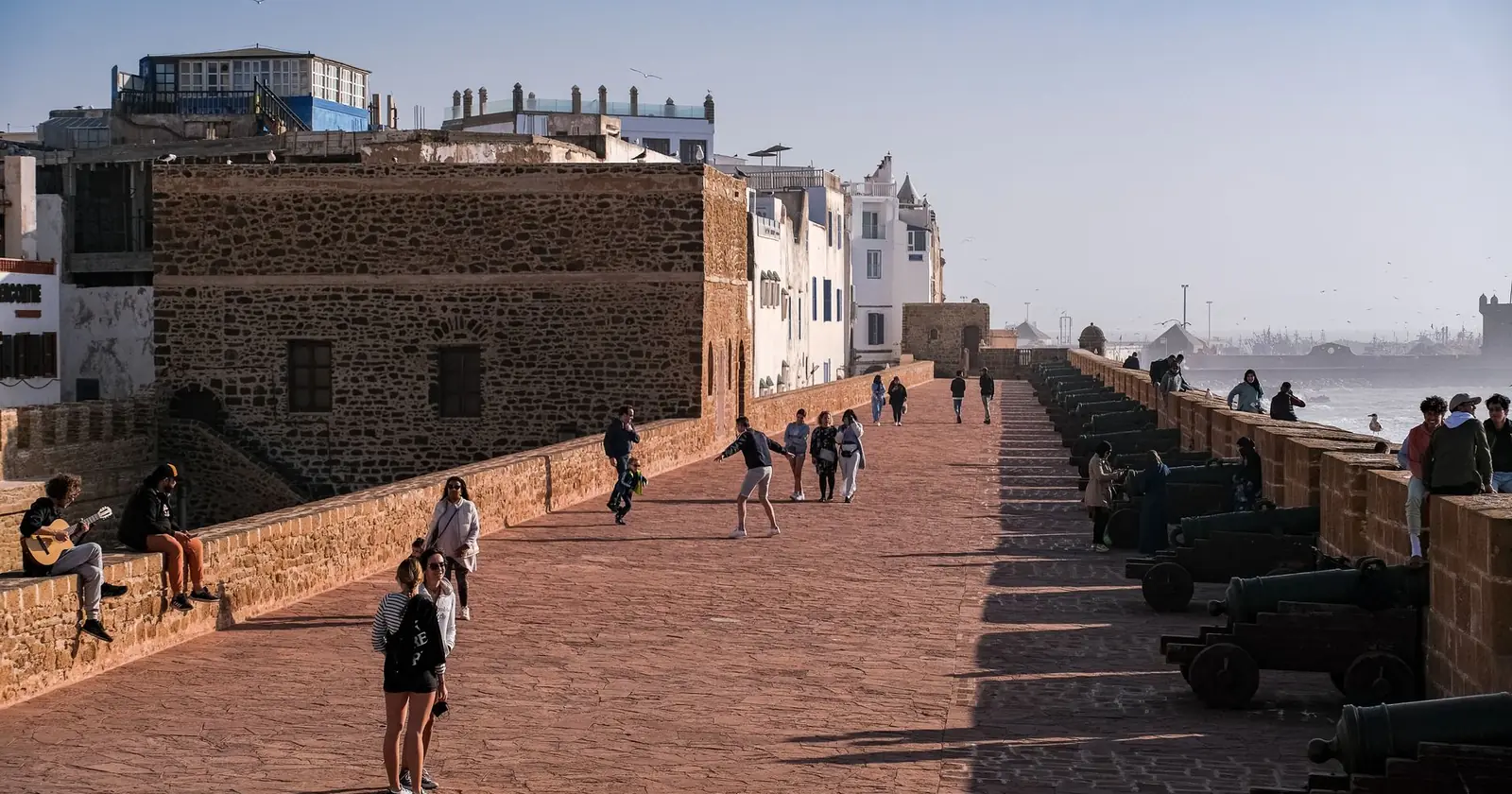
Photo: Manel Cusido / Pexels.
Figures are indicative and "as of 2026"; verify prices, seasons and visa rules before you rely on them.
Key takeaways
- In ERA5 model data the wind is strongest May to August, when 53 to 72% of daytime hours reach 12 knots, and lightest December to February
- The Atlantic stays cold all year thanks to the Canary Current; budget for a 3/2 wetsuit even in summer
- Very cheap base: furnished rooms often around 200 to 400 USD per month, all-in living can sit near 800 to 900 USD (verify current rates)
- British passport holders get up to 90 days visa-free for tourism, per UK travel advice; check your own nationality's rules
- Reliable internet lives in the coworking spaces, not always in cheap flats, so test the wifi before you commit
Why Essaouira is one of the best-value wind and kite bases anywhere
Essaouira sits on an exposed sweep of Moroccan Atlantic coast where the summer trade wind, which local schools call the Alizé, blows from the north and north-east down the shore for much of the year. The result is consistent, mostly side-shore to side-onshore wind that blows across a long, sandy bay, which is why the town markets itself as the Windy City of Africa and why it has been a windsurf and kite pilgrimage since the 1990s.
The wide main bay is the beginner and intermediate playground: a big, forgiving stretch of flatter water inside the bay with schools and rental centers lining the beach, so you can walk from your riad to a board in ten minutes. It is one of the rare world-class wind spots where you can also live cheaply, walk everywhere, and eat well, which is exactly what makes it work as a base rather than a one-week camp.
The wind, the water and the named spots
In the main Essaouira bay the wind is cross-shore and the water relatively protected, ideal for learning to kite or windsurf and for logging easy hours. When you want more, riders head about 25 km north to Moulay Bouzerktoun, a serious wave-sailing and wave-riding spot with powerful, gusty wind and rock, strictly for confident sailors and better on the right tide. To the south, Sidi Kaouki is a windy, open beach that doubles as a surf spot on smaller-wind days.
Water is the trade-off. The Atlantic here stays cold: satellite sea-surface data for the sea just off Essaouira give monthly means of about 17 to 19 degrees C, coolest in March at 16.8 and warmest in September and October at 19.0, with single days between about 15 and 22 degrees C (NOAA OISST, 2021 to 2025, our calculation). A 3/2 wetsuit is the sensible default for most sessions, and you will still want it in August. Verify current sea temperatures before you travel, but do not picture bathwater.
When to go: seasons, wind strength and crowds
Peak wind season is roughly April to October. In the ERA5 weather model, for a cell centered just off the town, the daytime wind from 2015 to 2024 averaged 12.4 to 13.7 knots (about 23 to 25 km/h) from June to August, and 53 to 72% of daytime hours from May to August reached 12 knots or more, against 21 to 33% from December to February (our calculation). From June to August, 80 to 95% of daytime model hours blew from the north or north-east. A 25 km model average understates what the bay feels like on a good afternoon: one school, Essaouira Wavescape, describes April to October as 15 to 30 knots for kiting. Strong summer days suit experienced riders on smaller kit but can overpower beginners. If you are weighing this coast against the surf town to the south, our Essaouira vs Taghazout comparison sets the wind and swell side by side.
The shoulder months of April, May, September and October are the sweet spot for most people: still consistent trade winds but softer and less punishing, with pleasant air and thinner crowds. March and November are quieter and gentler again, better for learning but with less certainty of wind. Treat these month-by-month wind figures as indicative and check a current forecast archive before booking; conditions vary year to year.
The nomad reality: wifi, cost, visas and the scene
Essaouira is one of Morocco's most affordable bases. As of 2026, furnished rooms commonly run around 200 to 400 USD per month and all-in monthly living is often quoted near 800 to 900 USD, with restaurant meals roughly 40 to 100 MAD. These are ballparks: verify current rents and prices before you rely on them, as they move with season and the dirham.
On connectivity, the picture is mixed. The reliable, dedicated lines with backup live in the coworking spaces; cheap flats and cafes can be patchy, so bring an eSIM as a backup and test any long-stay wifi before paying. On entry, UK travel advice says British passport holders can visit without a visa for up to 90 days for tourism, with a passport that expires at least 3 months after the date they arrive, and must request an extension at a Moroccan police station to stay longer (as of October 2026); other nationalities should confirm their own rules with official government guidance before traveling. The scene itself is small, artsy and low-key: friendly and safe-feeling, but quieter than Marrakech or Taghazout, with limited nightlife.
Getting there and settling in
Most people arrive overland from Marrakech, about 175 km and roughly a three-hour bus ride. The Supratours coach is the easy pick because its Essaouira stop sits right by the medina walls; CTM also runs but drops further out. Fares are cheap, in the region of 9 to 14 USD. Essaouira has its own small airport (Mogador) with limited seasonal flights, but Marrakech is the practical air hub.
Base yourself in or just outside the medina for walkability, then scout board storage and a coworking day pass in your first week. The town is compact enough that you can live wind-first: check the forecast, ride the bay or drive to Moulay Bouzerktoun, and work the light-wind mornings.
Safety note: cold water, strong gusts and exposed spots
The two big risks here are wind and temperature, not warmth. High-summer wind is strong and gusty, and offshore or overpowered conditions can push a rider out fast, so match your kit to the day, ride within the bay while you build skill, and use a school before you tackle Moulay Bouzerktoun, which has rock, current and heavy wind.
Cold-water rules apply all year: wear an appropriate wetsuit, know that cold saps strength and judgement, and do not session alone in big conditions. Respect any local flags, keep clear of swimmers and surfers, and treat the exposed north and south spots as advanced terrain. When in doubt, take a lesson or a guided session; the schools here know the tides and gust patterns far better than any forecast app.
FAQ: Essaouira
Is Essaouira good for beginner windsurfers and kitesurfers?
Yes, in the main bay. The wide, sandy Essaouira bay has cross-shore wind and relatively protected water, plus plenty of schools and rentals, which makes it a solid place to learn in the shoulder months. Avoid high summer as a total beginner, when July wind can be too strong, and stay out of the advanced north spot at Moulay Bouzerktoun until you are confident.
How cold is the water and do I need a wetsuit?
Cold enough that you should plan for a 3/2 wetsuit year-round. Satellite sea-surface data off Essaouira give monthly means of about 17 to 19 degrees C, warmest in September and October at 19.0 degrees C (NOAA OISST, 2021 to 2025), so even in August most people wear rubber. Do not expect warm, tropical water here.
Can I actually work remotely from Essaouira?
Yes, but lean on the coworking spaces for reliable internet rather than assuming your flat or a cafe will hold up. The town has a growing remote-work crowd and dedicated coworking lines with backup power, while cheap accommodation wifi can be patchy. Bring an eSIM as backup and always test a long-stay connection before you pay.
What does it cost to live in Essaouira per month?
It is one of Morocco's cheaper bases. As of 2026, furnished rooms often run about 200 to 400 USD per month and all-in monthly costs are commonly quoted near 800 to 900 USD, with meals roughly 40 to 100 MAD. Treat these as ballparks and verify current prices, since rents rise in peak wind season.
Do I need a visa, and how long can I stay?
UK travel advice says British passport holders can visit Morocco without a visa for up to 90 days for tourism, with a passport that expires at least 3 months after the date they arrive; to stay longer than 90 days, they must request an extension at a Moroccan police station (as of October 2026). Other nationalities should check their own government's advice or a Moroccan consulate before they fly.
Yannick Schroth
Founder of NOMADREEF and a former digital nomad. This guide is sourced from the references below; conditions, prices and rules change, so verify current details, and follow qualified local guidance and safety briefings. About the author · LinkedIn ↗
Sources
- Corrected 14 October 2026. An earlier version of this page said passports “usually” need “six months validity”; UK travel advice asks for an expiry date at least 3 months after arrival. It called the northerly summer wind “the Chergui”, which is wrongly applied: the Chergui is the hot, dry wind off the Sahara, while the summer wind here blows from the north and north-east. It said July wind is “often averaging around 30 km/h”, which we could not source; the ERA5 model off the town averages 13.7 knots in July. And it put the water at “warmest around 21 degrees C in September”, where the monthly mean off Essaouira peaks at 19.0 degrees C. It also said other nationalities get 90 days visa-free and that long stays mean border runs, neither of which we could tie to a primary source; the visa lines now quote UK advice only.
- Entry rules, UK reading: “You can visit Morocco without a visa for up to 90 days for tourism.” “To stay longer than 90 days, you must request an extension at a Moroccan police station.” “your passport must have an ‘expiry date’ at least 3 months after the date you arrive.” UK Foreign, Commonwealth & Development Office, read 14 October 2026. gov.uk
- Wind by month: our calculation from the ECMWF ERA5 reanalysis (0.25°, hourly), wind at 10 m, read from the Copernicus Climate Data Store on 3 November 2026, cell at 31.50° N 9.75° W, daytime hours 10:00 to 17:59 at UTC+1, 2015 to 2024. Mean daytime wind January to December 8.8, 9.9, 10.8, 11.2, 12.3, 12.4, 13.7, 12.7, 10.7, 8.9, 9.1, 7.8 knots; share of hours at 12 knots or more 27, 33, 39, 45, 53, 55, 72, 62, 41, 27, 29, 21%; June to August, 80 to 95% of hours from north or north-east. Contains modified Copernicus Climate Change Service information. Neither the European Commission nor ECMWF is responsible for any use that may be made of it. Copernicus Climate Data Store
- Sea temperature: our calculation from NOAA's OISST v2 daily 1/4-degree data, cell 31.375N 9.875W off Essaouira, 2021 to 2025. Monthly means January to December 17.6, 17.0, 16.8, 17.3, 17.4, 18.4, 18.3, 18.6, 19.0, 19.0, 18.1, 17.7 °C; daily range 15.3 to 21.7 °C. NOAA PSL (the NCEI ERDDAP copy it was read from was withdrawn in October 2026)
- School descriptions of the wind: Essaouira Watersports, “Essaouira's Alizée wind blows side-onshore” (essaouirawatersports.com); Essaouira Wavescape, kiting wind “strongest and most reliable from April to October (15 to 30 knots)” (essaouira-wavescape.com). Operator claims, read 14 October 2026.
- Kitesurf and windsurf spot guides and local school reports for Essaouira spots and conditions
- Digital-nomad and cost-of-living data aggregators for Essaouira rent, coworking and monthly budget ballparks (verify current figures)
- Coach operator and route information (Supratours, CTM) for Marrakech to Essaouira transport