Best Whitewater Destinations in the World (2026)
 by Yannick Schroth
Jul 29, 2026
8 min read
by Yannick Schroth
Jul 29, 2026
8 min read
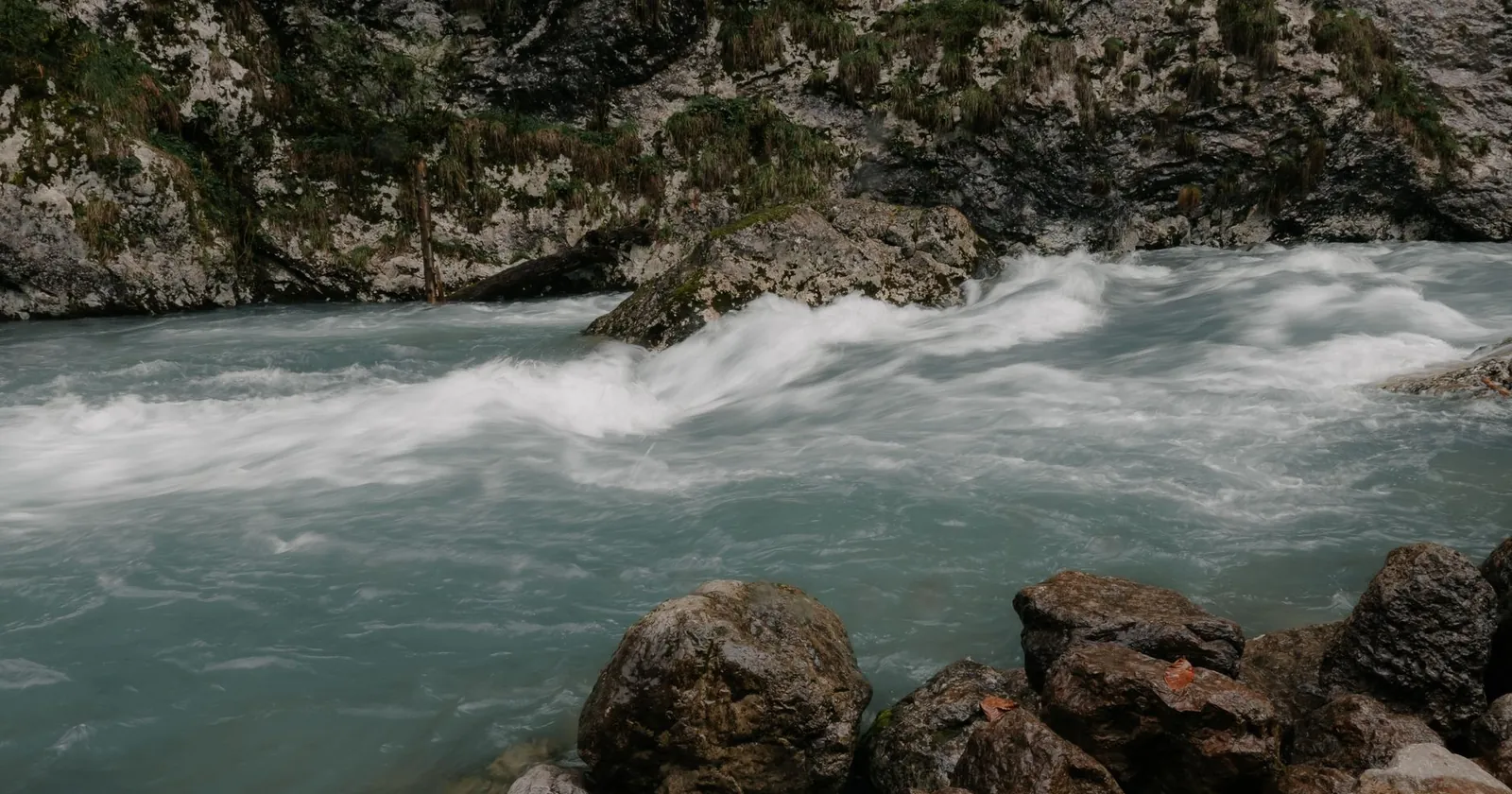
Photo: Maria Ovchinnikova via Pexels (free license).
Conditions, seasons and access change (including from dam projects), verify locally before you go.
How to read this list
- Bucket-list / expert: Futaleufu, Zambezi (big, committing water).
- Classic rafting hubs: White Nile (Jinja), Ottawa River.
- Accessible & budget: Rishikesh, Bali (great first guided trips).
- Always: go with reputable operators and respect the grade.
What the river grades actually mean
This is a curated overview of world-renowned whitewater regions, not a claim to have paddled every river on earth, and not our usual nomad-base format (these are rivers, not towns to live in for a month). We flag the character and rough grade of each, but river conditions, seasons and even the rapids themselves change (dam projects have altered some classic runs), so treat this as inspiration and verify current conditions and operators locally. Whatever the destination, the rule is the same: go with a reputable outfit and respect the grade.
Futaleufu River
Patagonia's turquoise legend and a bucket-list run: big, powerful Class IV to V water in stunning surroundings, a magnet for expert kayakers and adventurous rafters with top operators.
Class IV to V · expert / guided Read the guide → 17°55′S 25°51′E · Zambia / ZimbabweZambezi River
Below Victoria Falls, one of the world's great commercially-rafted big-water runs: huge Class V rapids in a dramatic gorge, run by experienced outfitters in the dry season.
Class V big water · guided Read the guide → 0°26′N 33°12′E · UgandaWhite Nile, Jinja
Long the classic tropical big-volume rafting run, warm water and powerful waves near Jinja. Hydro-dam projects have changed some rapids over the years, so check what is currently run.
Big volume · guided · verify Read the guide → 45°30′N 76°20′W · CanadaOttawa River
A friendly big-volume classic: warm summer water, forgiving deep-water rapids and world-class rafting and kayak schools, one of the best places to learn on serious whitewater.
Big volume · great for learning Read the guide → 30°05′N 78°17′E · IndiaRishikesh, India
Rafting on the Ganges in a backpacker and yoga hub in the Himalayan foothills: accessible, budget-friendly guided trips and a very traveller-friendly base (seasonal, and subject to local rules).
Accessible · budget · seasonal Read the guide → 8°25′S 115°17′E · IndonesiaBali, Indonesia
Gentle jungle rafting on the Ayung and Telaga Waja rivers, an easy add-on for nomads already based in Bali. Scenic Class II to III fun rather than serious whitewater.
Class II to III · nomad-friendly Read the guide →Picking your whitewater trip
- Total beginner? Bali or Rishikesh for gentle, guided, budget-friendly rafting.
- Want to learn to kayak? The Ottawa River's schools and forgiving big water are ideal.
- Chasing the classics? The Zambezi and Futaleufu are bucket-list big water, with the right experience or a top operator.
- Always: check the season, book a reputable outfitter, and be honest about your ability.
Learn and gear up
Want to progress from passenger to paddler? Start with how to start whitewater kayaking and our whitewater kayak gear guide. For a landlocked twist, see our river surfing guide.
Yannick Schroth
Founder of NOMADREEF. This is a general overview of famous whitewater regions, not a substitute for current local information or an operator's safety briefing. Always verify conditions and go with a reputable outfit. About the author · LinkedIn ↗
The grade on the label, and who trained the person in the back of the boat
Every river on this list is sold by its number. The number comes from one document, and the 2024 edition of it says something most river descriptions do not.
American Whitewater's International Scale of River Difficulty opens by undercutting itself: “The scale is not exact. Rivers do not always fit easily into one category, and regional or individual interpretations may cause misunderstandings”, and it is “not a substitute for a guidebook, first-hand descriptions of a run, or other sources of river information”. It warns specifically about the situation a travelling paddler is always in: “Boaters attempting difficult runs in an unfamiliar area should act cautiously until they learn how the scale is interpreted locally”. And it notes that an occasional Class IV rapid on a run is a different proposition from a whole river of them.
Worth noticing what the 2024 sheet contains: the scale runs Class 1 to Class 5, with Class 5 described as “Near the limits of navigation”. The old Class VI does not appear on it.
The other half is the guide. The International Rafting Federation, the world governing body for rafting since 1997, runs what it calls “the only globally recognised raft guide certification” through its Guide Training and Education system. On a river you have never seen, in a language you do not speak, that is the one credential that means the same thing everywhere.
FAQ: Whitewater Destinations in the World
What do the river grades actually mean?
American Whitewater's International Scale of River Difficulty runs from Class 1, beginner, very easy with small regular waves, up to Class 5, expert, near the limits of navigation. AW warns the scale is not exact and is interpreted differently by region, and that grades shift with water level, sometimes by a full class.
Can I do this with no experience?
Commercially guided rafting on a beginner section, yes. Kayaking, no: that needs a course, because the skill that keeps you safe is the roll and the judgement, neither of which you can improvise. Either way, the operator matters more than the river.
What is the most important safety rule?
Do not try to stand up in fast-moving water. American Whitewater's Safety Code says to swim to slow-moving water or water below your knee before attempting to stand, because a wedged foot plus current pushes you under and holds you there.
Sources
- What the grade is, and what it is not. American Whitewater, International Scale of River Difficulty, Safety Code 2024: “The scale is not exact… It is not a substitute for a guidebook, first-hand descriptions of a run, or other sources of river information”; “Boaters attempting difficult runs in an unfamiliar area should act cautiously until they learn how the scale is interpreted locally”; the sheet runs Class 1 (Beginner) to Class 5 (Expert, “Near the limits of navigation”). americanwhitewater.org. Read 12 September 2026.
- The one guide credential that travels. International Rafting Federation: “The International Rafting Federation (IRF) is recognised as the legitimate world governing body for rafting. Since 1997” it has worked with the global rafting community, and it describes its Guide Training and Education scheme as “The only globally recognised raft guide certification”. internationalrafting.com. Read 12 September 2026.
- Each entry links to our full guide for that place, and those guides carry the external sources and read dates behind the claims summarised here. They are where the readings are recorded, not the evidence for them: Futaleufu, Zambezi River, White Nile, Jinja, Ottawa River, Rishikesh, Bali (white-water rafting).