Whitewater Kayak Gear for Beginners
 by Yannick Schroth
Jul 29, 2026
8 min read
by Yannick Schroth
Jul 29, 2026
8 min read
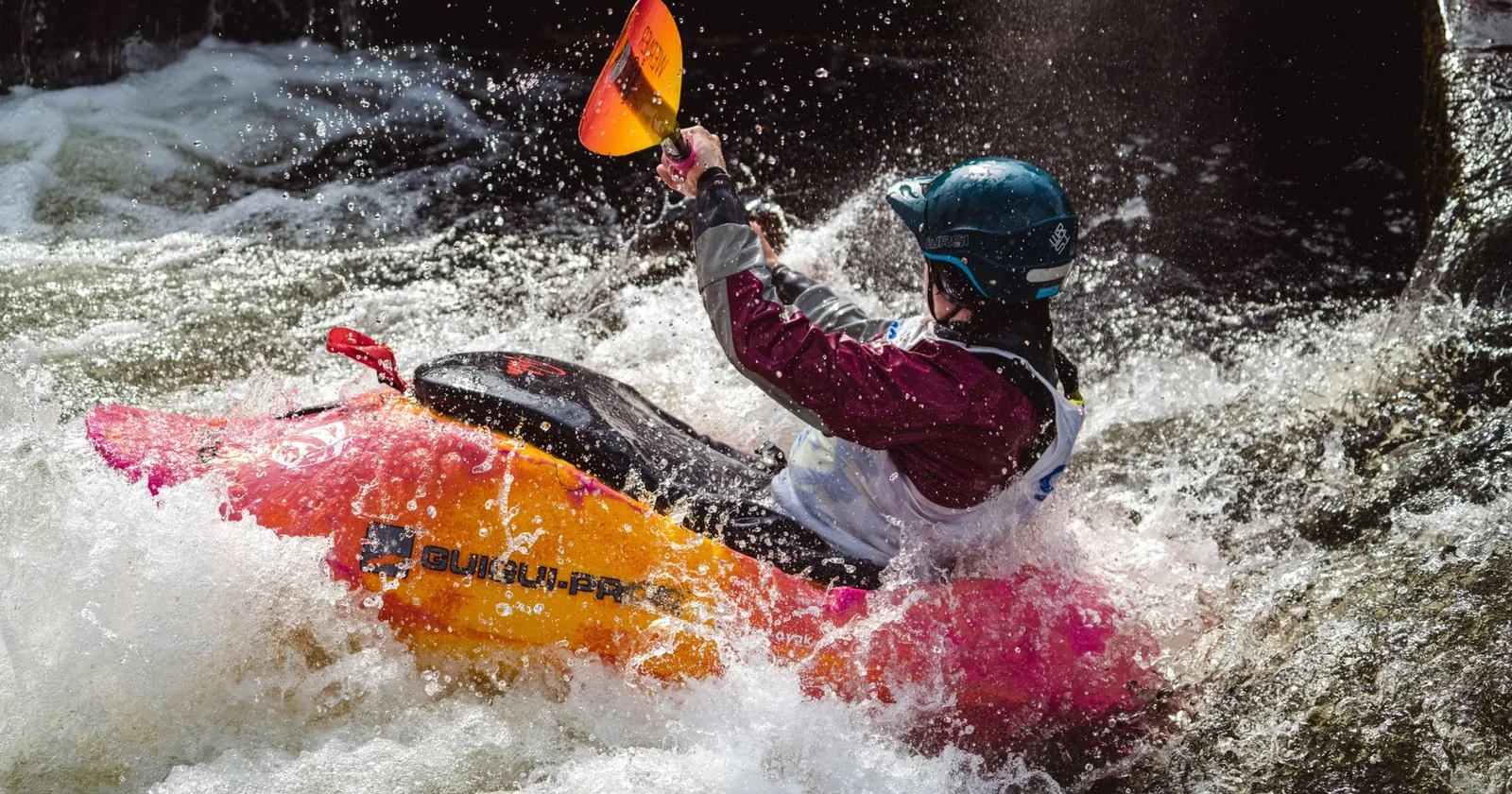
Photo: Aleksei Mzhachev via Pexels (free license).
Sizing and suitability depend on you and your water; get fitted advice from a club or shop.
A forgiving hull, not a twitchy playboat, to learn on.
Browse on Amazon →The safety-critical fit items; buy these first.
Browse on Amazon →Clubs lend kit; whitewater boats last well second-hand.
Browse on Amazon →Recommendations by type and spec, not a tested product ranking; confirm fit/size with a shop. Any price is live at the retailer. See our disclosure.
Key takeaways
- Core kit: boat, spray deck, buoyancy aid, helmet, paddle, thermal layer.
- Safety-critical fit items first: a snug PFD and a proper whitewater helmet.
- Beginner boat: a stable river-runner, not a twitchy playboat.
- Use club gear first; buy used for boats and paddles to save money.
- Rescue gear needs training: a throw bag is only useful if you know how.
Choosing a whitewater kayak
Whitewater kayaks come in styles: forgiving river runners (the usual beginner choice), longer, high-volume creek boats for steep water, and short, twitchy playboats for tricks. Start with a stable river runner sized to your weight so it floats and fits you properly. Boats are durable, so quality used kayaks are a great way to save money.
The spray deck
The spray deck (skirt) seals you into the cockpit to keep water out, and releases via the grab loop for your wet exit. It must fit both you and your boat's cockpit. This is a key item to get right, since you rely on that grab loop when you capsize.
Safety-critical: buoyancy aid and helmet
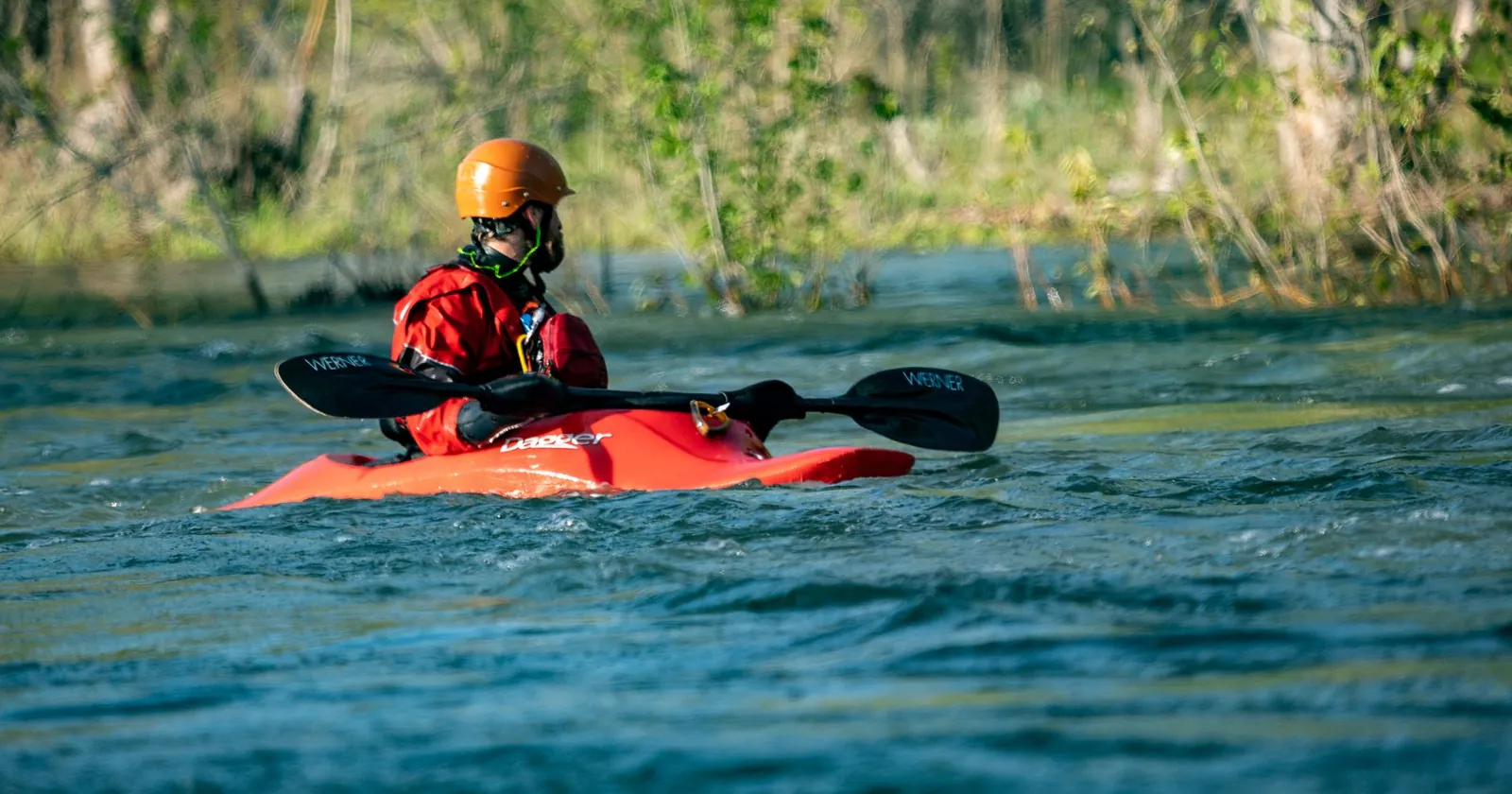
Use a whitewater-specific buoyancy aid (PFD) that fits snugly and will not ride up, not a cheap general vest, and a proper whitewater helmet built for rock impacts. Get both fitted properly, and replace a helmet after a serious hit. These are the items where fit and suitability matter most, so buy them first and buy them well.
The paddle and thermal protection
A suitable whitewater paddle sized to you and your style, and thermal protection for the water: a wetsuit in mild conditions, a drysuit for cold water. Cold water is a serious hazard, so dress for immersion, not the air temperature. See our wetsuit guide for the warmth basics.
Safety and rescue kit
Groups carry a throw bag (floating rescue rope), and each paddler should have a safety whistle and, as they progress, a river knife and basic rescue training. Rescue gear is only useful with training, so learn river rescue through your club alongside owning the kit.
Whitewater kayak brands worth a look
| Item | Beginner priority | Examples |
|---|---|---|
| Kayak | Stable river runner, sized to you | Pyranha, Dagger, Jackson Kayak, Wave Sport |
| Buoyancy aid | Whitewater PFD, snug fit | Palm, NRS, Astral, Peak |
| Helmet | Whitewater-rated, good fit | Sweet Protection, WRSI, Shred Ready |
| Paddle | Suitable size and style | Werner, Aqua Bound |
These are examples, not a ranked verdict; get fitted advice from a club or specialist shop for your weight and water. Browse kayak gear on Amazon (affiliate), and specialist paddlesport retailers for boats, decks and safety kit.
What the grade means, and what the racing version of the sport is measured in
Kayak gear is bought against a number, the grade you expect to paddle. American Whitewater's 2024 sheet is worth reading before spending, because it is candid about what the number is worth: “The scale is not exact”, and it is “not a substitute for a guidebook, first-hand descriptions of a run, or other sources of river information”. The gear-relevant line is the craft recommendation, which changes exactly once: Class 1 and Class 2 are “Suitable for a wide variety of craft” and river-specific craft; from Class 3, Intermediate, “Moderate difficulty with large waves and features requiring skilled maneuvering”, it narrows to “whitewater-specific craft and equipment” only. That is the boundary a kit list should be built around, not a brand.
For scale at the other end, the racing discipline is defined tightly enough to be measured. The International Canoe Federation's canoe slalom courses are “a maximum of 300 metres in length” with “a maximum of 25 gates, with a minimum of six upstream gates”, colour-coded red for upstream and green for downstream. The first world championships were in Geneva in 1949; the Olympic debut was Munich 1972, when East Germany won all four gold medals, and it returned as a core sport twenty years later.
Three hundred metres and twenty-five gates is a useful mental picture when you are choosing between a creeker and a playboat: the racing boats are built for a course shorter than most rapids you will actually run.
FAQ: whitewater kayak gear
What gear do you need for whitewater kayaking?
The core kit is a whitewater kayak, a spray deck that seals you into the cockpit, a well-fitting whitewater buoyancy aid (PFD), a whitewater helmet, a suitable paddle, and thermal protection for the water temperature such as a wetsuit or drysuit. Groups also carry safety gear like a throw bag, and each paddler should have a safety whistle and know basic river rescue. Beginners usually use club or school gear before buying their own.
What kind of kayak should a beginner buy?
For learning, a stable, forgiving river-runner style whitewater kayak is the usual choice, rather than a short playboat (which is twitchy) or a specialist creek boat. The right size depends on your weight, so it fits and floats you correctly. Ask your club or a specialist shop to help you size a boat, and consider buying used, as whitewater kayaks are durable and hold up well second-hand.
Do I need a special buoyancy aid and helmet?
Yes. Use a whitewater-specific buoyancy aid (PFD) that fits snugly and will not ride up, not a cheap general flotation vest, and a proper whitewater helmet designed for impacts against rocks. These are safety-critical items where fit and suitability matter, so get them fitted properly and replace a helmet that has taken a serious impact. Your club or a specialist retailer can advise on the right models.
Should I buy or use club gear first?
Use club or school gear first. Whitewater kayaking has a strong club culture, and clubs typically provide boats, decks, buoyancy aids, helmets and paddles for beginners, which lets you learn and work out what suits you before spending. When you do buy, prioritise safety-critical fit items (buoyancy aid, helmet), then a suitable boat and paddle, and consider quality used gear to save money.
What is a throw bag and do I need one?
A throw bag is a bag containing floating rescue rope that you throw to a swimmer to pull them to safety, a core piece of river-rescue kit. As a beginner you paddle with a group that carries throw bags and knows how to use them, and as you progress you carry and learn to use your own. Rescue gear is only useful with training, so learning basic river rescue through your club is as important as owning the kit.
Yannick Schroth
Founder of NOMADREEF and a former digital nomad. This guide explains whitewater kayak gear categories and beginner priorities; brand names are examples, and safety-critical items should be fitted by a club or specialist shop. It is not a substitute for a course. About the author · LinkedIn ↗
Sources
- Where the craft recommendation changes. American Whitewater, International Scale of River Difficulty, Safety Code 2024: Class 1 and Class 2 are “Suitable for a wide variety of craft” and “river-specific craft”; Class 3, Intermediate, “Moderate difficulty with large waves and features requiring skilled maneuvering”, is “Suitable only for whitewater-specific craft and equipment”; “The scale is not exact” and is “not a substitute for a guidebook”. americanwhitewater.org. Read 13 September 2026.
- What a slalom course is, in numbers. International Canoe Federation, canoe slalom: courses can be “a maximum of 300 metres in length and contain a maximum of 25 gates, with a minimum of six upstream gates”; “The type of gate is designated by colour - red for upstream and green for downstream”; “Switzerland hosted the first World Championships in Geneva in 1949 and the discipline made its Olympic debut as an introduction sport at the 1972 Games in Munich, when all four gold medals were won by East Germany.” canoeicf.com. Read 13 September 2026.
- Whitewater kayak gear categories and beginner priorities (club, instruction and manufacturer guidance).
- Our own how to start whitewater kayaking guide.