Mancora vs Montanita: Which South America Surf Town?
 by Yannick SchrothAug 3, 20266 min read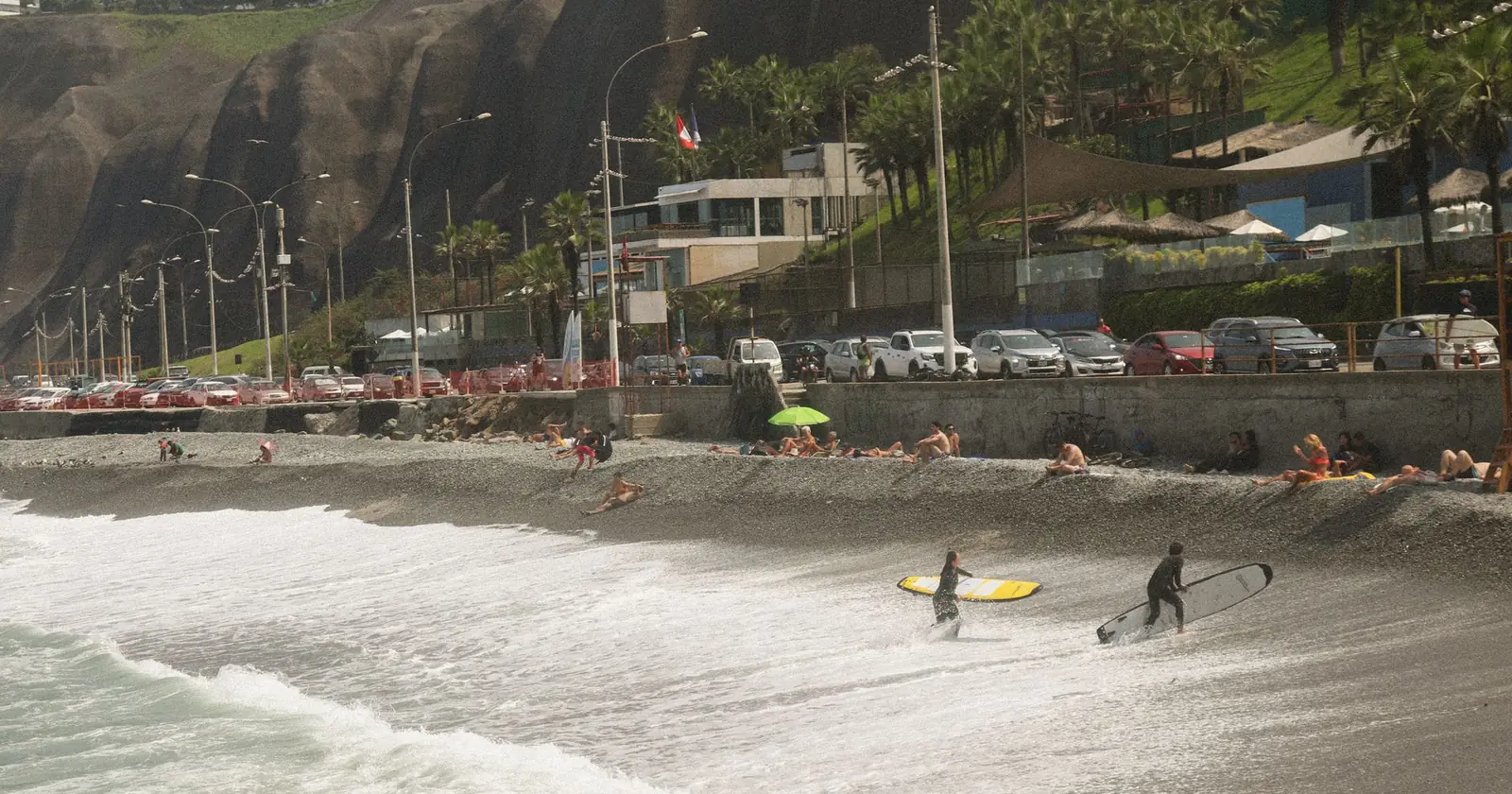
Photo: Winnie Ipa / Pexels.
Best for
- Consistent warm-water lefts, and kite too: Mancora, Peru
- A lively, cheap surf-and-party town: Montanita, Ecuador
| Mancora | Montanita | |
|---|---|---|
| Waves | Consistent warm-water lefts, rarely big | Year-round beach and point waves |
| Also | Kitesurfing when the wind blows | Surf-focused |
| Scene | Party, backpacker, beachy | Small, very lively party town |
| Cost | Cheap | Cheap |
| Visa | Peru tourist entry (nomad visa not operational) | Ecuador 90 days visa-free |
| Vibe | Warm, social, laid-back-party | Compact, intense party-surf |
| Best for | Warm lefts, kite and a mellow party | A cheap, buzzy surf-party base |
Mancora in short
Mancora, on Peru's warm northern coast, offers one of the country's more consistent setups: warm-water lefts that rarely get truly big, so they suit a wide range of surfers, plus a kitesurfing option when the wind is up. It is cheap, beachy and has a laid-back party-and-backpacker energy. The catch is Peru's visa reality: the nomad visa is not operational, so you live here on a tourist entry.
Montanita in short
Montanita is a small, intense Ecuadorian surf-party town: year-round waves, cheap living, and a compact center that goes hard after dark. It is one of the classic backpacker surf stops on the continent, social and buzzy, better suited to people who want the party as much as the surf. Ecuador gives many nationalities 90 days visa-free.
Mancora or Montanita: what it comes down to
Choose Mancora for warm, consistent lefts, a kite option and a slightly more laid-back beach-party vibe in Peru; choose Montanita for a cheaper, more intense surf-party town in Ecuador. Both are budget, warm-water and social, so it comes down to country, the exact waves and how much nightlife you want.
Mancora or Montanita: which to pick
- If you want warm consistent lefts and a kite option: Mancora.
- If you want a cheap, intense surf-party town: Montanita.
- Both are cheap and warm; Peru's nomad visa is not operational (tourist entry), Ecuador gives 90 days visa-free.
Neither of these has a storm season, and both live off the same oscillation
Máncora is in northern Peru, Montánita in Ecuador, and both sit outside the basin that governs everything north of them. The National Hurricane Center defines the eastern Pacific basin as extending “from Mexico and Central America westward to 140°W”, with the systems it tracks forming “between 5 and 30 degrees North latitude” and typically moving west. Máncora is at about 4°06′ South and Montánita at 1°50′ South, both on the far side of the equator from that band. Neither has a named-storm season, and neither has months that get cancelled.
What they have instead is the same climatic lever, and it is the one that makes them different from the rest of their own coastlines. Copernicus names ENSO as “The chief driver of year-to-year variability” in sea surface temperature: “El Niños temporarily increase the global average SST and La Niñas temporarily decrease it”. The eastern equatorial Pacific is where that signal is defined, and both towns sit in it.
Practically: the warm water both are sold on is warm because the Humboldt current loses its grip here, and how warm it is in any given year is an ENSO question. A guide's water temperature is an average over a pattern that swings, and an El Niño winter is a different sea from a La Niña one at both spots. Underneath that sits the trend: Copernicus puts the average sea surface temperature of the extrapolar ocean about 0.9 °C above the late nineteenth century, with around 0.6 °C added since 1980.
FAQ: Mancora vs Montanita
Is Mancora or Montanita better for surfing?
Both have accessible warm-water waves. Mancora has consistent lefts that rarely get big, suiting a range of levels, plus kitesurfing. Montanita has year-round beach and point waves in a more compact setup. Neither is a heavy-wave destination; both are friendly to improving surfers.
Which is cheaper?
Both are cheap by global standards, among the most affordable surf bases in South America. Costs are broadly similar; check each guide for current ranges. The bigger practical difference is the country and visa: tourist entry in Peru versus 90 days visa-free in Ecuador for many nationalities.
Which has the bigger party scene?
Montanita, in a compact and intense way: it is a classic backpacker party town. Mancora also parties but is more spread out and beachy. Choose Montanita for full-on nightlife, Mancora for a slightly mellower vibe.
Sources
- Where the nearest hurricane basin stops. NOAA National Hurricane Center, tropical cyclone climatology: “The eastern Pacific hurricane season runs from May 15 to November 30. The eastern Pacific basin extends from Mexico and Central America westward to 140°W”; tropical cyclones are described as originating over tropical or subtropical waters, with those forming “between 5 and 30 degrees North latitude” typically moving west. nhc.noaa.gov. Read 13 September 2026.
- The oscillation both coasts run on. Copernicus Climate Change Service, climate indicator for sea surface temperature: “The chief driver of year-to-year variability is the El Niño Southern Oscillation (ENSO)… El Niños temporarily increase the global average SST and La Niñas temporarily decrease it”; the average SST over the extrapolar ocean (60°S–60°N) “has increased by about 0.9°C” since 1880–1900, and “The increase from 1980 to 2023 has been around 0.6°C”. climate.copernicus.eu. Read 13 September 2026.
- This comparison is assembled from our two full destination guides, and every cost, wifi, season and visa claim above is one those guides already verify: Mancora, Peru, Montanita, Ecuador.
- How we work: editorial standards.