Canyoning in Interlaken: a trip guide
 by Yannick Schroth
Jul 31, 2026
7 min read
by Yannick Schroth
Jul 31, 2026
7 min read
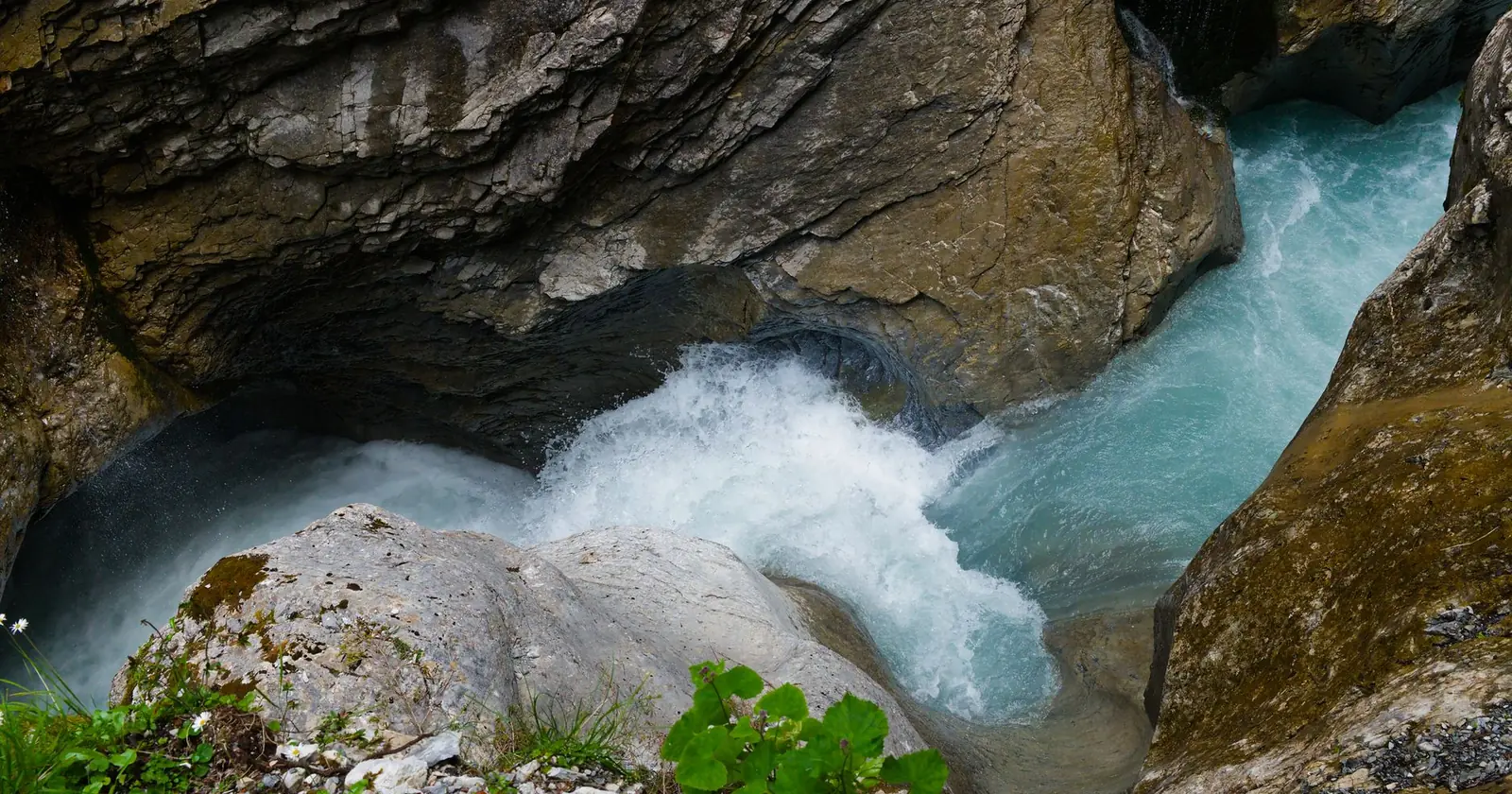
Photo: Jean-Paul Wettstein / Pexels.
Key takeaways
- Trip destination, not a nomad base: come for a few days of guided canyoning, not to live and work
- Season runs roughly May to October, with best flows and warmest water in June to September
- Beginner-friendly Saxeten gorge trips start around CHF 149 to 159 as of 2026; verify current prices
- Everything is guided by licensed operators; you do not need prior skills for entry-level canyons
- Flash floods are the killer risk here; the 1999 Saxetenbach disaster killed 21 people, so weather calls are non-negotiable
What Interlaken is for a canyoning trip
Interlaken sits on the flat plain between Lake Thun and Lake Brienz, directly under the Eiger, Monch and Jungfrau. That geography is why it works: dozens of steep, water-carved gorges drop off the surrounding mountains, and a cluster of established adventure operators runs guided canyoning into them from bases minutes out of town.
Canyoning here means moving down a gorge on foot and in the water: abseiling waterfalls, sliding polished rock chutes, jumping into plunge pools and swimming short sections. It is a visitor's adventure sport. You book a half-day trip, get kitted out, and a guide takes you through. You are not basing yourself here for months; you are coming for the gorges.
The canyoning itself, and how hard it is
The classic beginner option is the Saxeten gorge near Wilderswil, a short drive from Interlaken. It mixes natural slides, small jumps and abseils up to around 15 meters, with a typical trip running about four hours total and roughly 1h45 actually in the canyon. No experience is needed and most elements have an easier bypass if a jump or slide looks too much.
Harder, higher-commitment canyons exist in the wider Bernese Oberland and central Switzerland for people with a head for exposure and better fitness, and operators grade their trips from beginner up to sporty. You should still expect cold water, physical effort and moments of genuine exposure even on the easy trips. If you cannot swim confidently or dislike heights and cold, be honest at booking.
When to go canyoning in Interlaken
Canyoning in the Interlaken area generally runs from around May to October, driven by snowmelt, water temperature and flow. High summer, roughly June to September, gives the warmest water, longest days and most reliable operating schedule.
Shoulder months at either end can be colder and more weather-dependent, and early season can carry heavy snowmelt flows. Whenever you go, build in slack: trips are routinely rescheduled or canceled at short notice when thunderstorms threaten, and a rigid one-day itinerary is how you end up doing no canyoning at all.
Safety: flash floods are the main danger in a canyon
Canyoning's defining hazard is that you are inside a narrow watercourse that can fill in minutes. On 27 July 1999, a flash flood tore through the Saxetenbach gorge near Interlaken and killed 21 people, mostly young tourists, on a commercial trip; a Swiss court later convicted operators of negligent manslaughter for pressing on despite the weather. A separate canyoning accident near Interlaken in 2020 killed three more.
The lesson is simple and non-negotiable: go only with licensed, reputable operators, and treat a guide's decision to cancel for weather as good news, not a disappointment. Do not enter gorges independently unless you are a trained, equipped canyoneer reading your own forecasts. Expect cold water throughout, so hypothermia and slips on wet rock are everyday risks even when the sky is clear. Carry decent travel insurance that explicitly covers canyoning.
The biggest cause of canyoning accidents is the optional part
Canyoning safety advice tends to be about water: flow, flash floods, cold. The largest study of canyoning accidents puts the leading cause somewhere else, and it is the bit you can simply decline.
Austrian researchers went through thirteen years of national accident data, November 2005 to October 2018: 471 people involved in canyoning accidents, of whom 162, or 34.4 per cent, were severely injured and nine died. The causes come out in a clear order, jumping (110 cases, 23.4 per cent), then rappelling (51, 10.8), sliding (41, 8.7) and stumbling (26, 5.5). Injuries landed mostly on the lower extremities (133, 47.5 per cent), then the upper limbs and the spine. Deaths were a different matter from injuries: “Death was mainly caused by drowning.”
Two things follow for anyone booking a trip. The first is that the jumps are where the fractures come from, and jumps are the part a guide will always let you walk around. Declining the big one is not timidity; it is declining the single most common mechanism in the data. The second is the drowning line: the things that injure people and the things that kill them are not the same, which is why the guide's decision about water level matters more than your decision about the jump, and why the two should never be traded against each other.
Worth keeping in proportion: the same study puts the absolute risk at 0.02 deaths per 1000 hours of canyoning, which is not a dangerous sport by the numbers. But note one more figure, 116 people, a quarter of the total, needed evacuating without being injured at all. A canyon is a place you cannot simply walk out of, and being fine is not the same as being able to leave.
Getting there, operators and what it costs
Interlaken is easy to reach: frequent trains from Zurich, Bern and Geneva to Interlaken Ost or West, and most operators either meet you in town or run a short shuttle to the gorge, with transport usually bundled into the trip price. Trips include the technical kit you need, typically wetsuit, boots, harness, helmet and buoyancy aid.
Several established adventure companies run canyoning here and you book through them or through activity marketplaces. As of 2026, beginner Saxeten trips advertise from about CHF 149 to 159; verify the current price before you rely on it. Switzerland is genuinely expensive across the board, so budget for pricey food and lodging on top. This is not a place to work remotely from cheaply; it is a place to spend money on a short, high-quality adventure.
FAQ: Interlaken
Do I need any experience to go canyoning in Interlaken?
No. Entry-level trips like the Saxeten gorge are built for first-timers and fully guided, with easier bypasses for the bigger jumps and slides. You should be a confident swimmer and reasonably fit, and comfortable with cold water, some heights and short abseils.
When is the canyoning season?
Roughly May to October, with the best conditions in June to September when water is warmest and schedules most reliable. Individual trips can still be canceled at short notice for thunderstorms, so leave spare days in your plan.
How much does it cost?
As of 2026, beginner Saxeten canyoning trips advertise from around CHF 149 to 159, usually including kit and local transport. Verify the current price when you book, and remember Switzerland is expensive for food and accommodation on top.
Is canyoning here dangerous?
It carries real risk, above all flash floods: a 1999 flood in the Saxetenbach gorge killed 21 people, and a 2020 accident killed three. Go only with licensed operators, accept weather cancellations without argument, and take insurance that covers canyoning.
Is Interlaken a good digital-nomad base?
Not really. It is a premium adventure-tourism town, not a cheap long-stay base, so treat it as a trip destination for a few days of gorges and mountains rather than somewhere to live and work for a month. Switzerland's Schengen entry rules apply, so check your own visa position before traveling.
Yannick Schroth
Founder of NOMADREEF and a whitewater paddler who has spent time on Swiss rivers. This guide is sourced from the references below; canyoning carries real risk, so verify current details and always go with qualified local guides. About the author · LinkedIn ↗
Sources
- What actually goes wrong in a canyon. Ströhle M, Beeretz I, Rugg C, Woyke S, Rauch S, Paal P, “Canyoning Accidents in Austria from 2005 to 2018”, International Journal of Environmental Research and Public Health, 2019, doi 10.3390/ijerph17010102, using national data from the Austrian Alpine Safety Board and hospital data from Innsbruck: 471 people involved, “162 (34.4%) were severely injured, nine of whom died”; causes “Jumping (n = 110, 23.4%), rappelling (n = 51, 10.8%), sliding (n = 41, 8.7%) and stumbling (n = 26, 5.5%)”; injuries mostly to the lower extremities (133, 47.5%), then upper (65, 23.2%) and spine (44, 15.7%); “Death was mainly caused by drowning”; overall mortality 1.9 per cent and an absolute risk of “0.02 deaths per 1000 hrs of canyoning”; and 116 people (24.6%) needed evacuating without being injured. Austrian data, quoted as such. europepmc.org. Read 11 September 2026.
- Switzerland Tourism (MySwitzerland) official pages on Saxeten gorge canyoning
- Licensed Interlaken canyoning operators' own trip pages for season, inclusions and prices
- Activity booking marketplaces (CheckYeti, Viator, SwissActivities) for current 2026 price ballparks
- Swissinfo and contemporary news reporting on the 1999 Saxetenbach canyoning disaster and its verdict
- News reporting on the 2020 Interlaken-area canyoning fatalities