Fuerteventura vs Lanzarote: Kitesurf or Dive?
 by Yannick SchrothSep 5, 20266 min read
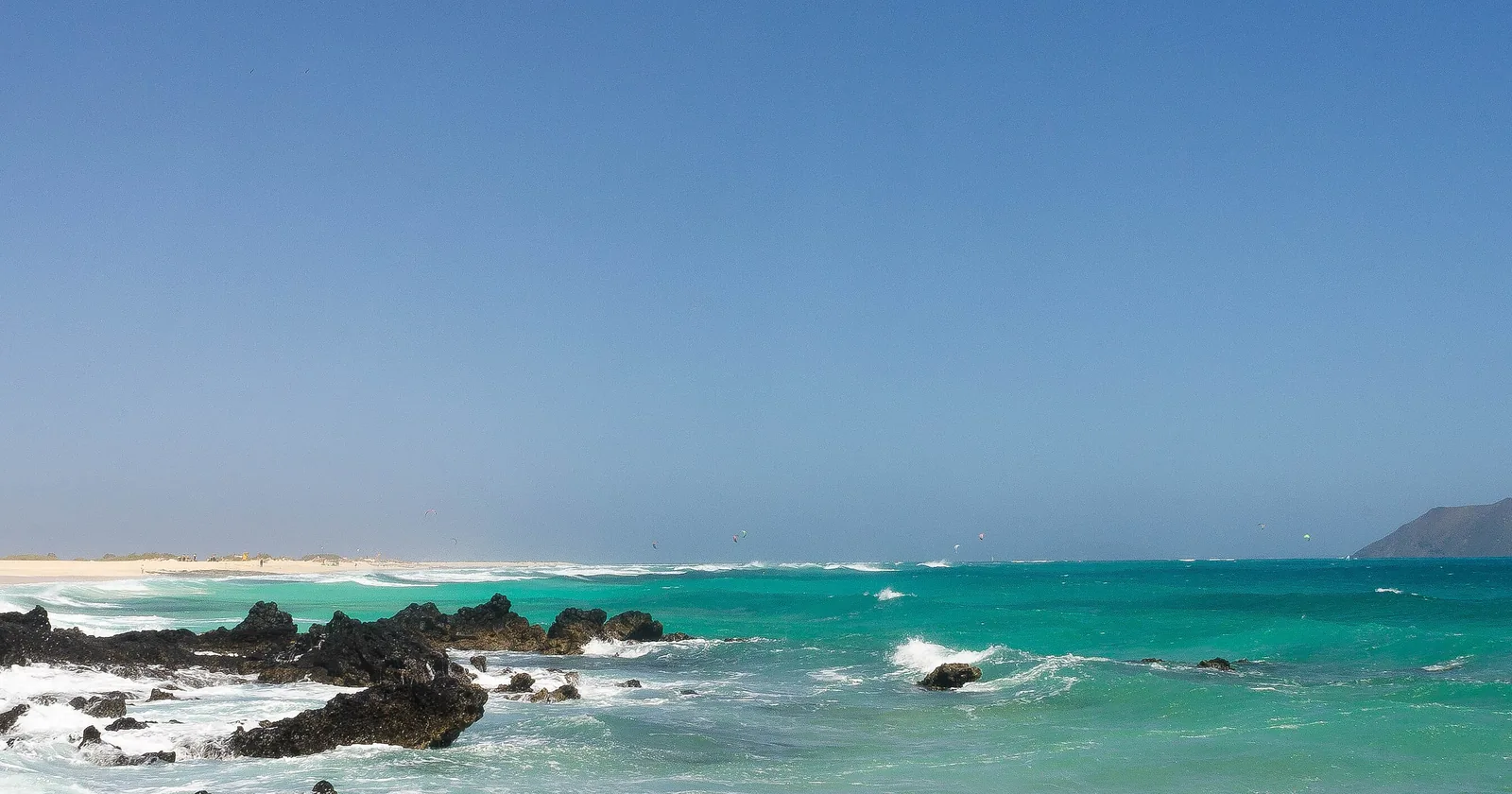
Corralejo, Fuerteventura, one of the two islands, not both. Photo: Thomas Tolkien, Wikimedia Commons, CC BY 2.0.
What each island's list is made of
| Corralejo, Fuerteventura | Lanzarote | |
|---|---|---|
| Businesses listed | 7 | 21 |
| Teaching diving | 2 | 20 |
| Teaching kitesurfing | 5 | 1 |
| Teaching windsurfing | 1 | 0 |
| In a citable register | 7 | 21 |
The split is not an accident of sampling. Corralejo sits at the north tip of Fuerteventura with Flag Beach and the dunes on one side and the strait to Lobos on the other, which is why the kite and windsurf schools are there. Lanzarote's dive centres sit along the sheltered south and east coasts, from Puerto del Carmen and Puerto Calero to Playa Blanca, where the lava drops into deep water a short swim from the sand. That is why all but one business on its list is a dive centre.
How much a listing here is worth
A dive centre in the Canaries needs the regional government's authorization, and Decreto 35/2006 creates a register of the authorized centres (article 15). We found no public version of that register we could read, and the decree covers diving only, so what we can show you is membership of voluntary bodies: SSI for diving, IKO for kitesurfing, VDWS for wind. A business in one of those directories has an affiliation the body itself publishes, and that is all it has. A business missing from all three may be unaffiliated, affiliated to a body that publishes no list, or simply not found by us.
Corrected on 27 October 2026. This page said there is no compulsory register for a dive centre in the Canaries. Decreto 35/2006 requires an authorization for every dive centre and creates a register of them; what we could not find is a public, readable copy of it. It also gave the distance between the islands as sixty kilometres in one place and fifteen in another; the strait is crossed by a 30-minute ferry.
So read the counts as a shape rather than a score. All seven at Corralejo and all twenty-one on Lanzarote carry an entry you can open, so the affiliation can be checked at the source. It does not mean anyone inspected them. Nobody did.
What actually separates them
- Kite: Fuerteventura, 5 schools against 1.
- Diving: Lanzarote, 20 centres against 2.
- Canary dive centres need an authorization, but its register is not public, so no list here is the whole set.
- Nobody assessed anybody on either island; there is no Green Fins member on either list.
Fuerteventura or Lanzarote: which to pick
Fuerteventura if the wind is the point. Corralejo is where the kite and windsurf schools are, and the dive centres there are a sideline rather than the reason to come. Lanzarote if you are diving: its list carries twenty dive centres against two, and they are strung along the whole leeward coast rather than gathered in one resort.
If you want both in one trip, they are a 30-minute ferry apart, and nothing about either list argues for choosing an island and staying on it.
The weather is not the difference. Two met stations say so.
These islands are a short ferry apart and get compared on climate, which turns out to be the one axis on which they are almost indistinguishable. Spain's met agency publishes standard values for both airports over the same 1981–2010 period:
- Annual mean temperature: 21.1 °C at both. Identical to the decimal.
- Annual rainfall: Fuerteventura 98 mm, Lanzarote 111 mm. Both are deserts; June, July and August record 0 mm on both islands.
- Annual sunshine: Fuerteventura 2,836 hours, Lanzarote 2,986. A difference of about twenty-five minutes a day.
- Rain days of 1 mm or more: 15.7 against 19.0 a year. Cloudless days: 68.7 against 72.5.
If you are choosing between them on weather, you are choosing on nothing. What does differ is what each island is formally designated as, and the sea is where the gap opens.
Lanzarote has been a UNESCO Biosphere Reserve since 1993: 129,310 hectares total, of which 90,610 are land and 38,700 sea, just under a third marine. UNESCO describes it as of “volcanic origin, with vast lava fields known as malpaís and a profusion of craters in Timanfaya National Park”. Population 145,084.
Fuerteventura was designated in 2009 and is far larger: 354,268 hectares, of which 166,432 are land and 187,836 sea. More than half of that reserve is water. UNESCO notes that the island's “western coastline extends for more than 100 km and is free of human intervention”, that its highest peak is Pico de la Zarza at 807 m, and that its main habitats include “the largest desert and semi-desert in Europe”.
That is the real choice. Lanzarote's designation is older and mostly about the land you drive across; Fuerteventura's is newer, nearly three times the size, and majority sea, a hundred kilometres of undeveloped west coast being the part that matters if you are here for the water.
FAQ: Fuerteventura vs Lanzarote
Is Fuerteventura or Lanzarote better for kitesurfing?
On what the registers carry, Fuerteventura. Corralejo has 5 kite schools listed against 1 on Lanzarote. Neither register is compulsory, so a school can teach without appearing in either.
Is Lanzarote better for diving than Fuerteventura?
It has far more dive centres on our lists: 20 on Lanzarote against 2 at Corralejo. Both islands dive the same Atlantic water and neither number says anything about the diving.
Can I check a Canary Islands dive school against a register?
Not against the one that counts. A Canary dive centre needs the regional government's authorization, and Decreto 35/2006 creates a register of them, but we found no public copy of it to read. What can be checked is the voluntary registers: SSI, IKO and VDWS. A school missing from those may simply never have joined.
Sources
- Both islands, same period, same agency. AEMET, standard climate values 1981–2010: Fuerteventura Aeropuerto (index C249I, 25 m), annual mean 21.1 °C, annual rainfall 98 mm, 2,836 hours of sunshine, 15.7 rain days of 1 mm or more, 68.7 cloudless days; Lanzarote Aeropuerto (index C029O, 14 m), annual mean 21.1 °C, annual rainfall 111 mm, 2,986 hours of sunshine, 19.0 rain days, 72.5 cloudless days. June, July and August record 0 mm at both. aemet.es. Read 13 September 2026.
- What each island is designated as. UNESCO Man and the Biosphere Programme. Lanzarote Biosphere Reserve: nominated 1993, surface 129,310.00 ha (terrestrial 90,610.00 ha, marine 38,700.00 ha), population 145,084, of “volcanic origin, with vast lava fields known as malpaís and a profusion of craters in Timanfaya National Park”. Fuerteventura Biosphere Reserve: nominated 2009, surface 354,268.00 ha (terrestrial 166,432.00 ha, marine 187,836.00 ha), population 113,275; “The western coastline extends for more than 100 km and is free of human intervention”; “The highest peak is Pico de la Zarza at 807 m”; its main habitats include “the largest desert and semi-desert in Europe”. Both entries read 13 September 2026: unesco.org (Lanzarote) and unesco.org (Fuerteventura).
- SSI training centre register for the dive centres. divessi.com
- IKO school register for the kite schools. ikointl.com
- VDWS station register for the windsurf station. vdws.de
- Counted from the operator lists: Corralejo, compiled 3 September 2026, and Lanzarote, compiled 20 September 2026. Each entry links to the register record it was read from.
- Dive centres in the Canaries. Decreto 35/2006, Boletín Oficial de Canarias 86 of 5 May 2006, as published by the Parlamento de Canarias: article 1, the authorization of dive centres; article 15, "Se crea [...] el Registro de Centros de Buceo Deportivo Recreativo". Read 27 October 2026. parcan.es (PDF)