Canyoning in Bali and Lombok, Indonesia
 by Yannick Schroth
Jul 31, 2026
7 min read
by Yannick Schroth
Jul 31, 2026
7 min read
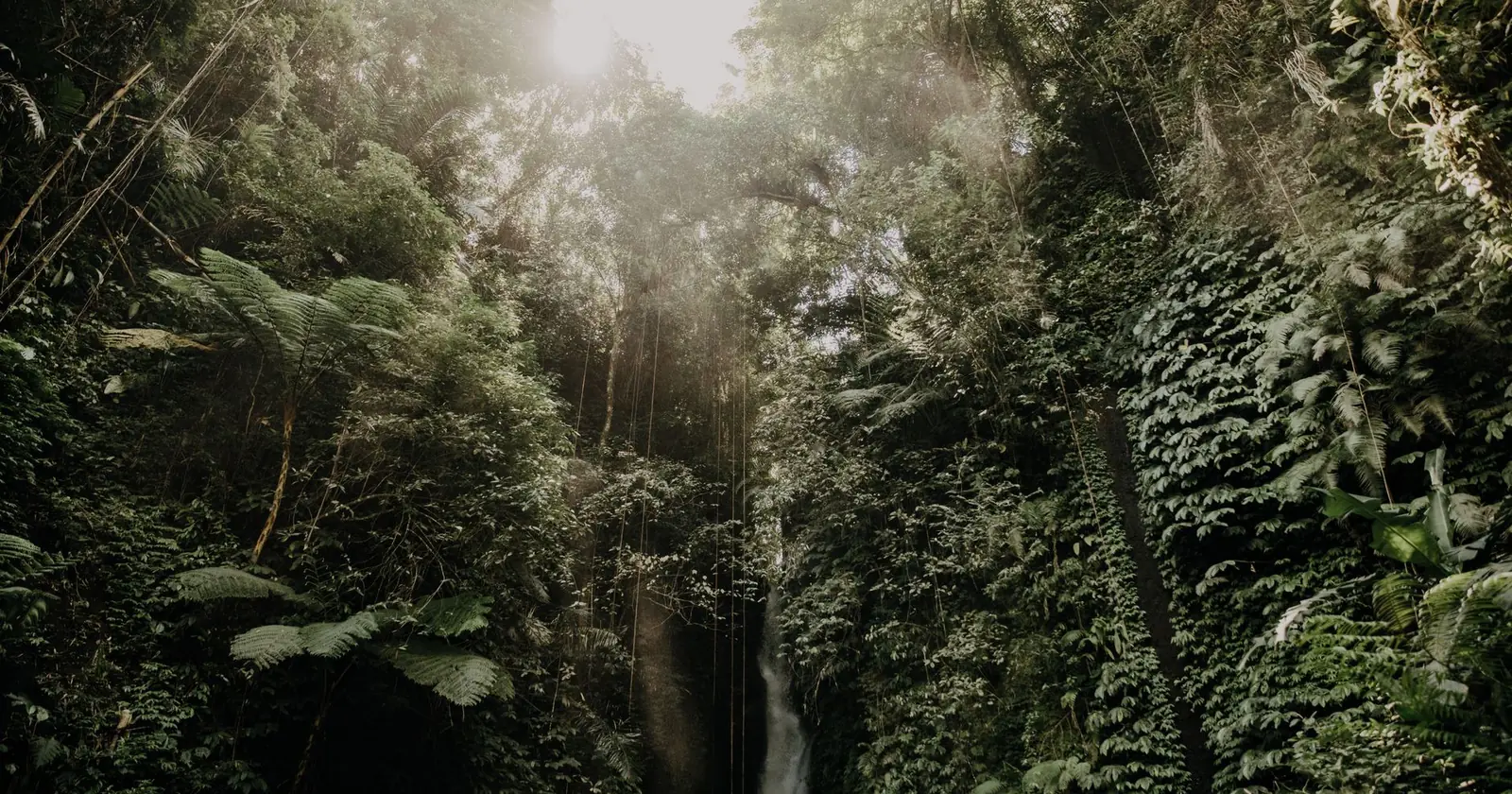
Photo: Alesia Kozik / Pexels.
Key takeaways
- Guided canyoning through jungle gorges and waterfalls; not a self-led activity for visitors
- Best in the dry season, roughly April to September, when water runs clear and flash-flood risk drops
- Bali's north (Gitgit, Sambangan/Aling-Aling) has the most beginner-to-intermediate options
- Lombok skews toward waterfall hiking and lighter canyoning around the Rinjani foothills
- An easy 1 to 2 day add-on to a Bali surf, dive or nomad stint, not a reason to relocate
What canyoning here actually involves
Tropical canyoning means descending a river gorge on foot and rope: abseiling (rappelling) down waterfalls, sliding polished rock chutes, jumping into deep pools and swimming or scrambling between them. Bali's canyons are warm-water and green rather than the cold alpine slots of Europe, which makes them approachable, but wet rock, moving water and rope work still demand respect.
Canyons are graded internationally on a V (vertical/technical) and A (aquatic) scale, each running from 1 to 7, with higher numbers meaning harder rope work and more powerful water. Most commercial trips in Bali sit at the easy-to-moderate end and take complete beginners; harder, more sustained descents exist for people with experience. Always match the grade to your honest fitness and comfort in water, not to bravado.
Where you go: Bali's north and Lombok's waterfall country
The main canyoning is in northern and central Bali. Gitgit near Singaraja is the best-known beginner gorge, while the Sambangan area (often sold as Aling-Aling) offers everything from gentle flows to steeper, more technical lines. Central Bali has tighter slot-style canyons such as the Beji Guwang / Sukawati 'secret canyon' near Ubud.
Lombok is more of a waterfall-and-jungle experience than a full technical canyoning destination. The classic sites cluster in the Rinjani foothills: Sendang Gile and Tiu Kelep near Senaru, and the Benang Stokel / Benang Kelambu falls further south. Expect river crossings, slippery rock and short scrambles rather than long roped descents, and note that local rules now require a hired guide at several of these falls.
When to go, and what each season costs you
Aim for the dry season, broadly April to September, when rivers run clearer and the flash-flood risk is at its lowest. This is the window most operators treat as prime, and some routes only run in dry months.
The wet season, roughly October to March, brings heavier, murkier water and a real spike in flash-flood danger; reputable operators cancel or reroute rather than push through. If you are visiting in those months, build in flexible days and accept that a trip can be called off at short notice. As of 2026, confirm current operating windows directly with your chosen operator before you commit.
Safety note: warm water does not mean low risk
The single biggest hazard is flash flooding. Canyons funnel rain that fell far upstream, so a dry, sunny gorge can rise fast from a storm you never saw. Never enter on a wet or threatening day, and only go with a guide who checks the forecast and will cancel.
Beyond floods, expect slippery rock, moving water, and jumps into pools of uncertain depth; drownings and injuries in Bali's gorges have happened. Go with a licensed operator that provides helmet, harness, wetsuit and rope work, briefs you properly, and runs a sensible guide-to-guest ratio. Do not jump unless a guide has checked the landing that day, tell them about any medical issues, and make sure your travel insurance actually covers roped canyoning, as many standard policies exclude it.
The biggest cause of canyoning accidents is the optional part
Canyoning safety advice tends to be about water: flow, flash floods, cold. The largest study of canyoning accidents puts the leading cause somewhere else, and it is the bit you can simply decline.
Austrian researchers went through thirteen years of national accident data, November 2005 to October 2018: 471 people involved in canyoning accidents, of whom 162, or 34.4 per cent, were severely injured and nine died. The causes come out in a clear order, jumping (110 cases, 23.4 per cent), then rappelling (51, 10.8), sliding (41, 8.7) and stumbling (26, 5.5). Injuries landed mostly on the lower extremities (133, 47.5 per cent), then the upper limbs and the spine. Deaths were a different matter from injuries: “Death was mainly caused by drowning.”
Two things follow for anyone booking a trip. The first is that the jumps are where the fractures come from, and jumps are the part a guide will always let you walk around. Declining the big one is not timidity; it is declining the single most common mechanism in the data. The second is the drowning line: the things that injure people and the things that kill them are not the same, which is why the guide's decision about water level matters more than your decision about the jump, and why the two should never be traded against each other.
Worth keeping in proportion: the same study puts the absolute risk at 0.02 deaths per 1000 hours of canyoning, which is not a dangerous sport by the numbers. But note one more figure, 116 people, a quarter of the total, needed evacuating without being injured at all. A canyon is a place you cannot simply walk out of, and being fine is not the same as being able to leave.
How to do it: operators, cost and getting there
This is a guided activity for visitors. Book a dedicated canyoning operator rather than a generic day-tour tout; look for stated grades, small groups, current safety certification and included technical kit. Most Bali trips run as full days with transfers, gear and lunch from the Ubud, Lovina or Singaraja side.
As a rough ballpark, full-day guided canyoning in Bali has been advertised from around IDR 1,700,000 per person (as of 2026; verify current pricing before you rely on it). Getting there usually means a hotel pickup plus a scenic drive north; Lombok's falls are reached via Senaru or the Tetebatu side, often as a long full-day outing. Because it is a short, kit-provided trip, there is nothing to buy in advance beyond quick-dry clothes and secure footwear.
FAQ: Bali and Lombok
Do I need any experience to go canyoning in Bali?
No. Most commercial trips are graded easy-to-moderate and take complete beginners, with guides teaching the abseiling and jumps as you go. You do need reasonable fitness and to be comfortable in and under water, since you cannot always avoid getting fully submerged.
Is Bali or Lombok better for canyoning?
Bali, if you want genuine roped canyoning: the north around Gitgit and Sambangan has the widest range of graded descents. Lombok is more waterfall hiking with light scrambling around the Rinjani foothills, which is lovely but less technical.
When is the best time of year to go?
The dry season, roughly April to September, gives clearer water and the lowest flash-flood risk. Avoid pushing through the October to March wet season, when operators may cancel and the gorges are far more dangerous.
What visa do I need, and can I base myself here?
Most visitors enter Indonesia on a Visa on Arrival: as of 2026 it costs about USD 35 or IDR 500,000 for 30 days, extendable once for a further 30, so verify current rules before you travel. That is fine for a canyoning trip, but treat Bali as somewhere you visit for the activity, not a canyoning base in itself.
Is it safe, and does my insurance cover it?
It is reasonably safe with a good operator in the right season, but flash floods, slippery rock and blind jumps are real risks and incidents have occurred. Book a licensed operator with proper kit and briefings, and check that your travel or health insurance explicitly covers roped canyoning, as many policies exclude it.
Yannick Schroth
Founder of NOMADREEF and a former digital nomad. This guide is sourced from the references below; conditions, prices and rules change, so verify current details, and follow qualified local guidance and safety briefings. About the author · LinkedIn ↗
Sources
- What actually goes wrong in a canyon. Ströhle M, Beeretz I, Rugg C, Woyke S, Rauch S, Paal P, “Canyoning Accidents in Austria from 2005 to 2018”, International Journal of Environmental Research and Public Health, 2019, doi 10.3390/ijerph17010102, using national data from the Austrian Alpine Safety Board and hospital data from Innsbruck: 471 people involved, “162 (34.4%) were severely injured, nine of whom died”; causes “Jumping (n = 110, 23.4%), rappelling (n = 51, 10.8%), sliding (n = 41, 8.7%) and stumbling (n = 26, 5.5%)”; injuries mostly to the lower extremities (133, 47.5%), then upper (65, 23.2%) and spine (44, 15.7%); “Death was mainly caused by drowning”; overall mortality 1.9 per cent and an absolute risk of “0.02 deaths per 1000 hrs of canyoning”; and 116 people (24.6%) needed evacuating without being injured. Austrian data, quoted as such. europepmc.org. Read 11 September 2026.
- Indonesian immigration / official Visa on Arrival guidance for fee, duration and single 30-day extension (cross-checked 2026)
- Established Bali canyoning operators' own route listings for spots, grades and indicative full-day pricing
- International canyoning grading references explaining the V and A 1 to 7 difficulty scales
- Local Lombok waterfall/park guidance on mandatory guides and access at Tiu Kelep, Sendang Gile and Benang falls
- General canyoning safety and flash-flood guidance from recognized canyoning bodies