Shearwater Peregrine Review (2026): The Nomad's Travel Dive Computer?
 by Yannick Schroth
Updated Jul 24, 2026
Editorial verdict 4.5/5
12 min read
by Yannick Schroth
Updated Jul 24, 2026
Editorial verdict 4.5/5
12 min read
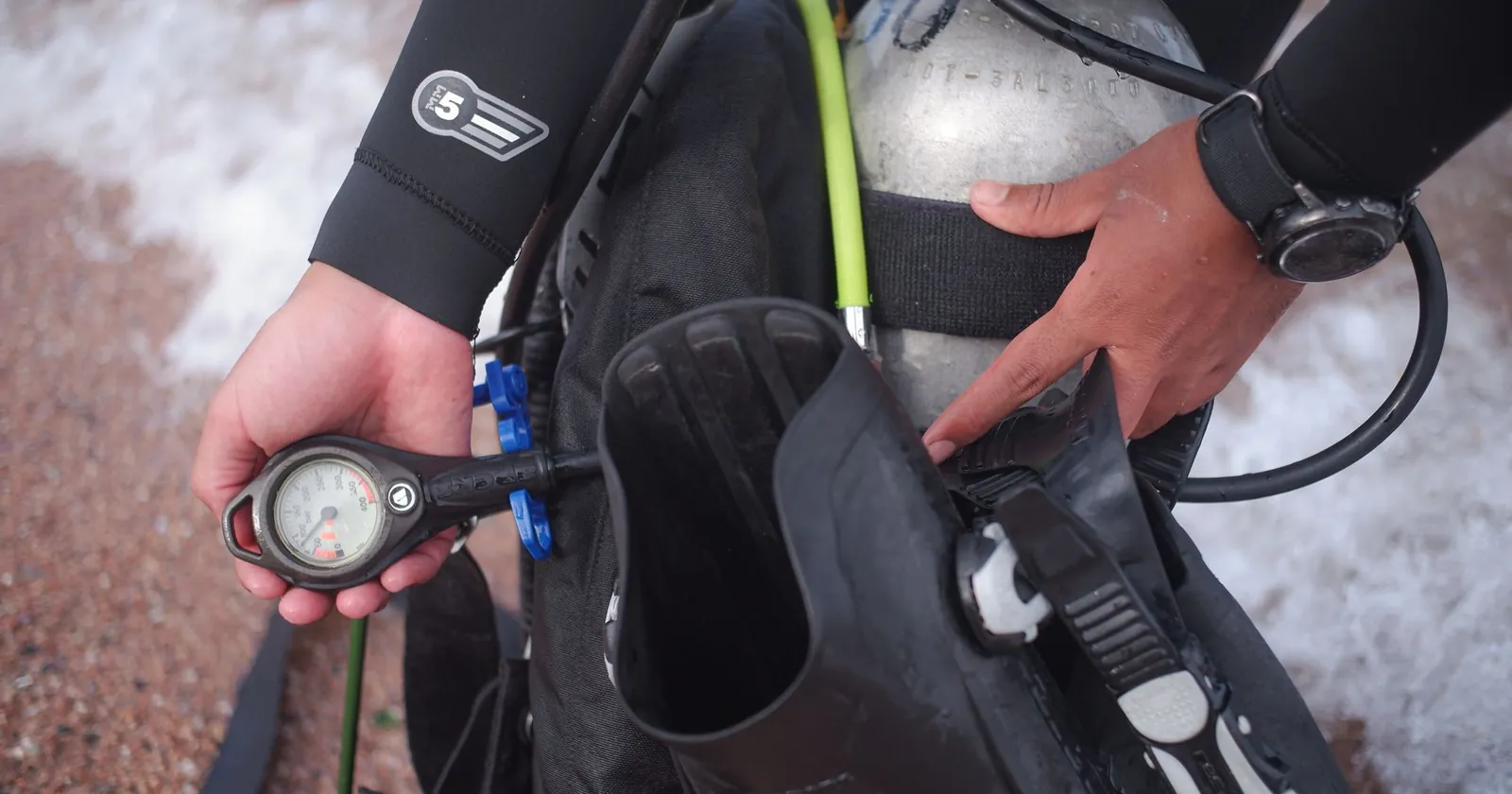
Dive instrument (illustrative). Photo: Hossam Ashoor via Pexels (free licence).
Specs and prices are "as of 2026"; confirm the current model and price before buying.
Key takeaways
- Best for: recreational and aspiring-tech nomad divers who want a clear screen and no fuss.
- Standout: large 2.2" colour display, simple two-button menus, and a rechargeable ~30-hour battery.
- Missing: air integration and a compass (the Peregrine TX adds both, for USD 180 more).
- Price: around $580 standard / $650 TX, as of 2026; check the live price before buying.
- Editorial verdict: 4.5/5, based on specs, verified-buyer reviews and expert consensus, not a personal bench test.
How we evaluated the Peregrine (honest methodology)
We have not bench-tested a Peregrine ourselves, so this is a research-based review: we weighed Shearwater's published specifications, the consensus of independent expert reviews, and aggregated verified-buyer feedback. Where we lack first-hand, in-water testing, we say so, and the 4.5/5 above is our editorial verdict from that research, not a score from a personal dive trip. Confirm the current model and spec on shearwater.com before you buy, because manufacturers revise hardware.
Shearwater Peregrine specs at a glance
| Spec | Shearwater Peregrine |
|---|---|
| Screen | 2.2" full-colour LED, high-contrast |
| Depth rating | 120 m (394 ft) |
| Modes | Air, Nitrox (to 40% O₂), 3-Gas Nitrox (to 100%, light tech), Gauge |
| Battery | Rechargeable, up to ~30 hours (medium brightness); Qi wireless charging pad included |
| Connectivity | Bluetooth (dive-log download, firmware updates) |
| Weight | ~122 g (4 oz) |
| Warranty | Two-year worldwide |
| Not included | Air integration, digital compass, GPS |
Indicative, as of 2026. Confirm exact figures on the manufacturer's current spec sheet.
Understanding the dive modes (and which a nomad actually uses)
A dive computer is only as useful as the modes you understand. Here is what this one offers and how it maps to real nomad diving:
- Air: the default for recreational diving on a normal tank. Simple and clear, and where most divers spend their time.
- Nitrox (to 40% O₂): enriched air extends your no-decompression time and can cut fatigue, which matters when you do several dives a day on a liveaboard or a dive-heavy week. You set the mix and the computer tracks your oxygen exposure.
- 3-Gas Nitrox (to 100%): program up to three mixes and switch between them, the gateway to light staged decompression. Most recreational nomads will not need it for years, but it means the unit grows with your training instead of becoming a paperweight.
- Gauge: a straightforward bottom timer and depth gauge, handy when you dive on tables.
The practical takeaway for a travelling diver: you will spend almost all your time in Air and Nitrox, and it is genuinely reassuring that the same computer can grow with you to your first decompression course one day, with no second purchase. Note that the standard Peregrine has no dedicated freedive mode; if you want one, look at Shearwater's Teric or Tern.
What reviewers consistently praise
- Readability. The big colour screen is the most repeated compliment: easy to read at depth, in low visibility, and for older eyes. Full-size computers like the Peregrine are simply easier to read than watch-style units.
- Simplicity. Two-button menus new divers pick up in minutes, without dumbing down the data. The user interface is widely called one of the best in the class.
- Rechargeable and app-connected. Up to ~30 hours per charge via a Qi pad, so no fiddly battery swaps mid-trip, and Bluetooth logging suits travellers.
- Room to grow. Air and nitrox cover recreational diving, and 3-gas nitrox with light decompression takes you to the edge of technical diving without buying a new computer.
- Brand trust and warranty. Shearwater's reputation for reliable, updatable computers, plus a two-year worldwide warranty, is a recurring theme.
What to weigh before buying the Peregrine
- No air integration. The standard Peregrine will not show your tank pressure on your wrist. If you want that, you need the TX (below) and a transmitter.
- No compass or GPS. You will still carry an analogue compass if you navigate; the Peregrine will not do it for you.
- It is a dive computer, not a watch. The size that makes it readable also makes it too big for everyday wear. If you want one device for the wrist all day, a Garmin Descent is the other direction.
- Not a full tech computer. It handles light deco and nitrox, not trimix or closed-circuit. Serious tech divers look at the Teric or Perdix.
Shearwater Peregrine vs Peregrine TX: should you pay up?
The Peregrine TX (around $650, versus about $580 for the standard) is the same excellent core with two additions: a wireless transmitter port for air integration (tank pressure on your wrist) and a digital compass. That is the whole difference. If either feature matters to how you dive, the TX is the cleaner buy than adding accessories later. If you dive recreational air and nitrox and are happy with an SPG and an analogue compass, the standard Peregrine saves money and does everything else identically. For most nomad divers, the standard model is the value pick.
Alternatives worth considering
| Computer | Adds vs Peregrine | Best for |
|---|---|---|
| Peregrine TX | Air integration + compass (~$120 more) | Nomads who want tank pressure on the wrist |
| Garmin Descent G1 / Mk3 | GPS, smartwatch features, full tech modes, daily-wear | Active divers who want one rugged device for everything |
| Suunto (D5 / Ocean) | Watch styling, air integration; typically pricier | Divers who prioritise a watch look |
Broadly: choose the Peregrine for the best screen and value in a dedicated dive computer, the TX if you want air and compass, and a Garmin Descent if you want a rugged daily-wear watch that also dives and does tech, at a higher price.
Why the Peregrine suits travelling nomad divers
For someone living out of a carry-on, a few Peregrine traits line up well. Rechargeable means no scramble for an odd battery in a small dive town, just a Qi pad or any wireless charger. The readable screen is exactly what you want when you dive unfamiliar sites in variable visibility. It is light at ~122 g, packs into the personal-kit bag we recommend in the dive-gear packing guide, and the two-year worldwide warranty travels with you. Pair it with cover that actually protects your diving in the dive insurance guide, and the interface-with-the-water side of your kit is sorted.
FAQ: the Shearwater Peregrine for travel
Is the Shearwater Peregrine good for travel and digital nomads?
Yes. It is rechargeable (up to about 30 hours per charge with Qi wireless charging, so no battery hunt mid-trip), has a large, easy-to-read colour screen, Bluetooth log sync, and a two-year worldwide warranty. The main travel caveat is size: it is a wrist dive computer, not a daily watch.
Does the Shearwater Peregrine have air integration or a compass?
No. The standard Peregrine has neither air integration nor a digital compass. If you want tank-pressure monitoring and a compass, the Peregrine TX adds both for USD 180 more.
What is the Shearwater Peregrine's depth rating and battery life?
The Peregrine is rated to 120 metres (394 feet) and uses a rechargeable battery that lasts up to about 30 hours on medium brightness, charged via an included Qi wireless pad. Confirm current specs on Shearwater's site before buying.
Peregrine vs Peregrine TX, which should a nomad buy?
Buy the standard Peregrine if you dive recreational air and nitrox and want to save money and weight. Step up to the TX (USD 180 more) only if you specifically want air integration and a digital compass. Most recreational nomad divers are well served by the standard model.
Is the Shearwater Peregrine good for beginners?
Yes. Its simple menus and large, readable screen make it beginner-friendly, while air, nitrox and 3-gas nitrox plus gauge modes mean you will not outgrow it quickly. It is a computer many divers keep for years.
Does the Shearwater Peregrine do technical diving?
It supports light decompression and up to three nitrox mixes, which covers the edge of recreational and into light tech. For full trimix or closed-circuit diving, Shearwater's higher-end computers like the Teric or Perdix are the right tools.
How much does the Shearwater Peregrine cost?
USD 580 for the standard Peregrine and USD 760 for the Peregrine TX, as of 2026. Prices change, so check the current price at a dive retailer or on Amazon before buying.
Yannick Schroth
Founder of NOMADREEF and a former digital nomad who has based across Asia and Latin America, from Thailand to Peru. This is a research-based review (specs, verified-buyer reviews and expert consensus), not a personal bench test; the verdict is our editorial opinion. About the author · LinkedIn ↗
Sources
- Corrected 9 August 2026. Peregrine TX USD 760 (not "about $650"), so the step up from the standard Peregrine is USD 180, not "$120 more". shearwater.com, checked 6 August 2026.
- DiveIn, "Shearwater Peregrine Dive Computer Reviewed". divein.com.
- Frog Dive, "Dive computer buyer's guide: Shearwater, Oceanic, Suunto, Garmin compared". frogdive.com.au.
- Shearwater, official Peregrine product page (confirm current specs). shearwater.com.