Night Diving for Beginners
 by Yannick Schroth
Jul 29, 2026
8 min read
by Yannick Schroth
Jul 29, 2026
8 min read
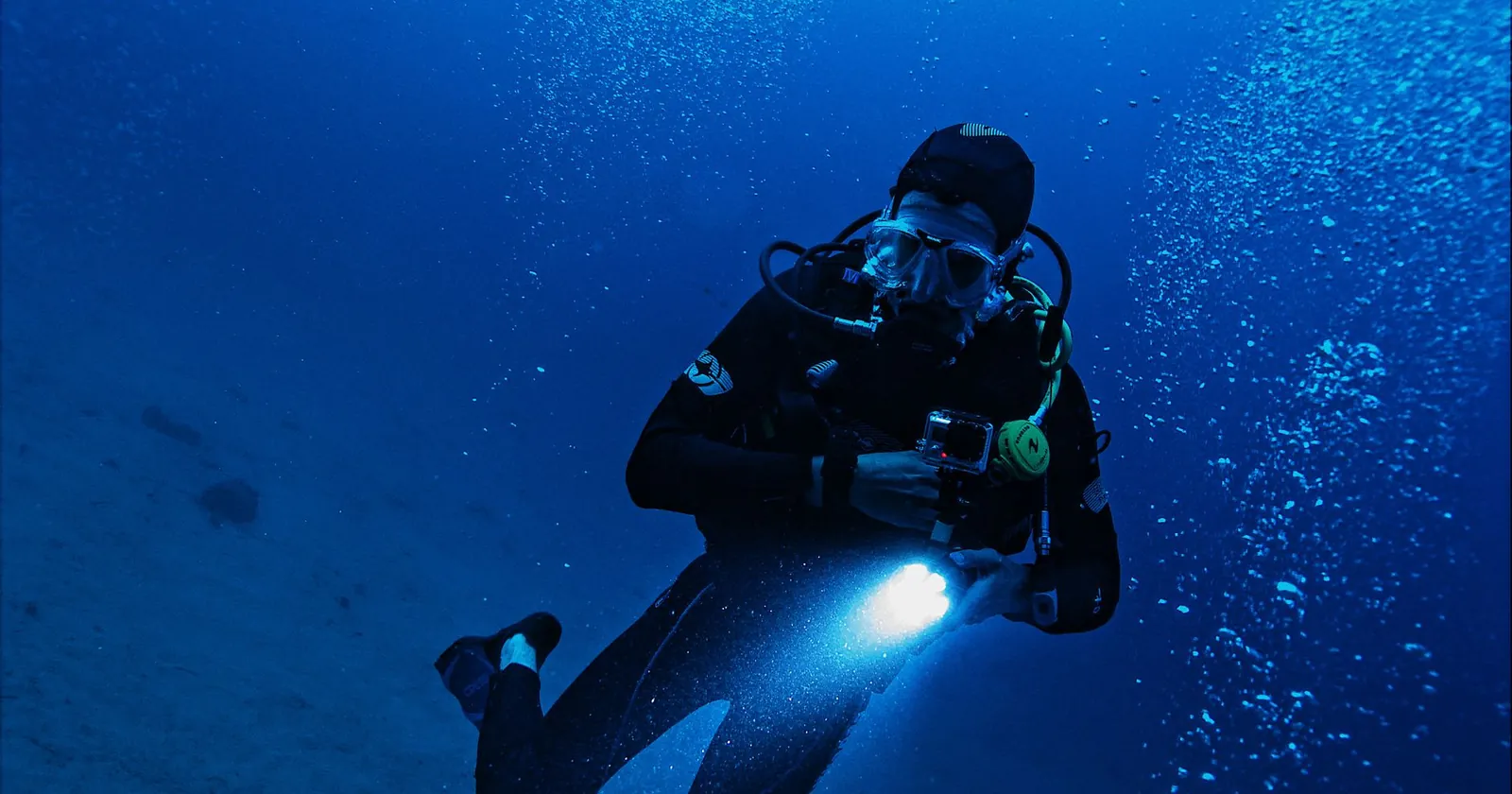
Photo: Maël Balland via Pexels (free licence).
This is general information, not a substitute for training; do your first night dives guided or with a course.
Key takeaways
- Two torches always: a primary and a backup, never one.
- Easy, familiar site you have dived in daylight, calm conditions.
- Guide or course first; it is more task-loading than a day dive.
- Communicate with your torch; never shine it in eyes.
- Go slow, stay close, and keep track of your buddy's light.
Why night dive?
Because the reef you know becomes a completely different place. At night the nocturnal shift comes out: hunting octopus, crabs, lobsters, moray eels, fish asleep in the coral, and predators on the move. Cover your torch and you may see bioluminescence, tiny organisms that glow when the water is disturbed, one of diving's most magical sights. Colours can look vivid in the beam. It is genuinely one of the best experiences in recreational diving.
Is it safe for beginners?
Yes, done properly. Night diving is more task-loading than a day dive (managing a torch, reduced vision, navigation), so you should be comfortable with your buoyancy and basic skills first, and do your first night dives with an instructor or an experienced guided group at an easy site you have already dived in daylight. A little nervousness before your first one is completely normal, and it fades within minutes of dropping in.
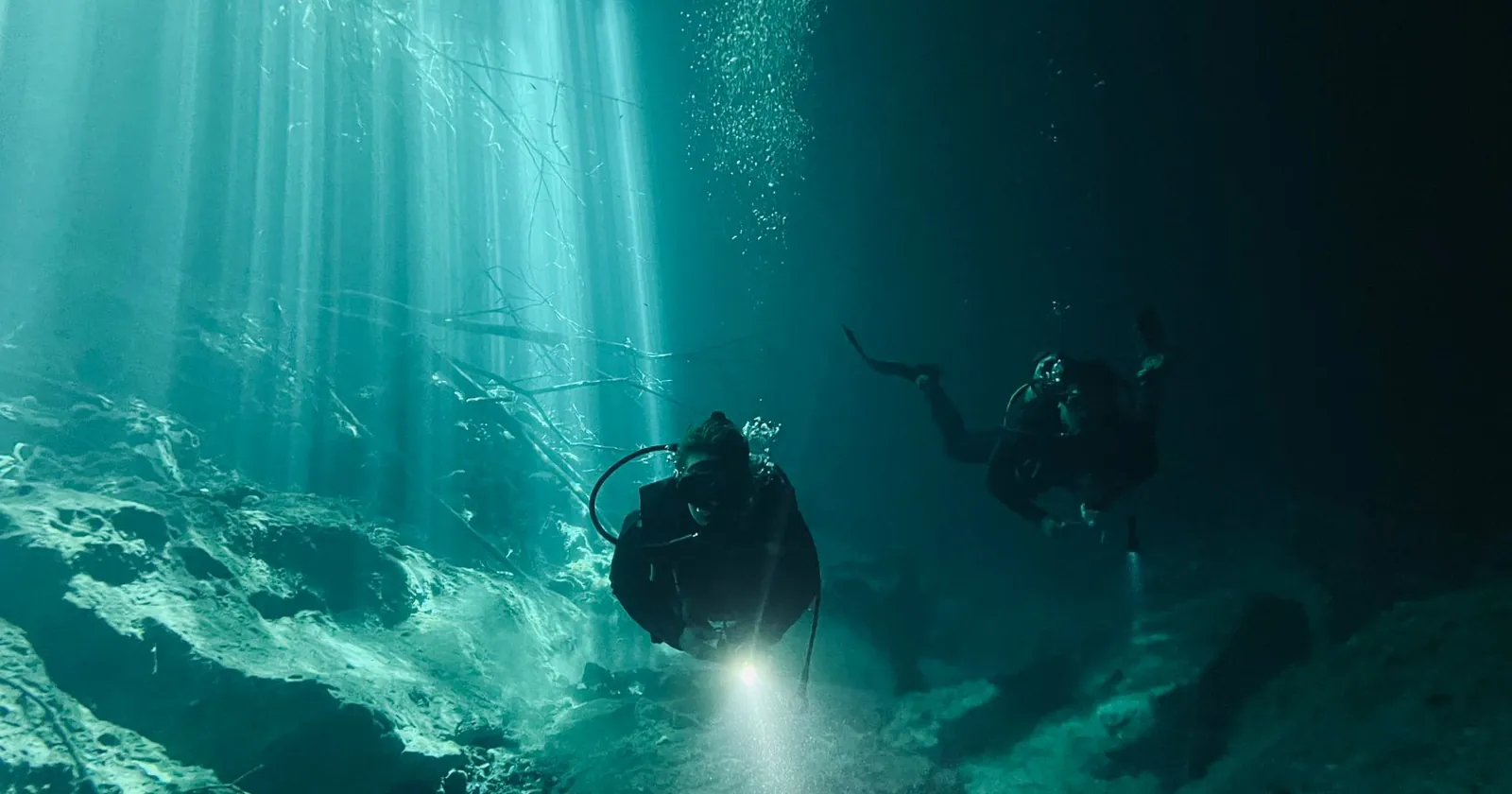
The gear you need
- Primary dive torch: your main light, bright and reliable.
- Backup torch: essential. DAN's wording is that it is "important always to have a basic backup light, too, just in case your primary should fail". BSAC turns the failure case into a rule: you and your buddy need at least one working torch each at all times, and if your torch breaks and you carry no spare, you terminate the dive. A backup is what keeps that rule from ending your dive at the first flicker.
- A way to be seen: a small marker light or glow stick on your tank or SMB so your buddy and the boat can spot you. DAN suggests a marker light on the tank valve and calls a small strobe "invaluable as a surface locating device at night"; chemical light sticks earn their place because they are "always on and are not battery- or bulb-dependent".
- Everything else is your normal scuba kit. Consider a torch you can clip or strap to your wrist to free your hands.
Check all batteries before every night dive. See our best dive torch guide for choosing lights.
Communicating in the dark
You communicate with your torch. Make your normal hand signals lit by your light, and use torch-beam signals. DAN describes three: a big circle of the beam asks are you OK, and a circle back is the affirmative reply; a quick up-and-down motion gets attention; a repeated back-and-forth motion says there is a problem (DAN, "Diving in the Dark", checked 12 August 2026). Attention and problem are two separate signals, which is worth learning correctly before you need the second one. DAN also notes that light signals have "dialects" just as hand signals do, so review them with your buddy and the boat crew beforehand, and BSAC states the same point as a rule: agree the signals you intend to use, because complex hand signals work less well in the dark. The golden manners rule: never shine your torch in another diver's eyes; light their hands or the reef, not their face. Keep track of each other's lights at all times.
Skills and tips for your first night dive
- Descend and ascend slowly, using a line or reference where possible.
- Stay close to your buddy, closer than by day, and keep your lights in view.
- Go slowly and light small areas; you see more by moving less.
- Watch your buoyancy and navigation, both are harder in the dark, so keep it simple.
- Don't chase animals with the beam, and keep to the look-don't-touch rule.
- Turn your torch off briefly (once settled and safe) to enjoy the bioluminescence, wave a hand and watch it sparkle.
FAQ: night diving
Is night diving safe for beginners?
Night diving is safe for a certified diver who does it properly: with training or a guide, good gear (a primary and a backup torch), a familiar site, and calm conditions. It is more task-loading than a day dive, so you should be comfortable with your buoyancy and basic skills first, and ideally do your first night dives with an instructor or an experienced guided group at an easy site you have dived in daylight. Nervousness is normal and fades fast.
What gear do you need for night diving?
The essentials are a reliable primary dive torch and a backup torch. DAN says it is important always to carry a basic backup light in case the primary fails, and BSAC's night-diving rule is that you and your buddy each need at least one working torch at all times and that you terminate the dive if your torch breaks and you have no spare. Add a way to be seen, such as a marker light on the tank valve or a glow stick, plus a small strobe for the surface. Everything else is your normal scuba kit. A torch you can clip or attach to your wrist frees your hands. Check batteries before every dive, and confirm the plan and signals with your buddy and guide.
What can you see on a night dive?
A different reef. Many nocturnal animals emerge at night, hunting octopus, crabs, lobsters, moray eels, sleeping fish, and you may see bioluminescence, tiny organisms that glow when disturbed, which is magical when you cover your torch. Colours can look vivid under the beam. The familiar daytime site transforms, which is exactly why divers love night diving.
How do you communicate on a night dive?
With your torch. You make hand signals lit by your light, and use torch-beam signals. DAN describes three: a big circle of the beam asks whether you are OK and a circle back is the affirmative reply, a quick up-and-down motion gets attention, and a repeated back-and-forth motion signals a problem. Attention and problem are separate signals, not one. Light signals have dialects just as hand signals do, so confirm the exact set with your buddy and the boat crew in the briefing. Never shine your torch directly into another diver's eyes; light their hands or the reef, not their face. Stay close to your buddy and keep track of each other's lights.
Do you need a certification to night dive?
You do not always need a separate card to join a guided night dive as a certified diver, but a Night Diver specialty course is strongly recommended and teaches you the skills, navigation, light use, communication and buoyancy in the dark, properly. Many operators will take certified divers on guided night dives; either way, do your first ones with training or an experienced guide, not alone.
Yannick Schroth
Founder of NOMADREEF and a former digital nomad. This guide explains night diving in general terms; it is not a substitute for training or a guided dive. Only night dive as a certified diver, and learn the skills through a course or an experienced guide. About the author · LinkedIn ↗
Sources
- DAN (Divers Alert Network), "Diving in the Dark". The torch signals as we describe them: "Make a big round circle with your light to ask if he is OK. A circle back is an affirmative reply", while "a quick up-and-down motion is a good way to get attention" and "a repeated back-and-forth motion indicates there is a problem". The same article states that "as hand signals tend to have 'dialects,' so do light signals; be sure to review them with buddies and boat crews before your dive", that it is "important always to have a basic backup light, too, just in case your primary should fail", and it recommends a marker light on the tank valve plus a strobe as a surface locating device. DAN, Diving in the Dark, checked 12 August 2026. Corrected 12 August 2026: an earlier version of this page merged two of these into one signal, saying that "a rapid up-and-down or side-to-side wave means attention or problem". DAN separates them, and the difference is the one that matters when something is wrong.
- DAN, "Night Diving". Read alongside the above, and slightly weaker on the point: it calls carrying at least one backup light on every night dive "advisable" rather than required, recommends chemlights because they are "always on and are not battery- or bulb-dependent", and asks you to stay close to your buddy and check in frequently. It sets no depth, distance or experience limit for night diving. DAN on night diving, checked 12 August 2026.
- BSAC, Safe Diving guide, "Going diving", night-diving section. The literal rules, which are narrower than the two-torch habit we recommend: "You and your buddy should have a minimum of one working torch each at all times", "If your torch breaks, and you don't have a spare, you should terminate the dive", "Where possible explore the site during daylight before night diving", "Avoid shining your torch in your buddy's eyes", and "Agree the signals you intend to use. Complex hand signals don't work as well in the dark". So the mandatory part is one working torch each plus an abort rule; the second torch is what stops the abort rule from ending your dive. BSAC Safe Diving guide, checked 12 August 2026.
- SSI training standards, Night and Limited Visibility specialty. At least two open-water training dives, minimum age 10, and a maximum training depth of 30 m, reduced to 18 m for ages 12 to 14 and 12 m for ages 10 to 11. Notable for what it does not do: it sets no shallower limit for diving in the dark. SSI standards, checked 12 August 2026. Agency standards differ and are revised over time, so the standard you were certified under governs, not this article.
- DAN, "Ascent Rates". The 30 feet per minute (about 9 m/min) rate used by the U.S. Navy and NOAA and endorsed by DAN; the effect of faster ascents on decompression stress; and safety stops as a way to pause in the shallows, with no depth or duration specified in that article. DAN on ascent rates, checked 8 August 2026. Metric conversions are ours and rounded.
- General information for certified divers. It is not training, and no article replaces a course, a briefing or a competent guide.