How to Start Surfing as a Beginner
 by Yannick Schroth
Jul 28, 2026
11 min read
by Yannick Schroth
Jul 28, 2026
11 min read
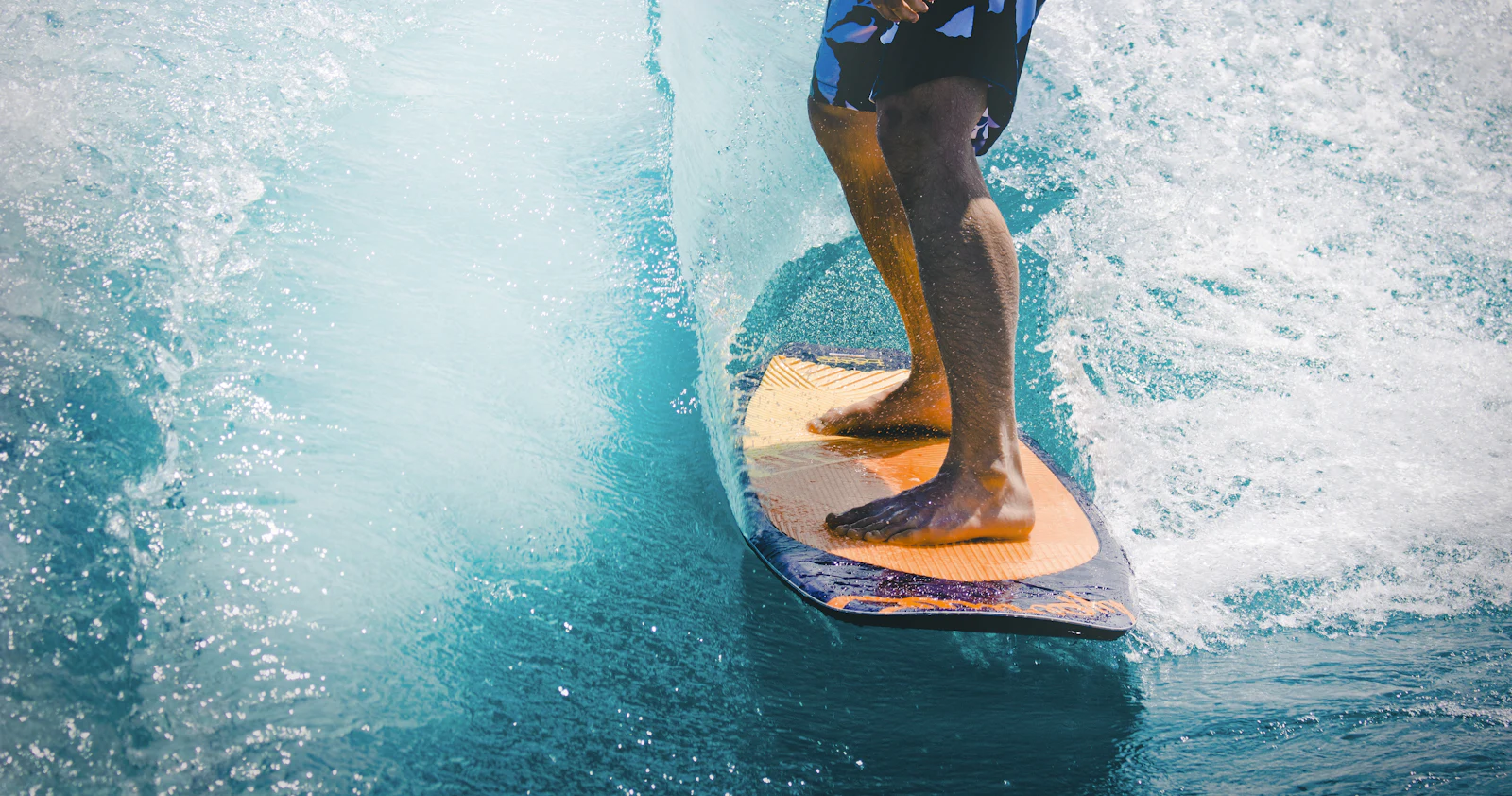
Photo via Unsplash (free licence).
This is general information, not instruction. Learn from a qualified instructor and within your ability.
Key takeaways
- Take a lesson, for safety, etiquette and much faster progress.
- Learn on a big soft-top (~8 ft): stable, buoyant, safe.
- Start in whitewater, the broken waves near shore, before paddling out.
- The pop-up is the skill. Everything else supports it.
- Learn the safety and etiquette before you enter a lineup.
Step 1: Take a lesson (do not self-teach)
You can technically teach yourself, but a lesson or two transforms the start. A good surf school puts you on the right board in the right spot, gives you the pop-up fundamentals, and, crucially, teaches rip-current safety and etiquette before you paddle into a crowded lineup. Surf camps, common in nomad hubs, bundle lessons, board rental and a social scene. It is the single best money you will spend on your surfing.
Step 2: Learn on a big soft-top
Beginners learn fastest on a soft-top foam board (a "foamie"), around 8 feet or longer for most adults. Foamies are stable, buoyant, catch waves easily and are safe if the board hits you or someone else, which is exactly what you want while you are falling off a lot. Do not start on a short, low-volume board; you will spend the session sinking and frustrated. We break down sizing in the beginner surfboard guide, and most people rent or borrow a board to start.
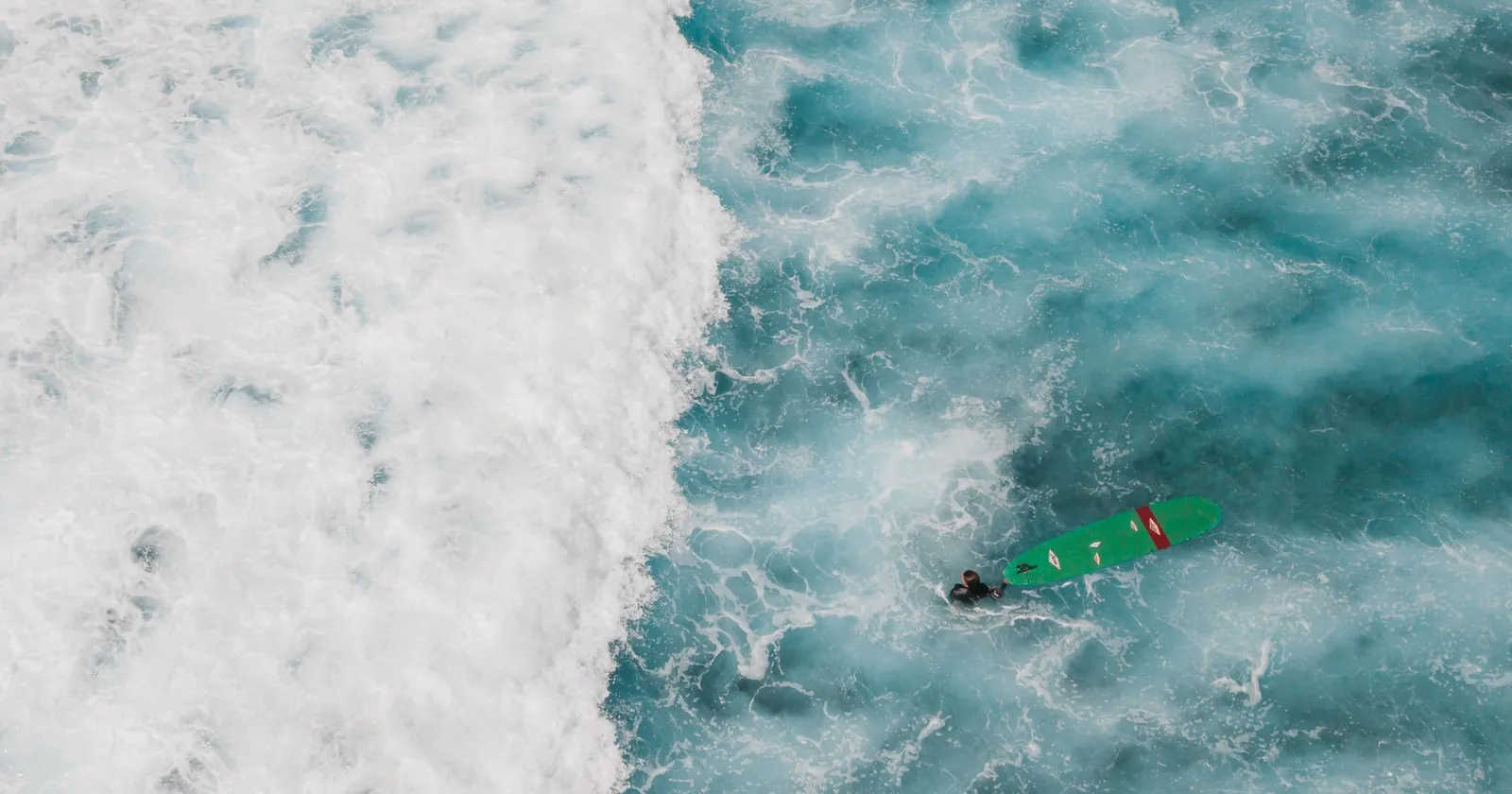
Step 3: Start in the whitewater
Do not paddle straight out to the lineup. Beginners learn in the whitewater, the broken, foamy waves that have already crumbled and are rolling toward shore. It is gentle, forgiving and lets you practise the pop-up and standing over and over in shallow, calm water. Only once you can reliably stand and steer in whitewater do you progress to catching unbroken "green" waves further out, which is a big step up in skill and awareness.
Step 4: Master paddling and the pop-up
Two skills carry everything. Paddling (lying on the board, cupping the water, with good position, not too far forward or you nosedive, not too far back or you never catch the wave) gets you into waves and is more tiring than it looks. The pop-up is the money move: the single, committed motion from lying to feet-planted-and-standing, in one go, not knees-first. Practise it on the sand until it is muscle memory. Add reading the ocean, where waves break, how sets come through, and you have the foundation.
Step 5: Learn the safety and etiquette first
Surfing takes place in a powerful, shared environment, so two things are non-negotiable before you paddle out. Rip-current safety: know how to spot and escape a rip (do not fight it). And surf etiquette: the right-of-way rules that keep a lineup safe and prevent collisions and conflict. We cover both in depth in surf etiquette and safety for beginners, read it before your first proper session, not after. Start at lifeguarded, beginner-friendly beaches and surf well within your ability.
Common beginner mistakes (and how to skip them)
- Too small a board. The biggest one. A short, low-volume board looks cool and sinks you. Start big and buoyant, and read the surfboard guide.
- Popping up too slowly, or knees-first. Commit to one fast motion from lying to standing; hesitation and a knee-stage both end in a fall.
- Wrong position on the board. Too far forward and you nosedive, too far back and the wave passes under you. Learn your sweet spot.
- Looking down. Look where you want to go, not at your feet; your body follows your eyes.
- Paddling out into the lineup too soon. Master whitewater first; the lineup has right-of-way rules and stronger waves.
- Ignoring the ocean. Spend time just watching a spot before you paddle out: where waves break, how sets come, where the rip is.
The gear you need to start
- A soft-top board (rent or borrow first), a leash (attaches the board to your ankle) and wax or a traction pad for grip.
- Exposure protection: a rashguard in warm water, a wetsuit in cooler water, matched to temperature as in the wetsuit guide.
- Reef-safe sunscreen and, for reef breaks later, booties.
FAQ: starting to surf
How long does it take to learn to surf?
Most people can stand up and ride whitewater on a soft-top within a lesson or two. Getting comfortable catching unbroken (green) waves and reading the ocean takes weeks to months of regular practice. Surfing has a famously long learning curve, so progress is measured in sessions, not days; the first stand-up is quick, real competence is a patient build.
What board should a beginner surfer use?
A large, stable soft-top foam board (a 'foamie'), around 8 feet or longer for most adults. Foamies are buoyant, catch waves easily and are safe if the board hits you or others, which makes them by far the fastest and safest way to learn. Avoid short, low-volume boards until you can consistently catch and ride green waves.
Do you need lessons to start surfing?
You do not strictly need them, but a lesson or two dramatically speeds up learning and, more importantly, teaches you rip-current safety and surf etiquette before you paddle into a crowded lineup. A good instructor also puts you in the right spot on the right board. It is money well spent for your safety and progress.
How fit do you need to be to surf?
You need to be a competent, comfortable swimmer and reasonably fit, as paddling is tiring and the ocean is unpredictable. You do not need to be an athlete to start on gentle waves, but the fitter and more confident you are in water, the faster you progress and the safer you are. Build swimming confidence first if needed.
Where is the best place to learn to surf?
Look for gentle, sandy-bottomed beach breaks with small, mellow waves and surf schools, ideally lifeguarded and not too crowded. Classic beginner-friendly nomad bases include La Punta in Puerto Escondido and Weligama in Sri Lanka. Avoid heavy, powerful or reef breaks (like Zicatela) until you are experienced.
Yannick Schroth
Founder of NOMADREEF and a former digital nomad who has based across Asia and Latin America. This guide is researched against surf-instruction and water-safety best practice; it is not a substitute for lessons from a qualified surf instructor. About the author · LinkedIn ↗
Sources
- International Surfing Association (ISA), learn-to-surf and instructor standards. isasurf.org.
- RNLI, rip-current and beach safety (Float to Live). rnli.org.
- Our own surf etiquette & safety and beginner surfboard guides.