Aruba for Kitesurfing Nomads: The Honest 2026 Base Guide
 by Yannick Schroth
Aug 1, 2026
8 min read
by Yannick Schroth
Aug 1, 2026
8 min read
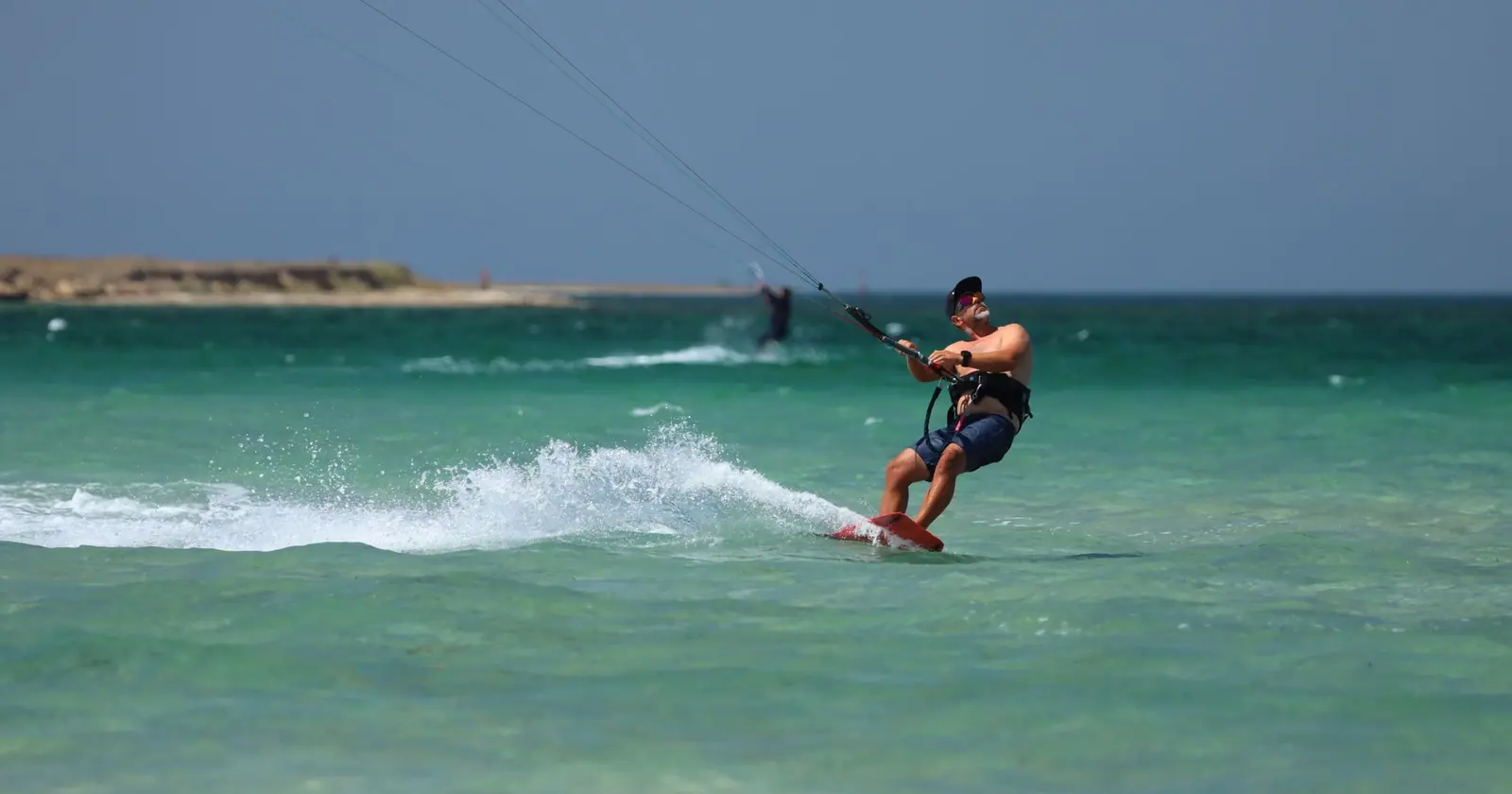
Photo: Serg Alesenko / Pexels.
Figures are indicative and "as of 2026"; verify prices, seasons and visa rules before you rely on them.
Key takeaways
- Wind is a year-round trade-wind machine but peaks May to July at 20 to 30 knots; August to November softens to roughly 10 to 18 knots (verify current season).
- There is no separate nomad visa: "One Happy Workation" is a tourist-stay program. US nationals get up to 90 days (vs the usual 30), extendable toward 180, capped at 180 per calendar year.
- You cannot legally work for or earn from an Aruban company on this status; your income must come from a home-country employer or your own foreign business.
- Budget high: a solo nomad realistically runs around USD 2,500 to 3,000+ per month including rent, since food and utilities are imported and pricey.
- Fisherman's Huts (Hadicurari) is the beginner and freeride hub; Boca Grandi is the advanced, wavier, side-onshore spot. Aruba sits below the main hurricane belt.
The wind and water season
Aruba's defining feature is the trade wind. It blows almost daily from the east/northeast, which is why the island became a windsurfing and kitesurfing fixture decades ago. As of 2026, the pattern reported by local schools and spot guides is: May, June and July are the windiest months, averaging 20 to 30 knots, while August through November eases to roughly 10 to 18 knots. January through April stay solidly rideable. Treat these as seasonal averages and check a live forecast source before committing.
For a multi-week base, the strongest, most bankable window is roughly January to August, with the sweet spot in late spring and early summer. If you come in the autumn shoulder you will still get sessions, but expect lighter, less consistent days and bring bigger kites and a foil or light-wind board.
Because the wind is thermally reinforced trade wind rather than storm-driven, days tend to build through midday and hold into the afternoon, which is convenient if you work mornings and ride after.
The spots: Fisherman's Huts and Boca Grandi
Fisherman's Huts (Hadicurari), on the northwest coast near the high-rise hotel strip, is the main hub and the beginner-friendly zone. It offers flatter water and steady wind suited to roughly 7m to 12m kites. Be aware the wind here has a strong offshore/cross-offshore component at parts of the beach; if it is light, getting back upwind to shore can be a genuine problem, so ride with a school or safety cover when you are learning.
Boca Grandi, on the southeast tip near the old lighthouse end of the island, is the advanced and intermediate spot. The wind is side-onshore and commonly 20 to 30 knots, with small bay chop of 0.5 to 1m and bigger 1 to 2m waves if you cross the reef upwind. Locals call it a skatepark for a reason: it is rewarding for freestyle and wave riding but not a learner beach.
Several kite schools and rental operators work the island, mostly clustered around Fisherman's Huts. Rather than name specific operators (staffing and prices change), book on arrival and confirm current rates, gear condition, and whether they run downwinders or lessons at Boca Grandi.
The visa reality: no true nomad visa
This is the trust-critical point. Aruba does not issue a standalone digital-nomad or remote-work visa. The widely marketed "One Happy Workation" is a tourism program, not a separate legal status: you enter and remain as a regular tourist. What it actually changes is the permitted stay length for US nationals, who can request up to 90 days instead of the standard 30, with extensions possible toward 180 days.
The practical mechanics, as reported in 2026: US passport holders select "One Happy Workation" as the purpose of visit on the ED-Card (embarkation) form, and no additional special visa form is currently required. Other nationalities generally get 30 days on entry, extendable through immigration toward 90 or 180. Total presence is capped at 180 days per calendar year. Always confirm the current rules on the official Aruba immigration / DIMAS channels before you fly, because entry policy changes.
Crucial limit: on this tourist status you may not perform services for, or take income from, an Aruban company or person. That requires a work or business permit. Legally you must be employed by, or self-employed through, a business in your home country. Do not treat Aruba as a place to take local clients.
Cost of living: budget like an island importer
Aruba is not cheap, and the reason is structural: almost all food and consumer goods are imported, pushing grocery prices well above US-mainland levels (reports cite roughly 30 to 50 percent higher). As of 2026, a solo nomad commonly lands around USD 2,500 to 3,000 or more per month including rent; without rent, day-to-day costs are often quoted near USD 1,300.
Housing ranges widely. A one-bedroom near Oranjestad is roughly USD 1,200 to 1,700 per month; beachfront or resort-area units run USD 2,000 to 3,500; older inland places around Santa Cruz or Savaneta can be USD 900 to 1,300. Utilities, driven by electricity and air-conditioning, run about USD 150 to 250. Treat all of these as ranges to verify against current listings, since short-term and monthly rates swing seasonally.
The currency is the Aruban florin (AWG), pegged to the US dollar (roughly 1.79 to 1), and USD is accepted almost everywhere, so US nomads face little exchange friction. Cooking at home and choosing an inland or Noord apartment over the beach strip are the two biggest levers on your monthly number.
Wifi, connectivity and daily life
By Caribbean standards Aruba's connectivity is a genuine strength. The island has fiber and 4G/LTE (with expanding 5G) through local carriers such as SETAR and Digicel, and reliability is generally better than on less-developed islands thanks to stable Dutch-Caribbean infrastructure. Confirm this for your specific rental: apartment wifi quality varies, and beach-strip or older inland units can disappoint, so ask hosts for a speed test screenshot before booking.
For redundancy, treat a local SIM or a nomad eSIM as mandatory backup for video calls, and consider a rental with fiber rather than a shared hotel connection. Power is 120V/60Hz on US-style plugs in most places, so US gear works without adapters, but keep a UPS or power bank for the occasional outage.
Daily life is easy for English speakers: Papiamento and Dutch are official, but English and Spanish are widely spoken, healthcare is solid, tap water (desalinated) is safe to drink, and the island is small enough to cross in under an hour. A rental car or scooter is close to essential if you want reliable spot access, since public transport is limited outside the main corridor.
Getting there, safety and honest limits
Access is a major plus. Queen Beatrix International (AUA) has frequent direct flights from multiple US hubs and from Amsterdam, and it offers US Customs preclearance, so you clear US immigration in Aruba and arrive home as a domestic passenger. That connectivity is a real reason to base here over more remote kite islands.
Aruba sits at about 12 degrees north, on the southern edge of the Caribbean and largely below the main Atlantic hurricane belt, so it faces far lower storm risk than islands further north (not zero; verify current advisories in season). Violent crime is low by regional standards, but petty theft, break-ins from parked cars, and opportunistic scams do happen, so use normal precautions and never leave gear or valuables visible in a rental car at the spots.
The honest limits: it is expensive, it is small (you will see all of it within a few weeks), the autumn wind lull is real, and the offshore wind component at Fisherman's Huts makes it less forgiving for solo beginners than the brochures suggest. Come for reliable wind, easy US logistics, and stable infrastructure, not for a low budget or big-island variety.
FAQ: Aruba
Does Aruba have a digital nomad visa?
No. Aruba does not issue a standalone nomad or remote-work visa. The "One Happy Workation" program is a tourism initiative that keeps you on ordinary tourist status. US nationals can request up to 90 days (instead of 30), extendable toward 180, capped at 180 per calendar year. You cannot legally work for or earn from an Aruban company on this status. Verify current rules on official Aruba immigration channels before traveling.
When is the best time to kitesurf in Aruba?
The wind is most reliable roughly January to August, peaking May, June and July at around 20 to 30 knots. August through November is the lighter shoulder, averaging about 10 to 18 knots, so bring bigger kites or a foil then. These are seasonal averages as of 2026; always check a live forecast before committing.
How much does it cost to live in Aruba per month?
Budget high. A solo nomad realistically spends around USD 2,500 to 3,000+ monthly including rent. One-bedrooms near Oranjestad run about USD 1,200 to 1,700, beachfront USD 2,000 to 3,500, and older inland units USD 900 to 1,300. Groceries sit 30 to 50 percent above US-mainland prices because nearly everything is imported. Treat all figures as ranges to verify against current listings.
Is the internet good enough for remote work in Aruba?
Generally yes, and it is a strength versus many Caribbean islands. There is fiber and solid 4G/5G through carriers like SETAR and Digicel, backed by stable Dutch-Caribbean infrastructure. Reliability still varies by rental, so ask hosts for a speed test and keep a local SIM or eSIM as backup for video calls. Power is US-style 120V, so US gear works directly.
Is Aruba safe, and is it in the hurricane zone?
Aruba is considered safe by regional standards, with low violent crime but real petty theft; never leave gear visible in a parked car at the spots. It sits near 12 degrees north on the southern Caribbean edge, largely below the main hurricane belt, so storm risk is much lower than islands further north, though not zero. Check current advisories during storm season.
Yannick Schroth
Founder of NOMADREEF and a former digital nomad. This guide is honestly sourced from the references below; conditions, prices and rules change, so verify current details, and follow qualified local guidance and safety briefings. About the author · LinkedIn ↗
Sources
- Aruba.com official tourism (kite/windsurfing and One Happy Workation pages)
- VisitAruba.com entry requirements and One Happy Workation program
- Aruba kite school and spot guides (Fisherman's Huts, Boca Grandi conditions)
- CityCost / Nomad Numbers cost-of-living data for Aruba, 2026
- Immigration/nomad-visa explainers (Deel, Citizen Remote) on tourist-stay status