How to Start Stand-Up Paddleboarding
 by Yannick Schroth
Jul 28, 2026
9 min read
by Yannick Schroth
Jul 28, 2026
9 min read
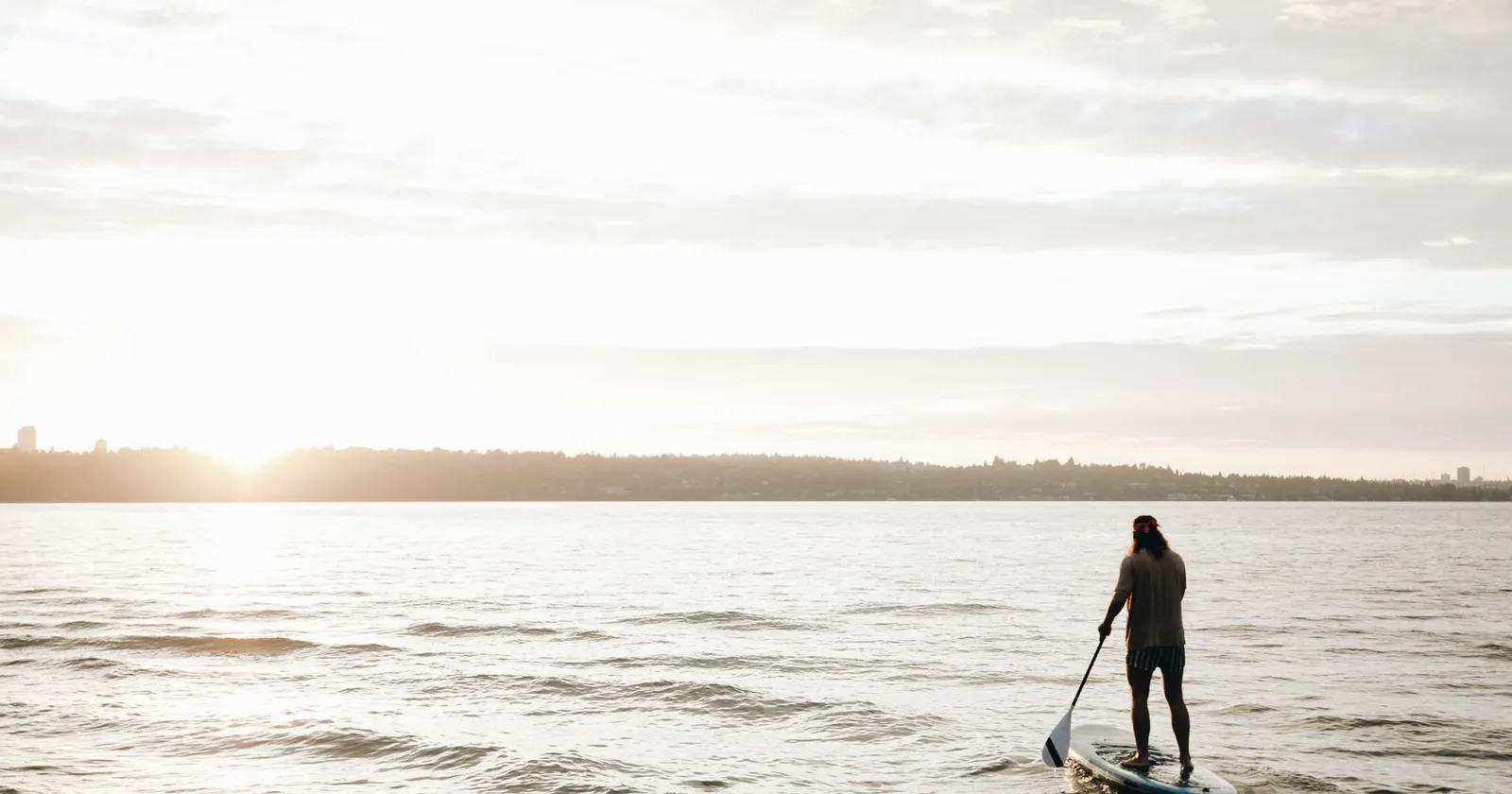
Photo: PNW Production via Pexels (free license).
This is general information; check local conditions, wear the right safety kit, and paddle within your ability.
Key takeaways
- Start on your knees, then stand slowly with feet parallel, eyes on the horizon.
- Paddle from your core, reach, plant, pull to your ankle, switch sides.
- Learn on calm, flat water with no offshore wind or current.
- Never paddle in offshore wind, it blows you out to sea (RNLI).
- Always wear a leash and buoyancy aid, and carry a phone on your person.
Step 1: Get the gear and check the conditions
SUP needs little: a board, a paddle, a leash and a buoyancy aid. Inflatable boards are perfect for travel, see the best inflatable SUP guide. Before you go, check the weather and tide, and the golden rule: never paddle in offshore wind (wind blowing from the land out to sea), which can carry you out fast. Start only in calm, sheltered conditions.
Step 2: Start on your knees
Do not try to stand first. Kneel in the middle of the board (over the carry handle, the balance point), get a feel for how it moves, and paddle on your knees for a minute. This builds confidence and teaches you the board's stability before you add the challenge of standing.
Step 3: Stand up slowly
With the board flat and moving gently, place your feet where your knees were, roughly shoulder-width apart and parallel, either side of the handle. Rise one foot at a time, keep your knees soft, and, crucially, look at the horizon, not your feet, your balance follows your eyes. A slightly bent, relaxed stance is far more stable than a stiff, upright one.
Step 4: Paddle with technique
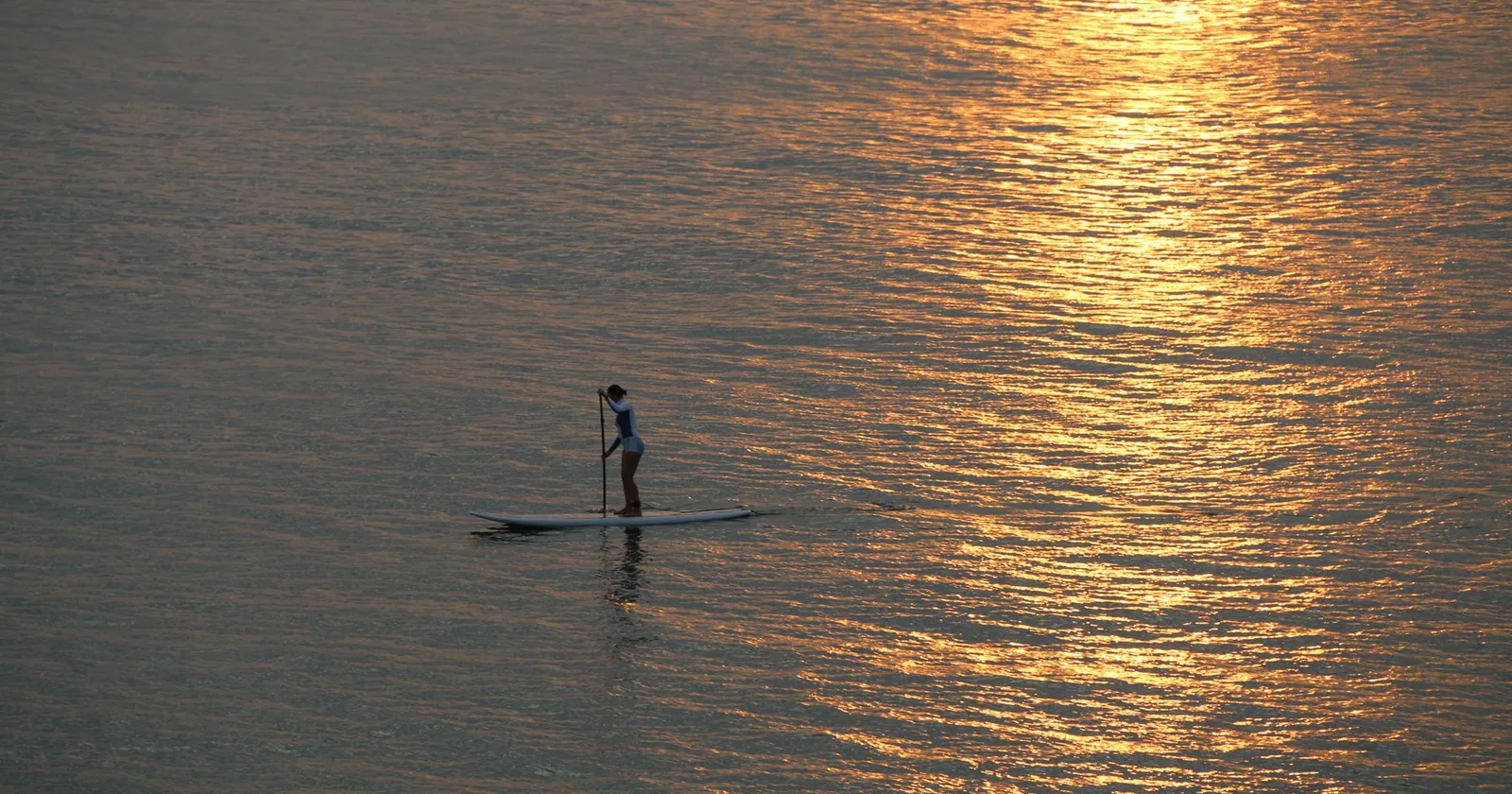
Good paddling is efficient, not frantic. Reach forward, plant the whole blade in the water, and pull back to your ankle, then lift and repeat. Use your core and torso, not just your arms, and hold the paddle with the blade angled away from you (a common beginner mistake is holding it backwards). To go straight, switch sides every few strokes. To turn, sweep the paddle in a wide arc.
Step 5: Fall safely and get back on
You will fall, everyone does. Fall away from the board, flat into the water, rather than onto the board (which causes injuries), and try to keep hold of your paddle. To get back on, position yourself at the middle of the board (by the handle), grab the far edge, and kick and pull yourself on from the side. Practise this in shallow water so it is second nature.
SUP safety: the rules that matter
SUP is gentle, but the sea is not, and most SUP rescues come down to a few missed basics. Per the RNLI:
- Avoid offshore winds, they blow you out to sea and it is an exhausting, sometimes impossible paddle back. This is the single biggest danger.
- Always wear a leash, and the right one: an ankle leash for flat, open water, but a quick-release waist leash for tidal or flowing water (rivers) where there is an entrapment risk.
- Wear a buoyancy aid or personal flotation device.
- Carry a phone in a waterproof pouch on your person (not in a bag on the board), and know to call the Coastguard if in trouble.
- Check weather and tide, paddle with others where you can, and tell someone your plans.
(RNLI).
The moment you leave the bathing area, the board changes category
The safety advice above is about staying out of trouble. This bit is about what the rules already say, and most paddlers never hear it.
The US Coast Guard settled the question in “a decisional memo dated Oct.3, 2008”, classifying paddleboards as vessels. What follows from that is geographic: used “beyond the narrow limits of a swimming, surfing, or bathing area”, a paddleboard comes under the Navigation Rules and the carriage requirements for its type, which may include “a Coast Guard approved life jacket for each person on board, a sound producing device, visual distress signals, and proper navigation lights”. Inside a marked bathing or surfing area, none of it applies.
The reassuring half is how cheaply it is satisfied: by the Coast Guard's own account, “a police-type whistle and a flashlight comply with these requirements”. Two items, a few euros, and a category of problem disappears. That is US law and not a world rule, but the underlying logic travels, because once you are past the swimmers you are a small craft sharing water with bigger ones, and a whistle is how they hear you.
FAQ: starting stand-up paddleboarding
Is stand-up paddleboarding hard to learn?
No, SUP is one of the easiest watersports to start. On calm, flat water most people are standing and paddling within their first session. The trick is to begin on your knees, keep the board flat, look at the horizon rather than your feet, and use a big, stable board. Balance improves quickly with a little practice.
What is the biggest danger in paddleboarding?
Offshore wind. Per the RNLI, offshore winds can blow a paddleboarder out to sea, and paddling back is exhausting and often impossible, this is behind many rescues. Always check the wind and tide, never paddle in offshore wind, wear the right leash and a buoyancy aid, carry a phone in a waterproof pouch on your person, and tell someone your plans.
Do you need a leash for paddleboarding?
Yes, always. Your board is your biggest buoyancy aid, and a leash keeps it with you if you fall. Crucially, choose the right leash for the water: an ankle leash is fine for flat, open water, but in tidal or flowing water such as rivers, where there is an entrapment risk, wear a quick-release waist leash. The RNLI stresses matching the leash to the environment.
What should you wear paddleboarding?
A buoyancy aid or personal flotation device, a leash suited to the water, and clothing for the conditions (a wetsuit in cool water, a rashguard and reef-safe sunscreen in the sun). Carry a means of calling for help, a phone in a waterproof pouch, on your person, not in a bag on the board. Dress for the water temperature, not the air.
Where should a beginner paddleboard?
Start on calm, flat, sheltered water: a lake, a calm bay, a lagoon or a slow river section, ideally with no offshore wind, little current and light boat traffic. Avoid the open sea, strong wind and tides while you learn. A lesson or a guided session in the right spot makes the first outing far easier and safer.
Yannick Schroth
Founder of NOMADREEF and a former digital nomad. This guide is researched against RNLI water-safety guidance and paddleboarding best practice, and cites its sources; check local conditions and, where useful, take a lesson. About the author · LinkedIn ↗
Sources
- A paddleboard is a vessel once you leave the bathing area. US Coast Guard Auxiliary help desk, stating the Coast Guard's position: “The U.S. Coast Guard in a decisional memo dated Oct.3, 2008, classified paddleboards as vessels in accordance with Title 1 United States Code, Section 3.” Beyond “the narrow limits of a swimming, surfing, or bathing area” the carriage requirements may include “a Coast Guard approved life jacket for each person on board, a sound producing device, visual distress signals, and proper navigation lights”, and “a police-type whistle and a flashlight comply with these requirements”. One country's rules, quoted as such. cgaux-helpdesk.kayako.com. Read 11 September 2026.
- RNLI, stand-up paddleboarding safety (offshore wind, leash choice, buoyancy aid, means of calling for help). rnli.org.
- Our own inflatable SUP and inflatable kayak guides.