River Surfing: A Beginner's Guide to Standing Waves
 by Yannick Schroth
Jul 29, 2026
8 min read
by Yannick Schroth
Jul 29, 2026
8 min read
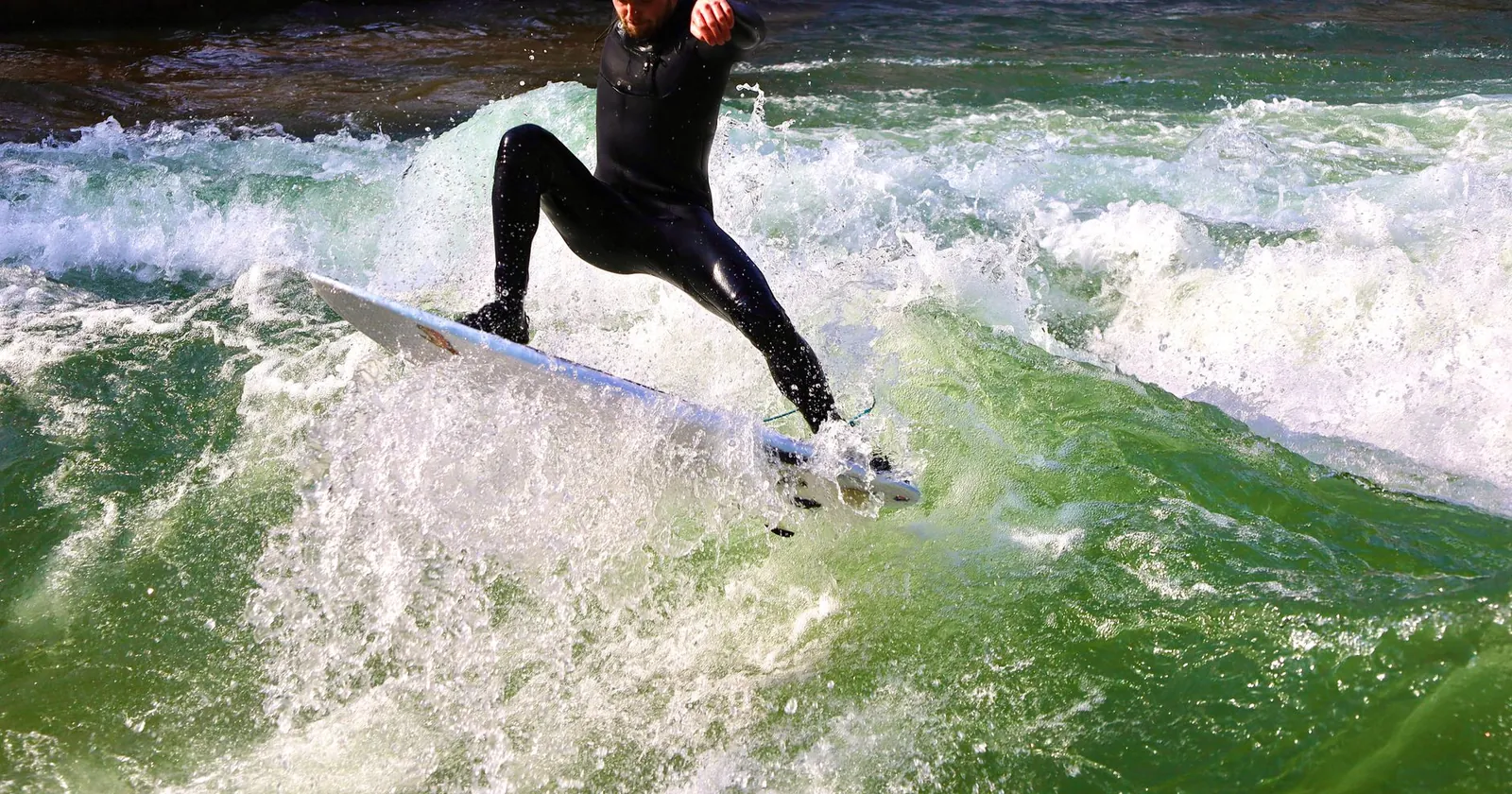
Photo: Monique Buchholz via Pexels (free licence).
This is a general explainer, not a substitute for local coaching and the spot's own rules.
Key takeaways
- A standing wave stays put; you ride it until you fall or step off.
- No paddling, no duck diving, but fast, powerful water and a hard bed.
- The Eisbach is expert-only; learn at gentler waves or river-surf parks.
- Riders queue and rotate; respect the local etiquette.
- Leash-free or a leash that releases under load; entrapment is the reason, and at the Eisbach it is the law.
What is a standing wave?
In the ocean, a wave moves and you ride it toward shore. On a river, a standing wave forms where fast water flows over a ledge, boulder or shaped riverbed, creating a wave that holds its position while the water pours through it. Drop onto it and you can surf in place for as long as you keep your balance, with the current doing the work. It is surfing without the paddle-out, the sets or the crowds drifting, just you, the wave and a queue on the bank.
How it differs from ocean surfing
The feel is unique. There is no paddling for waves and no duck diving, and rides can last minutes rather than seconds. But the water is often cold, the riverbed can be shallow and hard (sometimes concrete), and the flow is fast and unforgiving. Board control is subtle and quick, and a good river-surf board is typically shorter, tougher and more manoeuvrable than an ocean board. If you surf the ocean, expect a real adjustment.
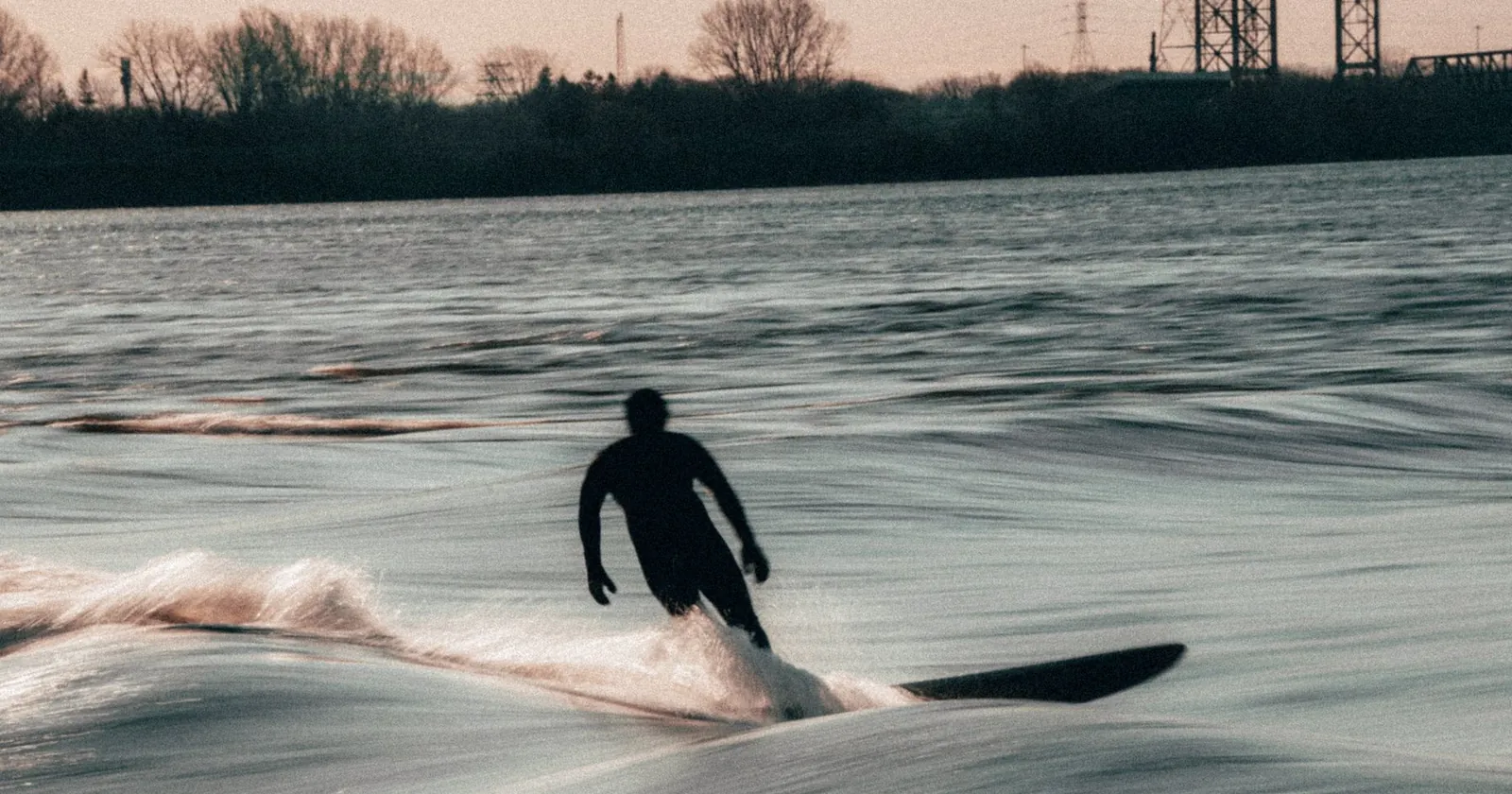
The famous waves
The most legendary river wave is the Eisbach in Munich's English Garden, a powerful, fast wave with a dedicated community, and firmly expert territory, now in the literal sense: since a fatal accident it is surfable only under a city ordinance, and the city has closed and reopened it more than once. See the section below before you plan a trip around it. Other river waves and whitewater parks exist in Nuremberg, in Bend, Oregon, in the Ottawa region of Canada, and at a growing number of purpose-built river-surf parks worldwide. The parks and gentler natural waves are where you actually learn; the marquee waves are not beginner venues.
Etiquette and the rotation
Because only one rider fits a river wave at a time, spots run on a rotation: you queue on the bank or in the eddy and take your turn, riding until you fall off or step out, then rejoin the back of the line. Jumping the queue is the cardinal sin. Learn and respect the local order and signals before you paddle out.
The Eisbach is now governed by an ordinance, and it is worth reading anywhere you surf a river
The leash debate stopped being a debate in Munich. After a surfer died when her leash snagged on the bed, the city regulated the wave, and the current instrument is an Allgemeinverfügung dated 8 May 2026 (revoking the previous one of 10 February 2026) issued under Article 18(3) of the Bavarian Water Act. Surfing the Eisbach is permitted only:
- to practised and experienced river surfers, at their own risk;
- from age 16, or from 14 accompanied by an adult supervisor who is themselves an experienced surfer;
- between 05:30 and 22:00;
- with a buddy on the bank who meets the same experience requirement and can carry out a rescue;
- without a leash, or with a leash that releases under load, so a snagged board cannot pull the surfer under;
- when the weather allows, and only if a wave that is surfable for experienced river surfers has actually formed.
The reasoning attached to the order is the part worth carrying to any river wave. The Eisbach "is not a wave designed or created for surfing; it is exclusively a consequence of the hydraulic structures and the management of the watercourse", whether a wave forms at all "depends on the circumstances", and the bed contains deliberate obstacles (Störsteine) plus whatever has been thrown in or shifted by gravel movement. Surfers "can injure themselves on these or get caught. There is danger to life." The current is strong, the water shallow and variable, and every surfer carries a duty both to self-rescue and to rescue others. Even the access is disclaimed: over tree roots, steep, unsurfaced, not cleared.
None of this is a reason to avoid river surfing. It is the clearest published description of what a river wave actually is, written by the authority that owns the water rather than by anyone selling the experience. Check the ordinance's current status before travelling: this wave has been closed, reopened, and altered by dredging within the past two years. Checked 12 August 2026.
How to start
Find a beginner-friendly river wave or a river-surf park that offers coaching and suitable boards, ideally with a gentle wave and a forgiving pool or deep run-out. Book a lesson, borrow or rent a river board, and learn the entry, the balance and the exit before you ever think about a wave like the Eisbach. If you already surf the ocean, your wave sense helps, but treat the river as a new discipline.
The two rules moving water does not forgive
Both come from the American Whitewater Safety Code (2024), quoted rather than paraphrased, because the wording carries the detail. On standing up: "Do not attempt to stand in fast-moving water. Swim to slow-moving water (little to no current) or very shallow water (below your knee) before attempting to stand." A wedged foot plus current pushes you under and holds you there. The threshold is knee-deep, not a feeling.
On swimming, there are two techniques and picking the wrong one is the common error: "When swimming in shallow or obstructed rapids, lie on your back with your feet held high and pointed downstream", but "if you're in slow moving water or the rapids are deep, roll onto your stomach and swim aggressively for shore." Feet-downstream is the defensive position, not the universal one.
American Whitewater also states plainly that "river running alone is strongly discouraged. Single-craft outings are a common factor in incidents and drownings."
Quoted from American Whitewater Safety Code (2024), checked 8 August 2026. AW publishes these as guidelines "for informational purposes only", not as a standard of care, and they are no substitute for instruction or local knowledge.
FAQ: river surfing
What is river surfing?
River surfing is riding a standing wave, a stationary wave formed where a river flows over a feature such as a ledge or shaped riverbed. Because the wave stays in one place while the water rushes through it, you can surf it continuously instead of catching a moving ocean swell and riding it to shore. Riders queue and take turns, dropping onto the wave from the bank or an eddy and riding until they fall off or step out.
Is river surfing harder than ocean surfing?
It is different rather than simply harder. There is no paddling for waves and no duck diving, but the wave is fast, powerful and unforgiving, the water is often cold, and the riverbed can be shallow and hard. Balance and quick, subtle board control matter a lot. Famous waves like Munich's Eisbach are strong and expert-only, while gentler man-made river waves and river-surf parks are far more beginner-friendly places to learn.
Where can you go river surfing?
River waves exist both naturally and in engineered whitewater parks. The most famous is the Eisbach in Munich's English Garden, a powerful expert wave. Others include waves in Nuremberg, Bend in Oregon, the Ottawa region in Canada and various purpose-built river-surf parks around the world. Beginner-friendly spots and coached river-surf parks are the best places to start; the marquee waves like the Eisbach are not beginner venues.
Do you use a leash for river surfing?
A fixed leash can snag on the riverbed or on obstacles in flowing water and hold you under, which is why river surfers either ride leash-free or use a leash that releases under load. At Munich's Eisbach this is no longer a matter of preference: the city ordinance of 8 May 2026 permits surfing only without a leash or with one that releases under tension, after a surfer died when hers caught on the bed. Other spots set their own rules, so follow the specific wave's guidance rather than assuming ocean habits apply.
Is river surfing safe?
River surfing carries real hazards: cold water, a shallow and often hard or concrete riverbed, strong current, fixed obstacles and the risk of entrapment. It is not a casual first-timer activity at powerful waves. Start at beginner-friendly or coached river-surf parks, wear appropriate protection (many riders wear a helmet and impact vest, plus a wetsuit for cold water), learn the local rules, never surf a river wave alone or beyond your ability, and check the specific spot's guidance. This is general information, not instruction.
Yannick Schroth
Founder of NOMADREEF and a former digital nomad. This is a general explainer of river surfing; it is not a substitute for local coaching and the rules of the specific wave, which every river surfer should follow. About the author · LinkedIn ↗
Sources
- American Whitewater Safety Code (2024). Defensive and aggressive swimming techniques; the instruction not to stand in fast-moving water and the below-the-knee threshold; and the warning against solo river running. American Whitewater Safety Code (2024), checked 8 August 2026.
- Landeshauptstadt München, Referat für Klima- und Umweltschutz, Allgemeinverfügung "Brettsurfen auf dem Eisbach nördlich der Prinzregentenbrücke", published 8 May 2026. Issued under Art. 18(3) BayWG and revoking the order of 10 February 2026. The conditions quoted on this page are its Nebenbestimmungen II.2 and II.3: experienced surfers only, age 16 or age 14 with an experienced adult supervisor, 05:30 to 22:00, a buddy watching from the bank who can perform a rescue, and surfing "ohne Leash ... oder ein Surfbrett mit einer Leash ... die sich unter Zug löst, sodass Surfende nicht unter Wasser gezogen werden können". The order also records that the wave "ist keine für das Surfen konzipierte bzw. erzeugte Welle", that the bed holds Störsteine and foreign objects, and that "es besteht Lebensgefahr". Allgemeinverfügung (PDF, German), checked 12 August 2026. Translations on this page are ours. Corrected 12 August 2026: this page described the Eisbach as "surfed year-round by a dedicated community" and called the leash question one where "rules vary by spot". In Munich it is not a matter of local custom but of a water-law order, and the wave has been closed and reopened since. A page that tells you to follow the spot's rules should know what they say.