Coasteering: A Beginner's Guide
 by Yannick Schroth
Jul 30, 2026
6 min read
by Yannick Schroth
Jul 30, 2026
6 min read
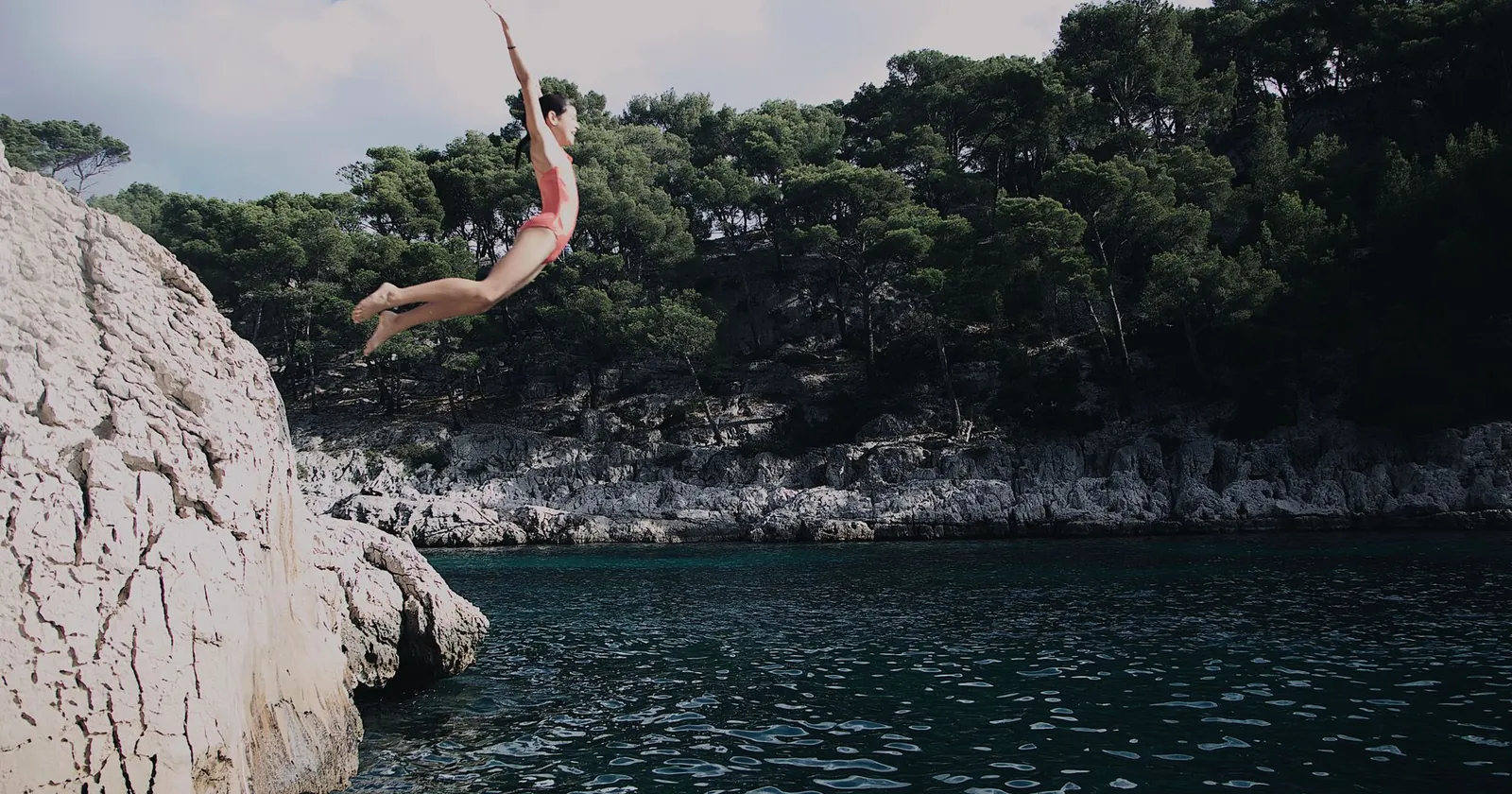
Photo: Mael Balland via Pexels (free licence).
This is a general explainer, not a substitute for a qualified guide and the operator's safety rules.
Key takeaways
- Scramble, swim and jump along the rocky intertidal coast.
- Always go guided; never coasteer on your own.
- Operators provide the wetsuit, buoyancy aid and helmet.
- Jumps are optional; only ever jump where the guide has checked.
- Tides and swell are managed by the guide, and matter enormously.
What coasteering is
Coasteering means travelling along a rocky coastline where the sea meets the land, using a mix of scrambling and climbing over rocks, swimming through gullies and channels, and jumping from rocks and small cliffs into deep water. It is a guided adventure that lets you explore the intertidal zone in a playful, thrilling way. The name and modern activity are strongly associated with Wales, particularly Pembrokeshire, where commercial coasteering developed.
Why you go with a guide
This is not a solo activity. A reputable, qualified guide chooses a route to suit the conditions and group, checks the depth and safety of every jump before anyone leaps, manages the tides and swell, and provides the gear. Coasteering with an operator is a well-managed thrill; freelancing on a strange coast is genuinely dangerous.
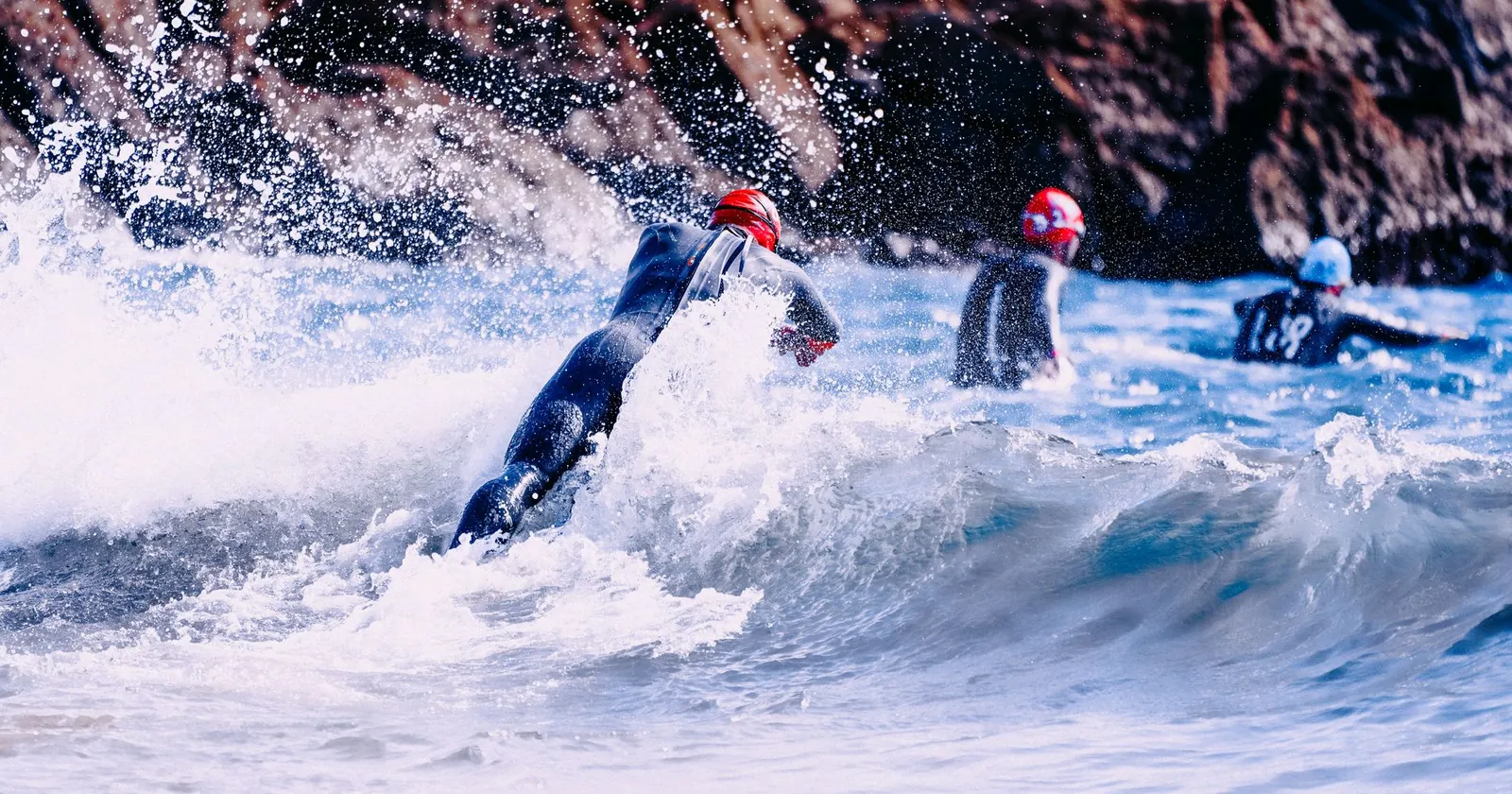
The gear
A good operator provides the safety-critical kit: a wetsuit (for warmth and impact protection), a buoyancy aid, and a helmet against the rocks. You bring old trainers or grippy water shoes you do not mind scuffing, and a swimsuit to wear underneath. Because the operator supplies the essentials, you rarely need to buy anything to try it.
Do you have to jump?
No. The jumps are a highlight but they are optional, and a good guide offers a range of heights and alternative routes so you can take part at your comfort level, including skipping jumps and climbing down instead. Never feel pressured. Only ever jump from spots the guide has checked and cleared, feet first and as instructed.
How to judge an operator, using the industry's own document
The NCC's provider guidance is written for operators, which makes it the most useful thing a customer can read. Four things in it are worth carrying to the booking page.
The kit list is part of the definition, not an optional extra. The NCC defines coasteering as an activity where "participants should wear an appropriate wetsuit, personal floatation device, helmet, and closed-toe footwear that is secure to the foot". Footwear is in there with the helmet, which is why an operator that shrugs at your flip-flops has told you something about the rest of its practice.
There is no fixed group ratio, and anyone quoting one is quoting somebody else. You will read "1 guide to 8 participants" attributed to the NCC in a lot of places. The February 2024 guidance says the opposite: "it is up to providers to identify their own ratios and develop their safety framework appropriate to their venue(s)", then lists what should drive that number, guide familiarity with the venue, sea state, rescue skills, exit accessibility, communications, group experience. A good operator can explain its ratio and why. A weak one recites a number.
The waiver you sign is a signal, and the guidance says how to read it. "Disclaimers have no standing in UK law and do not remove the duty of care held by each provider", and forms that try to indemnify the provider against its own negligence "are nullified by the Unfair Contracts Act (1977)" and "should be treated as a signal that the provider has a poor grasp of the required safety arrangements". An acknowledgement-of-risk form that records what you understood is normal and good. One that reads as a blanket waiver is a warning sign, by the industry body's own account.
Qualified means something specific since 2022. The NCC launched a Guide award on 1 April 2022, two days of training plus a day of assessment, skill-based rather than site-based, with site-specific induction still required before a guide leads there. "Our guides are experienced" is not the same sentence. And the NCC's own participation statement is the honest frame for all of it: well managed coasteering "reduces the risk of serious injury or death to an acceptable level. It does not remove it entirely." Checked 12 August 2026.
Where to try it
Coasteering is offered on rugged coasts worldwide, from its Welsh birthplace to Portugal's Algarve, the Azores and beyond. See our adventure water destinations for where it, canyoning and packrafting shine.
FAQ: coasteering
What is coasteering?
Coasteering is moving along a rocky coastline at the point where the sea meets the land, using a mix of scrambling and climbing over rocks, swimming through gullies and channels, and jumping from rocks and small cliffs into deep water. It is a guided adventure activity that lets you explore the intertidal zone in a playful, exhilarating way. The modern commercial activity is strongly associated with Wales, particularly Pembrokeshire, where guided coasteering developed.
Do I need to be a strong swimmer to go coasteering?
You need to be reasonably comfortable and competent in water, but you do not need to be an expert swimmer, because you wear a buoyancy aid (and a wetsuit, which also adds flotation) and a guide manages the route and group. Operators set minimum requirements, so check them, and be honest about your swimming ability and confidence when you book. Being at ease in moving water and willing to jump is more important than swimming speed for a typical beginner session.
Is coasteering safe?
Coasteering is an adventure activity with real hazards, rocks, swell, currents, tides and the jumps, so the essential safety measure is to go with a reputable, qualified guide or operator, never on your own. Guides choose a route to suit the conditions and group, check the depth and safety of every jump before anyone leaps, manage the tides and swell, and provide the right gear. Follow their instructions exactly, only jump where and when they say, and never freelance. With a good operator it is a well-managed, thrilling activity.
What gear do you need for coasteering?
A good operator provides the essential gear: a wetsuit (often a thick one, plus sometimes shorts or extra layers) for warmth and impact protection, a buoyancy aid, and a helmet to protect against rocks. You typically bring old trainers or sturdy water shoes with grip that you do not mind getting wet and scuffed, and a swimsuit to wear underneath. Because reputable operators supply the safety-critical kit, you rarely need to buy anything to try coasteering beyond suitable footwear.
Do you have to do the cliff jumps?
No. The jumps are a highlight for many people but they are optional, and a good guide offers a range of jump heights and alternative routes so you can take part at your own comfort level, including skipping jumps entirely and climbing down instead. Never feel pressured to jump, by the group or yourself. Only ever jump from spots the guide has checked and cleared, feet first and as instructed, since jumping into water of unknown depth or onto submerged rocks is extremely dangerous.
Yannick Schroth
Founder of NOMADREEF and a former digital nomad. This is a general explainer of coasteering; it is not a substitute for a qualified guide and the operator's safety rules, and coasteering should always be done with a reputable operator. About the author · LinkedIn ↗
Sources
- National Coasteering Charter, "Safety Advice for Coasteering Providers", version 4, February 2024. The definition and its PPE ("an appropriate wetsuit, personal floatation device, helmet, and closed-toe footwear that is secure to the foot"); the status of the document ("the use of the terms: should, consider, good or best practice are the opinions of the authors only, and as such, do not carry any legal compulsion", while "the NCC is the main reference point for advice on safe coasteering"); ratios ("it is up to providers to identify their own ratios"); under-18s and AALA ("must conform to AALA Licencing Regulations (where necessary)"); disclaimers ("disclaimers have no standing in UK law", forms indemnifying negligence "are nullified by the Unfair Contracts Act (1977)"); the Guide award launched 1 April 2022; and the participation statement. Earlier versions were developed with the RNLI, RoSPA, MCA, RLSS UK, SLSGB, AALS and AAIAC. NCC guidance (PDF), checked 12 August 2026. Corrected 12 August 2026: an earlier version of this page said coasteering has "no single governing body issuing binding safety rules" without naming the body that does publish guidance. Both halves are now on the page: the NCC exists and is the reference point, and its advice carries no legal compulsion. We also declined to repeat the "1 guide to 8 participants" ratio widely attributed to the NCC, because the document says providers set their own ratios.
- Coasteering conventions and origin (Pembrokeshire, Wales), guided operation, gear and jump/tide safety.
- Our own canyoning and adventure water destinations guides.